
Latest News
Reconciliation council chooses six deputies and over 40 members

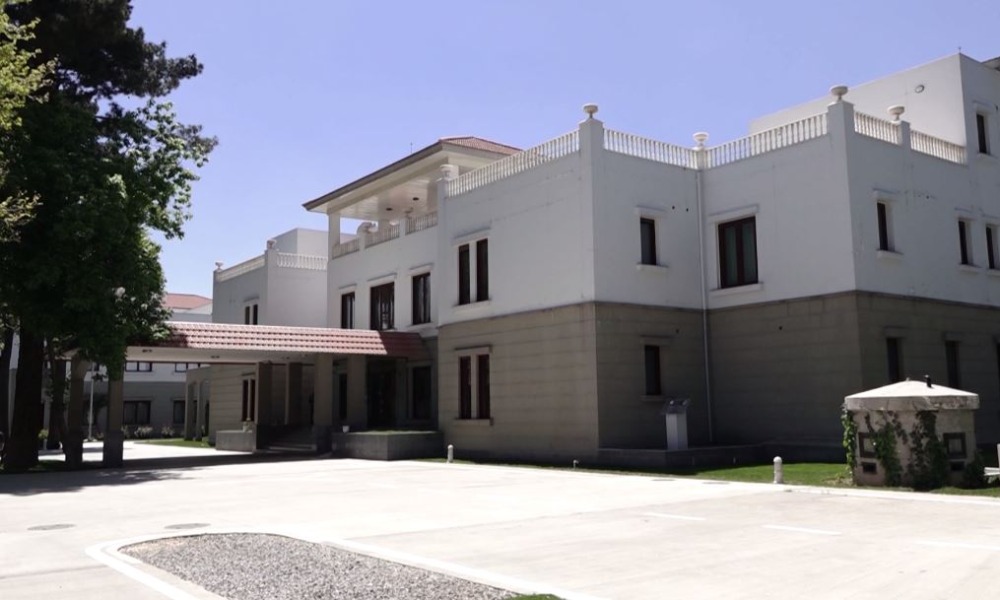
Spokesman for the High Council for National Reconciliation Fraidoon Khwazoon confirmed Saturday that six deputies and more than 40 members have been appointed to the body that was established in May.
Sources said the newly-appointed deputies are council head Abdullah Adbullah’s election campaign running mates Enayatullah Babur Farahmand and Asadullah Saadati; State Minister for Peace Affairs Abdul Salam Rahimi, as well as Ata-ur-Rahman Saleem and Din Mohammad, two members of the now defunct High Peace Council, and a woman who would be introduced by the Presidential Palace.
“More than 40 people have been introduced. The list was finalized and is waiting for the Chairman of the High Council for National Reconciliation to officially announce the structure,” Fraidoon Khwazoon said.
This development comes three months after the council was established following a power-sharing agreement between political rivals Abdullah and President Ashraf Ghani following months of post-election discord.
In addition to the six deputies, an additional 40-plus members were selected for the leadership committee of the council which is tasked with pursuing issues around the peace process.
While names have not yet been released, sources indicate all those appointed are prominent members of society and are all proponents of peace.
This comes after the US Special Representative for Afghanistan Reconciliation Zalmay Khalilzad called on the Afghan government and the Taliban this week to immediately start intra-Afghan negotiations; aimed at finding a political settlement to end the long-term conflict in the war-weary country.
Khalilzad said that there is no legitimate reason to delay the talks.
The Taliban, however, disputes this and has stated it will start negotiations once all the remaining 320 prisoners it has listed are released.
Although Ghani signed the release order of these prisoners almost two weeks ago, the process has stalled after the government on Wednesday suspended the release process.
Sediq Sediqqi, the Presidential spokesman, told Ariana News that the government will not release the remaining Taliban prisoners unless the group frees 22 Afghan security force members they are holding captive.
Meanwhile, Russian Foreign Ministry Spokeswoman Maria Zakharova said that his country hoped that “these issues will not become new obstacles to the launch of peaceful dialogue and will be resolved in the near future.”
She added that an early launch of intra-Afghan negotiations is in the interest of both the people of Afghanistan and the country’s foreign partners.







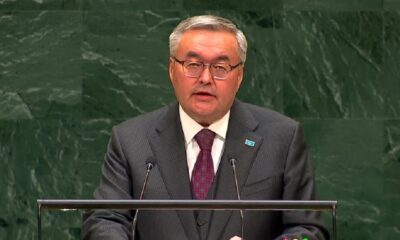




Kazakhstan’s Foreign Minister Mukhtar Tileuberdi has called for pragmatic and coordinated international engagement with Afghanistan, saying the country’s long-term stability is closely linked to the security and sustainable development of Central Asia.
Speaking during the general debate of the 81st session of the United Nations General Assembly in New York on Friday, Tileuberdi said humanitarian assistance to Afghanistan remains essential but alone cannot break the cycle of poverty, displacement and dependency.
He said Kazakhstan supports a “pragmatic, coordinated and step-by-step” approach to international engagement with Afghanistan, with the United Nations playing a central role.
Tileuberdi also said Kazakhstan is working with the UN to operationalize the United Nations Regional Centre for the Sustainable Development Goals for Central Asia and Afghanistan in Almaty.
He said the success of the centre should be measured by the results and assistance it delivers to the region.


Saar: Concerns over Pakistan’s political crisis discussed

Afghanistan Champions League: Omar Zawak Herat beat Toofan Herat 1-0

Blast in Pakistan’s Dera Ismail Khan kills 11, injures 30

Ariana Afghan Airlines increases Kabul-Delhi cargo flights

Khalilzad questions Pakistan’s commitment to Afghan welfare

Saudi energy group signs major Afghanistan deals covering gas exploration and pipeline plans

Trump floats idea of renaming Atlantic or Pacific Ocean

US hits Egyptian bank branches with Iran sanctions as war marks six months

Nepal flood rescue mission enters critical phase as thousands remain missing

Iranian clubs to face Gulf opponents at neutral venues in Asian Champions League Elite
Saar: Concerns over Pakistan’s political crisis discussed

Exclusive interview with Abdul Latif Mansoor, Minister of MRRD

Tawsia: Overview of Afghanistan’s iron mines

Tahawol: Discussion on fresh Pakistani airstrikes on Afghanistan

Saar: Calls for international support for Afghanistan discussed
-

 World5 days ago
CNN, MS NOW and Politico sue Trump, challenging White House ban
-

 Latest News3 days ago
Ariana Afghan Airlines ranks seventh among 45 Central Asian airlines
-

 Latest News4 days ago
UN reiterates call for respect for international law after Kunar airstrikes
-

 Regional3 days ago
US and Iran hold first talks since June after Trump’s ‘annihilation’ threat
-

 Latest News3 days ago
Silk Road highway in Wakhan corridor now reaches the China border
-

 Latest News4 days ago
Afghan Official: Pakistan’s airstrikes will not go unanswered
-

 Sport4 days ago
Afghan boxing referee heads to China for international festival
-

 Regional4 days ago
G7 foreign ministers call on Iran to stop arming Houthis