
Latest News
At UN Biden promises ‘relentless diplomacy,’ not Cold War

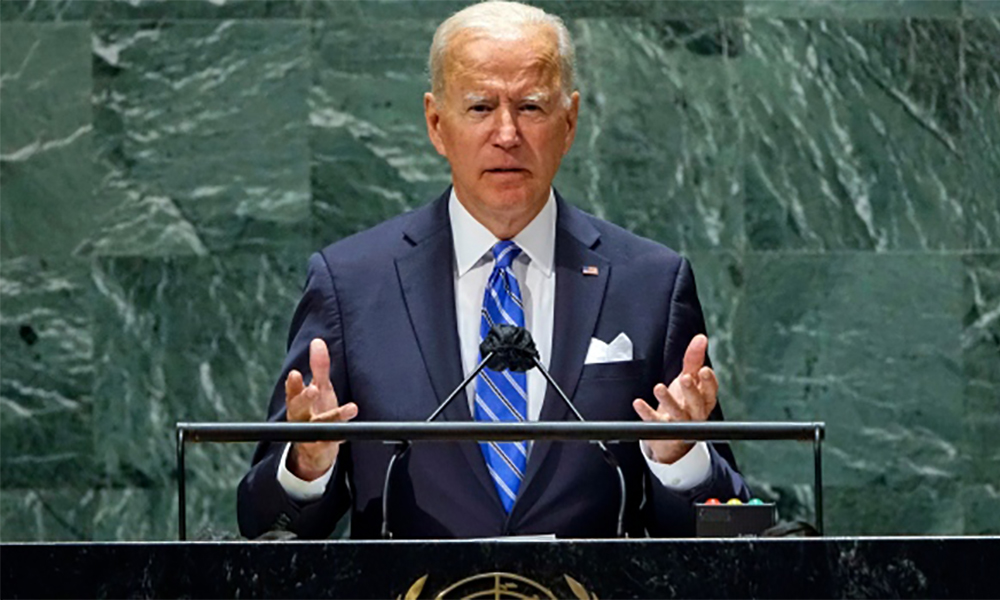
U.S. President Joe Biden mapped out a new era of vigorous competition without a new Cold War despite China’s ascendance during his first United Nations address on Tuesday, promising military restraint and a robust fight against climate change.
The United States will help resolve crises from Iran to the Korean Peninsula to Ethiopia, Biden told the annual U.N. General Assembly gathering.
The world faces a “decisive decade,” Biden said, one in which leaders must work together to combat a raging coronavirus pandemic, global climate change and cyber threats. He said the United States will double its financial commitment on climate aid and spend $10 billion to reduce hunger globally.
Biden did not utter the words “China” or “Beijing” but sprinkled implicit references to America’s increasingly powerful authoritarian competitor throughout his speech, as the two nations butt heads in the Indo-Pacific and on trade and human rights issues.
He said the United States will compete vigorously, both economically and to push democratic systems and rule of law.
“We’ll stand up for our allies and our friends and oppose attempts by stronger countries to dominate weaker ones, whether through changes to territory by force, economic coercion, technical exploitation or disinformation. But we’re not seeking – I’ll say it again – we are not seeking a new Cold War or a world divided into rigid blocs,” Biden said.
Chinese President Xi Jinping, who told the U.N. Tuesday that China would not build new coal-fired power projects abroad, used his video address to obliquely criticize the U.S. as well.
“Recent developments in the global situation show once again that military intervention from the outside and so-called democratic transformation entail nothing but harm,” Xi said.
Biden came to the United Nations facing criticism at home and abroad for a chaotic U.S. withdrawal from Afghanistan that left some Americans and Afghan allies still in that country and struggling to get out.
Biden’s emphasis on allied unity is being tested by a three-way agreement among the United States, Australia and Britain that undermined a French submarine deal and left France feeling stabbed in the back.
Biden met Australian Prime Minister Scott Morrison in New York and was to meet British Prime Minister Boris Johnson at the White House later in the day. His staff has been trying to arrange a phone call between Biden and French President Emmanuel Macron to try to cool tempers over the submarine deal.
“We’ve ended 20 years of conflict in Afghanistan and as we close this era of relentless war, we’re opening a new era of relentless diplomacy,” Biden said.
The United States would defend its national interests, Biden said, but “the mission must be clear and achievable,” and the American military “must not be used as the answer to every problem we see around the world.”
Biden, a Democrat, hoped to present a compelling case that the United States remains a reliable ally to its partners around the world after four years of “America First” policies pursued by his Republican predecessor Donald Trump.
Republicans pounced on Biden with sharp criticism.
“President Biden’s speech today does not match his actions. His failed leadership led to the chaotic and deadly withdrawal from Afghanistan that abandoned our partners, angered our NATO allies and emboldened our adversaries,” said U.S. Representative Michael McCaul, a Texas Republican.
Biden said that he remains committed to peacefully resolving a dispute with Iran over its nuclear program. He vowed to defend U.S. ally Israel but said a two-state solution with the Palestinians is still needed but a distant goal.
He said the United States wants “sustained diplomacy” to resolve the crisis surrounding North Korea’s nuclear and ballistic missile programs. North Korea has rejected U.S. overtures to engage in talks.
Discussing oppression of racial, ethnic and religious minorities, Biden singled out China’s Xinjiang region where rights groups estimate that one million Uyghurs and other ethnic minorities have been interned in camps.
In response to Biden’s reference to Xinjiang, China’s mission to the United Nations, told Reuters: “It’s completely groundless. We totally reject. The U.S. should pay more attention to its own human rights problems.”
U.N. Secretary-General Antonio Guterres, who begins a second five-year term at the helm of the world body on January 1, warned earlier of the dangers of the growing gap between China and the United States, the world’s largest economies.
“I fear our world is creeping towards two different sets of economic, trade, financial and technology rules, two divergent approaches in the development of artificial intelligence – and ultimately two different military and geopolitical strategies,” Guterres said.
“This is a recipe for trouble. It would be far less predictable than the Cold War,” Guterres said.








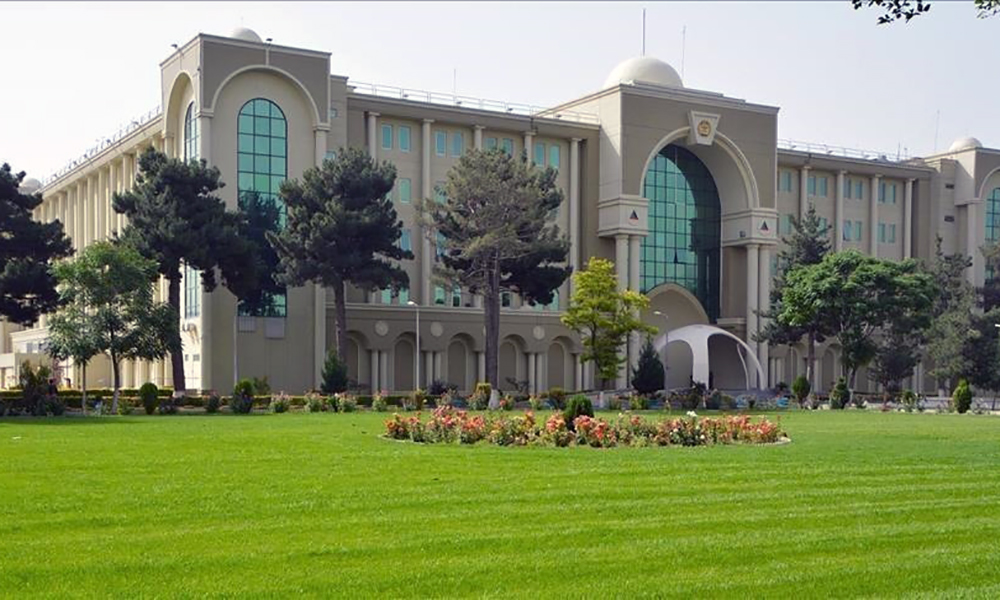
Afghanistan’s Ministry of Defense says a Pakistani military post near Spin Boldak was targeted and destroyed after Pakistani forces opened fire toward Afghanistan.
Ministry spokesperson Enayatullah Khwarazmi said in a post on X that Afghan forces suffered no casualties or damage in the clash.
Khwarazmi also rejected claims made by the Pakistani side about the incident, describing them as “propaganda.”
Latest News
Mujahid: Pakistan attacking Afghanistan to evade Mecca Pact responsibilities
He warned that the Islamic Emirate would give an “appropriate response” to what he called the Pakistani military regime’s “bullying.”
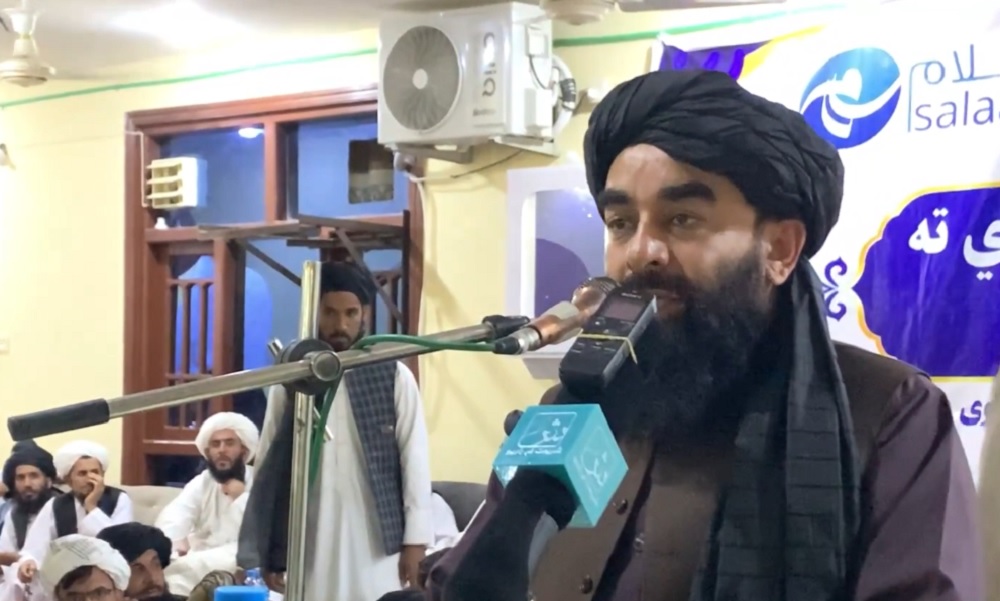
Islamic Emirate spokesperson Zabihullah Mujahid has accused Pakistan of carrying out attacks on Afghanistan to divert attention from its domestic problems and to evade responsibilities under the “Mecca Pact.”
Speaking at a religious seminary in Kandahar, Mujahid said Pakistan was facing political and economic challenges at home and was using attacks on Afghanistan to shift public attention away from protests and its internal problems.
“Pakistan, by violating the territory of its neighboring Islamic country, wants to divert attention from its failures,” he said.
Mujahid also criticized Pakistan’s political situation, claiming that political space had been restricted and that freedoms guaranteed under the country’s laws were not being allowed.
He said Pakistan’s economic problems had also increased significantly and accused the country of seeking to distract the public from those problems by engaging in conflict with Afghanistan.
Mujahid further accused Pakistan’s military leadership of putting the Pakistani people at risk through what he described as its “false position.”
He warned that the Islamic Emirate would give an “appropriate response” to what he called the Pakistani military regime’s “bullying.”
His remarks followed Pakistani airstrikes on Kandahar, Paktia and Khost provinces on Thursday, which Afghan authorities said killed four civilians.
The strikes came three days after attacks on Kunar and Paktika provinces, in which Afghan authorities said three civilians were killed.
Latest News
Kabul rejects U.S. claim that meth seized in Pakistan was of Afghan origin
Balkhi said the Islamic Emirate of Afghanistan (IEA) has imposed an absolute ban on the production, trafficking and use of all types of narcotics in Afghanistan.
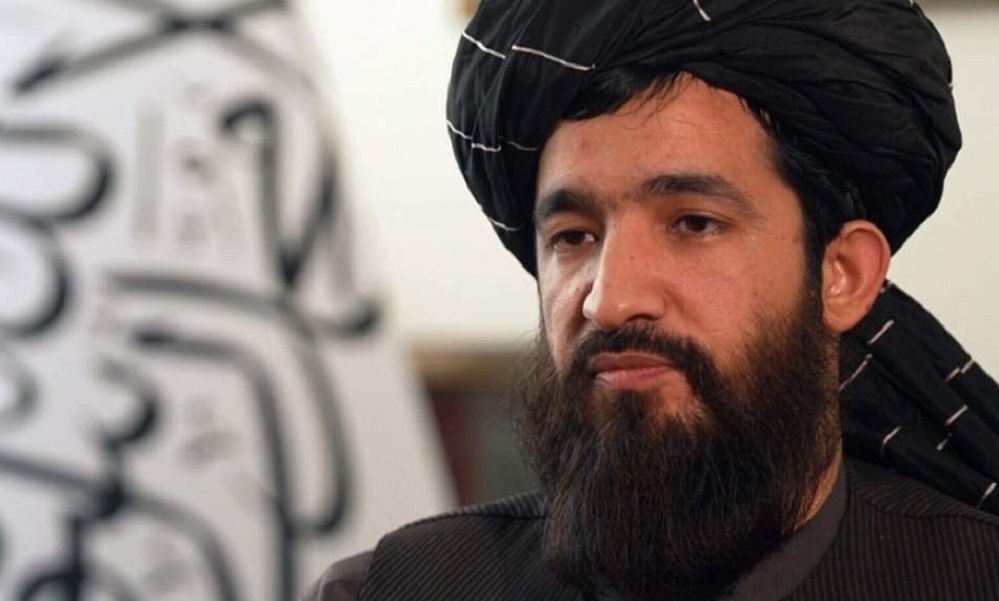
Afghanistan’s Foreign Ministry spokesperson Abdul Qahar Balkhi has rejected a U.S. claim that 463 kilograms of synthetic drugs seized in Pakistan were of Afghan origin, calling the attribution “unfounded and politically motivated.”
Balkhi said the U.S. Embassy in Islamabad should investigate the origin of the seized drugs in Pakistan rather than attributing them to Afghanistan.
“The attribution by the U.S. Embassy in Islamabad of the synthetic drugs bound for Sri Lanka and intercepted in Pakistan through joint U.S.-Pakistani efforts as ‘Afghan-origin’ is an unfounded and politically motivated allegation,” Balkhi said.
He said the Islamic Emirate of Afghanistan (IEA) has imposed an absolute ban on the production, trafficking and use of all types of narcotics in Afghanistan.
Balkhi also claimed that following the ban in Afghanistan, the cultivation, production and trafficking of narcotics have increased “on the other side of the Durand Line.”
He further argued that Afghanistan does not have the capacity to produce synthetic drugs and said crossing points along the Durand Line have been completely closed to all movement for nearly a year.
His remarks came after the U.S. Embassy in Islamabad said U.S. and Pakistani anti-narcotics authorities had seized 463 kilograms of crystal methamphetamine worth an estimated $21 million and bound for Sri Lanka.
The embassy said the operation led to multiple arrests and highlighted ongoing U.S. cooperation and training with Pakistani authorities to disrupt international drug-trafficking networks.


Exclusive interview with Abdul Latif Mansoor, Minister of MRRD

Sorkh Poshan Khafi rout Istiqlal Kabul 6-0 in ACL season six

Tawsia: Overview of Afghanistan’s iron mines

Afghanistan Champions League: Arman FC and Aino Mina play out goalless draw

Afghanistan says Pakistani military post destroyed near Spin Boldak

Saudi energy group signs major Afghanistan deals covering gas exploration and pipeline plans

ATN secures exclusive rights to broadcast T20I series in India across Afghanistan

Trump floats idea of renaming Atlantic or Pacific Ocean

US hits Egyptian bank branches with Iran sanctions as war marks six months

Nepal flood rescue mission enters critical phase as thousands remain missing
Exclusive interview with Abdul Latif Mansoor, Minister of MRRD
Tawsia: Overview of Afghanistan’s iron mines

Tahawol: Discussion on fresh Pakistani airstrikes on Afghanistan

Saar: Calls for international support for Afghanistan discussed

Tahawol: Opening of the 81st UN General Assembly Session
-

 Sport4 days ago
Afghanistan to face Japan and Nepal in Asian Games cricket group stage
-
 Regional5 days ago
Iran and US trade threats after Houthi attacks escalate regional conflict
-

 World4 days ago
CNN, MS NOW and Politico sue Trump, challenging White House ban
-
 Health4 days ago
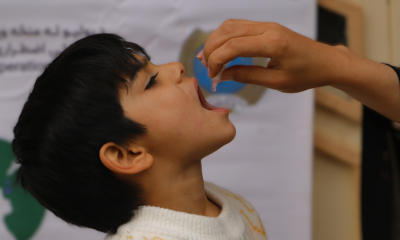
Four-day polio vaccination campaign begins across Afghanistan
-

 Latest News3 days ago
UN reiterates call for respect for international law after Kunar airstrikes
-
 Latest News4 days ago
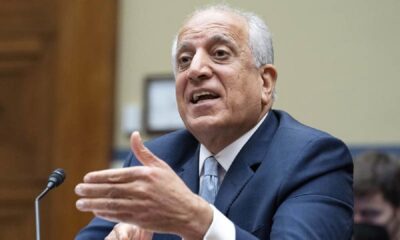
Khalilzad condemns Pakistan airstrikes, says current strategy is not working
-

 Latest News2 days ago
Ariana Afghan Airlines ranks seventh among 45 Central Asian airlines
-

 Latest News4 days ago
Afghan Official: Pakistan’s airstrikes will not go unanswered