
Latest News
EU launches humanitarian projects in Afghanistan worth over $300 million

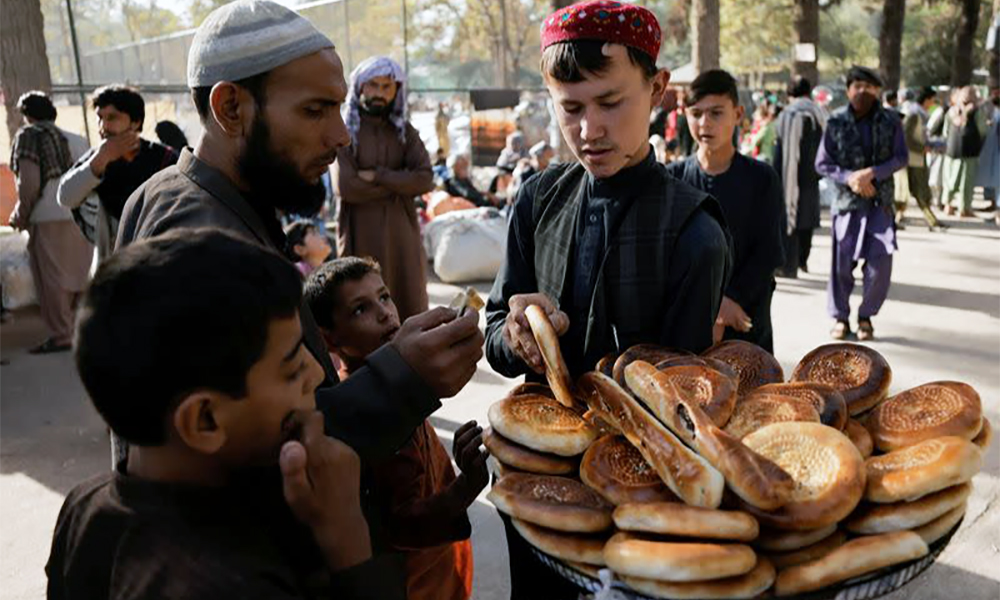
In a bid to address the major humanitarian crisis Afghanistan is facing, the European Union has launched projects worth €268.3 million ($304 million) that focusses on maintaining education, sustaining livelihoods, and protecting public health.
According to a statement issued by the UN, the funding is being channelled through United Nations agencies working in Afghanistan and benefits the Afghan population directly.
Commissioner for International Partnerships, Jutta Urpilainen, said: “I am pleased that we are addressing basic human needs and supporting livelihoods under the clear parameters set out by the Foreign Affairs Council.
“The projects focus on health, nutrition, clean water, sanitation, and education, in particular for women and girls. We are also supporting income generating activities, food security and local markets.
“We have reacted quickly to alleviate the suffering of the population and preserve a future for the Afghan people, especially women and youth,” said Urpilainen.
Seven EU projects, worth a total of €186 million, support health, education and livelihoods for Afghans and will be implemented through United Nations Children’s Fund (UNICEF), United Nations Development Programme (UNDP), the World Health Organization (WHO) and the World Food Programme (WFP).
A €50 million project implemented by UNICEF will provide around 194,000 public teachers nationwide with emergency cash support of around €90 per month for two months during the harsh winter time, the statement read.
Another €11 million project will ensure the provision of food at schools and to take home for boys and girls in primary school. For girls in secondary level, the EU will also support cash transfers for their households conditional on girls’ school attendance.
A €10 million project will improve testing, surveillance and hospital facilities to deal with COVID-19. This will be done in conjunction with the World Health Organization while a €25 million project will mitigate the health and nutrition effects of COVID-19 on women and children and will be done through UNICEF.
In addition to this, a €25 million project, implemented by UNICEF and the WHO, will allow for polio vaccine procurement and other measures and working with the WFP, the EU will increase food security, of €50 million, for around 450,000 persons.
Also, working with UNDP, a €15 million project will allow around 23,000 entrepreneurs, mainly women, to receive technical and/or financial support to develop and expand their businesses.
According to the statement, the EU has launched another five projects for a total of €79 million to address forced displacement and migration in Afghanistan, Iran, Pakistan and Central Asia.
The Afghan Children on the Move project will get €15 million; support to Afghan refugees and displaced people in Pakistan, Iran, Central Asia and Afghanistan will total €34 million; and a project for displaced Afghans in Pakistan, Iran, Central Asia, and Afghanistan will total €15 million.
Support will also be given to vulnerable Afghans and host communities in Iran through a project, with the Norwegian Refugee Council (NRC), totalling €14 million.
A €1 million project to enhance the capacities of Surkhandarya region in Uzbekistan to educate and train Afghan citizens will also be carried out and the EU will also increase its support to Afghan Human Rights Defenders at risk and Civil Society Organisations with two projects worth €3.3 million.
According to the statement, more projects in all these sectors are due to be launched in the coming months.
The new projects launched are a key milestone as part of the overall €1 billion EU support package announced by President Ursula von der Leyen in October last year.












Kazakhstan’s Foreign Minister Mukhtar Tileuberdi has called for pragmatic and coordinated international engagement with Afghanistan, saying the country’s long-term stability is closely linked to the security and sustainable development of Central Asia.
Speaking during the general debate of the 81st session of the United Nations General Assembly in New York on Friday, Tileuberdi said humanitarian assistance to Afghanistan remains essential but alone cannot break the cycle of poverty, displacement and dependency.
He said Kazakhstan supports a “pragmatic, coordinated and step-by-step” approach to international engagement with Afghanistan, with the United Nations playing a central role.
Tileuberdi also said Kazakhstan is working with the UN to operationalize the United Nations Regional Centre for the Sustainable Development Goals for Central Asia and Afghanistan in Almaty.
He said the success of the centre should be measured by the results and assistance it delivers to the region.


Abu Muslim Farah defeat Khurasan Faryab 2-0 in ACL season six

Saar: Concerns over Pakistan’s political crisis discussed

Afghanistan Champions League: Omar Zawak Herat beat Toofan Herat 1-0

Blast in Pakistan’s Dera Ismail Khan kills 11, injures 30

Ariana Afghan Airlines increases Kabul-Delhi cargo flights

Saudi energy group signs major Afghanistan deals covering gas exploration and pipeline plans

Trump floats idea of renaming Atlantic or Pacific Ocean

US hits Egyptian bank branches with Iran sanctions as war marks six months

Nepal flood rescue mission enters critical phase as thousands remain missing

Iranian clubs to face Gulf opponents at neutral venues in Asian Champions League Elite
Saar: Concerns over Pakistan’s political crisis discussed

Exclusive interview with Abdul Latif Mansoor, Minister of MRRD

Tawsia: Overview of Afghanistan’s iron mines

Tahawol: Discussion on fresh Pakistani airstrikes on Afghanistan

Saar: Calls for international support for Afghanistan discussed
-

 World5 days ago
CNN, MS NOW and Politico sue Trump, challenging White House ban
-

 Latest News4 days ago
Ariana Afghan Airlines ranks seventh among 45 Central Asian airlines
-

 Latest News5 days ago
UN reiterates call for respect for international law after Kunar airstrikes
-

 Regional4 days ago
US and Iran hold first talks since June after Trump’s ‘annihilation’ threat
-

 Latest News4 days ago
Silk Road highway in Wakhan corridor now reaches the China border
-

 Regional3 days ago
Iran airlines cancel flights as US sanctions hit
-

 Latest News5 days ago
Afghan Official: Pakistan’s airstrikes will not go unanswered
-
 Regional5 days ago
G7 foreign ministers call on Iran to stop arming Houthis