
Latest News
97% of Afghan population now facing food shortages: UN

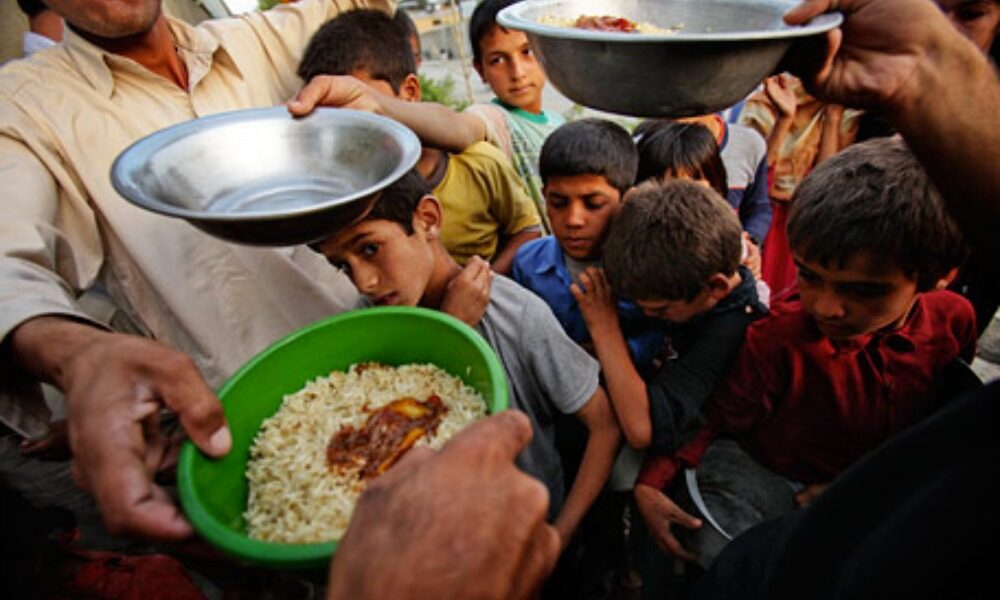
Millions of Afghans are now experiencing intense food shortages following the collapse of the former government and Islamic Emirate of Afghanistan (IEA) takeover in August.
As Muslims around the world celebrated Eid-Uk-Fitr, experts say that for most Afghans, it was simply another day of struggle to put food on the table.
According to the United Nations, 97 percent of Afghans are experiencing food shortages.
Following the IEA’s takeover in August, most Western aid was stopped. Hospitals and schools are unable to pay their employees, and many people are unable to purchase food, exacerbating an already dire crisis.
In a phone interview from her home in Afghanistan, a woman, who asked to remain anonymous, told Canada’s CTV News that she and her children struggled during Ramadan after months of limited access to food, which meant they had little to eat to break their fast in the evenings.
She says that without an adult male family member, their main source of income has been cut off, and the meal they received from a local charity on Eid for iftar was their first complete meal in months.
“When it comes to food shortages, it is so much worse than we can see,” said Noorain Noorani, the executive director of The Zahra Foundation, a registered charity with offices in Canada and the U.K. working to provide food and safe drinking water to impacted communities in Afghanistan.
“Political instability has continued to lead to displacement, loss of income, and access to education, and is contributing to the ongoing cycle of chronic poverty,” she said.
Over the past few months, the country has suffered a deadly series of bombings, including at mosques in Kabul, Kunduz and Mazar-e Sharif – an increased level of violence that Noorani says is compounding the food crisis.
The Zahra Foundation is one of the many organizations on the ground in Afghanistan that offered meal packages on Eid as Muslims broke their fasts with iftar.
“On Eid, we offered meals to anyone who needed them, and not just the civilians who’ve registered with us. But in the past few months, there are now more people on the waitlist than ever before,” said Noorani.
According to the United Nations World Food Program, more than 22 million people, or more than half of the country’s population, are suffering from acute hunger, with the majority unable to predict when their next meal would arrive.
This is a significant rise from September 2020, when over 14 million people were on the verge of becoming hungry. According to the group, 97 percent of the population had insufficient food consumption in December, and they were adopting ways to cope with their circumstances, such as skipping a meal.
The situation has gotten worse since a drought hit Afghanistan in October 2020. The UN says more than 40 percent of all crops have been lost, and livestock has been devastated due to the severe weather.
The United Nations World Food Programme in Afghanistan reached 376,139 people in Kabul in March 2022 for financial and food assistance, with the latest numbers for those supported in Eid still being tallied.
The IEA-controlled government has been cut off from the international economy since the fall of Kabul in August and the departure of U.S. soldiers, resulting in a currency crisis, widespread poverty, and the collapse of critical public services including health care.
The UN and its partners sought more than US$5 billion for the year in mid-January, more than the agency has ever requested for a single country.
The majority of the aid, US$4.4 billion, would go to Afghans within the nation. The remainder would be used to help the millions of Afghan refugees living in neighbouring countries such as Iran and Pakistan.
But there are concerns that Afghanistan still isn’t receiving enough international support.












Kazakhstan’s Foreign Minister Mukhtar Tileuberdi has called for pragmatic and coordinated international engagement with Afghanistan, saying the country’s long-term stability is closely linked to the security and sustainable development of Central Asia.
Speaking during the general debate of the 81st session of the United Nations General Assembly in New York on Friday, Tileuberdi said humanitarian assistance to Afghanistan remains essential but alone cannot break the cycle of poverty, displacement and dependency.
He said Kazakhstan supports a “pragmatic, coordinated and step-by-step” approach to international engagement with Afghanistan, with the United Nations playing a central role.
Tileuberdi also said Kazakhstan is working with the UN to operationalize the United Nations Regional Centre for the Sustainable Development Goals for Central Asia and Afghanistan in Almaty.
He said the success of the centre should be measured by the results and assistance it delivers to the region.


Abu Muslim Farah defeat Khurasan Faryab 2-0 in ACL season six

Saar: Concerns over Pakistan’s political crisis discussed

Afghanistan Champions League: Omar Zawak Herat beat Toofan Herat 1-0

Blast in Pakistan’s Dera Ismail Khan kills 11, injures 30

Ariana Afghan Airlines increases Kabul-Delhi cargo flights

Saudi energy group signs major Afghanistan deals covering gas exploration and pipeline plans

Trump floats idea of renaming Atlantic or Pacific Ocean

US hits Egyptian bank branches with Iran sanctions as war marks six months

Nepal flood rescue mission enters critical phase as thousands remain missing

Iranian clubs to face Gulf opponents at neutral venues in Asian Champions League Elite
Saar: Concerns over Pakistan’s political crisis discussed

Exclusive interview with Abdul Latif Mansoor, Minister of MRRD

Tawsia: Overview of Afghanistan’s iron mines

Tahawol: Discussion on fresh Pakistani airstrikes on Afghanistan

Saar: Calls for international support for Afghanistan discussed
-

 World5 days ago
CNN, MS NOW and Politico sue Trump, challenging White House ban
-

 Latest News3 days ago
Ariana Afghan Airlines ranks seventh among 45 Central Asian airlines
-

 Latest News4 days ago
UN reiterates call for respect for international law after Kunar airstrikes
-

 Regional3 days ago
US and Iran hold first talks since June after Trump’s ‘annihilation’ threat
-

 Latest News3 days ago
Silk Road highway in Wakhan corridor now reaches the China border
-

 Latest News4 days ago
Afghan Official: Pakistan’s airstrikes will not go unanswered
-

 Sport4 days ago
Afghan boxing referee heads to China for international festival
-
 Regional5 days ago
G7 foreign ministers call on Iran to stop arming Houthis