
Latest News
Reflections of a year in power, since take over by IEA

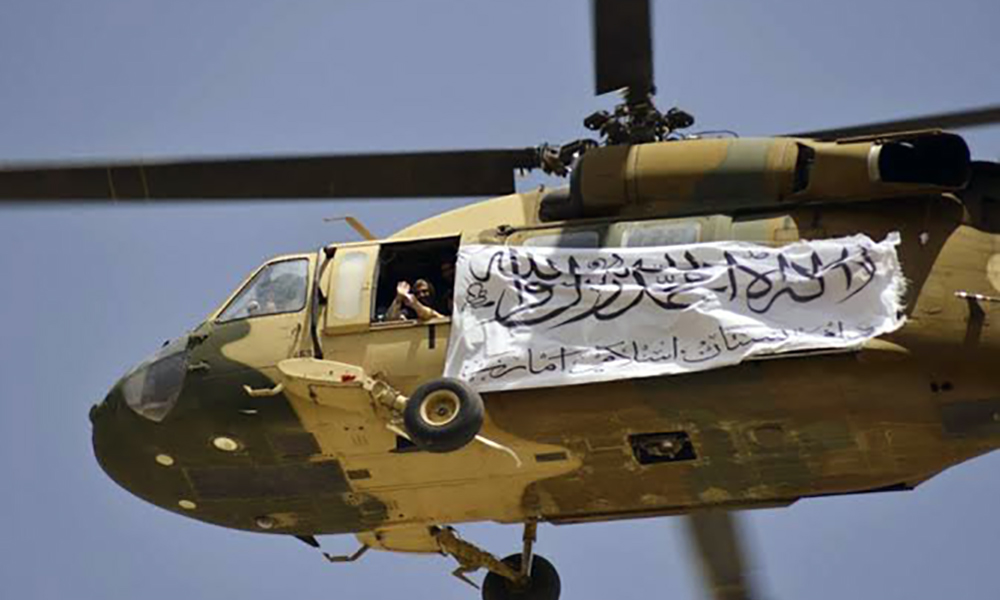
Exactly one year ago today, August 15, 2021, the Islamic Emirate of Afghanistan (IEA) regained control of the country after a 20 year war. In this time they have had enormous challenges to deal with.
The past year has been full of political ups and downs, with many calls being made for a more inclusive government.
“The Islamic Emirate of Afghanistan took control of the country last year while a puppet system collapsed and the Islamic Emirate took control of affairs suddenly and immediately. IEA moved the affairs of the country forward. Alhamdulillah, despite all the sanctions and problems, we have achieved a lot,” said Inamullah Samangani, the head of GMIC.
With the establishment of the Islamic Emirate in the country, many political leaders, leading officials of the previous government, parliament members, human rights defenders, journalists and some civil rights activists left the country and sought refuge outside of Afghanistan. But the leader of the Islamic Emirate issued a general amnesty order to control the situation.
Four months into the rule of the Islamic Emirate in the country, the new government was still in political and economic isolation, and with each passing day, international pressure and sanctions against the Islamic Emirate increased.
After four months, Acting Minister of Foreign Affairs Amir Khan Muttaqi traveled to Iran for the first time to meet with Iranian officials. He met with Mohammad Ismail Khan, a former jihadi leader, and Ahmad Massoud, the leader of the so-called National Resistance Front.
Muttaqi wanted them to return to the country.
Nine months after taking power, a commission was formed to entice Afghan refugees abroad to return home.
This commission was based on an order issued by the supreme leader of the Islamic Emirate, Haibatullah Akhundzada.
Since it’s inception, a number of prominent figures have returned home.
In the past year, the failure to form an inclusive government, the imposition of restrictions on women and girls, and the violation of human rights has however led to strong criticism by the foreign community against the Islamic Emirate.
Some refugees have said these issues are preventing them from returning home.
After ten months of being in power, the IEA held a mass gathering of Ulema. There were about 3,000 scholars in attendance.
In a rare trip to Kabul, Mullah Haibatullah Akhundzada delivered a speech.
He emphasized that the IEA is ready to interact with the world, but Islamic laws are a red line for them.
In the past year, the Islamic Emirate repeatedly criticized foreign interference in Afghanistan’s internal affairs and asked the countries of the region and the world to stop meddling in the country’s internal affairs.
The Ministry of Foreign Affairs of Afghanistan also says that the new government of Afghanistan is now independent and other governments should not interfere in Afghanistan’s affairs.
However, one year later, the new government of Afghanistan has still not been recognized and so far it has not been able to take up its official position at the United Nations.












Kazakhstan’s Foreign Minister Mukhtar Tileuberdi has called for pragmatic and coordinated international engagement with Afghanistan, saying the country’s long-term stability is closely linked to the security and sustainable development of Central Asia.
Speaking during the general debate of the 81st session of the United Nations General Assembly in New York on Friday, Tileuberdi said humanitarian assistance to Afghanistan remains essential but alone cannot break the cycle of poverty, displacement and dependency.
He said Kazakhstan supports a “pragmatic, coordinated and step-by-step” approach to international engagement with Afghanistan, with the United Nations playing a central role.
Tileuberdi also said Kazakhstan is working with the UN to operationalize the United Nations Regional Centre for the Sustainable Development Goals for Central Asia and Afghanistan in Almaty.
He said the success of the centre should be measured by the results and assistance it delivers to the region.


Abu Muslim Farah defeat Khurasan Faryab 2-0 in ACL season six

Saar: Concerns over Pakistan’s political crisis discussed

Afghanistan Champions League: Omar Zawak Herat beat Toofan Herat 1-0

Blast in Pakistan’s Dera Ismail Khan kills 11, injures 30

Ariana Afghan Airlines increases Kabul-Delhi cargo flights

Saudi energy group signs major Afghanistan deals covering gas exploration and pipeline plans

Trump floats idea of renaming Atlantic or Pacific Ocean

US hits Egyptian bank branches with Iran sanctions as war marks six months

Nepal flood rescue mission enters critical phase as thousands remain missing

Iranian clubs to face Gulf opponents at neutral venues in Asian Champions League Elite
Saar: Concerns over Pakistan’s political crisis discussed

Exclusive interview with Abdul Latif Mansoor, Minister of MRRD

Tawsia: Overview of Afghanistan’s iron mines

Tahawol: Discussion on fresh Pakistani airstrikes on Afghanistan

Saar: Calls for international support for Afghanistan discussed
-

 World5 days ago
CNN, MS NOW and Politico sue Trump, challenging White House ban
-

 Latest News4 days ago
Ariana Afghan Airlines ranks seventh among 45 Central Asian airlines
-

 Latest News5 days ago
UN reiterates call for respect for international law after Kunar airstrikes
-

 Regional4 days ago
US and Iran hold first talks since June after Trump’s ‘annihilation’ threat
-

 Latest News4 days ago
Silk Road highway in Wakhan corridor now reaches the China border
-

 Regional3 days ago
Iran airlines cancel flights as US sanctions hit
-

 Latest News5 days ago
Afghan Official: Pakistan’s airstrikes will not go unanswered
-

 Regional5 days ago
G7 foreign ministers call on Iran to stop arming Houthis