
Latest News
EU special envoy warns of ‘harsh winter ahead’ for Afghans

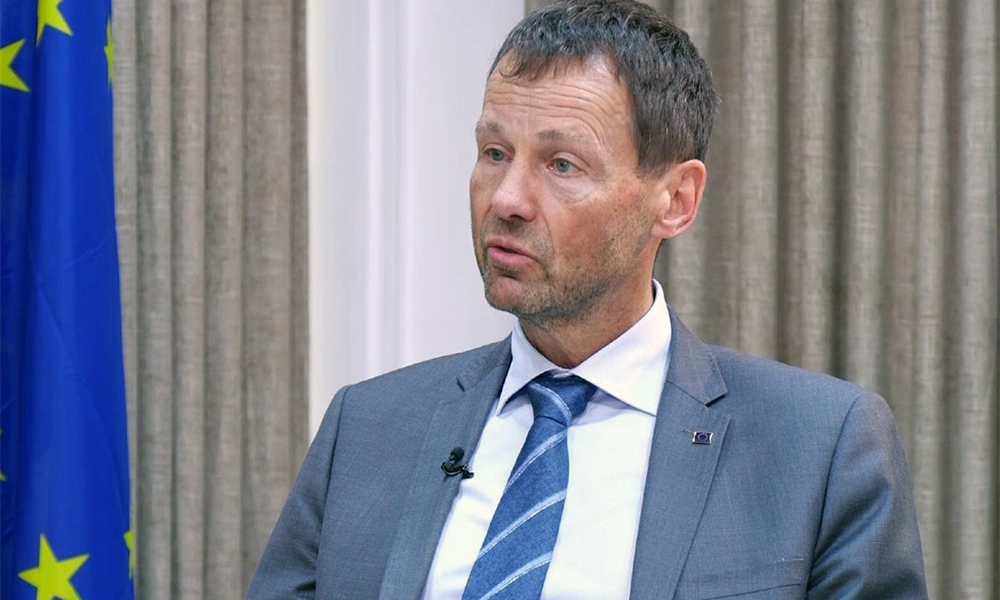
Wrapping up a five-day visit to Afghanistan, the EU’s special envoy Tomas Niklasson said on Monday more humanitarian assistance is needed to get Afghans through the harsh winter ahead.
In a statement issued Monday night, Niklasson said: “Despite generous donations by taxpayers and governments, including 300M euros by the European Union, the UN humanitarian appeal for Afghanistan remains grossly underfunded.”
He called on other countries, “including China, Russia and the OIC, to step up their support significantly.”
He also said the Islamic Emirate of Afghanistan (IEA) “throughout the country must refrain from attempts to interfere in or control the delivery of humanitarian assistance while instead ensuring humanitarian access and full respect for International Humanitarian Law.”
Niklasson said: “There is a need to stabilize the economy and provide opportunities for Afghan men and women to employment.”
He noted that UN sanctions against individual members of the IEA were playing a role and that “despite efforts by the UNSC and by the United States to give assurances to international banks and companies to allow for legal financial transactions with Afghanistan there is a tendency among international financial institutions to over-comply with the sanctions, which makes it difficult to transfer money into or out of Afghanistan.”
In addition, foreign currency reserves of the Afghan Central Bank remain frozen abroad, he said adding that the EU was however contributing to solutions by providing assistance.
He said more than 300 million euros has been provided to address basic needs in education and health and to provide livelihoods. Since August last year, the EU has provided more than 600 million euros to the people of Afghanistan, he said.
However he urged the IEA to focus on the economic crisis and to create an enabling environment for greater investment.
“In the short term they could look favorably on proposals made by the UN to facilitate the access of Afghan companies to foreign currency through a humanitarian exchange facility.
“They could take concrete steps to reassure Afghans and the international community about the independence of the Afghan Central Bank and its capacity to prevent money laundering and the financing of terrorism.
“They could provide legal clarity and a functioning court system. They could promote job opportunities for women rather than restricting their ability to work,” he said.
He said the IEA should ensure schools open throughout the country for boys and girls, young women and men adding that if “if secondary schools remain closed for girls, and with limited enrolment for boys, there will soon not be any students who can enroll for higher education. And a few years later there will not be the engineers, accountants, architects, teachers, midwives, nurses and doctors to build and sustain a future Afghanistan.”
Niklasson said the EU remains committed to keeping Afghanistan on the international agenda but while Afghanistan may be the Heart of Asia, it will not always be the central focus of the world.












Kazakhstan’s Foreign Minister Mukhtar Tileuberdi has called for pragmatic and coordinated international engagement with Afghanistan, saying the country’s long-term stability is closely linked to the security and sustainable development of Central Asia.
Speaking during the general debate of the 81st session of the United Nations General Assembly in New York on Friday, Tileuberdi said humanitarian assistance to Afghanistan remains essential but alone cannot break the cycle of poverty, displacement and dependency.
He said Kazakhstan supports a “pragmatic, coordinated and step-by-step” approach to international engagement with Afghanistan, with the United Nations playing a central role.
Tileuberdi also said Kazakhstan is working with the UN to operationalize the United Nations Regional Centre for the Sustainable Development Goals for Central Asia and Afghanistan in Almaty.
He said the success of the centre should be measured by the results and assistance it delivers to the region.


Abu Muslim Farah defeat Khurasan Faryab 2-0 in ACL season six

Saar: Concerns over Pakistan’s political crisis discussed

Afghanistan Champions League: Omar Zawak Herat beat Toofan Herat 1-0

Blast in Pakistan’s Dera Ismail Khan kills 11, injures 30

Ariana Afghan Airlines increases Kabul-Delhi cargo flights

Saudi energy group signs major Afghanistan deals covering gas exploration and pipeline plans

Trump floats idea of renaming Atlantic or Pacific Ocean

US hits Egyptian bank branches with Iran sanctions as war marks six months

Nepal flood rescue mission enters critical phase as thousands remain missing

Iranian clubs to face Gulf opponents at neutral venues in Asian Champions League Elite
Saar: Concerns over Pakistan’s political crisis discussed

Exclusive interview with Abdul Latif Mansoor, Minister of MRRD

Tawsia: Overview of Afghanistan’s iron mines

Tahawol: Discussion on fresh Pakistani airstrikes on Afghanistan

Saar: Calls for international support for Afghanistan discussed
-

 World5 days ago
CNN, MS NOW and Politico sue Trump, challenging White House ban
-

 Latest News3 days ago
Ariana Afghan Airlines ranks seventh among 45 Central Asian airlines
-

 Latest News4 days ago
UN reiterates call for respect for international law after Kunar airstrikes
-

 Regional3 days ago
US and Iran hold first talks since June after Trump’s ‘annihilation’ threat
-

 Latest News3 days ago
Silk Road highway in Wakhan corridor now reaches the China border
-

 Latest News5 days ago
Afghan Official: Pakistan’s airstrikes will not go unanswered
-

 Regional5 days ago
G7 foreign ministers call on Iran to stop arming Houthis
-

 Regional3 days ago
Iran airlines cancel flights as US sanctions hit