
Latest News
IEA ramps up security over Eid-ul-Adha

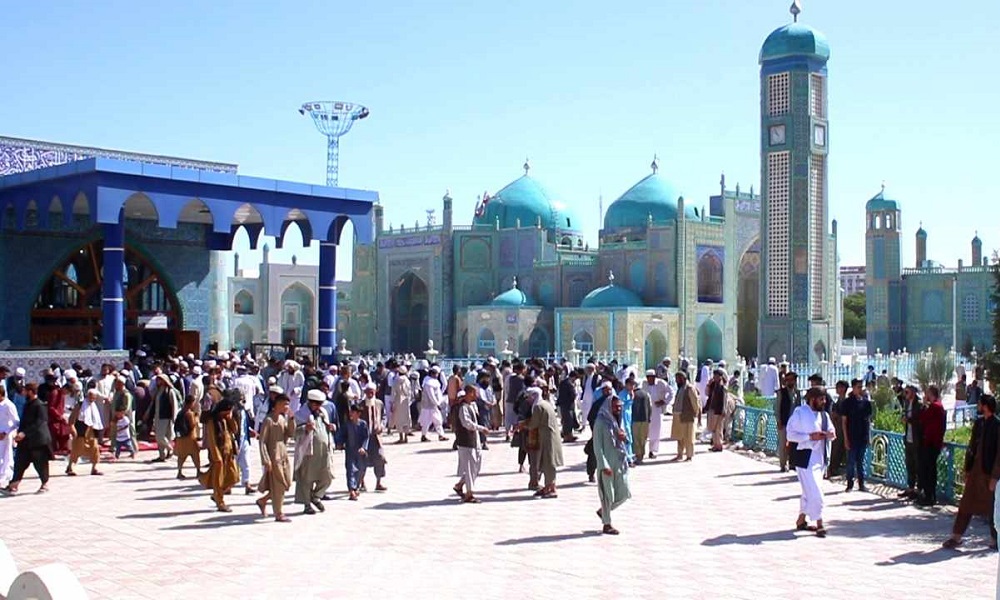
Islamic Emirate of Afghanistan (IEA) officials say serious measures have been taken to ensure security over Eid-ul-Adha throughout the country.
“Eid days are the days when Afghans are happy, they travel more, they move more, of course, they go everywhere; there is peace, security, and stability now in the country,” said Zabihullah Mujahid, IEA’s spokesman.
“The security departments were also ordered to improve people’s security in all sectors, including cities,” Mujahid added.
According to officials, thousands of security forces have been assigned to ensure the safety of the people throughout the country.
The residents of some provinces meanwhile are also happy that the security forces are trying to provide security day and night, and they hope the three days of Eid pass without any security incident.
Meanwhile, on Wednesday, the Islamic Emirate’s supreme leader Mawlavi Hibatullah Akhundzada said during the Eid-ul-Adha prayer ceremony in Kandahar that the world is being tested as to whether it recognizes the current system or not.
In an audio recording attributed to the Islamic Emirate leader speaking at Eid-ul-Adha prayers in Kandahar, Akhundzada said that it was necessary to stand against global pressure because Islam encourages Muslims to move forward and not go backward.
He also said there is no obstacle standing in the way of implementing “Islamic orders,” and they are not under the pressure of any power to “compromise on Islam.”
“If the world says that it does not recognize the system because it came by force, the world is facing a test and shame,” said Akhundzada.
“Islamic countries, Muslims and scholars have also been put to the test. We are also tested…. be steadfast, don’t go back, go forward.”
He considers the current security situation a unique achievement and asks people to cooperate in the survival of the Islamic Emirate.
The IEA leader also emphasized that the current system was not imposed on the people by force.
Akhundzada has expressed that whenever he feels that this system is out of the framework of Sharia, he will step down from his position.
In addition, he emphasized that multiple committees have been created to compile Islamic laws.
“The current system is moving towards Sharia, whenever I feel that the system is not based on Sharia, I resign from my position. The future laws are according to Islamic Sharia, and a tripartite committee has been established to draft them,” he said.
Mawlavi Hibatullah asked the government officials to take care of the people’s problems and not let the distance between the Islamic Emirate and the people increase.
IEA leader said that he takes care of people’s problems closely and whenever a Muslim is harmed in any corner of the world and he can help, he will rush to his aid.









Kazakhstan’s Foreign Minister Mukhtar Tileuberdi has called for pragmatic and coordinated international engagement with Afghanistan, saying the country’s long-term stability is closely linked to the security and sustainable development of Central Asia.
Speaking during the general debate of the 81st session of the United Nations General Assembly in New York on Friday, Tileuberdi said humanitarian assistance to Afghanistan remains essential but alone cannot break the cycle of poverty, displacement and dependency.
He said Kazakhstan supports a “pragmatic, coordinated and step-by-step” approach to international engagement with Afghanistan, with the United Nations playing a central role.
Tileuberdi also said Kazakhstan is working with the UN to operationalize the United Nations Regional Centre for the Sustainable Development Goals for Central Asia and Afghanistan in Almaty.
He said the success of the centre should be measured by the results and assistance it delivers to the region.


Abu Muslim Farah defeat Khurasan Faryab 2-0 in ACL season six

Saar: Concerns over Pakistan’s political crisis discussed

Afghanistan Champions League: Omar Zawak Herat beat Toofan Herat 1-0

Blast in Pakistan’s Dera Ismail Khan kills 11, injures 30

Ariana Afghan Airlines increases Kabul-Delhi cargo flights

Saudi energy group signs major Afghanistan deals covering gas exploration and pipeline plans

Trump floats idea of renaming Atlantic or Pacific Ocean

US hits Egyptian bank branches with Iran sanctions as war marks six months

Nepal flood rescue mission enters critical phase as thousands remain missing

Iranian clubs to face Gulf opponents at neutral venues in Asian Champions League Elite
Saar: Concerns over Pakistan’s political crisis discussed

Exclusive interview with Abdul Latif Mansoor, Minister of MRRD

Tawsia: Overview of Afghanistan’s iron mines

Tahawol: Discussion on fresh Pakistani airstrikes on Afghanistan

Saar: Calls for international support for Afghanistan discussed
-

 World5 days ago
CNN, MS NOW and Politico sue Trump, challenging White House ban
-

 Latest News3 days ago
Ariana Afghan Airlines ranks seventh among 45 Central Asian airlines
-

 Latest News4 days ago
UN reiterates call for respect for international law after Kunar airstrikes
-

 Regional3 days ago
US and Iran hold first talks since June after Trump’s ‘annihilation’ threat
-

 Latest News3 days ago
Silk Road highway in Wakhan corridor now reaches the China border
-

 Latest News4 days ago
Afghan Official: Pakistan’s airstrikes will not go unanswered
-

 Sport4 days ago
Afghan boxing referee heads to China for international festival
-
 Regional5 days ago
G7 foreign ministers call on Iran to stop arming Houthis