
Health
Dengue will ‘take off’ in southern Europe, US, Africa this decade, WHO scientist says

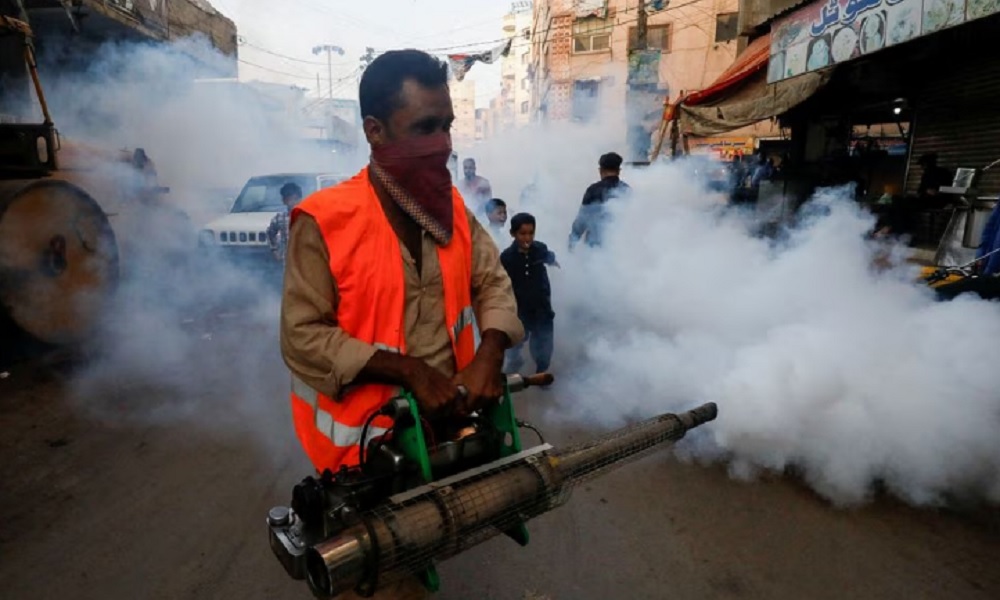
Dengue fever will become a major threat in the southern United States, southern Europe and new parts of Africa this decade, the WHO’s chief scientist said, as warmer temperatures create the conditions for the mosquitoes carrying the infection to spread.
The illness has long been a scourge in much of Asia and Latin America, causing an estimated 20,000 deaths each year. Rates of the disease have already risen eight-fold globally since 2000, driven largely by climate change as well as the increased movement of people and urbanization, Reuters reported.
Many cases go unrecorded, but in 2022 4.2 million cases were reported worldwide and public health officials have warned that near-record levels of transmission are expected this year. Bangladesh is currently experiencing its worst-ever outbreak, with more than 1,000 deaths.
“We need to talk much more proactively about dengue,” Jeremy Farrar, an infectious diseases specialist who joined the World Health Organization in May this year, told Reuters.
“We need to really prepare countries for how they will deal with the additional pressure that will come… in the future in many, many big cities.”
Farrar previously spent 18 years working in Vietnam on tropical diseases including dengue. He later headed up the Wellcome Trust global health charity and advised the UK government on its COVID-19 response before joining the WHO in May this year.
Farrar said the infection is likely to “take off” and become endemic in parts of the United States, Europe and Africa – all regions where there has already been some limited local transmission – as global warming makes new areas hospitable to the mosquitoes that spread it. That will put acute pressure on hospital systems in many countries, he warned.
“The clinical care is really intensive, it requires a high ratio of nurses to patients,” he said. “I really worry when this becomes a big issue in sub-Saharan Africa.”
Most people who get dengue do not have symptoms, meaning case rates are thought to be far higher than the reported numbers. Those who do can experience fever, muscle spasms and joint pain so severe it is known as “break-bone fever.” In severe cases – less than 1% – it can be fatal.
There is no specific treatment for dengue, although there is a vaccine available. Earlier this week, the WHO recommended Takeda Pharmaceuticals’ Qdenga vaccine for children aged 6 to 16 in areas where the infection is a significant public health problem.
Qdenga is also approved by the EU regulator, but Takeda withdrew its application in the United States earlier this year, citing data collection issues. Takeda said it was still in talks with the U.S. Food and Drug Administration about the vaccine.
Preparing new regions of the world to deal with dengue means ensuring that any public health funds get spent in the right areas, Farrar said, including on the best way to control the mosquito.
Dengue is spread by infected Aedes aegypti mosquitoes, which behave differently to the malaria-carrying kind. For example, they bite people indoors, and they bite all day rather than overnight. They also breed in very shallow water.
Farrar said proper prevention would include triaging plans for hospitals as well as scientific innovation alongside other key factors, such as urban planning, to avoid areas of standing water near or in houses.
“We need to combine different sectors that are not used to working together,” he said.



Health
Kandahar Red Crescent: More than 3,000 mental health patients treated in five years
Doctors said patients considered a serious danger to society are kept at the center on a permanent basis and receive regular treatment.
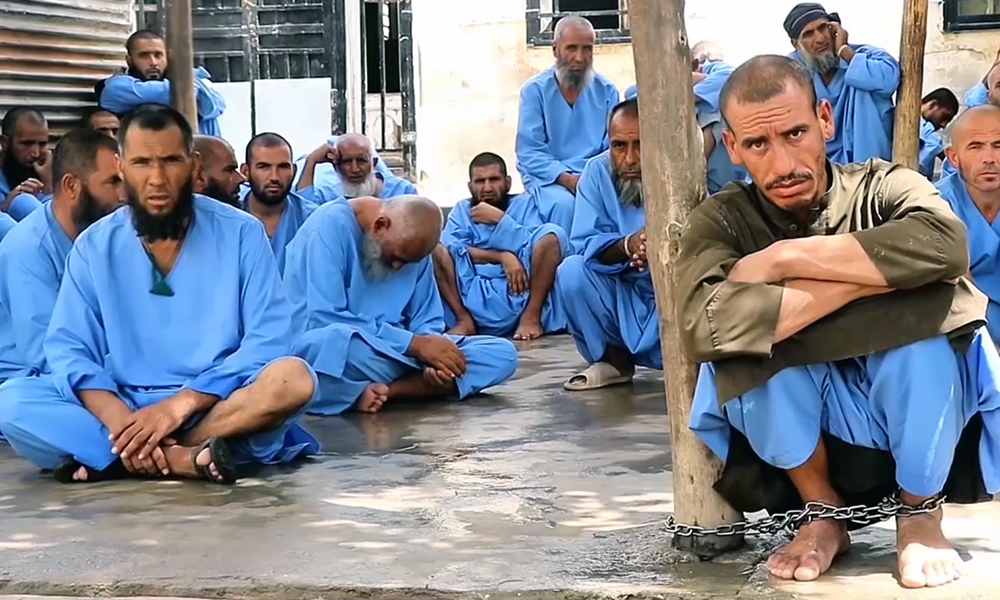
The Kandahar branch of the Afghan Red Crescent Society says more than 3,000 mental health patients, including men and women, have received treatment at home across southern Afghanistan over the past five years.
Officials said 405 patients were also treated at the Afghan Red Crescent’s mental health treatment center in Kandahar and returned to their homes. The center is the only facility in southern Afghanistan providing treatment to mental health patients from the region.
According to officials, during the past five years, 1,936 male and 1,331 female mental health patients received treatment at their homes.
Currently, 158 patients, including men and women who pose a risk to themselves or others, are being kept and treated at the center, while treatment for another 804 patients is continuing at their homes.
Doctors said patients considered a serious danger to society are kept at the center on a permanent basis and receive regular treatment.
Meanwhile, some patients who were previously brought to the center in poor condition are now recovering and have expressed satisfaction with the services they have received.
The development comes as officials from the Red Crescent’s southern regional branch say mental health problems linked to poverty and family difficulties are increasing.
Despite the challenges, they said efforts are underway to expand mental health services so that more patients can receive treatment.
Health
Health minister visits Belarus to expand medical cooperation
Belarusian Deputy Health Minister welcomed Jalali and his delegation, describing the visit as an important step toward strengthening health cooperation between Afghanistan and Belarus.
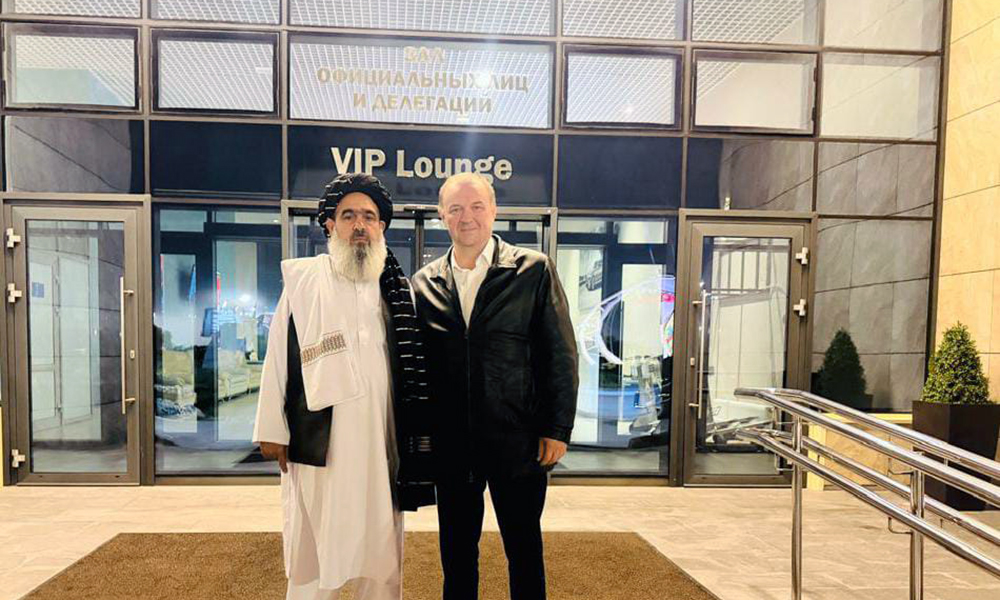
Afghanistan’s Minister of Public Health, Noor Jalal Jalali, has travelled to Belarus at the head of a delegation to strengthen health cooperation and exchange medical expertise between the two countries.
According to Afghanistan’s Ministry of Public Health, the visit will focus on expanding bilateral cooperation, reviewing Belarus’s healthcare institutions and sharing experience in medical services and specialized healthcare.
Belarusian Deputy Health Minister Barys Andrasyuk welcomed Jalali and his delegation, describing the visit as an important step toward strengthening health cooperation between Afghanistan and Belarus.
During the visit, Jalali is expected to meet with senior officials at Belarus’s Ministry of Health and visit several medical and research institutions, including the Belarusian State Medical University, a state pharmaceutical production company, specialized cardiac and oncology centers, the Republican Centre for Hygiene and Epidemiology, and an emergency clinical hospital.
The two sides are also expected to discuss cooperation in medical education, healthcare services, pharmaceutical production and specialized treatment, as well as opportunities to expand technical exchanges.
The visit comes as Afghanistan seeks to expand international cooperation in the health sector and improve access to medical expertise, training and pharmaceutical resources.
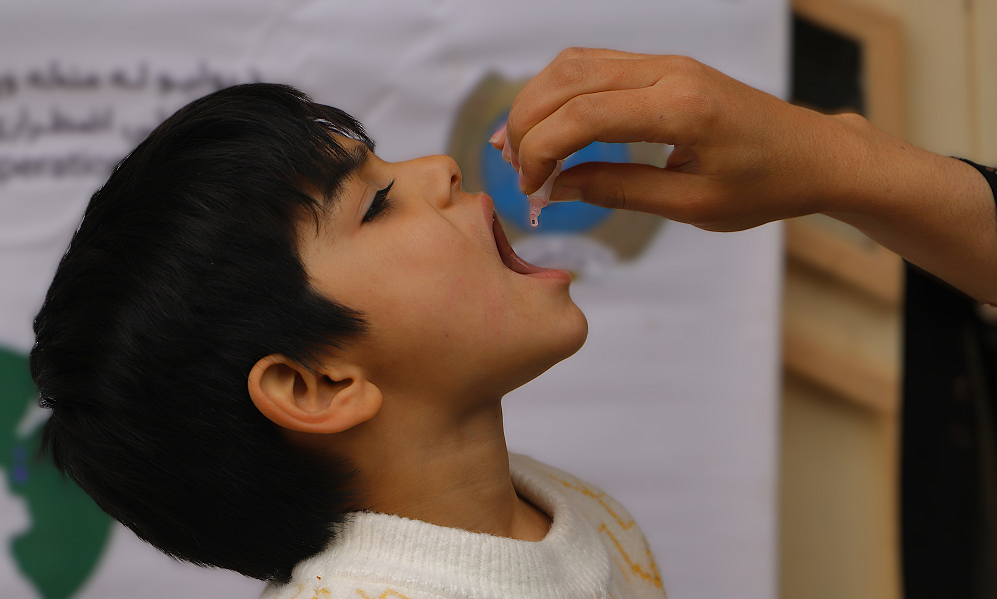
A nationwide polio vaccination campaign got underway across Afghanistan on Monday.
The four-day campaign aims to vaccinate around 12.77 million children under the age of five against polio.
Officials said the campaign is aimed at strengthening protection for children against polio and preventing the spread of the virus.
However, in the southern zone of the country, the polio vaccination campaign will begin one day later, on Tuesday, to ensure better implementation.
According to the information provided, Afghanistan has conducted one nationwide and two sub-national polio vaccination campaigns so far this year. The current campaign is the fourth of the year. In addition, localized campaigns and public awareness programs have also been carried out.
Officials said some environmental samples linked to the polio virus have tested positive. However, the Ministry of Public Health has not so far confirmed any human cases of polio.
According to officials, investigations into suspected cases are ongoing, and information on confirmed human cases will be shared once the assessments are completed and sufficient evidence is available.


Kandahar Red Crescent: More than 3,000 mental health patients treated in five years

Russia accuses West of double standards over deportation of Afghans

Afghanistan on climate front line as Kabul faces groundwater warning

US Afghanistan War Commission meets Asim Munir over Pakistan’s role in conflict

EU appoints Nicola Bellomo as new chargé d’affaires in Afghanistan

Saudi energy group signs major Afghanistan deals covering gas exploration and pipeline plans

Iranian clubs to face Gulf opponents at neutral venues in Asian Champions League Elite

Khalilzad: Afghanistan ready to attract major investment

Ariana Television Network secures exclusive rights to Afghanistan’s 2026/27 cricket series

Afghanistan drawn in Group A of AFC U17 Asian Cup qualifiers

Saar: Afghanistan’s image at UNGA

Saar: Concerns over Pakistan’s political crisis discussed

Exclusive interview with Abdul Latif Mansoor, Minister of MRRD

Tawsia: Overview of Afghanistan’s iron mines

Tahawol: Discussion on fresh Pakistani airstrikes on Afghanistan
-

 Sport2 days ago
Afghan bodybuilder Ali Bilal finishes runner-up at Mr Olympia for third straight year
-
 Latest News2 days ago
Afghanistan says 28 killed, 32 captured in Nuristan operation
-
 World2 days ago
Trump rejects Iranian proposal to open Hormuz and end fighting
-

 Sport3 days ago
Afghanistan to face India in Asian Games cricket quarter-final
-
 Latest News5 days ago
Khalilzad warns Pakistan-Afghanistan tensions likely to worsen after fresh airstrikes
-

 Latest News3 days ago
Khalilzad questions Pakistan’s commitment to Afghan welfare
-

 Sport4 days ago
Afghanistan Champions League: Arman FC and Aino Mina play out goalless draw
-

 World3 days ago
Iran awaits US move after WSJ report says Trump rejects peace plan