
Latest News
Reactions over Pakistan’s forced deportations of Afghan immigrants

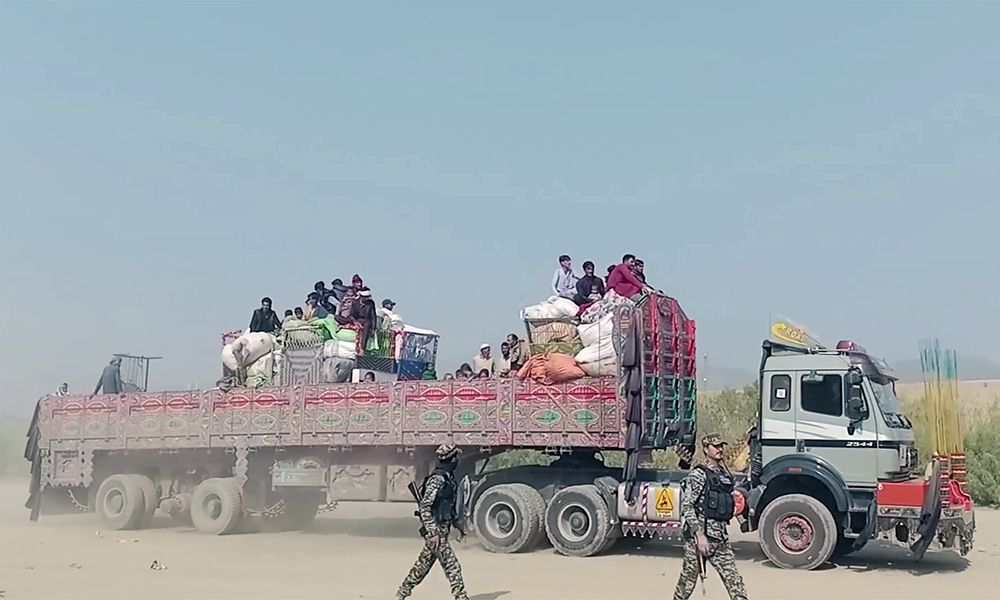
The forced deportation of Afghan immigrants from Pakistan has faced various reactions across the country.
Residents of Balkh, Jawzjan and Sar-e-Pul provinces condemn the expulsion of Afghan immigrants from Pakistan, asking Islamabad to stop this process and let Afghan immigrants leave this country gradually.
Pakistan’s action to forcibly deport Afghan immigrants has triggered the anger of Afghan citizens.
“Pakistan has violated international law with this action. Now that the immigrants are returning from Pakistan, we appreciate and welcome them,” said Nawed, a resident of Balkh.
In the meantime, with the arrival of the cold season, another concern is that the migrants will face serious challenges and need cooperation.
“The cold season is approaching and life is getting difficult, and we ask the government to take care of the migrants,” said Ziba Aminyan, a resident of Balkh.
Residents of Jawzjan and Sar-e-Pul provinces also said that they are ready to cooperate with the returnees.
“We ask the aid organizations and the Islamic Emirate to provide work, clothes, food and shelter for the returnees,” said Ghulam Sakhi Frootan, said Sar-e-Pul resident.
“The forced deportation of immigrants from Pakistan is an un-Islamic and inhumane act and is against the culture of neighborliness. I request all my compatriots to stand by their deported compatriots in this difficult situation and ask them to support them in every way and stand beside them,” said Juma Khan, a resident of Jawzjan.
Simultaneously, Balkh province’s directorate of refugees said that they are prepared to deal with returning migrants from Pakistan.
“For all returning migrants, we assure them that the Islamic Emirate is at their service and provides them with work and shelter,” said Asadullah Wafa, head of Balkh’s migrant affairs.
The process of forced deportation of immigrants has also faced international reactions, from the United Nations to other human rights institutions. Everyone has clearly said that Pakistan should stop the current process of deportation.
Although the residents of the northeastern provinces of the country welcome the return of Afghan immigrants from Pakistan, they consider Pakistan’s policy towards immigrants a wrong, inhumane and hasty.
“The Islamic Emirate should provide shelter for the returnees because they are Afghans and should return to Afghanistan,” said Abbas, a resident of Takhar.
“Afghanistan is currently safe. I ask the Afghan immigrants to return to their country,” said Safan, a resident of Takhar.
Residents of the Northeast ask people to help the immigrants who return from Pakistan with coordination, like they gave a handful of hands to the Herat earthquake victims, so that they do not feel indifferent in their homeland.
“We are asking the current government of Afghanistan to create jobs for the immigrants, and just as they took the hands of the Herat earthquake victims, now is the time to take the hands of the immigrants,” said Dawood Ahmadi, a resident of Takhar.
“Pakistan has imposed a restriction on Afghan immigrants that they can only carry 50,000 Pakistani rupees with them when they return,” said Ahmadullah, a resident of Takhar.
The residents of Kunduz and Badakhshan provinces welcome the return of the migrants and call on the IEA and aid institutions to cooperate with them.
In Herat, the residents have also reacted to the wave of deportations of Afghan immigrants from Pakistan. They say that in a situation where the neighboring countries need to be more humble with the Afghan people and help them, they make the current crisis in the country worse.
Some experts also say that the process of deporting Afghan immigrants from Pakistan deepens the humanitarian crisis in Afghanistan. It is necessary for the interim administration of Pakistan to show flexibility and deal with the Afghan immigrant community in accordance with international conventions.
One month ago, the government of Pakistan announced that it would deport illegal immigrants from the country, now this process has officially started.












Kazakhstan’s Foreign Minister Mukhtar Tileuberdi has called for pragmatic and coordinated international engagement with Afghanistan, saying the country’s long-term stability is closely linked to the security and sustainable development of Central Asia.
Speaking during the general debate of the 81st session of the United Nations General Assembly in New York on Friday, Tileuberdi said humanitarian assistance to Afghanistan remains essential but alone cannot break the cycle of poverty, displacement and dependency.
He said Kazakhstan supports a “pragmatic, coordinated and step-by-step” approach to international engagement with Afghanistan, with the United Nations playing a central role.
Tileuberdi also said Kazakhstan is working with the UN to operationalize the United Nations Regional Centre for the Sustainable Development Goals for Central Asia and Afghanistan in Almaty.
He said the success of the centre should be measured by the results and assistance it delivers to the region.


Abu Muslim Farah defeat Khurasan Faryab 2-0 in ACL season six

Saar: Concerns over Pakistan’s political crisis discussed

Afghanistan Champions League: Omar Zawak Herat beat Toofan Herat 1-0

Blast in Pakistan’s Dera Ismail Khan kills 11, injures 30

Ariana Afghan Airlines increases Kabul-Delhi cargo flights

Saudi energy group signs major Afghanistan deals covering gas exploration and pipeline plans

Trump floats idea of renaming Atlantic or Pacific Ocean

US hits Egyptian bank branches with Iran sanctions as war marks six months

Nepal flood rescue mission enters critical phase as thousands remain missing

Iranian clubs to face Gulf opponents at neutral venues in Asian Champions League Elite
Saar: Concerns over Pakistan’s political crisis discussed

Exclusive interview with Abdul Latif Mansoor, Minister of MRRD

Tawsia: Overview of Afghanistan’s iron mines

Tahawol: Discussion on fresh Pakistani airstrikes on Afghanistan

Saar: Calls for international support for Afghanistan discussed
-

 World5 days ago
CNN, MS NOW and Politico sue Trump, challenging White House ban
-

 Latest News3 days ago
Ariana Afghan Airlines ranks seventh among 45 Central Asian airlines
-

 Latest News5 days ago
UN reiterates call for respect for international law after Kunar airstrikes
-

 Regional4 days ago
US and Iran hold first talks since June after Trump’s ‘annihilation’ threat
-

 Latest News4 days ago
Silk Road highway in Wakhan corridor now reaches the China border
-

 Regional3 days ago
Iran airlines cancel flights as US sanctions hit
-

 Latest News5 days ago
Afghan Official: Pakistan’s airstrikes will not go unanswered
-

 Sport5 days ago
Afghan boxing referee heads to China for international festival