
Latest News
WFP says aid cuts to Afghanistan leave millions hungry this winter

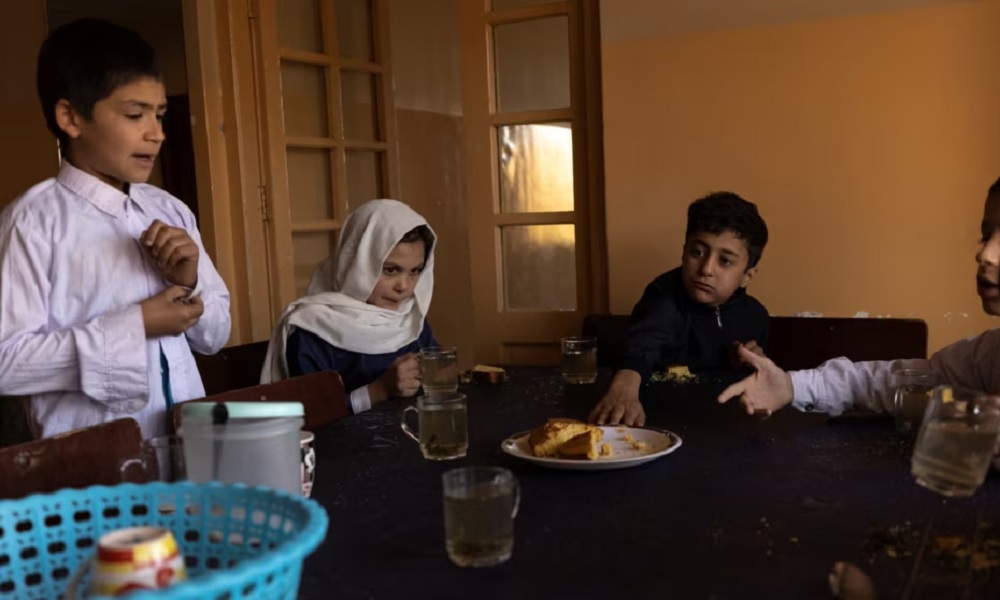
The head of the World Food Programme in Afghanistan says the agency can only feed half the millions of Afghans in need after cuts in international aid and an impending freeze in U.S. foreign funding.
Many people were living on just “bread and tea”, WFP Country Director Hsiao-Wei Lee told Reuters.
Afghanistan was tipped to the brink of economic crisis in 2021 as the Islamic Emirate took over and all development and security assistance to the country was frozen, with restrictions also placed on the banking sector.
Since then humanitarian aid – aimed at funding urgent needs through non-profit organisations and bypassing government control – has filled some of the gap. But donors have been cutting steadily in recent years, concerned by IEA restrictions on women, including their order that Afghan female NGO employees stop work, and competing global crises.
Lee told Reuters shortly before finishing her three-year term in Afghanistan that funding cuts had meant that roughly half the 15 million Afghans in acute need of food were not receiving rations during this year’s harsh winter.
“That’s over 6 million people who are probably eating one or two meals a day and it’s just bread and tea,” she said in an interview on Saturday. “Unfortunately this is what the situation looks like for so many that have been removed from assistance.”
Afghanistan’s humanitarian plan was only just over half funded in 2024, according to U.N. data, and aid officials have flagged fears this could fall further this year.
The U.S. State Department issued a “stop-work” order on Friday for all existing foreign assistance and paused new aid, according to a cable reported by Reuters, after President Donald Trump ordered a pause to review if aid allocation was aligned with his foreign policy.
It was not immediately clear how that would impact Afghanistan’s humanitarian operations, which in 2024 were over 40% funded by the United States, the largest donor.
“I think any potential reduction in assistance for Afghanistan is of course concerning…whether it is assistance to WFP or another actor,” Lee said.
“The levels of need are just so high here in Afghanistan. I certainly hope that any decisions made, any implementation of decisions made take into consideration the needs of the people – the women, the children,” she said.
Western diplomats and humanitarian officials have said aid is dropping to Afghanistan in part due to global emergencies in Sudan, Ukraine and Gaza and also because of concerns with IEA restrictions on women.
Lee said the operating environment had been a “rollercoaster” in the last three years, but that WFP was trying to prove to donors concerned about the plethora of restrictions on women that they were still reaching female beneficiaries and their children with aid.












Kazakhstan’s Foreign Minister Mukhtar Tileuberdi has called for pragmatic and coordinated international engagement with Afghanistan, saying the country’s long-term stability is closely linked to the security and sustainable development of Central Asia.
Speaking during the general debate of the 81st session of the United Nations General Assembly in New York on Friday, Tileuberdi said humanitarian assistance to Afghanistan remains essential but alone cannot break the cycle of poverty, displacement and dependency.
He said Kazakhstan supports a “pragmatic, coordinated and step-by-step” approach to international engagement with Afghanistan, with the United Nations playing a central role.
Tileuberdi also said Kazakhstan is working with the UN to operationalize the United Nations Regional Centre for the Sustainable Development Goals for Central Asia and Afghanistan in Almaty.
He said the success of the centre should be measured by the results and assistance it delivers to the region.


Abu Muslim Farah defeat Khurasan Faryab 2-0 in ACL season six

Saar: Concerns over Pakistan’s political crisis discussed

Afghanistan Champions League: Omar Zawak Herat beat Toofan Herat 1-0

Blast in Pakistan’s Dera Ismail Khan kills 11, injures 30

Ariana Afghan Airlines increases Kabul-Delhi cargo flights

Saudi energy group signs major Afghanistan deals covering gas exploration and pipeline plans

Trump floats idea of renaming Atlantic or Pacific Ocean

US hits Egyptian bank branches with Iran sanctions as war marks six months

Nepal flood rescue mission enters critical phase as thousands remain missing

Iranian clubs to face Gulf opponents at neutral venues in Asian Champions League Elite
Saar: Concerns over Pakistan’s political crisis discussed

Exclusive interview with Abdul Latif Mansoor, Minister of MRRD

Tawsia: Overview of Afghanistan’s iron mines

Tahawol: Discussion on fresh Pakistani airstrikes on Afghanistan

Saar: Calls for international support for Afghanistan discussed
-

 World5 days ago
CNN, MS NOW and Politico sue Trump, challenging White House ban
-

 Latest News3 days ago
Ariana Afghan Airlines ranks seventh among 45 Central Asian airlines
-

 Latest News4 days ago
UN reiterates call for respect for international law after Kunar airstrikes
-

 Regional3 days ago
US and Iran hold first talks since June after Trump’s ‘annihilation’ threat
-

 Latest News3 days ago
Silk Road highway in Wakhan corridor now reaches the China border
-

 Latest News5 days ago
Afghan Official: Pakistan’s airstrikes will not go unanswered
-

 Sport4 days ago
Afghan boxing referee heads to China for international festival
-
 Regional5 days ago
G7 foreign ministers call on Iran to stop arming Houthis