
Latest News
CSTO member countries concerned over terrorism threat to Central Asia from Afghanistan
Armenia, Belarus, Kazakhstan, Kyrgyzstan, Russia, and Tajikistan make up the CSTO, with Tajikistan playing a key role in ensuring security in the area.

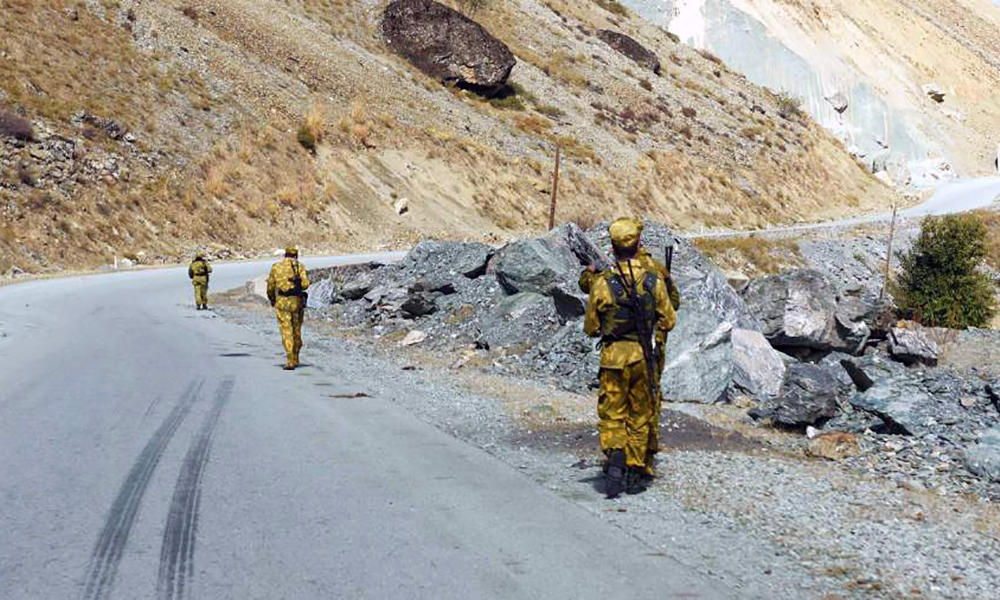
The Collective Security Treaty Organization (CSTO) has expressed concern about what they claim is growing threats in provinces in northern Afghanistan that border Central Asian countries.
Natalia Kharitonova, press secretary of the CSTO secretariat, told Russia’s Izvestia news outlet that the territory of Afghanistan remains a source of challenges related to terrorism, extremism, and drug crimes.
According to her, Tajikistan is ready to begin the first stage of the CSTO program to strengthen the Tajik-Afghan border.
However, she stated that the removal of the Islamic Emirate from Russia’s list of terrorist organizations may encourage Kabul to work more closely with neighboring countries to combat terrorism.
Armenia, Belarus, Kazakhstan, Kyrgyzstan, Russia, and Tajikistan make up the CSTO, with Tajikistan playing a key role in ensuring security in the area.
The CSTO program to strengthen the Tajik-Afghan border was first adopted by the CSTO in 2024. There are three phases.
The first phase involves Tajikistan, as the coordinator of the program, assessing the capabilities of the Member Countries in the production of weapons and technical means for border protection.
Once this is completed, CSTO members will select funding sources and finalize contracts. Deliveries are already planned for 2026-2027, the CSTO confirmed.
The third phase, which runs from 2027 to 2029, involves the practical provision of security along the entire section of the Tajik-Afghan border, which stretches for 1,300 km. Actual details on this phase have not yet been revealed.
However, Omar Nessar, a researcher at the Institute of Oriental Studies of the Russian Academy of Sciences, told Izvestia that the task of actually securing the border will probably be Russia’s responsibility as it has a large military base in Tajikistan.
On April 11, the Secretary General of the organization, Imangali Tasmagambetov, met in Dushanbe with the President of Tajikistan, Emomali Rahmon, and other officials, including the Minister of Defense of Tajikistan and the Secretary of the Security Council.
This, and other recent visits, demonstrate the Tajik side’s willingness to implement the first and all subsequent phases of the program, Kharitonova told Izvestia.
She went on to say that the organization has detected groups of militants operating from inside Afghanistan, along the Tajik border.
According to her, these are international militant groups such as Jundallah, the East Turkestan Islamic Movement and ISIS (Daesh).
Izvestia reported that the situation has become a lot more complicated since the change in power in Syria as several hundred militants from Central Asia were released from Syrian prisons. Hundreds made their way to the Afghan border area with Tajikistan, she said.
However, Omar Nessar believes that the situation on the border is stable at the moment, but that it could change.
Nessar suggested that a move towards recognizing the Islamic Emirate could be seen as an incentive for the ruling government to work more closely with neighboring countries to combat terrorism.
The Islamic Emirate has however repeatedly stated that no foreign militant groups, or Daesh, operate out of Afghanistan. The IEA has said it will not allow any individual or group to threaten another country from Afghanistan soil.












Kazakhstan’s Foreign Minister Mukhtar Tileuberdi has called for pragmatic and coordinated international engagement with Afghanistan, saying the country’s long-term stability is closely linked to the security and sustainable development of Central Asia.
Speaking during the general debate of the 81st session of the United Nations General Assembly in New York on Friday, Tileuberdi said humanitarian assistance to Afghanistan remains essential but alone cannot break the cycle of poverty, displacement and dependency.
He said Kazakhstan supports a “pragmatic, coordinated and step-by-step” approach to international engagement with Afghanistan, with the United Nations playing a central role.
Tileuberdi also said Kazakhstan is working with the UN to operationalize the United Nations Regional Centre for the Sustainable Development Goals for Central Asia and Afghanistan in Almaty.
He said the success of the centre should be measured by the results and assistance it delivers to the region.


Abu Muslim Farah defeat Khurasan Faryab 2-0 in ACL season six

Saar: Concerns over Pakistan’s political crisis discussed

Afghanistan Champions League: Omar Zawak Herat beat Toofan Herat 1-0

Blast in Pakistan’s Dera Ismail Khan kills 11, injures 30

Ariana Afghan Airlines increases Kabul-Delhi cargo flights

Saudi energy group signs major Afghanistan deals covering gas exploration and pipeline plans

Trump floats idea of renaming Atlantic or Pacific Ocean

US hits Egyptian bank branches with Iran sanctions as war marks six months

Nepal flood rescue mission enters critical phase as thousands remain missing

Iranian clubs to face Gulf opponents at neutral venues in Asian Champions League Elite
Saar: Concerns over Pakistan’s political crisis discussed

Exclusive interview with Abdul Latif Mansoor, Minister of MRRD

Tawsia: Overview of Afghanistan’s iron mines

Tahawol: Discussion on fresh Pakistani airstrikes on Afghanistan

Saar: Calls for international support for Afghanistan discussed
-

 World5 days ago
CNN, MS NOW and Politico sue Trump, challenging White House ban
-

 Latest News4 days ago
Ariana Afghan Airlines ranks seventh among 45 Central Asian airlines
-

 Latest News5 days ago
UN reiterates call for respect for international law after Kunar airstrikes
-

 Regional4 days ago
US and Iran hold first talks since June after Trump’s ‘annihilation’ threat
-

 Latest News4 days ago
Silk Road highway in Wakhan corridor now reaches the China border
-

 Regional3 days ago
Iran airlines cancel flights as US sanctions hit
-

 Latest News5 days ago
Afghan Official: Pakistan’s airstrikes will not go unanswered
-

 Regional5 days ago
G7 foreign ministers call on Iran to stop arming Houthis