
World
Trump arrives in Britain for second state visit
On Wednesday, Trump and his wife, Melania, will be treated to British royal pageantry, including a carriage tour, a state banquet, a flypast by military aircraft and a gun salute.

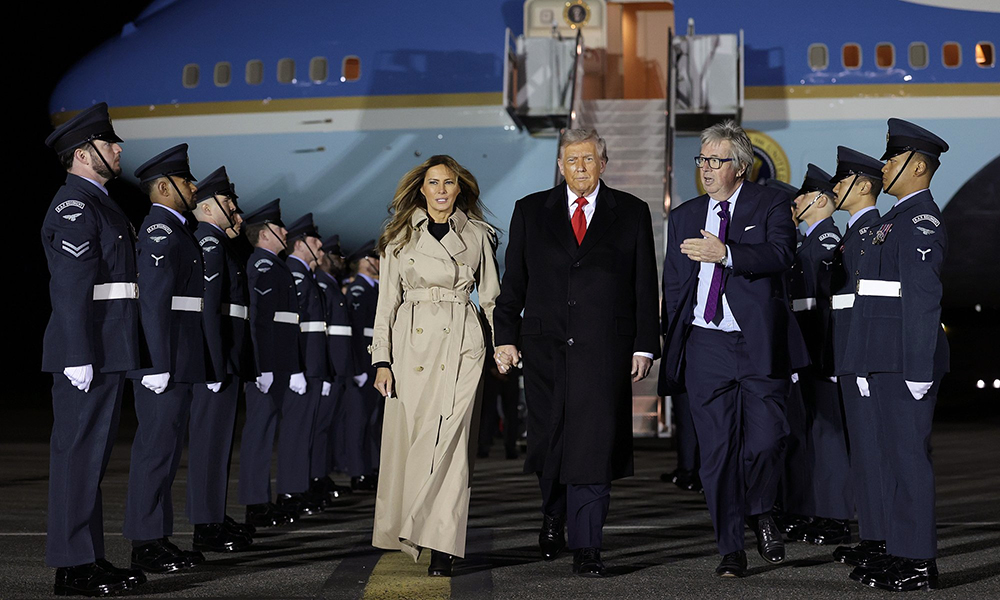
U.S. President Donald Trump arrived in Britain late on Tuesday for an unprecedented second state visit at which the two nations will seal investment deals, a renewal of a “special relationship” Prime Minister Keir Starmer is keen to champion, Reuters reported.
U.S. Treasury Secretary Scott Bessent and British finance minister Rachel Reeves led events before Trump’s arrival, announcing a “Transatlantic taskforce” to deepen work between two of the world’s largest financial centres.
Trump will then be greeted by King Charles on Wednesday, for a day of pomp at Windsor Castle, a regal show of soft power that Starmer hopes will offer him protection from possible pitfalls during the trip.
The visit should provide Trump with a diversion less than a week after a close ally, conservative activist Charlie Kirk, was shot dead, a killing that has appeared to affect the president deeply.
Starmer is also looking to turn the focus onto geopolitics and investment after enduring a tough couple of weeks that have undermined his authority. First he was forced to fire his deputy and then six days later his ambassador to the U.S., Peter Mandelson, over his ties to convicted sex offender Jeffrey Epstein.
Starmer wants to pitch Britain as a destination for U.S. investment, closely aligning its financial services, tech and energy sectors with larger U.S. peers to try to drive much-needed economic growth at home, read the report.
To that end, business executives including Nvidia Corp (NVDA.O), CEO Jensen Huang and OpenAI’s Sam Altman are due to attend, while billions of dollars of business deals are expected to be announced.
Micosoft (MSFT.O), said it would invest over $30 billion in Britain over the next four years, while Google said it would invest 5 billion pounds ($6.8 billion), partly on a new data centre close to London that would help meet demand for AI services.
A spokesperson for Starmer described the state visit as “a historic opportunity” coming “at a crucial time for global stability and security”.
“The prime minister will discuss the challenges that both our countries face, and the opportunities, as we enter a new era of our deep and unparalleled relationship,” the spokesperson told reporters.
Starmer will turn the focus to foreign affairs on Thursday when he hosts Trump at his Chequers country residence and will attempt to draw a line under his handling of the departures of his deputy, Angela Rayner, and Mandelson.
He gave both his full-throated support before being forced to let them go, prompting questions over his political judgment at a time when Nigel Farage’s populist Reform UK party holds a hefty lead the polls, read the report.
Mandelson’s ties to the late Epstein that led to his sacking could present Starmer with a tricky moment with Trump, whose administration had close ties to the former ambassador and whose own relationship with the financier has also come under scrutiny.
Starmer has justified his abrupt sacking of Mandelson last week by saying he was not aware of the depth of the ex-ambassador’s ties to Epstein and Trump has denied writing him a birthday letter which Democrats in the House of Representatives made public.
On Wednesday, Trump and his wife, Melania, will be treated to British royal pageantry, including a carriage tour, a state banquet, a flypast by military aircraft and a gun salute.
A day later, Starmer welcomes Trump to Chequers, a 16th century manor house in the southern English countryside, to discuss investment, tariffs on steel and aluminium, ending Russia’s full-scale invasion of Ukraine and the situation in Gaza.
Both nations will have sizeable delegations and will be largely protected from planned anti-Trump protests. U.S. Secretary of State Marco Rubio was greeted by Britain’s newly-appointed foreign minister, Yvette Cooper, when he arrived on Tuesday.






World
Israel’s Netanyahu says Iran tried to kill one of his sons
It was not immediately clear which of his sons he was referring to. Netanyahu’s elder son, Yair, lives in Miami.
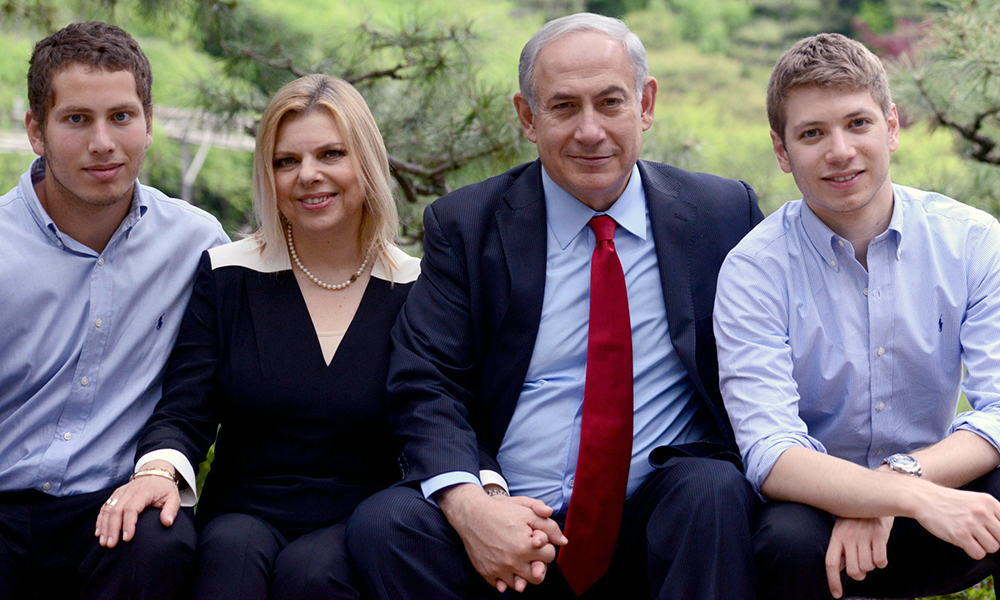
Israeli Prime Minister Benjamin Netanyahu said on Monday that Iran had tried to kill one of his sons, but gave no details about when the alleged plot took place, which son was targeted or how close it came to being carried out, Reuters reported.
Netanyahu’s allegation underscores the heightened tensions since the U.S.-Israeli war on Iran began in February, during which Supreme Leader Ayatollah Ali Khamenei and other senior Iranian leaders were killed.
Netanyahu, whose coalition is trailing in opinion polls two months before an October 27 general election, made the claim in a telephone interview with Israel’s Channel 14. He was responding to reports that one of Israel’s security agencies had refused to provide protection for a political rival ahead of the nationwide vote.
“As for my sons. Here, I think there is something quite unbelievable, yes. Iran targeted one of my sons. Iran tried to kill, to murder one of my sons,” Netanyahu told the conservative channel known for its favourable coverage of the government.
“Iran tried to murder one of my sons, and therefore this security protection is not a luxury,” he said, without providing any further details about the alleged plot or how close it came to being carried out.
It was not immediately clear which of his sons he was referring to. Netanyahu’s elder son, Yair, lives in Miami.
Iran’s mission at the United Nations in New York did not immediately respond to a request for comment on the accusation.
Netanyahu also said he had told the Shin Bet security agency chief David Zini that appropriate security should be provided for any prime ministerial candidate.
Israeli media had reported earlier that Zini declined to provide security for Gadi Eisenkot and told the country’s election authority there was no plot to harm him, read the report.
Eisenkot’s party is projected to win the largest number of seats in the election, although Israeli governments are usually formed through coalitions among multiple parties rather than by a single party winning a parliamentary majority outright.
World
Norway to give over $9 billion to Ukraine in 2027
Norwegian Prime Minister Jonas Gahr Stoere and leaders from across the Nordic and Baltic region are visiting Kyiv on Sunday in a show of support for Ukraine in the war with Russia.
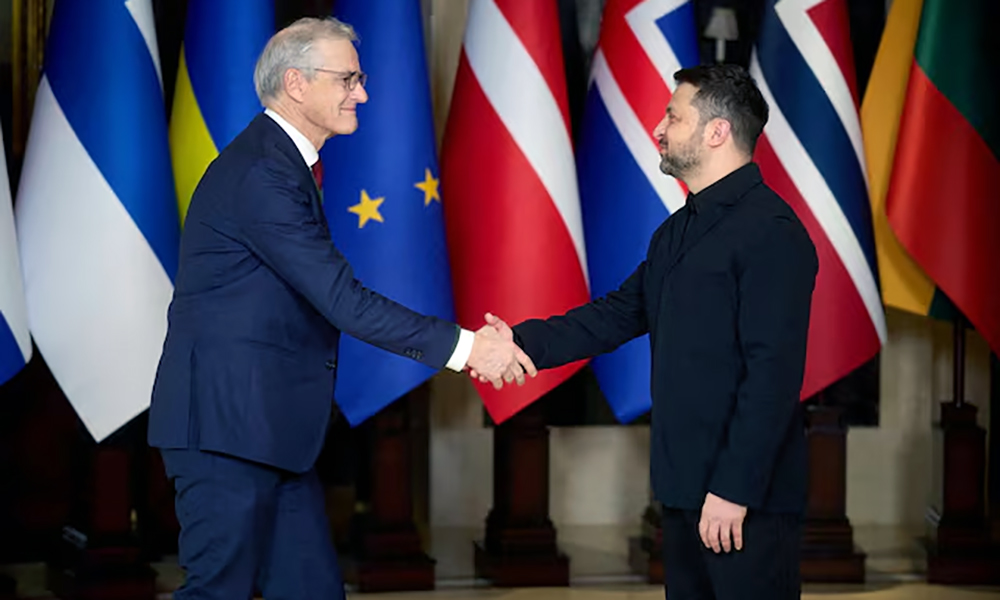
Norway plans to give another 85 billion Norwegian crowns ($9.2 billion) in financial support to Ukraine in the 2027 fiscal year, in line with the amount given in 2026, the Nordic country’s government said in a statement on Sunday.
Norwegian Prime Minister Jonas Gahr Stoere and leaders from across the Nordic and Baltic region are visiting Kyiv on Sunday in a show of support for Ukraine in the war with Russia.
Norway plans to give another 85 billion Norwegian crowns ($9.2 billion) in financial support to Ukraine in the 2027 fiscal year, in line with the amount given in 2026, the Nordic country’s government said in a statement on Sunday.
Norwegian Prime Minister Jonas Gahr Stoere and leaders from across the Nordic and Baltic region are visiting Kyiv on Sunday in a show of support for Ukraine in the war with Russia.
Russia and Ukraine are both ramping up drone campaigns aiming to cripple each other’s economic infrastructure, often striking targets far beyond the frontlines of the war started by Moscow, as fighting on the battlefield grinds toward the 4-1/2-year mark.
World
Israel strikes southern Syria; Damascus condemns attack
Israeli troops continue to operate in southern Syria, and Israel occupies territory in southwest Syria it seized after the toppling of Bashar al-Assad in December 2024.
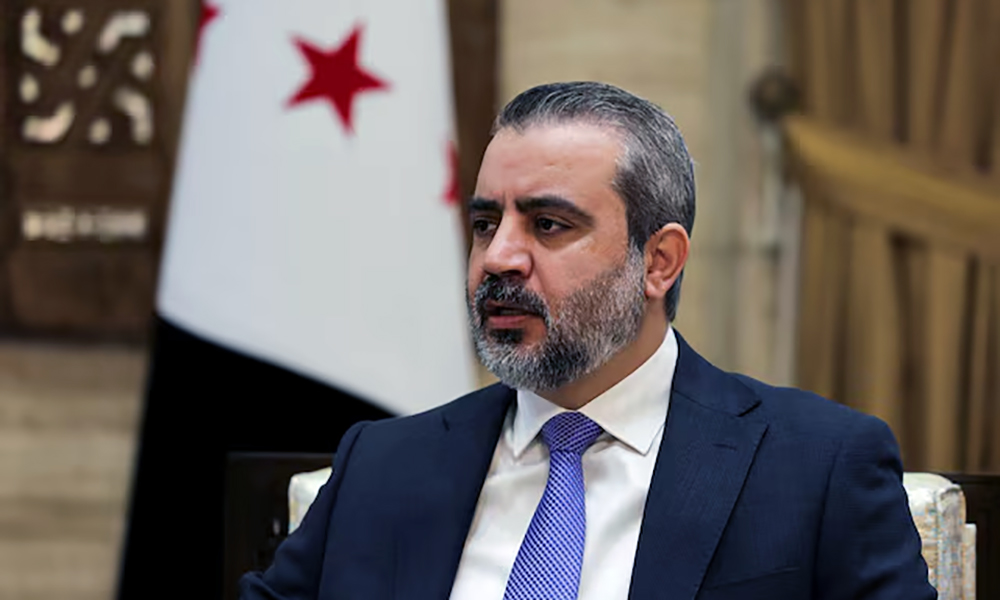
Israel said it targeted a “terrorist” in southern Syria on Saturday in what Syria’s foreign ministry said was a drone strike on a civilian vehicle on the outskirts of Damascus in a “blatant” violation of its territory.
The Syrian foreign ministry said the drone had hit a civilian car on a road near Beit Jinn village in the countryside west of the capital, which caused injuries amongst civilians.
Syrian state TV reported one person was injured.
The Israeli military said in a statement that it fired in southern Syria toward what it described as a terrorist, whose activity posed an immediate threat to its soldiers. It did not say how it fired.
Tensions between Israel and Syria flared up this week after Israel bombed an airbase in the northwest on Tuesday, an escalation U.S. special envoy to Syria, Tom Barrack, called “unnecessary.”
Syria’s foreign ministry said the strike was part of a pattern of repeated Israeli attacks on Syrian territory, and was a “blatant violation” of its sovereignty. It held Israel accountable for the consequences of such actions.
Israeli troops continue to operate in southern Syria, and Israel occupies territory in southwest Syria it seized after the toppling of Bashar al-Assad in December 2024.


Tahawol: Aisha Wahab’s emphasis on US ties with IEA

Muttaqi discusses expanding economic ties with Kuwait’s Al-Sayer Group

Saar: Guterres’s concern regarding global conflicts discussed

Germany deports 30 Afghan refugees to Kabul

Pakistan and Iran make significant progress in talks on Iran conflict

Pakistan’s governance system has ‘collapsed’: Mohsin Naqvi

Afghanistan exports first stone shipment to US in $100,000 trade milestone

AFC confirms clubs for 2026/27 competitions; draw set for August 18

Only two days to go before Afghanistan and Ireland begin ODI series

Iran seeks to establish free trade zone with Afghanistan and China
Tahawol: Aisha Wahab’s emphasis on US ties with IEA
Saar: Guterres’s concern regarding global conflicts discussed

Saar: Afghanistan’s uncertain future in SCO

Tahawol: IEA seeking Afghanistan seat at UN

Saar: U.S. sanctions against Iran
-
 Latest News2 days ago
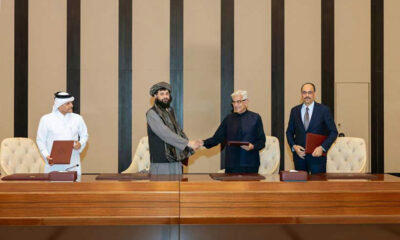
Four mediators struggle to secure lasting Pakistan-Afghanistan ceasefire
-
 Latest News4 days ago
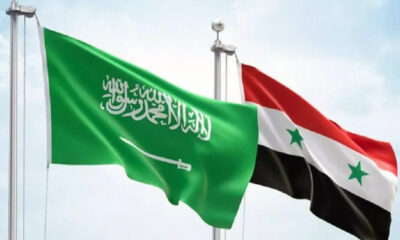
Syria and Saudi Arabia condemn Kabul bombing, express solidarity with Afghanistan
-
 Latest News4 days ago
US judge strikes down Trump visa suspension for 75 countries, including Afghanistan
-
 Latest News4 days ago
Achakzai urges Pakistan to end hostility towards Afghanistan
-

 Sport4 days ago
Afghanistan-India T20I series could see major schedule change
-
 Latest News5 days ago
Qatar and UAE condemn Kabul school bombing that injured dozens
-
 Business2 days ago
Afghanistan’s trade diversification challenges Pakistan
-
 Latest News3 days ago
AfghanEvac warns US court ruling does not reopen door for Afghans