
Latest News
Afghanistan faces worsening humanitarian crisis after deadly quake and drought
Roads, communication networks, and health centers were severely damaged, leaving many areas cut off from assistance.


Afghanistan is confronting one of its most severe humanitarian emergencies in recent years, as a deadly earthquake and worsening drought devastate communities already struggling with poverty, displacement, and dwindling international aid.
A powerful earthquake struck eastern Kunar Province near the Pakistan border on August 31, 2025, killing nearly 2,000 people and injuring more than 3,600. The 6.0-magnitude tremor, which hit just before midnight, flattened or damaged more than 8,500 homes and affected an estimated 60,000 people across mountain districts.
Roads, communication networks, and health centers were severely damaged, leaving many areas cut off from assistance.
In the immediate aftermath, the Islamic Emirate of Afghanistan (IEA) and humanitarian partners launched emergency operations, including search-and-rescue efforts, road clearance, and medical evacuations. Relief agencies quickly deployed food, water, and temporary shelter to affected families, while 25 inter-agency teams carried out rapid needs assessments across Kunar and neighboring provinces.
To sustain the emergency response, the Central Emergency Response Fund (CERF) and Afghanistan Humanitarian Fund (AHF) jointly released $10 million on September 1, allowing aid groups to expand life-saving support. Despite continued aftershocks and blocked access routes, coordination improved once UNHAS helicopters resumed flights in mid-September.
Recognizing the scale of the crisis, Indrika Ratwatte, the UN Humanitarian Coordinator for Afghanistan, launched a $139.6 million emergency response plan on September 9 to assist nearly half a million people through the end of 2025.
“We are in a race against time to deliver winter supplies before the cold sets in,” Ratwatte said, calling for renewed international solidarity with the Afghan people.
Multiple crises converging
The earthquake struck as Afghanistan faces multiple, overlapping emergencies. A severe drought, now considered one of the worst in 50 years, has destroyed rain-fed crops and parched farmlands across the north and central regions. According to the Food and Agriculture Organization (FAO), up to 50% of irrigated land has been damaged, while rain-fed wheat has almost completely failed.
In Faryab Province, farmers say they have never witnessed such devastation. “In my lifetime, I have never seen such a drought. We have lost all hope,” said Kohistani, a 75-year-old farmer in Kohistan District, where wells have dried and families are leaving their villages.
Despite the hardship, local communities are finding ways to adapt. Small-scale irrigation systems, cold storage for crops, and vocational training in trades such as carpentry and mechanics are being introduced to build climate resilience and provide alternative incomes. As one Afghan proverb reminds: “Drop by drop, a river becomes.”
The crisis unfolds at a time when global humanitarian funding is at its lowest in years. Nearly half of Afghanistan’s population still depends on aid for survival, while more than 1.4 million Afghan refugees in Pakistan face uncertainty following the expiration of registration cards and pressure to return home.


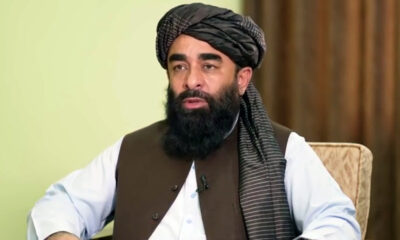


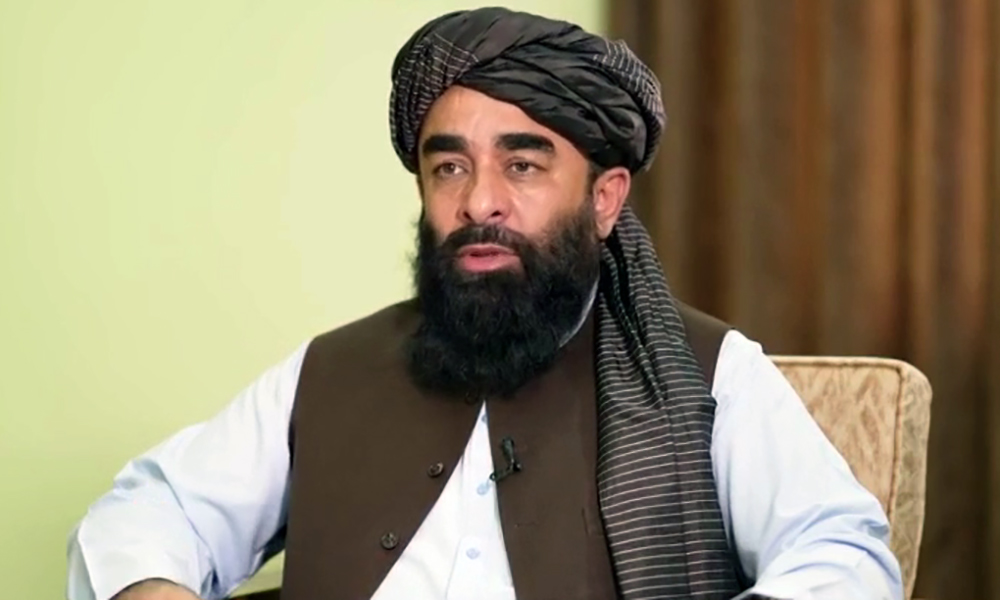
Zabihullah Mujahid, spokesman of the Islamic Emirate of Afghanistan (IEA), has said that Afghanistan wants to strengthen ties with Saudi Arabia, praising the Kingdom’s role in reconstruction and in promoting peace and stability in the country.
In an interview with Al Arabiya English, Mujahid said Afghanistan wants continued dialogue and cooperation with Pakistan and would welcome a broader role for Saudi Arabia in helping resolve disputes between the two countries.
Mujahid said security challenges involving the Tehreek-e-Taliban Pakistan (TTP), Baloch groups and others had existed in Pakistan for years and should be addressed internally rather than blamed on Afghanistan.
He also said Afghanistan does not allow the TTP to operate on its territory and does not support armed groups or permit Afghan soil to be used against other countries.
Mujahid warned that Afghanistan would defend itself and deliver a “crushing response” if Pakistan violated Afghan territory under the pretext of self-defense.
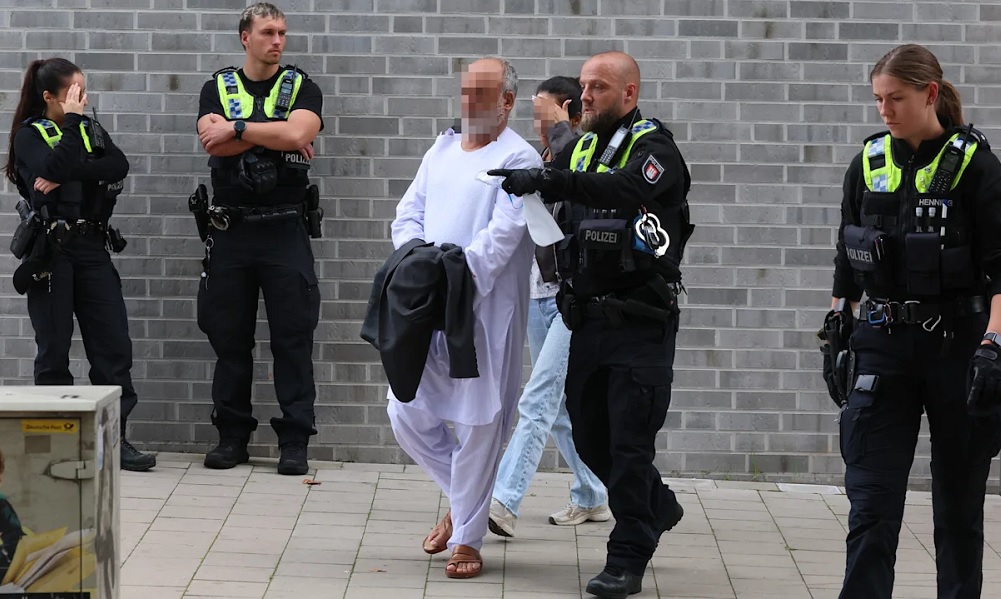
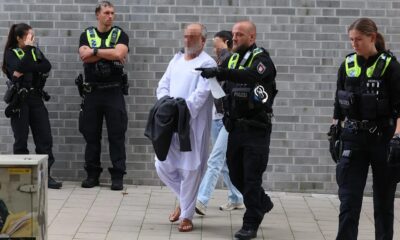
A 40-year-old Afghan man has been arrested in the German city of Hamburg after he went to a police station and told officers that he had killed his wife, German media reported.
The man went to Police Station 31 in the Barmbek district at around 8:31 a.m. on Thursday and made the confession. Police arrested him at the station.
Police and emergency responders then went to the family’s apartment on Von-Essen-Straße, where they found the woman unconscious. Paramedics attempted to revive her and took her to hospital, but the mother of three later died.
According to BILD newspaper, the woman had been strangled.
Police secured the scene and the case has been handed over to a homicide squad and the Hamburg public prosecutor’s office. The suspect is expected to appear before a judge.
The couple’s children were at school when the incident occurred. Relatives have been receiving support from a crisis intervention team of the German Red Cross.
In a separate incident, a family member attempted to harm himself with a knife after being informed of the woman’s death. A homicide detective was slightly injured in the hand while intervening and was taken to hospital. The family member was also detained.
The investigation into the case is ongoing.
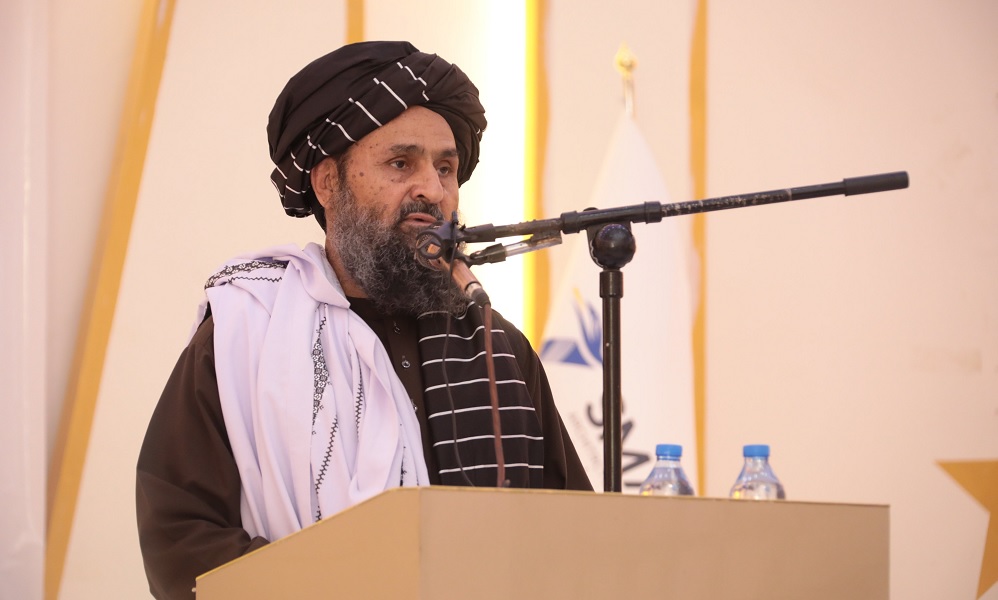
Afghanistan’s Deputy Prime Minister for Economic Affairs Mullah Abdul Ghani Baradar on Friday inaugurated construction of the Qutayba ibn Saeed al-Baghlani Industrial Park in northern Baghlan province, saying the project would help strengthen domestic production and reduce reliance on imports and aid.
Baradar said economic independence was the foundation of political and cultural independence, and called for stronger industrial and productive activity across the country.
The Islamic Emirate has begun developing industrial parks in different parts of Afghanistan to process raw materials domestically, expand production and create opportunities to export finished goods, he said.
“This will gradually transform Afghanistan from a consumer country into a producer country,” Baradar said.
He said Afghanistan should make greater use of its geographic position and economic potential to reduce unemployment and poverty, and called for joint efforts by the government and the Afghan people to create long-term employment opportunities.
Baradar said the government was working to address economic challenges through a gradual and organized approach, including financial and monetary policies aimed at maintaining price stability and strengthening people’s purchasing power.
He also called on regional and international economic organizations to end Afghanistan’s inactive participation in their institutions and facilitate its return to active participation.
According to Baradar, greater participation would allow Afghanistan to present its economic priorities and opportunities and strengthen economic cooperation, technical assistance and capacity building.
The industrial park will be built on 1,679 jeribs of land and is expected to provide space for industrial activity and create jobs for thousands of Afghans.


ACL: Sarsabz Yashlar edge Isteqlal Kabul 2–1

Debate on Afghanistan and New Investment Opportunities

Sorkh Poshan Khafi beat Arman FC 2–0 in ACL season six

At least 15 killed in blast near mosque in Khyber Pakhtunkhwa

Afghanistan seeks stronger ties with Saudi Arabia, dialogue with Pakistan: Mujahid

Four mediators struggle to secure lasting Pakistan-Afghanistan ceasefire

Syria and Saudi Arabia condemn Kabul bombing, express solidarity with Afghanistan

Afghanistan’s trade diversification challenges Pakistan

Saudi energy group signs major Afghanistan deals covering gas exploration and pipeline plans

ATN secures exclusive rights to broadcast T20I series in India across Afghanistan
Debate on Afghanistan and New Investment Opportunities

Tahawol: Reasons behind Qatari, Turkish security officials’ Kabul visit discussed

Saar: Outcome of UN Security Council meeting on Afghanistan discussed

Tahawol: Afghanistan’s readiness for US relations discussed

Saar: UN Security Council meeting on Afghanistan discussed
-
 Regional5 days ago
Hormuz shipping traffic remains below 10-day average at weekend, data shows
-
 Latest News5 days ago
Helmand governor, UNAMA discuss province’s key challenges
-
 Latest News5 days ago
Muttaqi defends Afghanistan’s policies, calls for stronger international ties
-

 Sport5 days ago
Farooq Khan Ahmadzai makes international umpiring debut
-
 Latest News3 days ago
UN warns of mounting humanitarian and human rights pressures in Afghanistan
-
 Sport4 days ago
ACL: Abu Muslim Farah 4-0 Istiqlal Kabul; Omar Zawak 3-1 Sarsabz Yashlar
-
 Latest News4 days ago
Mujahid: Afghanistan’s reconstruction must rely on domestic investment
-
 Latest News4 days ago
Afghan doctors barred from Peshawar hospital over visa issues