
Latest News
Afghanistan faces worsening humanitarian crisis after deadly quake and drought
Roads, communication networks, and health centers were severely damaged, leaving many areas cut off from assistance.


Afghanistan is confronting one of its most severe humanitarian emergencies in recent years, as a deadly earthquake and worsening drought devastate communities already struggling with poverty, displacement, and dwindling international aid.
A powerful earthquake struck eastern Kunar Province near the Pakistan border on August 31, 2025, killing nearly 2,000 people and injuring more than 3,600. The 6.0-magnitude tremor, which hit just before midnight, flattened or damaged more than 8,500 homes and affected an estimated 60,000 people across mountain districts.
Roads, communication networks, and health centers were severely damaged, leaving many areas cut off from assistance.
In the immediate aftermath, the Islamic Emirate of Afghanistan (IEA) and humanitarian partners launched emergency operations, including search-and-rescue efforts, road clearance, and medical evacuations. Relief agencies quickly deployed food, water, and temporary shelter to affected families, while 25 inter-agency teams carried out rapid needs assessments across Kunar and neighboring provinces.
To sustain the emergency response, the Central Emergency Response Fund (CERF) and Afghanistan Humanitarian Fund (AHF) jointly released $10 million on September 1, allowing aid groups to expand life-saving support. Despite continued aftershocks and blocked access routes, coordination improved once UNHAS helicopters resumed flights in mid-September.
Recognizing the scale of the crisis, Indrika Ratwatte, the UN Humanitarian Coordinator for Afghanistan, launched a $139.6 million emergency response plan on September 9 to assist nearly half a million people through the end of 2025.
“We are in a race against time to deliver winter supplies before the cold sets in,” Ratwatte said, calling for renewed international solidarity with the Afghan people.
Multiple crises converging
The earthquake struck as Afghanistan faces multiple, overlapping emergencies. A severe drought, now considered one of the worst in 50 years, has destroyed rain-fed crops and parched farmlands across the north and central regions. According to the Food and Agriculture Organization (FAO), up to 50% of irrigated land has been damaged, while rain-fed wheat has almost completely failed.
In Faryab Province, farmers say they have never witnessed such devastation. “In my lifetime, I have never seen such a drought. We have lost all hope,” said Kohistani, a 75-year-old farmer in Kohistan District, where wells have dried and families are leaving their villages.
Despite the hardship, local communities are finding ways to adapt. Small-scale irrigation systems, cold storage for crops, and vocational training in trades such as carpentry and mechanics are being introduced to build climate resilience and provide alternative incomes. As one Afghan proverb reminds: “Drop by drop, a river becomes.”
The crisis unfolds at a time when global humanitarian funding is at its lowest in years. Nearly half of Afghanistan’s population still depends on aid for survival, while more than 1.4 million Afghan refugees in Pakistan face uncertainty following the expiration of registration cards and pressure to return home.






Latest News
Five years out of school: Amnesty raises alarm over Afghan girls’ education
Five years on, millions of Afghan girls remain out of secondary school and unable to return to their classrooms.

Amnesty International says five years have passed since millions of girls in Afghanistan were deprived of secondary education, warning that the continued restrictions are affecting the future and aspirations of an entire generation.
The organization’s South Asia regional office said Thursday, September 17, on X that five years without access to education represent five years of injustice and lost opportunities for Afghan girls.
Despite the restrictions, Amnesty said girls across Afghanistan continue to seek ways to pursue their education, including through online learning, protests and, for some, migrating abroad to continue their studies.
Amnesty International has called on the international community to stand with Afghan women and girls and urge the Islamic Emirate to reopen girls’ secondary schools as soon as possible.
Five years on, millions of Afghan girls remain out of secondary school and unable to return to their classrooms.
The Islamic Emirate, however, has described girls’ education above the sixth grade as an internal matter and said efforts are underway to address the issue.
Latest News
Afghanistan condemns alleged drone attack on Mecca
Balkhi also warned that any threat to the holy sites could deeply anger Muslims and contribute to further instability in the region.

Afghanistan’s Ministry of Foreign Affairs has strongly condemned an alleged drone attack on Mecca, calling any threat to the Two Holy Cities an “unforgivable crime.”
“Any action against the Two Holy Cities that threatens the security and sanctity of these sacred sites is an unforgivable crime,” Abdul Qahar Balkhi, spokesperson for the ministry, said.
He stressed that the Two Holy Cities are sacred and highly respected sites shared by the Muslim world, and that their security and sanctity must be protected from conflicts, violence and military actions.
Balkhi also warned that any threat to the holy sites could deeply anger Muslims and contribute to further instability in the region.
Saudi Arabia’s air defences intercepted and destroyed a Houthi drone south of Mecca on Tuesday before it entered prohibited airspace over the holy city, said a spokesman for the Saudi-led military coalition fighting Yemen’s Iran-aligned Houthis.
A Houthi military source denied the group posed any threat to Mecca or other holy sites, in comments carried by the Houthi-run SABA news agency on Tuesday.
Latest News
Quetta commissioner calls for stronger coordination on Afghan refugee repatriation
According to the briefing, approximately 23,000 Afghan refugees remain in Quetta, with relevant departments continuing efforts to facilitate their repatriation.
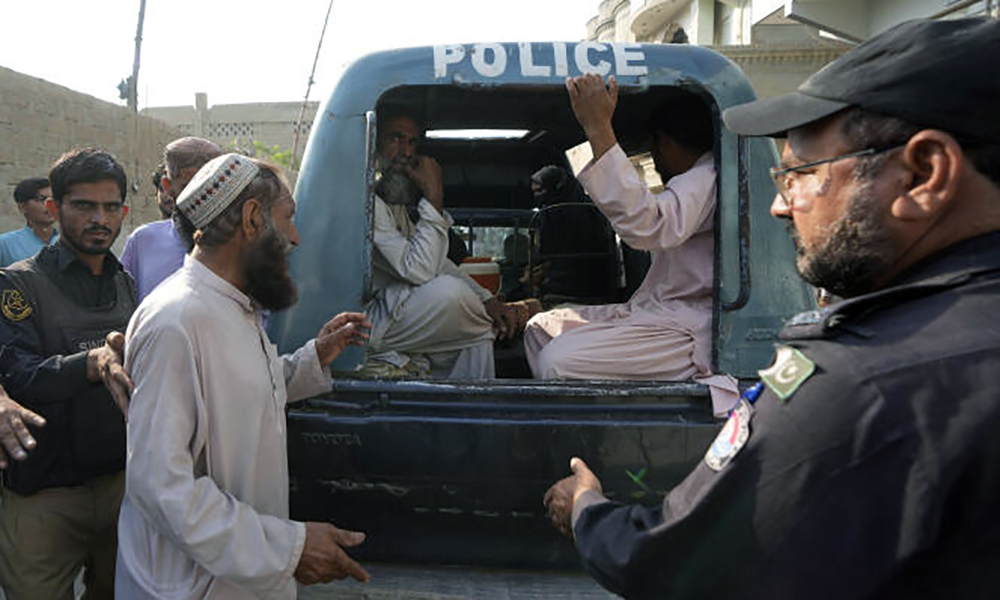
Quetta Commissioner Zeeshan Lashari has directed relevant departments to strengthen coordination to ensure the effective repatriation of Afghan refugees from Balochistan to Afghanistan.
A meeting chaired by Lashari reviewed administrative arrangements and measures related to the return of Afghan refugees.
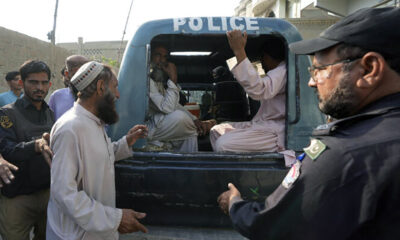
Officials told the meeting that around 800,000 Afghan refugees in Balochistan have already been repatriated to Afghanistan, while more than 350,000 others have returned voluntarily.
According to the briefing, approximately 23,000 Afghan refugees remain in Quetta, with relevant departments continuing efforts to facilitate their repatriation.
The meeting also discussed the issue of Afghan refugees who return to Afghanistan but later attempt to re-enter Pakistan. Officials agreed to seek guidance from the Home Department on how such cases should be handled.
Lashari directed authorities to improve coordination among relevant institutions and ensure that the repatriation process is carried out effectively.
He also instructed officials to take action in accordance with applicable laws and government policy against those who attempt to re-enter Pakistan after returning to Afghanistan.


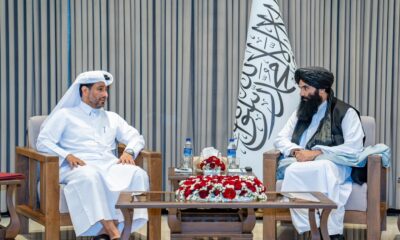
Tahawol: Reasons behind Qatari, Turkish security officials’ Kabul visit discussed

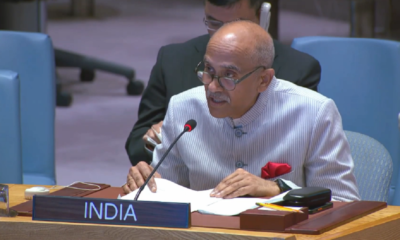
Saar: Outcome of UN Security Council meeting on Afghanistan discussed

Five years out of school: Amnesty raises alarm over Afghan girls’ education

Afghanistan condemns alleged drone attack on Mecca

Quetta commissioner calls for stronger coordination on Afghan refugee repatriation

Four mediators struggle to secure lasting Pakistan-Afghanistan ceasefire

Afghanistan’s trade diversification challenges Pakistan

Syria and Saudi Arabia condemn Kabul bombing, express solidarity with Afghanistan

Saudi energy group signs major Afghanistan deals covering gas exploration and pipeline plans

ATN secures exclusive rights to broadcast T20I series in India across Afghanistan
Tahawol: Reasons behind Qatari, Turkish security officials’ Kabul visit discussed
Saar: Outcome of UN Security Council meeting on Afghanistan discussed

Tahawol: Afghanistan’s readiness for US relations discussed

Saar: UN Security Council meeting on Afghanistan discussed

Tahawol: Afghanistan at the center of UN discussions
-

 Sport4 days ago
Zadran calls on Afghan fans to rally behind team against India
-
 Latest News4 days ago
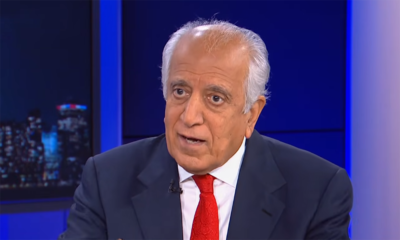
Khalilzad warns US risks losing influence in Afghanistan to China and Russia
-
 Business5 days ago
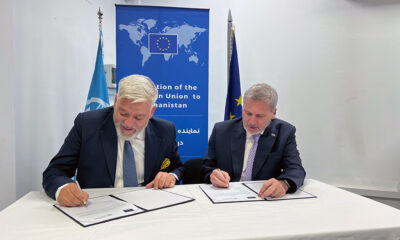
EU and FAO launch €5m programme to strengthen Afghanistan’s agrifood sector
-
 World5 days ago
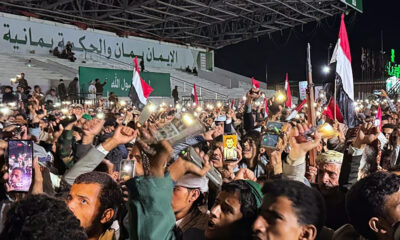
Houthi advance in Yemen puts U.S. in a new bind
-

 Regional5 days ago
Iran and UAE back joint BRICS statement urging restraint in war
-

 Sport4 days ago
India beat Afghanistan by seven wickets in first T20I
-
 Latest News4 days ago
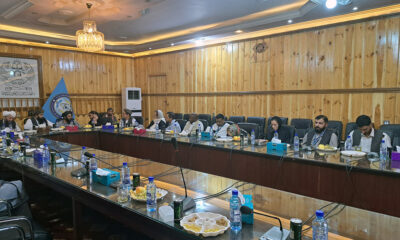
Helmand governor, UNAMA discuss province’s key challenges
-
 Regional4 days ago
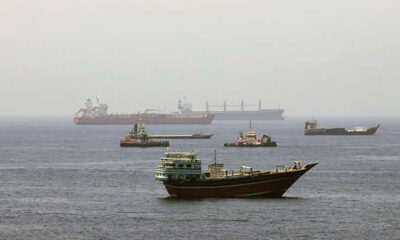
Hormuz shipping traffic remains below 10-day average at weekend, data shows