
Business
Afghanistan’s growth prospects remain uncertain amid global uncertainty: World Bank report
According to the report, in Afghanistan, despite aid cuts, the economy is estimated to have grown by 2.5 percent in FY24-25, which was slower than the pace of population growth.

Amid increasing uncertainty in the global economy, South Asia’s growth prospects have weakened, with projections downgraded in most countries in the region, including Afghanistan.
Stepping up domestic revenue mobilization could help the region strengthen fragile fiscal positions and increase resilience against future shocks, said the World Bank in its twice-yearly regional outlook – the South Asia Development Update – which was released on Wednesday.
According to the report, in Afghanistan, despite aid cuts, the economy is estimated to have grown by 2.5 percent in FY24-25, which was slower than the pace of population growth.
Growth is forecast to increase only moderately to 2.2 percent in 2025/26, the World Bank report stated.
Coinciding with the release of the South Asia report was the World Bank’s Afghanistan Development Update report which explained the situation in more detail.
Stating that while the country’s economy is gradually recovering, the outlook remains uncertain due to growing fiscal pressures, a widening trade deficit and persistent poverty and food insecurity.
The report stated that these factors continue to strain households and hinder inclusive growth.
However, Afghanistan recorded its second consecutive year of growth in 2024, the World Bank stated, adding that the recovery was largely driven by the agriculture sector.
Manufacturing and services remained subdued due to an unfavorable business environment, persistent export barriers and declining foreign aid.
Modest gains in private consumption and real estate investment contributed to growth, the report stated, adding that rising imports widened the trade deficit, increasing external vulnerabilities.
At the same time, rapid population growth and the return of refugees continue to strain job creation and public service delivery, further deepening the fragility of the economy.
Deflation meanwhile persisted in 2024, with food prices having declined sharply. Non-food inflation remained stable. Persistent deflation continued in 2024,
Poverty, food insecurity, and malnutrition however remained pressing challenges and despite modest wage growth, high unemployment and restrictions on women continue to strain livelihoods, the report stated.
Early this year, 14.8 million people faced food shortages, while acute malnutrition – now affecting 4.7 million women and children – is worsening. The World Bank warned that without urgent action, human capital development will be further undermined.
Fiscal pressures meanwhile remained high as domestic revenue mobilization, though relatively strong, is insufficient to offset the sharp decline in aid.
The report also stated that exports declined in 2024, while imports surged – widening the trade deficit.
The increase in imports however was driven by rising industrial demand and substitution of domestic consumer goods.
The afghani (AFN) currency, which had appreciated significantly in 2023 due to strong foreign inflows stabilized with slight depreciation in 2024 but the banking sector remained fragile.
The World Bank reported that economic growth is expected to slow to 2.2 percent in 2025 amid aid disruptions, before gradually recovering to 2.5 percent in 2026–27.
The organization however warned that while Afghanistan’s youth remain a vital source of resilience and untapped potential, urgent action to expand job opportunities for them is needed.







Business
Afghanistan seeks expanded ties with Russia in energy, mining and infrastructure
TASS reported that Kabul is also prepared to cooperate with Moscow in the extraction of mineral resources.

Afghanistan has expressed strong interest in broadening trade and economic cooperation with Russia, with a particular focus on energy, mining and infrastructure projects, according to Russia’s TASS news agency.
In an interview with TASS, Afghanistan’s Ambassador to Moscow, Gul Hassan, said Kabul is keen to import oil and gas from Russia as part of efforts to deepen bilateral economic ties.
He noted that trade relations between the two countries are progressing and that, if key obstacles—especially banking restrictions—are addressed, Afghanistan could also import medicines, industrial goods, grain, vegetable oils and other commodities from Russia.
In return, the ambassador said Afghanistan is ready to export fresh and dried fruits, vegetables, medicinal plants, carpets and mineral resources to the Russian market, adding that expanding export-import operations could significantly increase bilateral trade volumes.
He also revealed plans to open an exhibition of Afghan products in Moscow, which he said would help boost trade turnover.
TASS reported that Kabul is also prepared to cooperate with Moscow in the extraction of mineral resources.
Hassan described the economy as a central pillar of Afghanistan’s foreign policy, emphasizing the government’s goal of positioning the country as a key link in regional economic integration and attracting foreign investment.
He noted that Russian companies have long shown interest in Afghanistan’s industrial, mining and infrastructure sectors.
The ambassador further told TASS that Russian firms are already in talks with relevant Afghan authorities on the construction of small hydroelectric power plants.
Representatives of several Russian companies have reportedly visited Afghanistan and held meetings with officials and technical experts.
According to Hassan, practical steps toward cooperation in the energy and power generation sectors are expected in the near future, pointing to a potential new phase in Afghan-Russian economic relations.
Business
Pakistan, China plan to extend CPEC to Afghanistan, revive trilateral framework
The proposed CPEC expansion into Afghanistan is seen as a move to enhance regional economic integration amid shifting geopolitical dynamics.
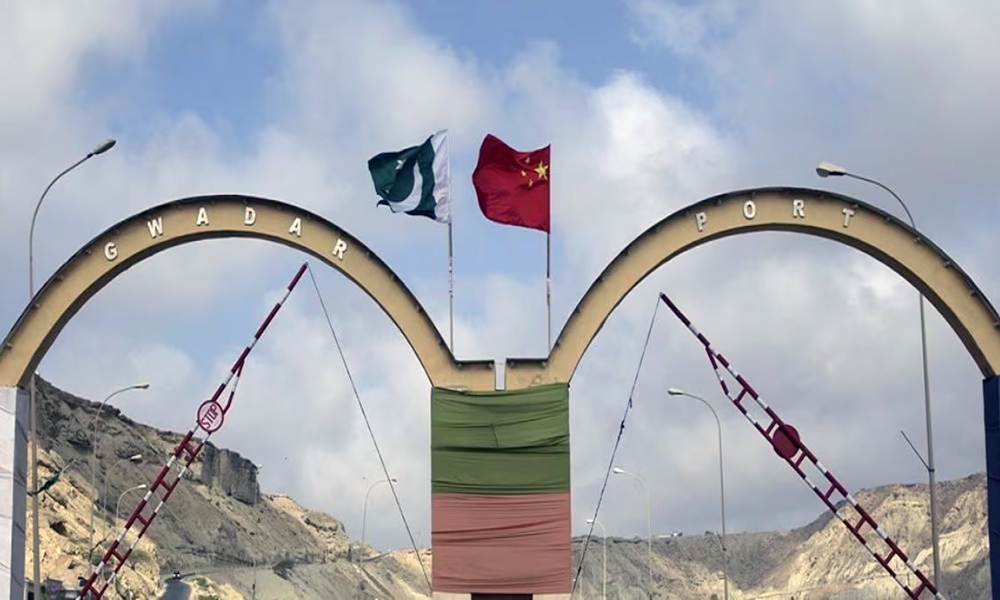
Pakistan and China are moving forward with plans to extend the China-Pakistan Economic Corridor (CPEC) into Afghanistan, a strategic step aimed at bolstering regional connectivity and economic cooperation. The expansion, along with the revival of the Pakistan-China-Afghanistan trilateral framework, was discussed in a recent briefing to the Pakistani Senate Standing Committee on Foreign Affairs.
According to Pakistan Today, officials from Pakistan’s Ministry of Foreign Affairs outlined the details during a session in Islamabad, where they reviewed key aspects of Pakistan’s foreign relations, regional developments, and economic diplomacy.
Officials emphasized that Pakistan’s relationship with China remains strong, underscoring the “all-weather” strategic partnership between the two nations. Strengthening ties with Beijing, they stated, continues to be a cornerstone of Pakistan’s foreign policy. This includes unwavering support for China’s position on regional and international issues, particularly the One-China policy and matters related to territorial integrity.
The briefing also touched upon China’s consistent backing of Pakistan in various areas, including sovereignty, economic stability, counter-terrorism, and support for Pakistan’s exit from the Financial Action Task Force (FATF) grey list.
The Kashmir issue was also addressed, with officials noting that China considers it an unresolved matter and advocates for a peaceful resolution in line with UN Security Council resolutions.
The proposed CPEC expansion into Afghanistan is seen as a move to enhance regional economic integration amid shifting geopolitical dynamics. Officials stated that reviving the trilateral framework is part of broader efforts to foster greater cooperation and connectivity in the region, with an eye on long-term stability and prosperity.
The move also reflects both countries’ desire to further integrate Afghanistan into the regional economic landscape, a key element in fostering peace and development.
Business
Uzbekistan–Afghanistan trade rises to $1.6 billion in 2025
Trade relations remain largely export-driven, with Uzbekistan supplying Afghanistan primarily with food products, energy resources, and industrial goods.
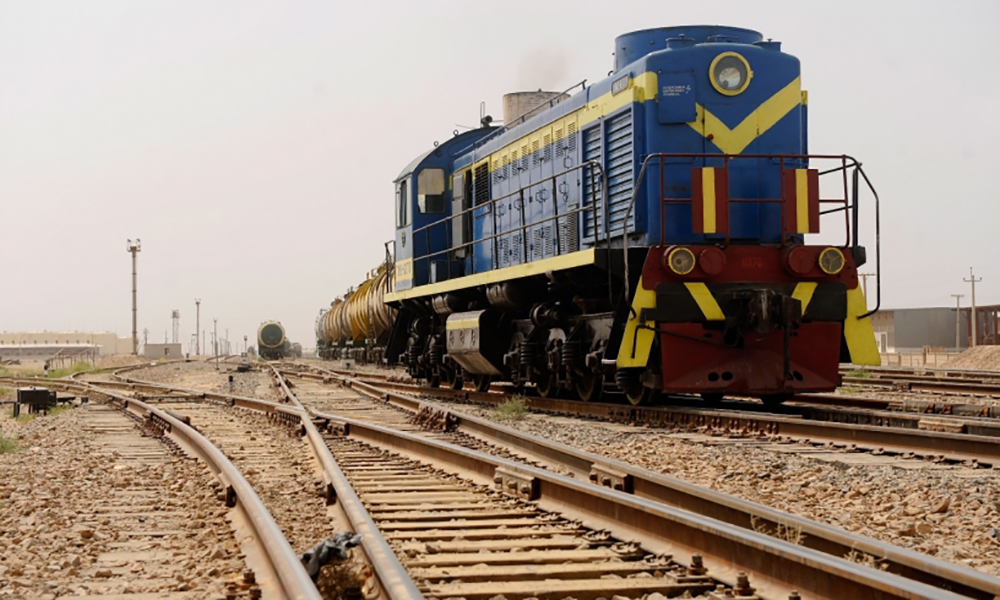
Trade between Uzbekistan and Afghanistan rose sharply in 2025, reaching $1.6 billion, according to official data released by Uzbekistan’s National Statistics Committee.
The figure represents a 45.5 percent increase from $1.1 billion in 2024 and an 84.4 percent rise compared with 2023, when bilateral trade stood at $867.5 million, highlighting rapid growth in economic exchanges between the two countries.
Uzbekistan’s exports to Afghanistan accounted for the vast majority of the trade volume, totaling $1.5 billion, or 93.8 percent of overall bilateral turnover. Trade relations remain largely export-driven, with Uzbekistan supplying Afghanistan primarily with food products, energy resources, and industrial goods.
The surge in trade comes as Uzbekistan’s total foreign trade turnover reached $81.2 billion in 2025, reflecting broader efforts to expand and diversify external economic ties. By the end of the reporting period, Uzbekistan maintained trade relations with 210 countries.
China remained Uzbekistan’s largest trading partner, accounting for 21.2 percent of total trade, followed by Russia (16.0 percent), Kazakhstan (6.1 percent), Türkiye (3.7 percent), and the Republic of Korea (2.1 percent).
The latest figures underscore strengthening economic ties between Uzbekistan and Afghanistan amid efforts to boost regional trade and connectivity.


Tahawol: Pakistan’s Foreign Policy Failure of Towards Afghanistan discussed

Saar: Regional Problems, Opportunities, and Challenges discussed

Pakistan to repatriate nearly 20,000 Afghans awaiting US resettlement

Terrorist activities observed along Afghanistan borders, says Lavrov

Afghan border minister holds phone talks with Iran’s deputy foreign minister

Afghanistan–China joint market opens in Kabul

Pakistan approves re-export of stranded Afghan transit trade cargo

ATN secures broadcast rights to Carabao Cup semis across Afghanistan

Pakistan army orders evacuation of Tirah Valley, fears of mass displacement grow

Afghan traders sign deal to import pharmaceuticals from Bangladesh
Tahawol: Pakistan’s Foreign Policy Failure of Towards Afghanistan discussed
Saar: Regional Problems, Opportunities, and Challenges discussed

Saar: Afghanistan’s relations and opportunities with regional countries

Tahawol: Kabul’s response to Pakistan’s new accusation discussed

Saar: Discussion on Iran-US talks in Oman
-
 Latest News3 days ago
Afghanistan to grant one- to ten-year residency to foreign investors
-
 Latest News5 days ago
Terrorist threat in Afghanistan must be taken seriously, China tells UNSC
-

 Sport4 days ago
Indonesia shock Japan to reach historic AFC Futsal Asian Cup final
-

 Sport5 days ago
Milano Cortina 2026 Winter Olympics: What You Need to Know
-

 Sport3 days ago
Iran clinch AFC Futsal Asian Cup 2026 in penalty shootout thriller
-

 Latest News5 days ago
US Justice Department to seek death penalty for Afghan suspect in National Guard shooting
-
 Latest News3 days ago
Afghanistan says Pakistan is shifting blame for its own security failures
-
 Latest News5 days ago
Uzbekistan, Kazakhstan discuss cooperation on Afghanistan