
Afghans must unite for peace, says Sirajuddin Haqqani


Acting Minister of Interior Sirajuddin Haqqani has emphasized national unity and solidarity as essential for achieving lasting peace in Afghanistan.
Haqqani stressed on the importance of peace during meetings with government officials, religious scholars, traders, and various segments of society on the occasion of Eid al-Adha.
According to a statement from the Ministry of Interior, Haqqani warned that forgetting the country’s core goals has repeatedly led Afghanistan into crisis.
He stated that the Islamic Emirate does not hold anyone accountable based on past actions and that there is no place for hatred, stressing that Afghans must stand united for peace and brotherhood.
The Acting Minister also highlighted the spirit of sincerity and togetherness during Eid, saying this should become a lasting and genuine principle in Afghan society.






Sport
Asian Games open in Japan as Afghanistan sends 34 athletes
The Afghan delegation includes competitors in wushu, boxing, cricket and other disciplines, with athletes set to face strong competition from across the continent.
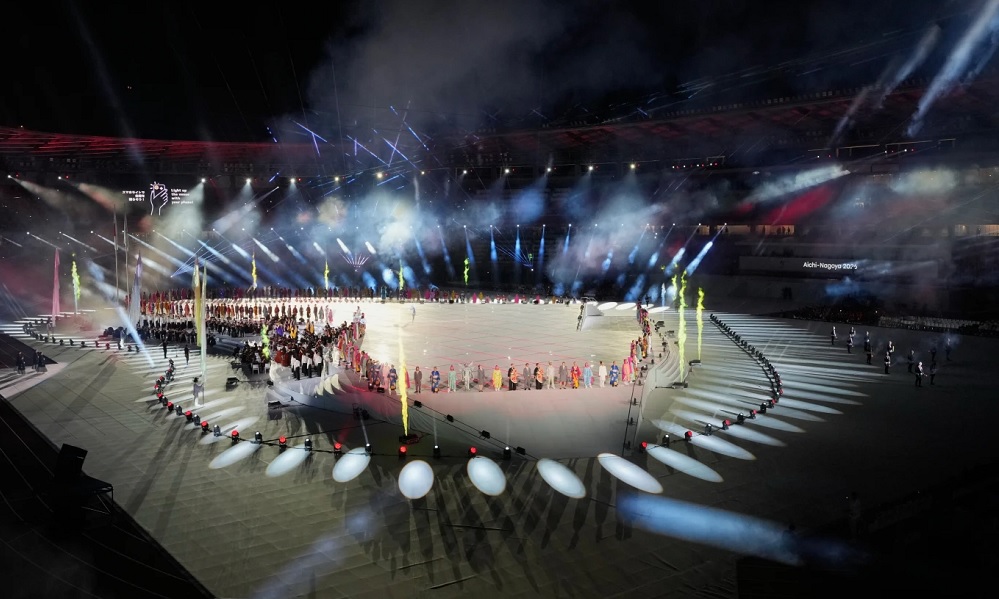
The 20th Asian Games officially opened in Nagoya, Japan, on Saturday, bringing together more than 11,000 athletes from 45 countries and regions for Asia’s biggest multi-sport event.
Japan’s Emperor Naruhito formally declared the Games open during a colourful ceremony at Mizuho Park Athletic Stadium. Empress Masako, International Olympic Committee President Kirsty Coventry and Olympic Council of Asia President Sheikh Joaan bin Hamad Al Thani were among the dignitaries attending.
Held under the theme “Harmonic Heart Beat,” the opening ceremony featured Japanese cultural performances, music, technology displays and fireworks before athletes entered the stadium for the traditional parade of nations.
The Aichi-Nagoya Games run from September 19 to October 4, with athletes competing in 43 sports and 469 medal events. Some competitions began before the opening ceremony, including football and basketball, because of the packed schedule.
Afghanistan sends 34 athletes
Afghanistan is represented by 34 athletes competing across nine sports at the Games.
The Afghan delegation includes competitors in wushu, boxing, cricket and other disciplines, with athletes set to face strong competition from across the continent.
Four Afghan wushu athletes — Mohammad Jafar Soltani, Shahzada Safi, Mohammad Khalid Hotak and Hamid Ashrafi — are scheduled to begin their campaigns on Sunday.

Afghanistan will also compete in cricket, with the Afghanistan Cricket Board selecting a 15-member squad for the men’s tournament. Darwish Rasooli will captain the side, with experienced players including Najibullah Zadran and Karim Janat included in the squad.
The cricket tournament is scheduled to take place from September 24 to October 3, giving Afghanistan’s emerging players another opportunity to compete on a major international stage.
For Japan, the Games mark the country’s return to hosting a major multi-sport event with spectators following the Tokyo Olympics in 2021, which were held largely without fans because of COVID-19 restrictions.
The Nagoya Games have nevertheless faced logistical challenges during their preparation. Organisers decided against building a traditional athletes’ village, instead housing competitors in hotels, temporary accommodation and a cruise ship. Some delegations have reported difficulties involving accommodation, transportation and registration.
Despite the problems, the opening ceremony provided a colourful start to the competition, with organisers highlighting the role of sport in bringing people together.
OCA President Sheikh Joaan said athletes from across Asia demonstrated how sport could help bridge divisions around the world.
“While the world is too often divided by conflict, they [the Asiad athletes] remind us that sport remains a powerful force for peace, understanding and friendship among nations,” he said.
Competition will continue across Japan until October 4, when the 20th Asian Games will conclude after 16 days of sporting action.
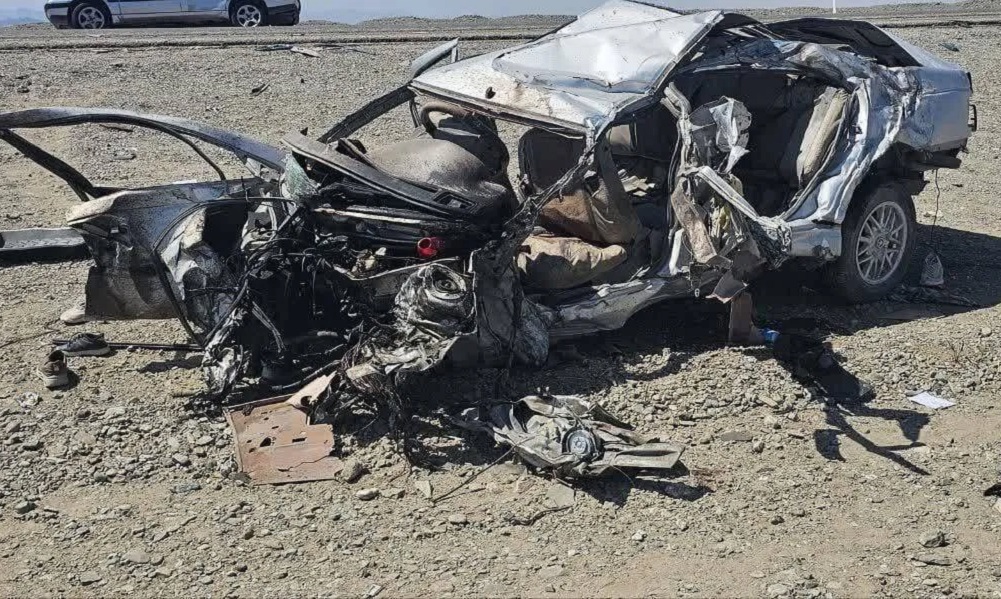
Seven Afghan migrants have been killed after a vehicle carrying Afghan migrants collided with a fuel-carrying vehicle in Iran’s Sistan and Baluchestan province.
According to the human rights organization HalVash, the accident occurred on Friday in the Sarbaz area of Sistan and Baluchestan.
Siyavash Mohbi, the head of Iran’s traffic police in Sistan and Baluchestan, said the Afghan nationals had entered Iran illegally.
He added that nine other people were injured in the incident.
Mohbi attributed the accident to the negligence of the driver of the vehicle carrying the migrants.


Asian Games open in Japan as Afghanistan sends 34 athletes

Seven Afghan migrants killed in traffic accident in Iran’s Sistan and Baluchestan

OIC to hold Afghanistan Contact Group meeting on sidelines of UN General Assembly

Flames, smoke seen near Riyadh airport; Houthis claim attacks on Saudi capital

Tahawol: Kabul’s warning over any threat from Pakistan discussed

Four mediators struggle to secure lasting Pakistan-Afghanistan ceasefire

Syria and Saudi Arabia condemn Kabul bombing, express solidarity with Afghanistan

Afghanistan’s trade diversification challenges Pakistan

Saudi energy group signs major Afghanistan deals covering gas exploration and pipeline plans

ATN secures exclusive rights to broadcast T20I series in India across Afghanistan
Tahawol: Kabul’s warning over any threat from Pakistan discussed

Debate on Afghanistan and New Investment Opportunities

Tahawol: Reasons behind Qatari, Turkish security officials’ Kabul visit discussed

Saar: Outcome of UN Security Council meeting on Afghanistan discussed

Tahawol: Afghanistan’s readiness for US relations discussed
-
 Latest News4 days ago
UN warns of mounting humanitarian and human rights pressures in Afghanistan
-
 Regional4 days ago
Saudi Arabia calls alleged Mecca attack a ‘red line’ as Houthis deny involvement
-
 Latest News5 days ago
Petition filed in Islamabad High Court against PMDC directive affecting Afghan students
-
 Latest News4 days ago
Five Years On: IEA touts economic growth despite international isolation
-
 Sport4 days ago
India take 2-0 lead in 3-match series against Afghanistan
-
 Sport5 days ago
Nabi reaches 2,500 T20I runs
-
 Latest News5 days ago
At least 17 Afghan migrants reportedly die of thirst near Iran border
-

 Latest News3 days ago
Five years out of school: Amnesty raises alarm over Afghan girls’ education