
Latest News
Collapse of former govt, military rooted in US deal with IEA: CENTCOM chief

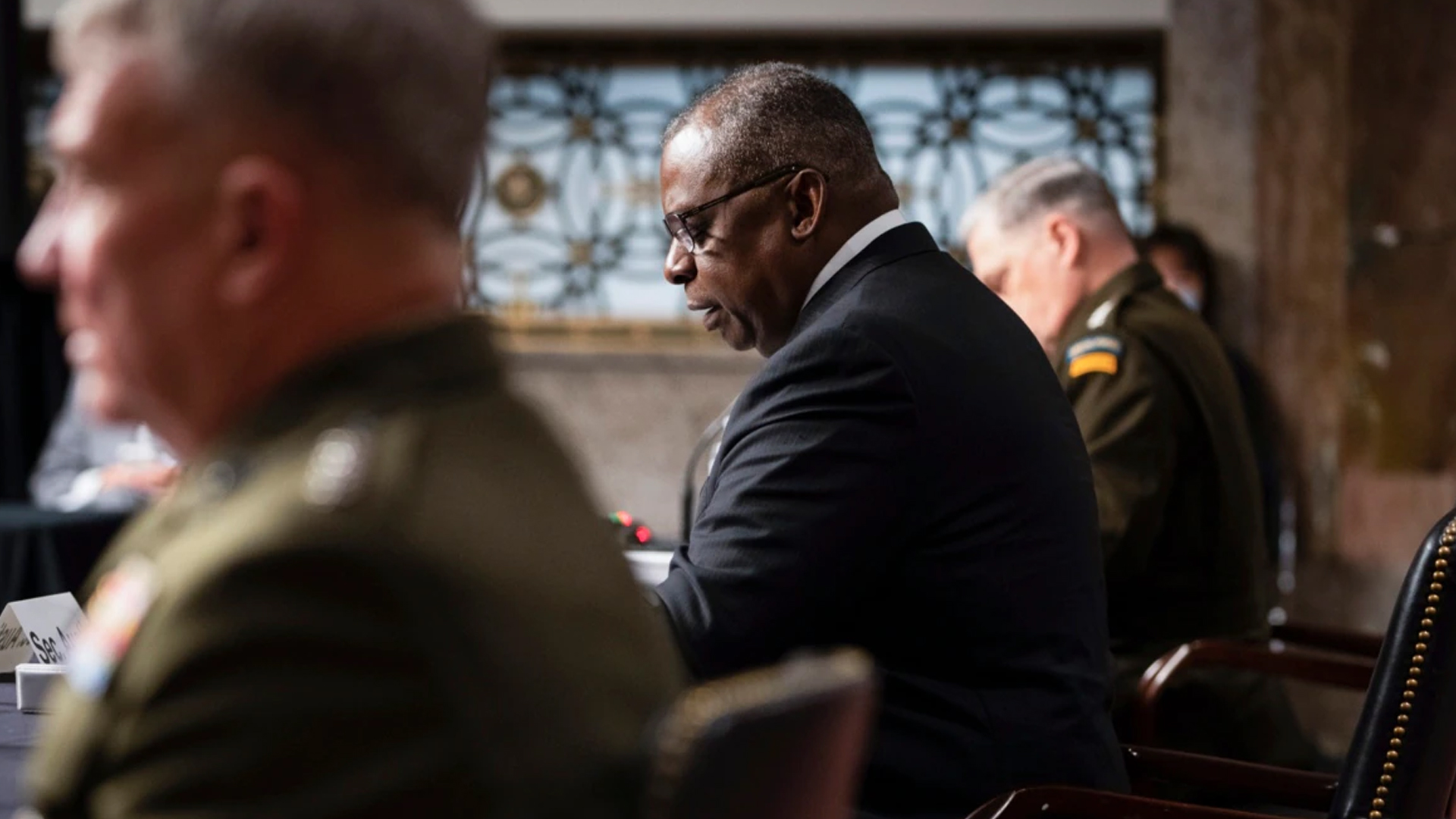
Senior Pentagon officials said Wednesday the collapse of the Afghan government and its security forces in August could be traced to a 2020 U.S. agreement with the Islamic Emirate of Afghanistan (IEA) that promised a complete U.S. troop withdrawal.
General Frank McKenzie, the head of the U.S. Central Command, told the House Armed Services Committee that once the U.S. troop presence was pushed below 2,500 as part of President Joe Biden’s decision in April to complete a total withdrawal by September, the unraveling of the U.S.-backed Afghan government accelerated.
“The signing of the Doha agreement had a really pernicious effect on the government of Afghanistan and on its military — psychological more than anything else, but we set a date-certain for when we were going to leave and when they could expect all assistance to end,” McKenzie said.
McKenzie said he also had believed “for quite a while” that if the United States reduced the number of its military advisers in Afghanistan below 2,500, the Kabul government inevitably would collapse “and that the military would follow.”
He said in addition to the morale-depleting effects of the Doha agreement, the troop reduction ordered by Biden in April was ”the other nail in the coffin” for the 20-year war effort because it blinded the U.S. military to conditions inside the Afghan army, “because our advisers were no longer down there with those units.”
Defense Secretary Lloyd Austin, testifying alongside McKenzie, said he agreed with McKenzie’s analysis. He added that the Doha agreement also committed the United States to ending airstrikes against the IEA, “so the Taliban (IEA) got stronger, they increased their offensive operations against the Afghan security forces, and the Afghans were losing a lot of people on a weekly basis.”
Wednesday’s hearing was politically charged, with Republicans seeking to cast Biden as wrongheaded on Afghanistan, and Democrats pointing to what they called ill-advised decisions during the Trump years.
General Mark Milley, chairman of the Joint Chiefs of Staff, had said a day earlier in a similar hearing in the Senate that the war in Afghanistan was a “strategic failure,” and he repeated that on Wednesday.
Defying U.S. intelligence assessments, the Afghan government and its U.S.-trained army collapsed in mid-August, allowing the IEA, which had ruled the country from 1996 to 2001, to capture Kabul with what Milley described as a couple of hundred men on motorcycles, without a shot being fired.
This week’s House and Senate hearings marked the start of what is likely to be an extended congressional review of the U.S. failures in Afghanistan, after years of limited congressional oversight of the war and the hundreds of billions of taxpayer dollars it consumed.
“The Republicans’ sudden interest in Afghanistan is plain old politics,” said Senator Elizabeth Warren, a Massachusetts Democrat, who supported Biden’s decision to end U.S. involvement in Afghanistan.
Tuesday’s hearing also was contentious at times, as Republicans sought to portray Biden as having ignored advice from military officers and mischaracterized the military options he was presented last spring and summer.
Milley said Tuesday that lessons need to be learned, including whether the U.S. military made the Afghans overly dependent on American technology in a mistaken effort to make the Afghan army look like the American military.
Milley cited “a very real possibility” that al-Qaida or the Islamic State (ISIS) group’s Afghanistan affiliate, Daesh, could reconstitute in Afghanistan and present a terrorist threat to the United States in the next 12 to 36 months, AP reported.
The hearings come after US special envoy for Afghanistan Zalmay Khalilzad said last weekend that former president Ashraf Ghani’s decision to leave Afghanistan without warning took everyone, including Washington, by surprise.
In an exclusive interview with Ariana News, Khalilzad said that the night before his departure, the US Secretary of State Antony Blinken had spoken to Ghani on the phone.
He said Ghani had not given any signal as to his intentions.
“Everyone including the US were shocked when this happened,” he said.
However, he implied that had Ghani stepped down as president in the lead up to the IEA’s takeover, things could have been very different.












Kazakhstan’s Foreign Minister Mukhtar Tileuberdi has called for pragmatic and coordinated international engagement with Afghanistan, saying the country’s long-term stability is closely linked to the security and sustainable development of Central Asia.
Speaking during the general debate of the 81st session of the United Nations General Assembly in New York on Friday, Tileuberdi said humanitarian assistance to Afghanistan remains essential but alone cannot break the cycle of poverty, displacement and dependency.
He said Kazakhstan supports a “pragmatic, coordinated and step-by-step” approach to international engagement with Afghanistan, with the United Nations playing a central role.
Tileuberdi also said Kazakhstan is working with the UN to operationalize the United Nations Regional Centre for the Sustainable Development Goals for Central Asia and Afghanistan in Almaty.
He said the success of the centre should be measured by the results and assistance it delivers to the region.


Abu Muslim Farah defeat Khurasan Faryab 2-0 in ACL season six

Saar: Concerns over Pakistan’s political crisis discussed

Afghanistan Champions League: Omar Zawak Herat beat Toofan Herat 1-0

Blast in Pakistan’s Dera Ismail Khan kills 11, injures 30

Ariana Afghan Airlines increases Kabul-Delhi cargo flights

Saudi energy group signs major Afghanistan deals covering gas exploration and pipeline plans

Trump floats idea of renaming Atlantic or Pacific Ocean

US hits Egyptian bank branches with Iran sanctions as war marks six months

Nepal flood rescue mission enters critical phase as thousands remain missing

Iranian clubs to face Gulf opponents at neutral venues in Asian Champions League Elite
Saar: Concerns over Pakistan’s political crisis discussed

Exclusive interview with Abdul Latif Mansoor, Minister of MRRD

Tawsia: Overview of Afghanistan’s iron mines

Tahawol: Discussion on fresh Pakistani airstrikes on Afghanistan

Saar: Calls for international support for Afghanistan discussed
-

 World5 days ago
CNN, MS NOW and Politico sue Trump, challenging White House ban
-

 Latest News4 days ago
Ariana Afghan Airlines ranks seventh among 45 Central Asian airlines
-

 Latest News5 days ago
UN reiterates call for respect for international law after Kunar airstrikes
-

 Regional4 days ago
US and Iran hold first talks since June after Trump’s ‘annihilation’ threat
-

 Latest News4 days ago
Silk Road highway in Wakhan corridor now reaches the China border
-

 Regional3 days ago
Iran airlines cancel flights as US sanctions hit
-

 Latest News5 days ago
Afghan Official: Pakistan’s airstrikes will not go unanswered
-
 Regional5 days ago
G7 foreign ministers call on Iran to stop arming Houthis