
Regional
Delaying the pullout of American troops would make no difference in Afghanistan: Obama

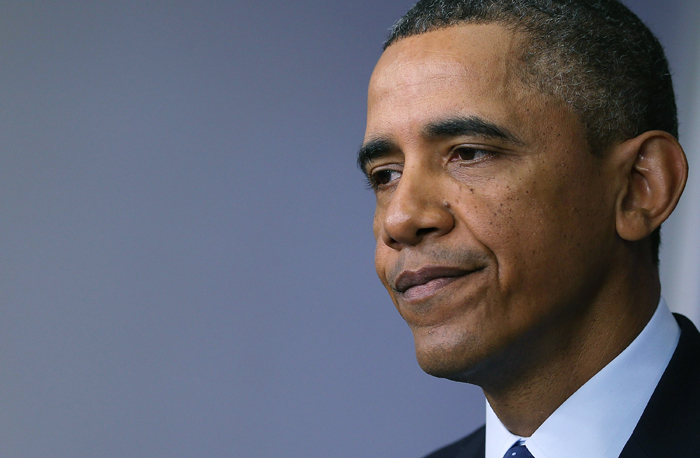

Barack Obama, President of the United State has said that delaying the pullout of American troops from Afghanistan would make no difference there as long as the country did not overcome its political rifts.
Mr. Obama’s comments were particularly pointed, given that Afghanistan’s leadership has been paralyzed for months after a disputed election to replace President Hamid Karzai.
A senior American official said, “People have said, ‘Doesn’t this show that you should never take the troops out of Afghanistan?’ ” “He said to response ‘No, it actually points to the imperative of having political accommodation. There’s a limit to what we can achieve absent a political process.’ ”
Meanwhile, NATO secretary general, Andres Fogh Rasmussen said that signing the security accord Kabul-Washington and between Kabul-NATO for the training mission is a precondition.
However, Rasmussen assured that the security accord will be signed but he warned that if the security agreement not signed, cancelation of the NATO’s training mission will be an option.

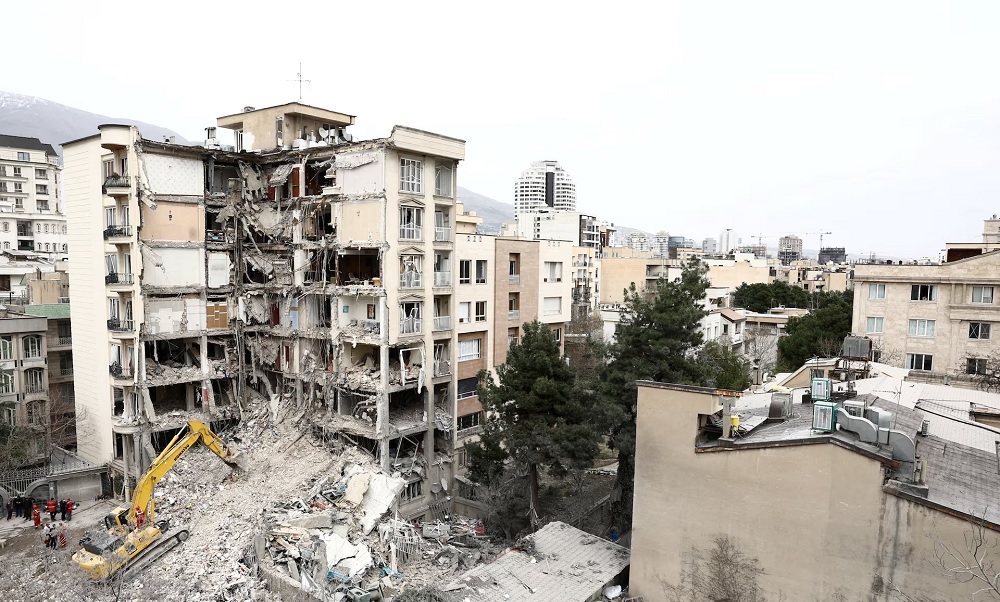
Israel struck the Iranian capital Tehran on Wednesday, Israeli military and Iranian media said, as President Donald Trump said the U.S. was making progress in its efforts to negotiate an end to the war, with reports of a 15-point plan sent to Tehran.
The Israeli Defense Forces said in a Telegram post it had launched a wave of strikes targeting infrastructure across Tehran. The semi-official Iranian SNN News Agency said the strikes hit a residential area in the city, with rescuers searching the rubble, Reuters reported.
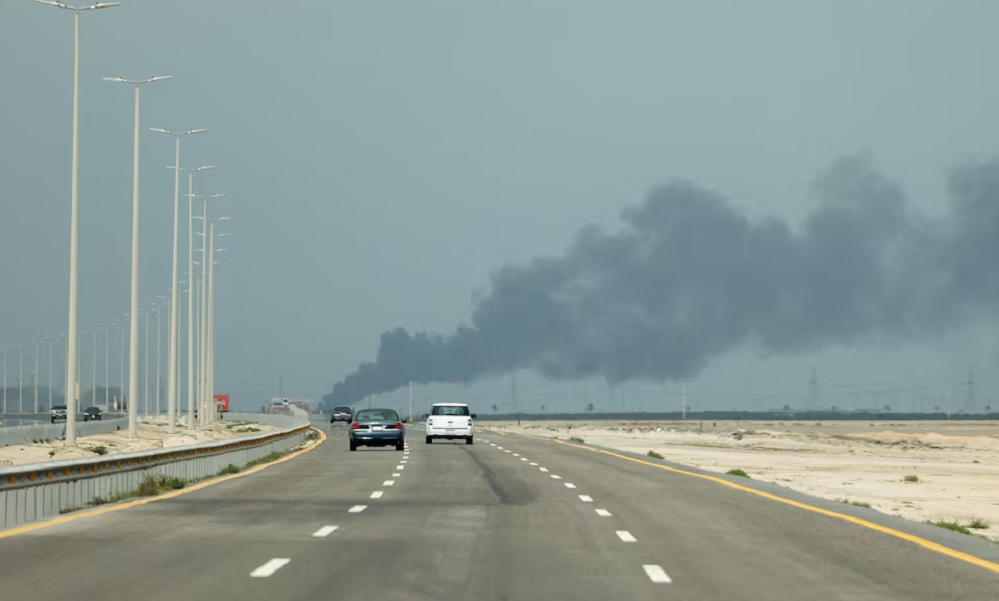
Kuwait and Saudi Arabia said on Wednesday they had repelled fresh drone attacks, without stating where they originated. Drones targeted a fuel tank at Kuwait International Airport, causing a fire but no casualties, Kuwait’s Civil Aviation Authority said.
Iran’s Revolutionary Guards said it had launched a new wave of attacks against locations in Israel including Tel Aviv and Kiryat Shmona, as well as U.S. bases in Kuwait, Jordan and Bahrain, Iranian state media reported.
Trump said on Tuesday the U.S. was in “negotiations” to end the war, which has already killed thousands and created the worst energy shock in history, leading to global fuel shortages and roiling markets.
Stocks rose and oil prices fell on Wednesday on reports the U.S. is seeking a month-long ceasefire and had sent a 15-point plan to Iran for discussion, raising hopes for a resumption of oil exports out of the Persian Gulf.
Trump told reporters at the White House the U.S. was talking to “the right people” in Iran to end hostilities, adding the Iranians wanted to reach a deal very badly.
Iran’s powerful parliament speaker Mohammad Baqer Qalibaf on Monday dismissed such reports as “fake news.”
15 POINT PLAN SENT TO IRAN
The New York Times reported on Tuesday that Washington sent Iran a 15-point plan to end the war in the Middle East. Israel’s Channel 12, quoting three sources, said the U.S. was seeking a month-long ceasefire to discuss the 15-point plan.
A source familiar with the matter confirmed that the U.S. had sent a plan to Iran but provided no further details.
The Israeli media outlet said the plan would include the dismantling of Iran’s nuclear programme, ceasing support for proxy groups, such as Lebanon’s Hezbollah, and the reopening of the Strait of Hormuz.
The U.S. and Israel launched strikes on Iran on February 28 after saying they had failed to make enough headway in talks aimed at ending Iran’s nuclear programme, although mediator Oman said significant progress had been made.
Since then, Iran has attacked countries that host U.S. bases, struck Gulf energy infrastructure and effectively closed the Strait of Hormuz, conduit for a fifth of the world’s oil and liquefied natural gas.
Iran has told the United Nations Security Council and the International Maritime Organization that “non-hostile vessels” may transit the Strait of Hormuz if they coordinate with Iranian authorities, according to a note seen by Reuters on Tuesday.
The effective closure of the waterway, where 20% of the world’s oil and gas normally transits, has created the worst energy supply shock in history, sent fuel prices soaring, and disrupted global aviation.
PAKKISTAN OFFERS TO HOLD US-IRAN TALKS
Pakistan’s Prime Minister Shehbaz Sharif said on Tuesday he was willing to host talks between the U.S. and Iran on ending the war, a day after Trump postponed threats to bomb Iranian power plants after what he called “productive” talks.
Pakistan has long-standing ties to neighbouring Iran’s Islamic Republic and has been building a relationship with Trump.
Despite reports of negotiations, the Pentagon is expected to send thousands of soldiers from the U.S. Army’s elite 82nd Airborne Division to the Middle East, two people familiar with the matter told Reuters on Tuesday, adding to a massive U.S. military buildup.
The forces will add to the 50,000 U.S. troops already in the region and accelerate Washington’s massive U.S. military buildup there, fuelling fears of a longer conflict.
Key U.S. allies in the Middle East are moving closer to direct involvement in the conflict with Iran, as sustained attacks on Gulf infrastructure intensify pressure on regional governments, according to a report by The Wall Street Journal.
Both Saudi Arabia and the United Arab Emirates are reportedly weighing deeper coordination with the United States and Israel, following repeated Iranian missile and drone strikes that have disrupted their economies and threatened regional energy security.
While neither country has formally committed troops, recent developments suggest a shift toward more active participation. The report indicates that Gulf support is already enhancing U.S. operational capabilities, including facilitating airstrike logistics and potentially opening new avenues to target Iran’s financial networks.
Saudi Arabia signals shift in stance
Saudi Arabia appears to be reassessing its position as attacks on critical infrastructure continue. Riyadh has reportedly allowed U.S. forces access to the King Fahd Air Base, a move that could support expanded military operations.
Foreign Minister Faisal bin Farhan warned that the kingdom’s tolerance for Iranian attacks is limited. “Any belief that Gulf countries are incapable of responding is a miscalculation,” he said following recent strikes on energy facilities.
Crown Prince Mohammed bin Salman is said to be considering stronger action to restore deterrence, with officials suggesting it may be only a matter of time before Saudi Arabia takes a more direct role in the conflict.
According to the WSJ report, one source said that “it is only a matter of time before the kingdom enters the war.”
UAE ramps up pressure on Tehran
The United Arab Emirates has also taken steps to increase pressure on Tehran, particularly through economic measures. Authorities in Dubai have shut down Iranian-linked institutions, including the Iranian Hospital and Iranian Club, citing violations of national laws and alleged links to state-backed activities.
Officials warned that further action could include freezing billions of dollars in Iranian assets held within the UAE, a move that could significantly impact Iran’s already strained economy.
Long regarded as a key financial hub for Iranian businesses, the UAE’s shift signals a notable escalation in its stance, even as it continues to deliberate over potential military involvement.
Regional tensions and strategic stakes
The growing alignment among Gulf states follows a series of attacks on energy facilities across Saudi Arabia, Kuwait, the UAE, and Qatar. Doha has condemned the strikes as a dangerous escalation and a direct threat to regional stability.
At the center of the war remains control over the Strait of Hormuz, a critical artery for global oil shipments. Iran’s ability to disrupt traffic through the strait continues to give it significant strategic leverage.
Risk of wider regional war
As the conflict approaches the one-month mark, Gulf states are maintaining close coordination with Washington over next steps. However, analysts warn that continued Iranian strikes could force regional powers into open confrontation.
With economic, security, and geopolitical stakes rising, the prospect of a broader regional war is becoming increasingly likely unless tensions are quickly contained through diplomatic efforts.
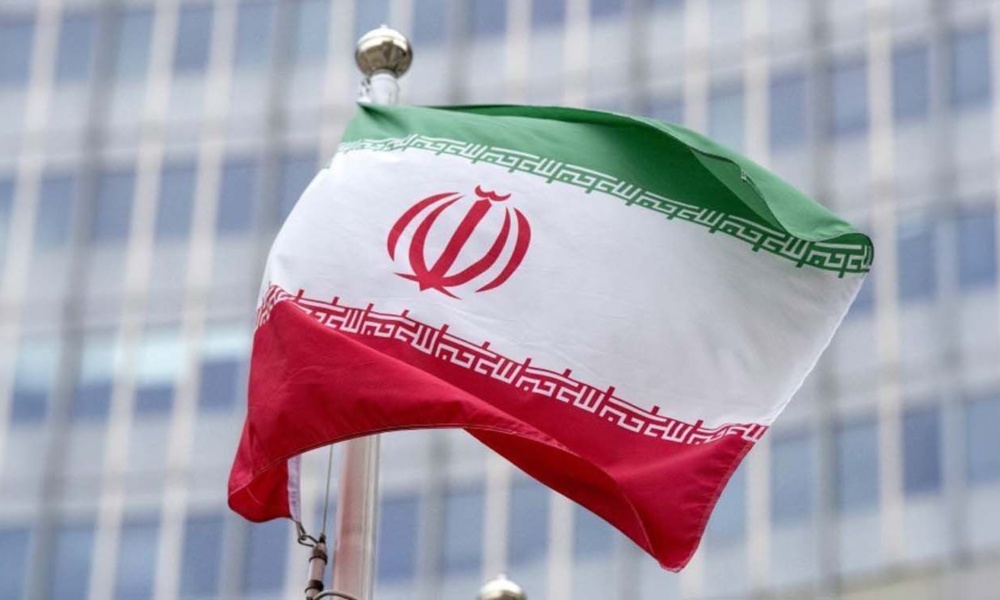
Claims by Donald Trump that the United States is engaged in “good and productive conversations” with Iran have been firmly denied by Tehran, further clouding the already tense standoff between the two sides.
Iran’s Parliamentary Speaker, Mohammad Bagher Ghalibaf, dismissed the assertion, stating that no negotiations are currently taking place. In remarks posted on social media, he accused Washington of spreading “fake news” in an attempt to manipulate global financial and oil markets during a period of heightened volatility.
“No negotiations have been held with the US, and fake news is used to manipulate the financial and oil markets and escape the quagmire in which the US and Israel are trapped,” he said late Monday.
The denial comes after Trump signaled a temporary pause in planned military strikes on Iranian energy infrastructure, including power plants, following his earlier ultimatum that Tehran reopen the strategic Strait of Hormuz within 48 hours or face attack.
Analysts question timing of “talks”
Political analyst Mitchell Plitnick suggested the claim of ongoing talks may have been aimed more at calming markets than reflecting genuine diplomatic progress.
“He saw that markets were likely to react negatively to threats of attacking Iran’s electrical grid and moved to stabilize the situation,” Plitnick said, adding that there is no evidence of active communication between Washington and Tehran.
Iranian officials have consistently maintained that there has been no direct contact with the U.S., reinforcing skepticism over Trump’s statements.
Strategic stakes remain high
The dispute is closely tied to control of the Strait of Hormuz, a critical maritime chokepoint through which a large share of the world’s oil supply passes. Iran has warned it could restrict or even close the waterway if its territory or infrastructure is targeted, a move that could have far-reaching consequences for global energy markets.
Analysts note that this leverage gives Tehran a significant strategic advantage in the ongoing war, particularly as fears of supply disruptions continue to influence oil prices and global economic stability.
Fragile pause amid risk of escalation
While Trump has delayed potential strikes for several days, the situation remains highly volatile. The absence of confirmed diplomatic engagement raises concerns that the pause may be temporary, with the risk of rapid escalation still looming.
As tensions persist, international observers continue to call for transparency, restraint, and renewed diplomatic efforts to prevent a broader conflict in the region.


Two civilians killed, eight injured in fresh shelling by Pakistan in Kunar

EU urges de-escalation between Afghanistan and Pakistan, raises rights concerns

IPL 2026: RCB sold for $1.78 billion in landmark deal

‘Made in Afghanistan’ expo opens in Tashkent

Afghan, Pakistani clerics urge extension of ceasefire until Eid ul-Adha

Pakistani military jet downed in Afghanistan’s Jalalabad, pilot captured alive

Afghan Air Force conducts airstrikes in Islamabad, other cities

Prominent Muslim scholar issues fatwa calling for Afghanistan-Pakistan ceasefire

Afghan air force strikes key Pakistani military installations in retaliatory operation

IEA: Special circle in Pakistan has launched mission to destabilize region

Tahawol: Escalating threats between Iran-US discussed

Tahawol: Possibility of US ground forces entering Iran war discussed

Saar: Using US prisoners as political pressure

Tahawol: Pakistan’s efforts to destabilise Afghanistan

Saar: Decline in international assistance to Afghanistan
-
 Latest News3 days ago
Deadly violence likely without dialogue between Afghanistan and Pakistan: ICG
-

 Sport4 days ago
Ireland to host Afghanistan for ODI series in August
-
 Latest News4 days ago
Mojtaba Khamenei calls for improved Afghanistan–Pakistan relations, offers help
-

 Latest News4 days ago
Malaysian PM welcomes temporary Afghanistan–Pakistan truce, urges lasting peace
-

 Latest News2 days ago
Pakistan seeks Russian mediation to resolve Afghanistan tensions
-

 International Sports3 days ago
FIFA World Cup 2026: Play-Off Tournament takes centre stage
-
 Sport3 days ago
Afghanistan secures third place at 2026 World Kokpar Championship
-
 Business3 days ago
Afghani strengthens nearly 10% against US dollar amid banking sector reforms