
Latest News
‘Desperate situation’ for Ghani as his power is undermined: NYT

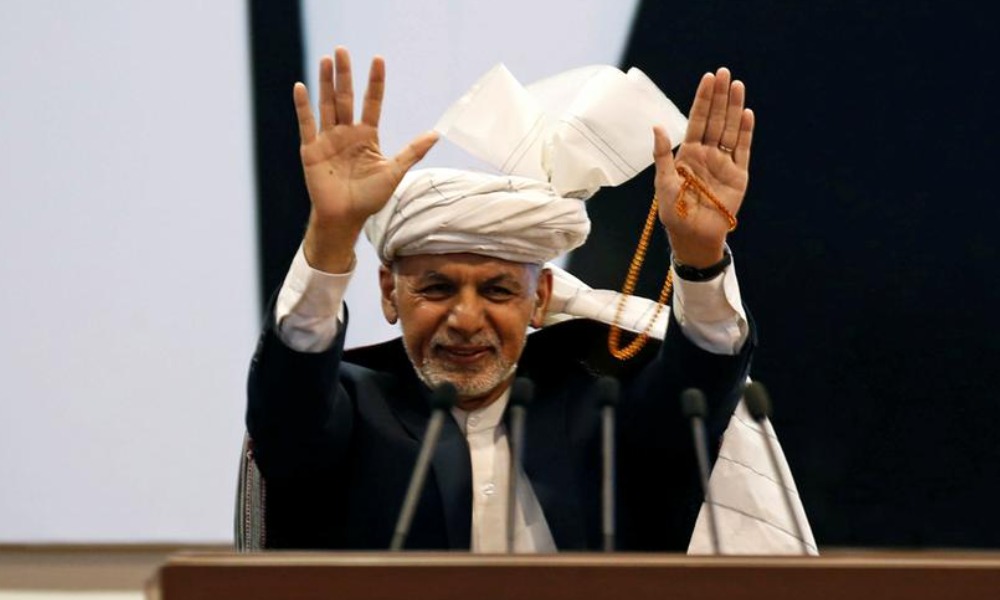
A senior Afghan military official said this week that if the US pulls out without a political settlement having been reached between government and the Taliban, the country will be in “deep trouble”.
Speaking to the New York Times this week, the security official said: “If the US pulls out, and there is no political agreement, then we are in deep trouble.”
“Militarily, we don’t have much hope,” he said. “If we don’t get something, the Taliban are going to march. It’s going to be a severe battle.”
One Western diplomat in Kabul said the country’s military position is deteriorating. Each day brings news of security force members blown up or gunned down.
“They can’t keep doing that,” said the diplomat, commenting on the steady loss of military strength. “The toll on the government, and the credibility and legitimacy it has, it’s not sustainable.”
The New York Times reported that this comes at a time where President Ashraf Ghani has few remaining allies, the Taliban are gaining militarily and his international supporters are impatient with him and the stumbling peace process.
The article questions how much control Ghani actually has over his country’s future and his own – questions that have, according to the NYT, been largely resolved by politicians, analysts and citizen: Not much!
NYT reports Ghani is dependent on the counsel of a handful of people and is unwilling to even watch television news – also that he is losing allies fast.
This, the NYT reports, spells trouble for a country where a hard-line insurgency has the upper hand militarily, where nearly half the population faces hunger at crisis levels, where the majority of government money comes from donors and where weak governance and widespread corruption are endemic.
This, meanwhile, is all taking place as Washington is preparing to pull out its last remaining troops, “a prospect expected to lead to the medium-term collapse of the Afghan forces they now support,” the report read.
Former National Directorate of Security chief Rahmatullah Nabil told the NYT: “He (Ghani) is in a desperate situation.”
“We’re getting weaker. Security is weak, everything is getting weaker, and the Taliban are taking advantage.”
The NYT reported that many are fed up with what they see as Ghani’s obstinacy in refusing to make concessions to adversaries, or his condescending style and that a recent letter to him from US Secretary of State Antony Blinken was so harsh that even Afghans critical of Ghani found it insulting.
The letter used the phrase “I urge you” three times while Blinken also said “I must also make clear to you, Mr. President … that as our policy process continues in Washington, the United States has not ruled out any option.”
The NYT stated that the unspoken subtext was clear: Your influence is minimal.
Hekmat Khalil Karzai, the head of an Afghan think tank reacted to this and said: “As an Afghan, a sense of humiliation comes over you.”
“But I also feel Ghani deserves it,” Karzai said. “He’s dealing with the kiss of death from his own closest partner.”
This comes as US President Joe Biden continues to “review” the agreement signed with the Taliban in February last year – which stipulates Washington pulls out all its troops by May 1 – a deadline that is just three weeks away.
It also comes amid a flurry of meetings between leaders of countries in the region, of US officials and Afghan politicians.
The key issue currently is the US proposal of an interim government followed by elections – an interim government that would include Taliban participation.
As pointed out by the NYT, such a move could require Ghani to step down – something he has until now repeatedly refused to consider.
Ghani has his own plan, which includes early elections but the NYT states, both Washington’s plan and Ghani’s could fall flat as the Taliban have never said they would agree to elections, nor have they indicated that they would go along with any sort of government plan or be content with power-sharing.
“From what we’re seeing, they want absolute power, and they are waiting to take power by force,” Ghani’s national security adviser, Hamdullah Mohib, said in an interview.
Visions of September 1996, when the Taliban rolled into Kabul virtually unopposed and proceeded to establish their harsh regime, haunt the capital, the NYT stated.
Meanwhile some former officials criticized Ghani as being compelled to micromanage all ministries and departments, including that of military matters.
Karzai said: “He likes that, because he feels he’s the only one [competent to make serious decisions].”
But Mohib called the micromanagement accusation “a huge exaggeration,” saying that the president had not attended a security meeting “in weeks,” adding that “he is aware of the strategic picture.”
When contacted by the NYT for an interview, Ghani’s communications office refused, while a senior aide did not respond to an interview request.
A Western diplomat meanwhile told the NYT that the consequences of Ghani’s isolation is not good for Afghan unity and that these divisions spread from Kabul into the country’s fractious regions, where independent militias and other longstanding power-brokers have either rearmed themselves or are preparing to do so.
One example cited by the NYT is the low-intensity fight between government forces and the militia of a minority militia commander, Alipour, which has been smoldering for months.
The fight was recently fueled by the downing of an Afghan forces helicopter in March by Alipour’s men.
The NYT reported that Ghani and his aides have taken an active role in managing the conflict, to the dismay of the Afghan military.
“This is what we wanted to avoid. We are already stretched,” said a senior Afghan security official. “And here, you want to start another war?”
In conclusion, the NYT article noted that the upcoming talks in Turkey, the Istanbul Summit, could well end up like the recent ones in Moscow and Dushanbe, Tajikistan — with bland communiqués deploring violence and hoping for peace.
The American idea — to substitute new talks in a new locale for the old talks in Qatar that have gone nowhere — is not necessarily a winning bet and that early signs are not promising, with Ghani once again rejecting preliminary American proposals, and the Taliban aggressively noncommittal about the ideas currently on the table, the NYT reported.



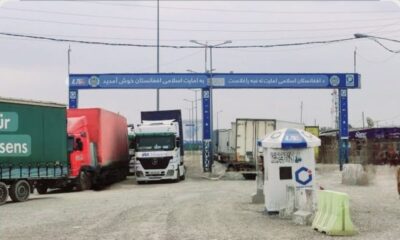




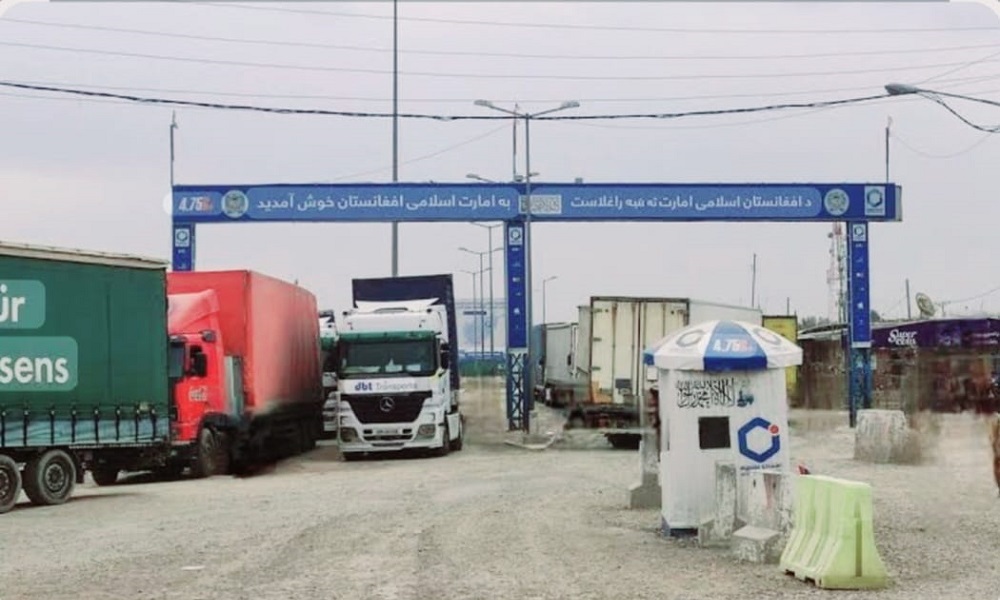
Mohammad Yousuf Saeedi, spokesperson for the governor of Herat, announced on Friday that Iranian cargo truck drivers will no longer need visas to enter Afghanistan.
Saeedi said that, by order of the leader of the Islamic Emirate, starting Saturday, Iranian transit vehicles will be allowed to enter Afghanistan without a visa or a “road pass.”
According to him, the implementation of this decision will reduce transportation costs and, as a result, lower the prices of goods.
Noor Ahmad Islamjar, the governor of Herat, visited the Islam Qala border crossing on Friday to review the implementation of this order. During the visit, he discussed the details of executing the plan with officials from relevant departments, including representatives from the Ministry of Foreign Affairs, Public Works, Customs, and Transport.
Starting Saturday (March 28), foreign cargo vehicles are expected to enter the Islam Qala border without the need for a visa or road pass, unload their goods, and then return to their destinations.
The statement added that implementing this plan could reduce transportation fares on one hand and, by lowering transport costs, help decrease the prices of goods on the other.
This process will create daily job opportunities for more than 1,000 people.
Latest News
Afghans in Iran face growing uncertainty as war enters second month
The organization said that since the start of the war, more than 35,000 Afghans have returned to Afghanistan.
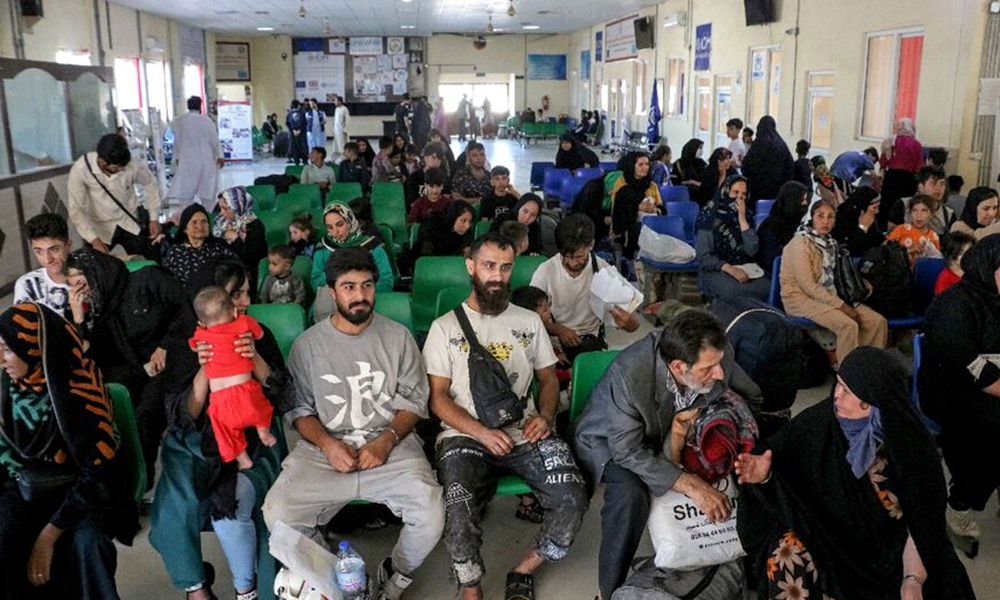
Millions of Afghans living in Iran are facing increasing uncertainty and hardship as the war in the country enters its second month, according to the Norwegian Refugee Council (NRC).
In a statement, NRC Secretary General Jan Egeland warned that more than four million Afghans residing in Iran are among the most vulnerable groups affected by the ongoing conflict. Many Afghan families have lost their only sources of income as informal work has collapsed amid continuous airstrikes and economic disruption.
According to the NRC, a large number of Afghans live in major cities that have come under heavy attacks. Many are unable to flee to safer areas because they have nowhere to go or lack legal permission to travel.
The organization said that since the start of the war, more than 35,000 Afghans have returned to Afghanistan, while over one million Afghan migrants in Iran remain at risk of deportation to a country already struggling with humanitarian challenges.
Egeland noted that after a month of sustained Israeli and U.S. bombardment across Iran, the civilian population is exhausted and deeply traumatized. Millions of people have already fled their homes in search of safety, while others remain trapped in dangerous conditions.
Reports indicate that thousands of homes, hospitals, and schools have been damaged or destroyed across Iran. NRC staff in Tehran say many neighborhoods have suffered significant destruction, while families are taping their windows to prevent injuries from shattered glass caused by nearby explosions.
The war has also severely disrupted daily life, with internet outages and major disruptions to banking services making it increasingly difficult for residents to access basic needs.
According to available data, about 2,700 people have been killed across the Middle East in attacks involving the United States, Israel, and Iran, with more than half of the casualties reported inside Iran. Iran’s Health Ministry says that between February 28 and March 25, at least 1,500 people were killed and over 18,000 injured in the country.
Humanitarian organizations warn that funding for life-saving assistance in both Iran and Afghanistan remains critically low. Aid agencies say they lack sufficient resources to prevent hunger and provide emergency shelter for displaced families.
Egeland warned that if the war continues, the region could face a far larger humanitarian crisis, with millions potentially forced to flee across borders and placing further pressure on already fragile neighboring countries.
He called on all parties involved in the conflict to respect international humanitarian law, stop attacks on civilians and civilian infrastructure, and work toward a diplomatic solution to end the crisis.
Latest News
Russia deems US military presence in Afghanistan unacceptable
Kabulov’s remarks came in response to growing concerns regarding the U.S. military’s presence in the Middle East, particularly amid rising tensions with Iran.
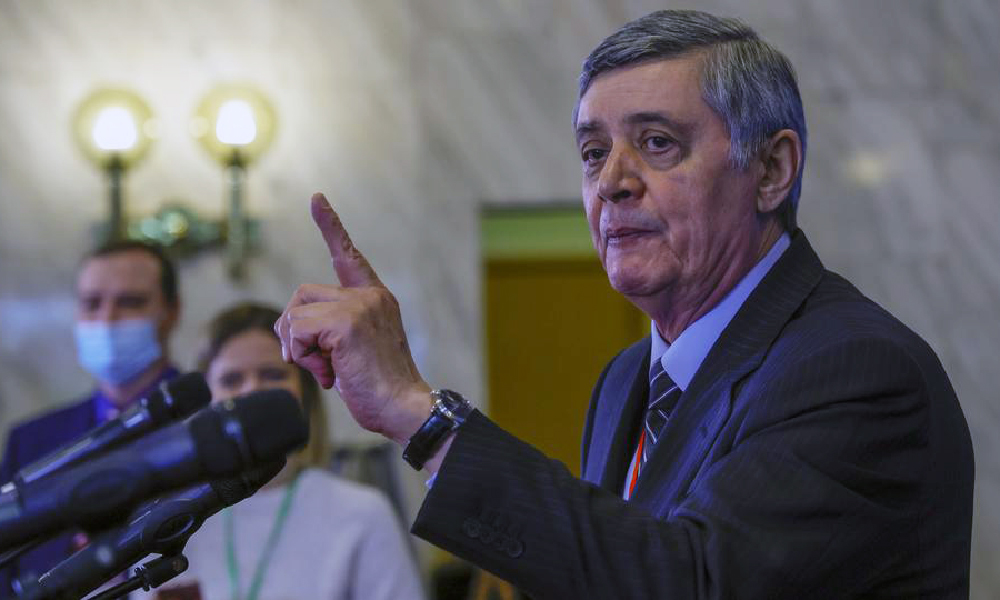
Russia has strongly condemned any potential return of U.S. military forces to Afghanistan, specifically the possibility of reopening Bagram Air Base, calling such moves “categorically unacceptable.” The statement was made by Zamir Kabulov, the Russian President’s special representative for Afghanistan and senior adviser to the Russian Foreign Ministry, in an interview with RIA Novosti.
Kabulov emphasized that Moscow opposes the establishment of any U.S. or NATO military infrastructure on Afghan soil or in neighboring regions, under any pretext. He also expressed hope that the Taliban-led government in Afghanistan, known as the Islamic Emirate of Afghanistan, would share Russia’s stance on the issue.
Kabulov’s remarks came in response to growing concerns regarding the U.S. military’s presence in the Middle East, particularly amid rising tensions with Iran. There have been reports suggesting that the U.S. might seek access to Bagram Air Base again as part of a strategic pivot in the region.
Recalling the previous administration under former U.S. President Donald Trump, Kabulov noted that the U.S. had persistently sought to regain control of Bagram Air Base following its chaotic withdrawal from Afghanistan in August 2021. “There is nothing new in these demands,” Kabulov stated, referring to the ongoing push by the U.S. to re-establish a military foothold in the region.
Russia’s firm stance reflects its broader geopolitical concerns regarding the influence of the U.S. and NATO near its borders, particularly in Central Asia and Afghanistan.


Exclusive interview with Indrika Ratwatte, Deputy UN Special Representative for Afghanistan

US Vice President Vance emerges as key figure in Iran peace efforts: Report

Tawsia: Efforts to boost Afghanistan’s domestic production and economic diplomacy

Trump extends deadline for striking Iranian energy plants to April 7

IEA says Iranian drivers no longer need visas to enter Afghanistan

Pakistani military jet downed in Afghanistan’s Jalalabad, pilot captured alive

Afghan Air Force conducts airstrikes in Islamabad, other cities

Prominent Muslim scholar issues fatwa calling for Afghanistan-Pakistan ceasefire

Afghan air force strikes key Pakistani military installations in retaliatory operation

IEA: Special circle in Pakistan has launched mission to destabilize region
Exclusive interview with Indrika Ratwatte, Deputy UN Special Representative for Afghanistan
Tawsia: Efforts to boost Afghanistan’s domestic production and economic diplomacy

Tahawol: Discussion on day 27 of Iran–US war

Saar: Islamic Emirate confident of Durand Line control

Tahawol: Efforts to release Mohammad Rahim from Guantanamo Bay Detention Camp
-

 Latest News4 days ago
Pakistan seeks Russian mediation to resolve Afghanistan tensions
-
 Latest News5 days ago
World must re-engage to prevent all-out Afghanistan-Pakistan war: Financial Times
-
 Latest News3 days ago
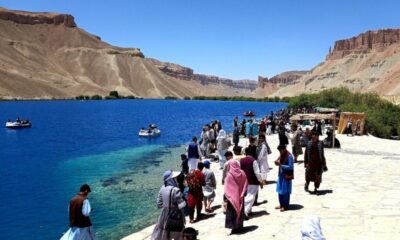
Around 2.3 million tourists visited Afghanistan’s recreational areas during Eid: Ghufran
-

 Sport3 days ago
Afghanistan squad hit by withdrawals ahead of AFC Asian Cup Qualifiers
-
 Latest News1 day ago
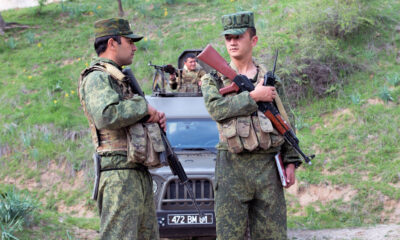
Tajikistan shifts stance on Afghanistan amid rising border tensions
-
 Latest News3 days ago
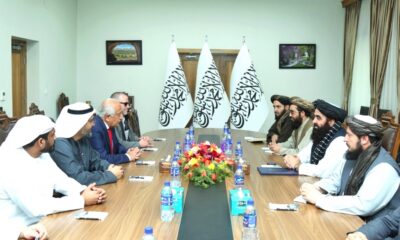
Islamic Emirate releases American prisoner Dennis Coyle
-
 Latest News4 days ago
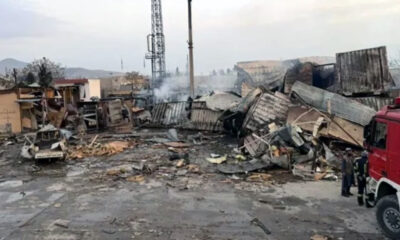
Airstrike on Kabul drug rehabilitation centre sparks legal concerns
-
 Latest News2 days ago
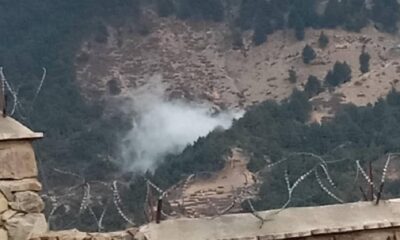
Two civilians killed, eight injured in fresh shelling by Pakistan in Kunar