
Latest News
Differences grow over National Unity Government

![GOV 9_4_2015_DARI_SOT.avi_snapshot_00.16_[2015.04.09_15.01.18]](https://ariananews.af/wp-content/uploads/2015/04/GOV-9_4_2015_DARI_SOT.avi_snapshot_00.16_2015.04.09_15.01.18.jpg)
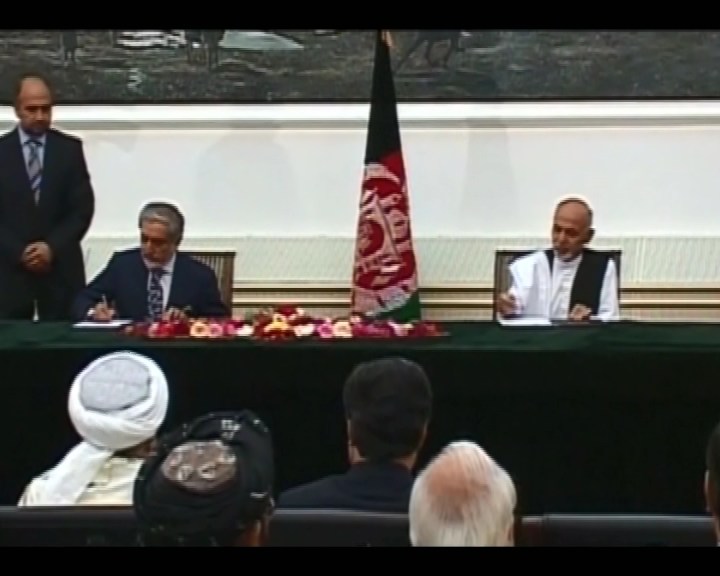
Months after President Ashraf Ghani was sworn in, Afghanistan is still struggling to form a government, damaging the economy and miring the country in uncertainty as the Taliban insurgency continues.
Afghan political analysts are said to consider the extreme differences between the two leaders of government caused people to not be satisfied with government’s performance, adding NUG will disrupt if the situation and same differences continue.
Political analysts believe that the national unity government was not formed based on law, so that disagreements become more with each day passing.
M.P.s turned down all but eight of Ghani’s 25 picks for a range of reasons—from dual-citizenship to problems with educational documents and at least one nominee whose name was found to be on an Interpol wanted list.
It means Afghanistan must get by for nearly months with no permanent minister in several key posts, including defense.
![GOV 9_4_2015_DARI_SOT.avi_snapshot_01.12_[2015.04.09_15.01.47]](https://ariananews.af/wp-content/uploads/2015/04/GOV-9_4_2015_DARI_SOT.avi_snapshot_01.12_2015.04.09_15.01.47.jpg)
Afghanistan faces an array of daunting problems, including a fierce and resilient Taliban insurgency, widespread corruption, poverty and growing unemployment among the country’s 30 million population, most of whom are young. The economy suffered during the months of deadlock that followed last year’s disputed presidential election.
Following the differences and disagreements, the chief of executive officer (CEO) Abdullah Abdullah said that the executive office is not a ceremonial post of a gift; the position has its full authorities.
According to finance ministry data, income in 2014 fell short of predictions by around 25 percent because the disruption caused by the lengthy election process reduced trade and investment.
![GOV 9_4_2015_DARI_SOT.avi_snapshot_01.48_[2015.04.09_15.02.22]](https://ariananews.af/wp-content/uploads/2015/04/GOV-9_4_2015_DARI_SOT.avi_snapshot_01.48_2015.04.09_15.02.22.jpg)
Analysts fear that without permanent ministers, there may be delays to international aid and development payments—on which the Afghan economy is heavily dependent.
They warned that the continuation of the current situation will damages the integrity of the country and the leaders of national unity government.
In public, Ghani and Abdullah repeatedly talk confidently about the future of the new Afghan government and its ability to improve lives in the war-ravaged country.
However, Afghanistan presidency and the executive office are said to consider these differences an ordinary issue in governing affairs.
Reported by Hamid Sidiqi

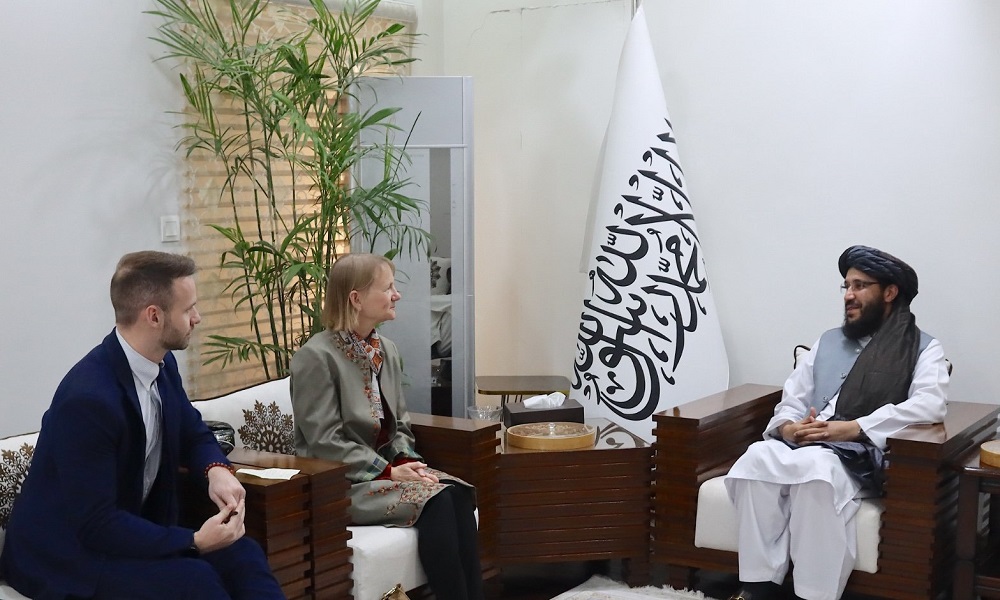
A UNHCR delegation led by Filippa Candler, Head of UNHCR in Afghanistan, met with Sardar Ahmad Shakeeb, Ambassador of the Islamic Emirate of Afghanistan to Pakistan, to discuss ongoing humanitarian assistance and challenges faced by Afghan refugees in Pakistan.
The meeting, which also included Charlie Goodlake, Senior External Relations Officer for the UNHCR Commission in Afghanistan, focused on the plight of remaining Afghan refugees, students, and other Afghan nationals living in Pakistan.
Ambassador Shakeeb welcomed the delegation and praised UNHCR for closely monitoring refugees’ living conditions and communicating their situation to the international community. However, he noted that the assistance provided so far remains insufficient.
“Although the support is limited, it is commendable that UNHCR continues to highlight refugees’ hardships,” Shakeeb said during the meeting.
Candler acknowledged the constraints, stating that despite financial limitations, UNHCR remains committed to providing the maximum possible assistance to Afghan refugees.
Goodlake provided an update on UNHCR’s support for returnees, saying the organization delivered approximately $25 million in assistance to refugees returning from Pakistan and Iran in 2025. He confirmed that UNHCR’s support would continue in coordination with the Afghan government.
The meeting concluded with both parties agreeing to continue cooperation and strengthen coordination on refugee and returnee support.
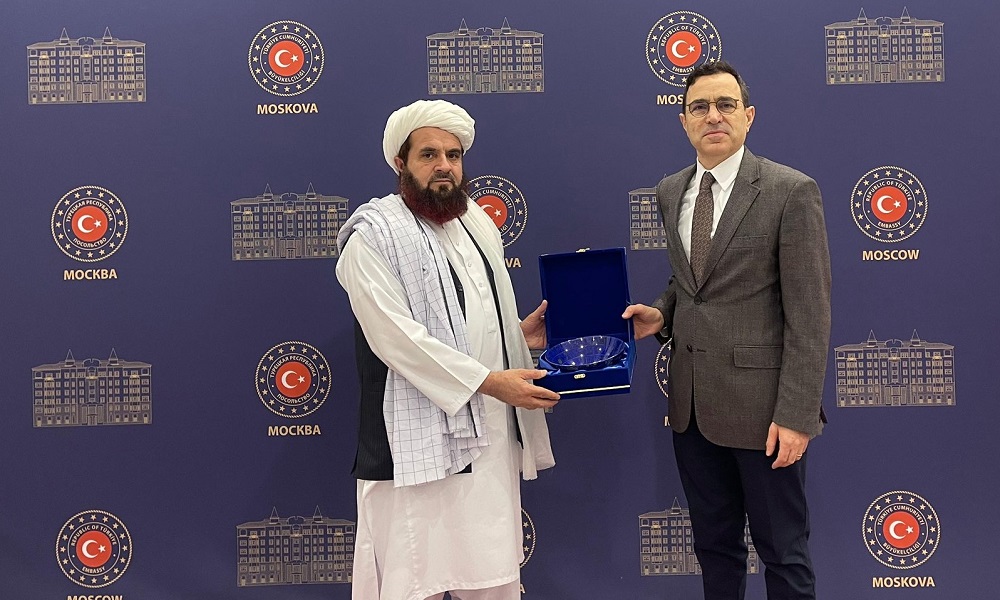
Gul Hasan Hasan, the Ambassador of the Islamic Emirate of Afghanistan in Moscow, met with Tanju Bilgic, the Ambassador of Turkey, to discuss strengthening and expanding political, economic, and cultural relations between Kabul and Ankara.
In a statement issued by the Afghan Embassy in Moscow on Friday, the meeting also expressed appreciation for Turkey’s balanced policy toward the Islamic Emirate, based on mutual respect.
Both sides emphasized the need to facilitate visa issuance for Afghan traders and patients by Turkey and to further strengthen comprehensive cooperation between the two countries.
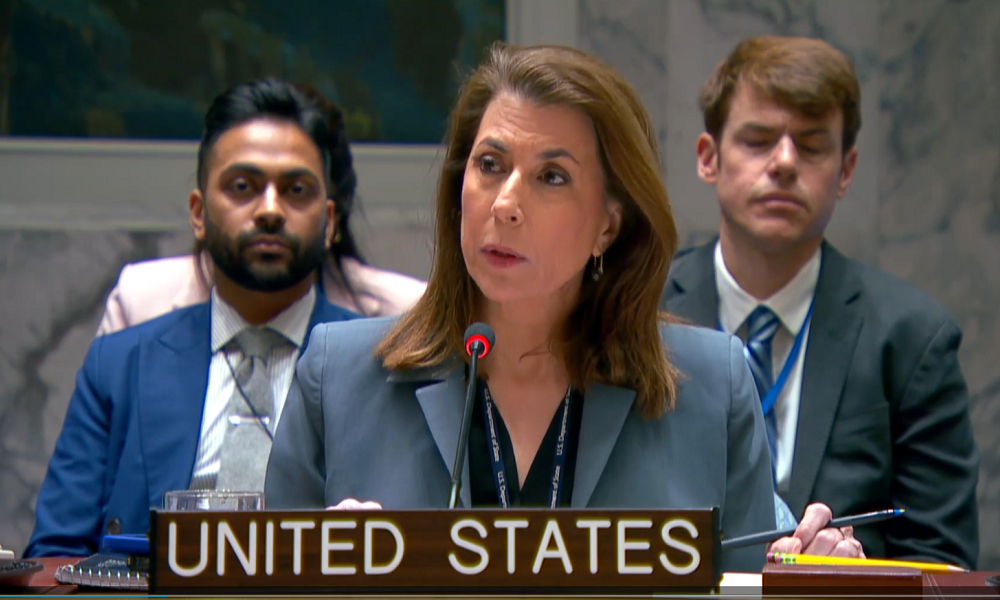
At the United Nations Security Council session renewing the 1988 sanctions mandate, US deputy representative, Tammy Bruce, said on Thursday that the Monitoring Team remains vital for assessing security and human rights conditions in Afghanistan.
She said the team’s reports provide key insights into the Islamic Emirate’s counterterrorism efforts and its human rights record, especially regarding women and girls.
Bruce accused the IEA of continuing “hostage diplomacy,” noting they have sought the release of an al-Qaida operative held at Guantanamo Bay detention camp in exchange for detained American citizens.
“The Taliban (IEA) must end all forms of hostage-taking and wrongful detentions,” she said. “The UN 1988 sanctions regime and its Monitoring Team remain critical tools for the international community to hold the Taliban accountable, including for these deplorable tactics.”
China’s envoy, Fu Cong, welcomed the Monitoring Team’s recent visit to Afghanistan and encouraged its experts to maintain engagement with and dialogue with the Afghan government.
“We urge the Afghan government to earnestly fulfil its counterterrorism responsibilities and take more resolute and effective measures to completely eradicate all terrorist forces in the country, including Daesh, al Qaeda, ETIM and TTP,” he said.
The envoy called for travel ban exemptions for Islamic Emirate officials to facilitate their international engagement.
Russian deputy representative, Anna Evstigneeva, said that attempts to shift the focus from key issues related to combating terrorism and narcotics trafficking to the human rights situation in Afghanistan are counterproductive and will undermine the effective implementation by experts of their tasks.


Exclusive interview with Naeemul Haq Haqqani, head of the government media center

Tawsia: IEA’s residency plan for foreign investors discussed

UNHCR delegation meets Afghan ambassador in Islamabad to discuss refugee support

Afghan and Turkish ambassadors discuss expansion of bilateral relations

US accuses IEA of ‘hostage diplomacy’ at UN Security Council meeting

Pakistan army orders evacuation of Tirah Valley, fears of mass displacement grow

Afghan traders sign deal to import pharmaceuticals from Bangladesh

AFC Futsal Asian Cup 2026: Day One Review

Afghan envoy in UAE holds talks with Etihad Airways on launch of direct flights

Over 5.2 million Afghans return from Iran, Pakistan in 2025; IFRC warns of growing crisis
Exclusive interview with Naeemul Haq Haqqani, head of the government media center
Tawsia: IEA’s residency plan for foreign investors discussed

Tahawol: U.S. review of Afghanistan policy discussed

Saar: Discussion on close ties between Daesh and Pakistan

Tahawol: IEA’s rejection of global corruption index report discussed
-

 Sport5 days ago
Champions League Elite action continues as qualification race tightens
-

 International Sports4 days ago
IPL 2026: Franchise sales gather pace as global investors circle teams
-

 Sport5 days ago
Early medal leaders emerge as Winter Olympics continue in Italy
-
 Latest News5 days ago
Terrorist activities observed along Afghanistan borders, says Lavrov
-

 World5 days ago
Hong Kong tycoon Jimmy Lai sentenced to 20 years in jail in national security trial
-
 Latest News5 days ago
Pakistan president claims situation in Afghanistan is ‘similar to or worse than pre-9/11’’
-
 Business4 days ago
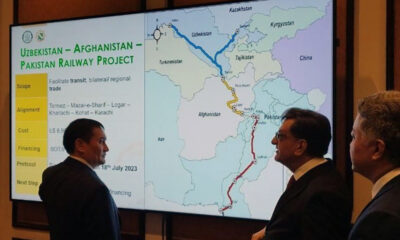
Uzbekistan approves feasibility study agreement for Trans-Afghan Railway
-
 Sport2 days ago
Afghanistan’s semi-final hopes hang in the balance after two T20 World Cup defeats