
Latest News
Hundreds die in surge of violence in Afghanistan

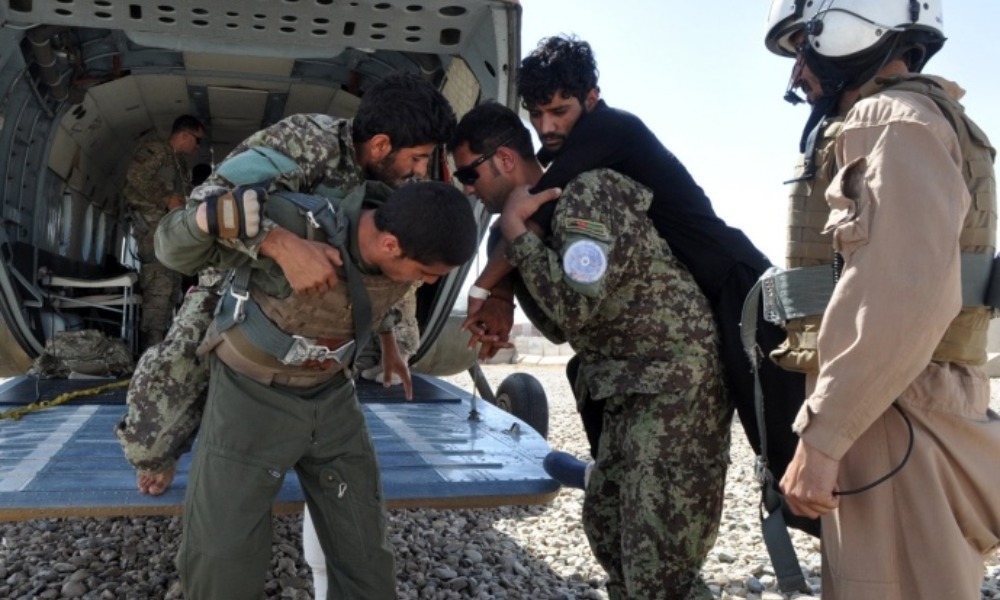
More than 100 Afghan security force personnel have been killed over the last two weeks amid a surge of Taliban attacks following Washington’s announcement it would pull all U.S. troops out by Sept. 11, officials said on Thursday.
Senior Afghan officials say the Taliban is putting on a show of force and seeking to gain territory as foreign forces pull out. The Taliban has waged a two-decade-long insurgency since being ousted from power by U.S.-led foreign troops in 2001.
According to two senior security officials, around 120 Afghan security forces personnel, 65 civilians and over 300 Taliban fighters have been killed in the last 15 days of fighting, and scores more wounded across the country.
A spokesman for the Interior Ministry, Tariq Arian, said the Taliban have carried out at least six suicide bombings and several targeted killings and had planted 65 roadside bombs to target government troops.
He added that more than 60 civilians have been killed and 180 injured. He did not provide figures for casualties suffered by security forces, in keeping with usual government practice.
Dozens of Taliban fighters, including several commanders, have been killed during operations, Arian said.
Taliban spokesman Zabihullah Mujahid rejected the government’s claim the group had inflicted civilian casualties, saying these were caused by air and ground operations by Afghan forces. He did not comment on the deaths of Taliban or security forces.
President Joe Biden earlier this month announced the United States would begin its final military withdrawal on May 1, completing it by Sept. 11. Foreign troops under NATO command will also withdraw, NATO allies agreed.
The White House said on Thursday that American troops had started withdrawing from Afghanistan, confirming comments made over the weekend by a senior U.S. general.
Since Biden’s announcement, violence has increased by nearly a quarter around the country, with Taliban attacks reported in 21 of the 34 provinces, an Afghan Defence Ministry spokesman said.
“We are already in the middle of Taliban’s annual spring offensive but we are prepared and conducting our operations,” said a senior government official, who asked not to be named.
Afghan chief of intelligence Ahmad Zia Siraj said the Taliban have increased violence “to the highest level” in recent days.
Top security leaders flew to the central province of Ghazni on Thursday to assess the situation amid reports of the Taliban amassing fighters in the area to overrun the strategic province.
Peace efforts stalled after the Taliban and the Afghan government began talks in the Qatari capital Doha last year. Washington pushed for a summit in Turkey this month but that was postponed because the Taliban refused to participate, and no new date has been set.
The troop pullout deadline of Sept. 11 is later than a May 1 deadline agreed between the Taliban and United States in Doha last year. The Taliban, which has not attacked foreign troops since the Doha agreement, has called the delay unacceptable.












Kazakhstan’s Foreign Minister Mukhtar Tileuberdi has called for pragmatic and coordinated international engagement with Afghanistan, saying the country’s long-term stability is closely linked to the security and sustainable development of Central Asia.
Speaking during the general debate of the 81st session of the United Nations General Assembly in New York on Friday, Tileuberdi said humanitarian assistance to Afghanistan remains essential but alone cannot break the cycle of poverty, displacement and dependency.
He said Kazakhstan supports a “pragmatic, coordinated and step-by-step” approach to international engagement with Afghanistan, with the United Nations playing a central role.
Tileuberdi also said Kazakhstan is working with the UN to operationalize the United Nations Regional Centre for the Sustainable Development Goals for Central Asia and Afghanistan in Almaty.
He said the success of the centre should be measured by the results and assistance it delivers to the region.


Abu Muslim Farah defeat Khurasan Faryab 2-0 in ACL season six

Saar: Concerns over Pakistan’s political crisis discussed

Afghanistan Champions League: Omar Zawak Herat beat Toofan Herat 1-0

Blast in Pakistan’s Dera Ismail Khan kills 11, injures 30

Ariana Afghan Airlines increases Kabul-Delhi cargo flights

Saudi energy group signs major Afghanistan deals covering gas exploration and pipeline plans

Trump floats idea of renaming Atlantic or Pacific Ocean

US hits Egyptian bank branches with Iran sanctions as war marks six months

Nepal flood rescue mission enters critical phase as thousands remain missing

Iranian clubs to face Gulf opponents at neutral venues in Asian Champions League Elite
Saar: Concerns over Pakistan’s political crisis discussed

Exclusive interview with Abdul Latif Mansoor, Minister of MRRD

Tawsia: Overview of Afghanistan’s iron mines

Tahawol: Discussion on fresh Pakistani airstrikes on Afghanistan

Saar: Calls for international support for Afghanistan discussed
-

 World5 days ago
CNN, MS NOW and Politico sue Trump, challenging White House ban
-

 Latest News3 days ago
Ariana Afghan Airlines ranks seventh among 45 Central Asian airlines
-

 Latest News4 days ago
UN reiterates call for respect for international law after Kunar airstrikes
-

 Regional3 days ago
US and Iran hold first talks since June after Trump’s ‘annihilation’ threat
-

 Latest News3 days ago
Silk Road highway in Wakhan corridor now reaches the China border
-

 Latest News4 days ago
Afghan Official: Pakistan’s airstrikes will not go unanswered
-

 Sport4 days ago
Afghan boxing referee heads to China for international festival
-
 Regional5 days ago
G7 foreign ministers call on Iran to stop arming Houthis