
Latest News
IEA calls on Doha meeting delegates to help resolve Afghanistan’s challenges
Mujahid told delegates that the IEA is endeavoring to achieve economic independence by laying the foundations of a self-sustaining and secure national economy.

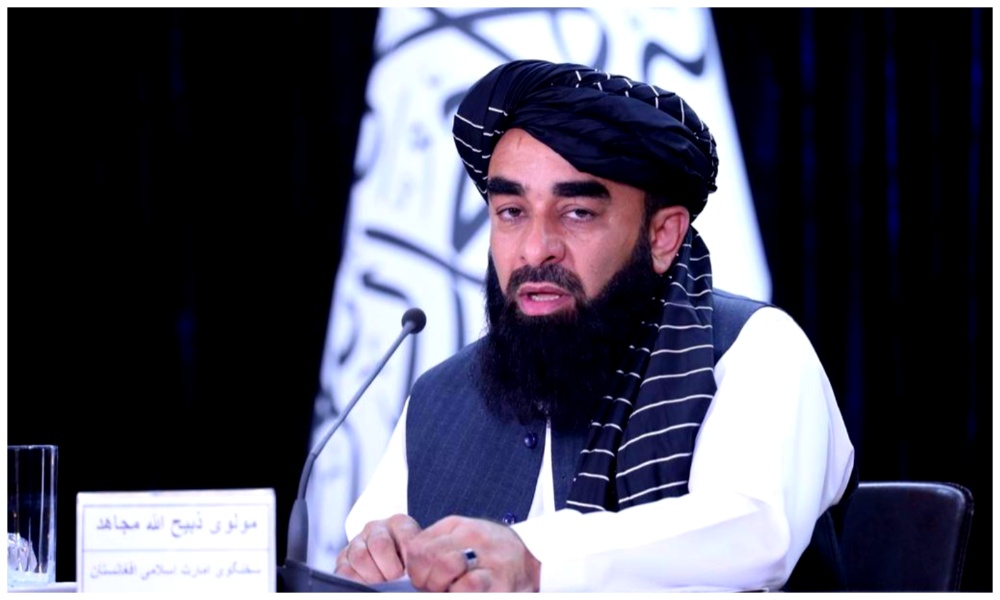
Heading Afghanistan’s delegation to Doha, Zabihullah Mujahid on Sunday called for working groups to be established to resolve three critical issues – the removal of all restrictions and sanctions; the unfreezing of all Afghanistan’s foreign reserves; and finding alternative livelihoods for former poppy farmers.
In his speech to delegates attending the UN-led Doha meeting on Afghanistan, Mujahid said: “We perceive the current Doha meeting as a crucial opportunity to engage in constructive dialogue regarding the unilateral and multilateral sanctions imposed on some officials and our financial and banking sectors, as well as the broader challenges confronting our national economy.”
He said the Doha forum represents a positive step towards addressing Afghanistan’s key challenges but noted that questions were being asked at home as to why no easing of sanctions had been made on the financial and trade sectors.
Mujahid stated that Afghans, who have suffered through almost 50 years of conflict, foreign invasions and interference by other countries had now gained independence, ended the war and built a system aimed at “fostering positive engagement with the world, however, in return they faced sanctions and restrictions?
“Is it fair and appropriate?” Mujahid asked.
He said he knows some countries disagree with the Islamic Emirate’s policies but that it was the duty of experienced diplomats to find ways to interact and understand each other.
“The policy differences should not escalate to the extent that powerful countries use their leverage to impose security, political, and economic pressures on our people, affecting the lives of our nation in a significant way,” he said.
He raised the issue of poppy cultivation and said despite sanctions and outside pressure, the IEA had banned the cultivation, processing and smuggling of poppy.
“Poppy cultivation, which remained as a significant challenge in Afghanistan, we reduced it to almost zero; however, in contrast, instead of recognizing and commending these initiatives, lifting banking restrictions to stimulate the country’s economy and unfreezing national reserves, some countries have continued with their policy of non-cooperation,” he said.
Mujahid told delegates that the IEA is endeavoring to achieve economic independence by laying the foundations of a self-sustaining and secure national economy.
“We are committed to advancing real economic development in Afghanistan, taking initial steps towards creating jobs, establishing factories, lifting people out of poverty, and creating business opportunities for women,” he said.
Acknowledging the countries that provide humanitarian aid, Mujahid implied this was not a solution but that in order to end the humanitarian crisis, the international community needed to remove sanctions, provide development aid and allow the government and people of Afghanistan to utilize their capacities without restrictions for the revival of the national economy.
He spoke on the progress the IEA has made with its neighboring countries in terms of connectivity and mentioned the railway project linking Uzbekistan to Afghanistan and Pakistan. He also touched on the Turkmenistan-Afghanistan-Pakistan-India (TAPI) gas pipeline project.
“In collaboration with Turkmenistan, we have made significant progress regarding the implementation of the ambitious gas pipeline project (TAPI) over the past two years. This milestone ensures positive participation in energy exchange and connectivity between Central and South Asia through Afghanistan,” he said.
He pointed out that a secure Afghanistan benefits the entire region and that ties already forged with regional countries demonstrates the IEA’s commitment to establishing and maintaining good relations.
In light of this, other nations, especially Western countries, can remove obstacles hindering the development of relations with the IEA, he said, emphasizing that differences of opinion “are natural”.
“Like the regional countries, they can take genuine and practical steps toward positive engagement,” Mujahid said.
“The Islamic Emirate of Afghanistan is keen on engaging constructively with Western nations as well. Like any sovereign state, we uphold certain religious and cultural values and public aspirations that must be acknowledged to facilitate progressive bilateral relations rather than encountering disputes and stagnation.
“Our aspiration is for the national sovereignty, independence, values, and preferences of the Islamic Emirate of Afghanistan to be duly respected, as affirmed by the United Nations Charter,” Mujahid said.
He also outlined progress made on a diplomatic note and said: “Just as the regional countries have positively interacted with the current government of Afghanistan as a responsible system, we hope that Western countries will also prioritize mutual bilateral interests in a similar manner.”
Mujahid however slammed “countries and organizations that profess to uphold human rights”. This was in relation to the “ongoing genocide in Gaza, Palestine.”
Without naming countries or organizations, he said: “It is important to note that certain entities directly involved in this humanitarian atrocity lack the moral standing to lecture us on human rights.
In conclusion, he reiterated that in order to ensure the Doha meeting is productive and meaningful, two areas need to be focused on. First was the removal of all restrictions and sanctions and second was the unfreezing of all Afghanistan’s foreign reserves.
“The continued freezing of these reserves has severely impaired the ability of commercial banks to meet the currency needs of their clients, both domestically and internationally,” he said adding that it was also crucial that interactions between
Afghanistan banks and foreign banks resume.
Mujahid’s third point was that alternative livelihoods were needed for Afghan farmers who previously cultivated poppies.
“This is a shared responsibility that must be addressed collectively, and Afghanistan should not be left to manage this challenge alone.
“I propose the formation of working groups to address these issues and look forward to having effective and productive discussions with respected representatives on these matters.”
The UN is hosting its 3rd meeting on Afghanistan. The meeting got underway on Sunday, June 30 and will wrap up on Monday, July 1 in Doha, Qatar.
Representatives from more than 25 countries and international organizations are taking part in the meeting.
RELATED STORIES
Third Doha meeting on Afghanistan gets underway in Qatar
Back from UAE, IEA officials say numerous countries keen to expand ties






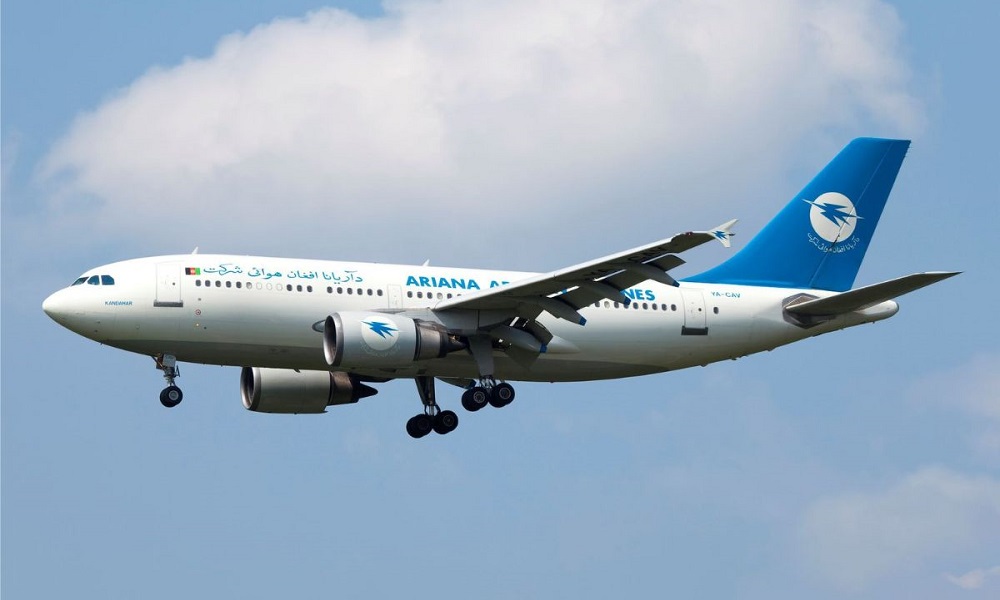
Ariana Afghan Airlines has ranked seventh among 45 airlines in Central Asia in Skytrax’s 2026 rankings.
Company officials say Ariana Afghan ranked eighth on the list in 2025, but moved up one place this year following improvements in service quality and the expansion of its operations.
According to the officials, in 2026 the airline met criteria including service quality, flight safety, professional cabin crew, and experience in the aviation sector, placing it among the top 10 airlines in Central Asia.
Skytrax is an international organization that evaluates and ranks the quality of services in the aviation industry and airlines, assessing and ranking carriers annually based on specific criteria.
Latest News
Silk Road highway in Wakhan corridor now reaches the China border
The road is expected to be officially opened for use in the near future, potentially improving connectivity through the remote Wakhan Corridor.
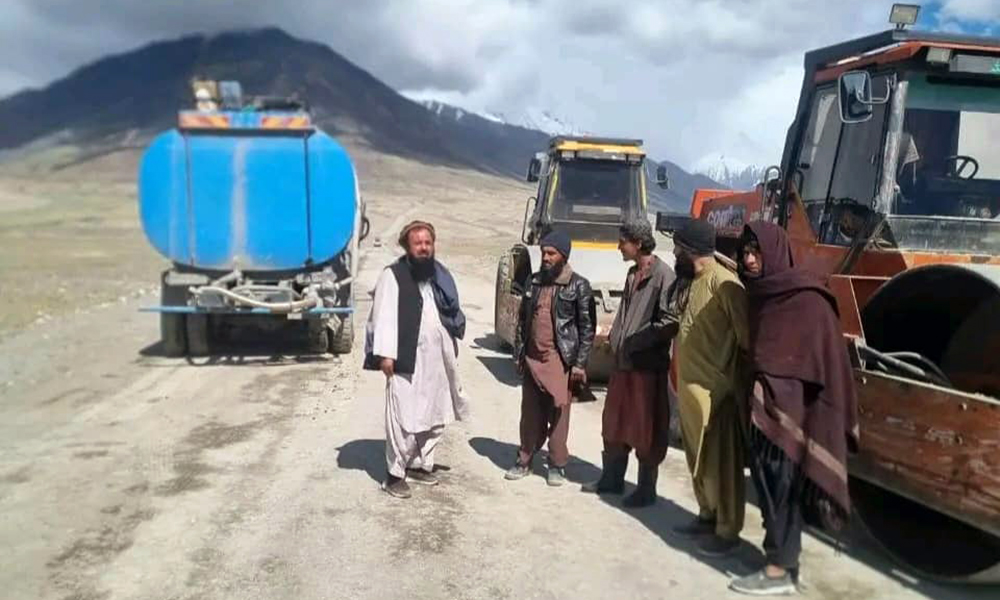
The construction of the Silk Road Highway in Afghanistan’s Wakhan Corridor has been fully completed after five years of work, officials in Badakhshan province said.
Amanullah Chehra, head of Rural Rehabilitation and Development in Badakhshan, said the 121.13-kilometre road begins in the Barghil area and stretches to Bzai Gonbad near the Chinese border.
According to officials, the road is between 7 and 10 metres wide and includes three major bridges, each measuring approximately 20 to 22 metres in length. Numerous smaller drainage structures have also been built along the route to facilitate the flow of water.
The road is expected to be officially opened for use in the near future, potentially improving connectivity through the remote Wakhan Corridor.
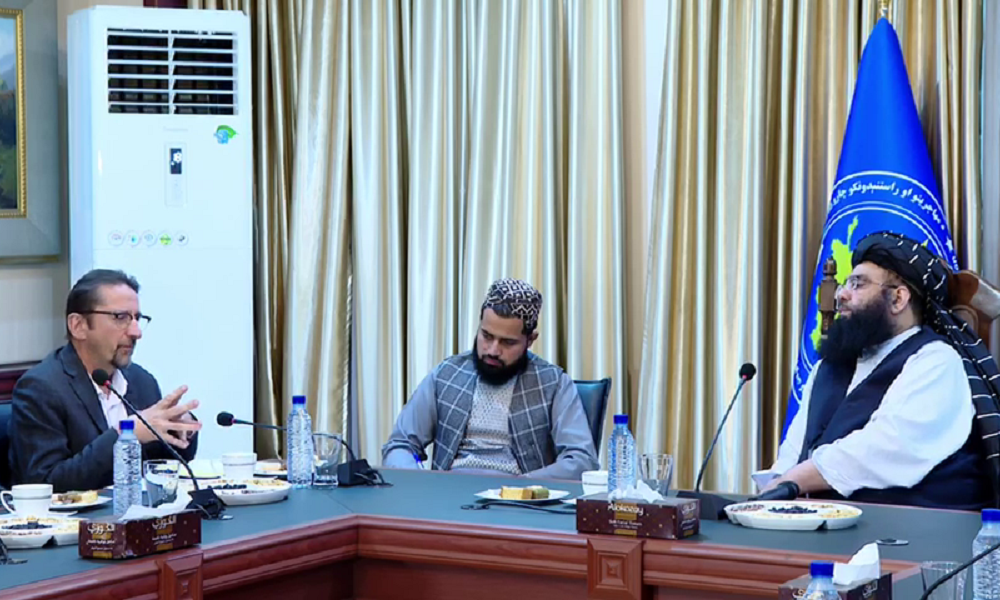
Afghanistan’s Minister of Refugees and Repatriation, Mawlawi Abdul Kabir, met on Wednesday with Bruno Lemarquis, UNAMA’s Deputy Head for Humanitarian Affairs, to discuss the situation of Afghan returnees and humanitarian assistance.
The Ministry of Refugees and Repatriation said Lemarquis briefed the minister on assessments conducted by UN agencies during visits to several provinces to identify the needs of returnee families.
Lemarquis said joint cooperation between UN agencies and the Islamic Emirate is needed to support and resettle returnees. He added that UN agencies are currently assisting thousands of families and called for the expansion of humanitarian assistance.
He also said the international community should pay greater attention to the needs of Afghans, adding that UNAMA is ready to cooperate in addressing challenges facing returnees.
Abdul Kabir welcomed UNAMA’s support and thanked the United Nations for its assistance to Afghans. He said various government institutions have been tasked with addressing returnees’ needs.
The minister also called on aid organizations to continue supporting returnee families, saying a program to resettle thousands of internally displaced families is also underway.
Kabir further said the necessary facilities have been provided for UN agencies to operate and that the Islamic Emirate welcomes UNAMA’s humanitarian cooperation.


Ariana Afghan Airlines ranks seventh among 45 Central Asian airlines

Silk Road highway in Wakhan corridor now reaches the China border

Refugees minister, UNAMA deputy discuss challenges facing returnees

OIC Contact Group reaffirms support for Afghan people

UK Afghanistan war crimes inquiry faces delay over 97 million newly identified documents

Saudi energy group signs major Afghanistan deals covering gas exploration and pipeline plans

ATN secures exclusive rights to broadcast T20I series in India across Afghanistan

China evacuates thousands as Typhoon Narra brings torrential rain

Trump floats idea of renaming Atlantic or Pacific Ocean

US hits Egyptian bank branches with Iran sanctions as war marks six months

Tahawol: Reactions to Pakistan’s attacks on Afghanistan discussed

Saar: Uncertain fate of Afghanistan’s seat at UN discussed

Tahawol: Uncertain future of Afghanistan’s permanent UN seat

Saar: Pakistan military strikes Afghan provinces discussed

Tahawol: Impact of middle East war on Afghanistan
-
 World4 days ago
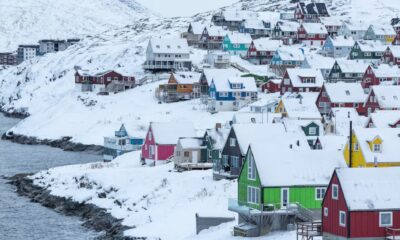
US and Denmark reach deal on Greenland, Trump says
-
 Sport2 days ago
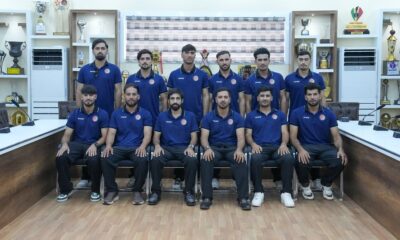
Afghanistan to face Japan and Nepal in Asian Games cricket group stage
-
 Latest News3 days ago
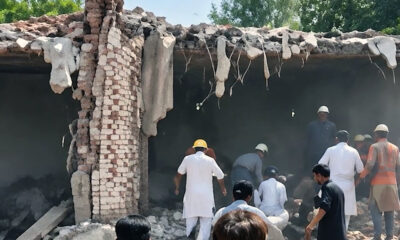
Pakistan says Kohat attackers had roots in Afghanistan
-
 Latest News4 days ago
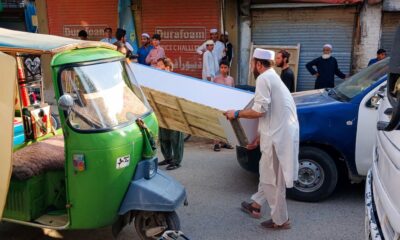
Afghanistan condemns mosque attack in Khyber Pakhtunkhwa
-
 Latest News3 days ago
OIC to hold Afghanistan Contact Group meeting on sidelines of UN General Assembly
-
 Latest News4 days ago
Afghan official meets Iranian oil minister to discuss energy cooperation
-
 Regional3 days ago
Flames, smoke seen near Riyadh airport; Houthis claim attacks on Saudi capital
-

 Sport5 days ago
ACL: Sarsabz Yashlar edge Istiqlal Kabul 2–1