
World
India raises defence budget to $72.6 bln amid tensions with China


India proposed on Wednesday 5.94 trillion rupees ($72.6 billion) in defence spending for the 2023-24 financial year, 13% up from the previous period’s initial estimates, aiming to add more fighter jets and roads along its tense border with China, Reuters reported.
Finance Minister Nirmala Sitharaman allocated 1.63 trillion rupees for defence capital outlays – an expenditure that would include new weapons, aircraft, warships and other military hardware, as she unveiled nearly $550 billion of total federal spending in the annual budget for 2023-24 starting in April.
She said 2.77 trillion rupees would be devoted to military salaries and benefits in 2023-24, 1.38 trillion on pensions for retired soldiers, and further amounts for miscellaneous items.
itharaman also revised the defence budget for the current financial year ending in March to 5.85 trillion rupees from earlier estimates of 5.25 trillion.
In the past few years, Prime Minister Narendra Modi has ramped up spending to modernise the military, while underlining his government’s commitment to boosting domestic production to supply forces deployed along two contentious borders, Reuters reported.
Laxman Behera, a defence expert at government-funded Jawaharlal Nehru University in New Delhi, said the hike in the defence budget was “reasonable but not sufficient”, considering requirements for military modernisation.
“The government has tried to allocate reasonable funds for defence forces while balancing other priorities during the pre-election budget,” he said, noting India needed more funds in view of growing friction with China along disputed borders.
The total Indian defence budget, estimated at about 2% of GDP, is still lower than China’s 1.45 trillion yuan ($230 billion) in allocations for 2022, which New Delhi sees as posing a threat to neighbours including India and Japan, read the report.
“The overall increase in the armed forces’ budget is as anticipated, but likely lower than what they asked for to beef up operational capabilities,” said Amit Cowshish, former financial adviser for acquisitions at the Defence Ministry.
India plans to spend near 242 billion rupees ($3 billion) for naval fleet construction and 571.4 billion rupees ($7 billion) for air force procurements including more aircraft, the latest budget document showed.
The South Asian giant employs 1.38 million people in its armed forces, with large numbers deployed along borders with nuclear-armed rivals China and Pakistan.
Although the defence budget allocations fell short of military expectations, they are likely to grow as the economy recovers from two years of pandemic curbs, according to Behera.
India and China share a 3,500-kilometre (2,100-mile) frontier that has been disputed since the 1950s. The two sides went to war over it in 1962.
At least 24 soldiers were killed when the armies of the Asian giants clashed in Ladakh, in the western Himalayas, in 2020 but tensions eased after military and diplomatic talks, Reuters reported.
A fresh clash erupted in the eastern Himalayas in December last year but no deaths were reported.




World
Vance says Iran must cut enrichment to end war
Vance said the US remained open to an agreement but would require concrete Iranian nuclear concessions.
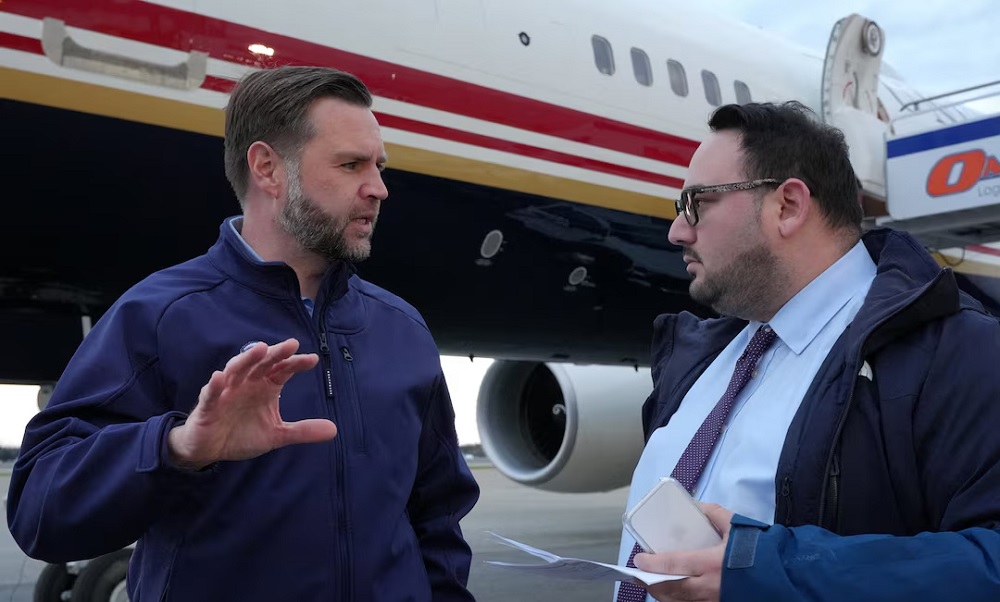
US Vice President JD Vance said in an exclusive interview with Reuters that Iran must make a “meaningful” reduction in its nuclear enrichment capacity to satisfy US demands and end the countries’ seven-month war, even as Washington was unsure how Tehran makes decisions in negotiations.
Vance, a longtime skeptic of US involvement in foreign wars, has taken a leading role in negotiating a settlement to the conflict and brokered a provisional peace agreement in June that quickly fell apart. The war has jolted global energy markets and become a political liability for President Donald Trump and fellow Republicans ahead of November midterm elections, Reuters reported.
Speaking on Monday after a campaign trip in Alaska, Vance said any agreement would require Iran to reduce its nuclear enrichment capacity, rather than offer assurances of future nuclear drawdowns.
“If you don’t want a nuclear weapon, then why do you need 60% enriched fuel? And if you want to show commitment to not building a nuclear weapon, don’t build highly enriched fuel. That’s a very basic threshold issue,” Vance said.
“I think if they want to show a commitment to not building a nuclear weapon, they would do something meaningful on their enrichment capacity.”
Iran and the US have exchanged proposals in recent weeks aimed at ending the war and reopening the Strait of Hormuz, a vital global energy shipping route. Trump rejected Tehran’s latest offer and has warned that military operations could intensify after the midterms.
Vance said the US remained open to an agreement but would require concrete Iranian nuclear concessions.
“We’re not going to trade words for actions,” Vance said.
UNCLEAR HOW IRAN MAKES DECISIONS: VANCE
Complicating matters, Vance said Washington is uncertain who makes decisions in Tehran.
Vance said the US was in talks with Iranian President Masoud Pezeshkian and Foreign Minister Abbas Araqchi. But it was unclear how much authority they wield within Iran’s power structure, he said, after joint US-Israeli strikes at the start of the war killed Supreme Leader Ayatollah Ali Khamenei.
“One of the things we picked up on is it’s not totally clear how their country makes decisions,” Vance said. Separately, Trump said on Tuesday his “biggest problem” is no one knows who is running Iran.
Iran’s Foreign Ministry spokesperson said on Sunday that US officials are well aware of who their Iranian counterparts are and how Iran’s decision-making system works.
“The problem is actually the opposite: it lies in the contradictory positions and mixed messaging from US officials,” Esmaeil Baghaei told a weekly press conference.
Vance told Reuters he has held personal conversations with field commanders to gauge battlefield conditions. He dismissed concerns over critical munitions shortages and added that while Iranian troops are periodically able to strike commercial ships in the Strait of Hormuz, they are largely unable to prevent energy exports through the waterway.
Vance declined to say if he was leading peace talks, though he is frequently cited as the White House’s top negotiator.
“We’re certainly involved,” he said. “Ultimately, the president of the United States is driving things.”
The war — and its $3 billion monthly price tag — has become a key issue on the campaign trail. Higher energy prices have put Trump and Republicans on the defensive in competitive states that will decide control of Congress.
Vance has sought to temper criticism of Trump’s handling of the conflict, telling voters they should not let that issue keep them from backing Republicans in next month’s elections.
In Alaska, Vance rallied for Republican Senator Dan Sullivan, who is locked in a tight reelection battle with Democratic challenger Mary Peltola. Trump carried Alaska by 13 percentage points in 2024, but rising everyday costs have put the state in play.
Before speaking with Reuters, Vance focused much of his speech on affordability concerns, especially around energy. Alaska’s remote locale makes consumer goods more expensive, and energy production is a key industry.
Rally attendees roared when Sullivan nearly introduced Vance as the president of the US, rather than the vice president. Vance is seen as a leading Republican contender to succeed Trump in the White House.
Vance told Reuters afterward that he had not decided whether to seek the presidency in 2028.
“I’m inherently a procrastinator,” he said. “I really haven’t thought about it much.”
World
▶️Saudi Arabia, Turkey, Pakistan activate Mecca defense pact
The three countries said the measures would be implemented under approved arrangements and in accordance with the national laws of each country.
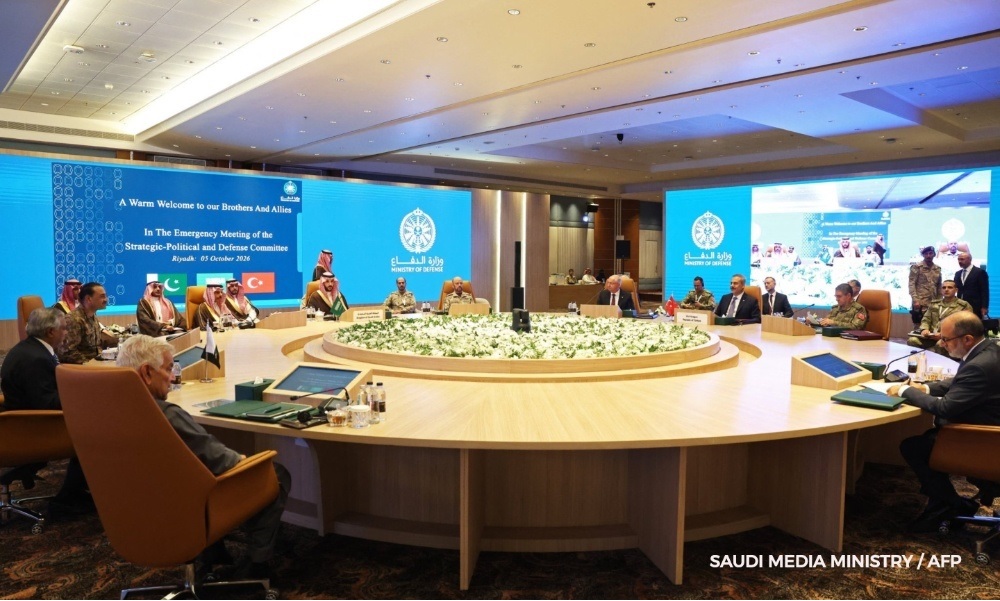
Saudi Arabia, Turkey and Pakistan have agreed to immediately implement their collective defence commitments, including the rapid deployment of agreed military forces and capabilities to Saudi Arabia.
The decision was reached on Monday during an emergency meeting of the Mecca Defence Alliance in Riyadh, according to a joint statement issued by Pakistan’s foreign ministry.
The three countries said the measures would be implemented under approved arrangements and in accordance with the national laws of each country.
Saudi Defence Minister Khalid bin Salman said the meeting reaffirmed the three countries’ “solidarity and unity” in responding to what he described as attacks against Saudi Arabia and Islamic holy sites.
The move follows a reported attack on a power distribution station in Medina. The Saudi-led coalition fighting Yemen’s Iran-aligned Houthi group said the attack targeted a facility supplying electricity to the Prophet’s Mosque, one of Islam’s holiest sites.
Saudi Arabia, Pakistan and Turkey signed the Mecca Joint Defence Agreement in August. Under the pact, an armed attack against one of the three members is considered an attack against all.
The agreement initially provided few details on the specific military commitments or defence obligations of each country.
The latest announcement marks a move from the framework of the agreement towards its practical implementation, with the three countries now agreeing to put arrangements for the deployment of military capabilities into effect.
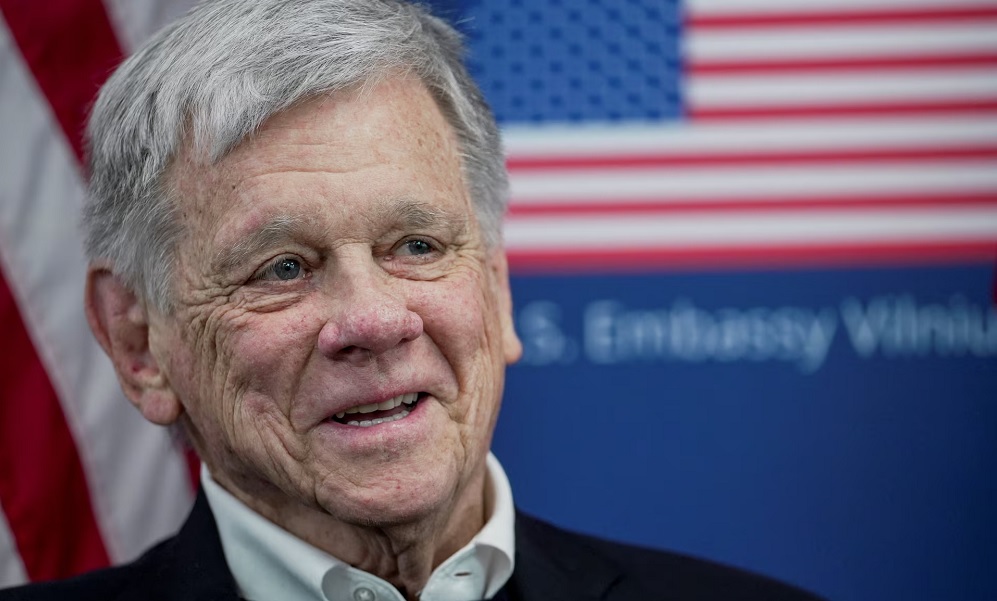
US President Donald Trump said on Sunday that lawyer and current Belarus envoy John Coale, who has been credited with the release of hundreds of prisoners, would be his special presidential envoy for hostage affairs.
Belarusian President Alexander Lukashenko pardoned 15 prisoners last month after talks with Coale, who has been talking to Minsk for more than a year, Reuters reported.
“John has already secured the return of over 65 Americans and Allied Citizens from Belarus over the last year, and negotiated the release of more than 800 political prisoners from multiple countries in Eastern Europe,” Trump wrote in a post on Truth Social.
Coale will replace Adam Boehler, who Trump said had brought back 196 hostages. Boehler, who in August helped to secure the release of a former American marine from Russia, will continue to assist in other matters as a senior adviser, Trump added.


Lionel Messi bids tearful farewell to Argentina after 3-0 win over Benin

British special forces could face prosecution over alleged Afghanistan crimes

Afghan agriculture minister in Tashkent for international forum

Afghan returns from Pakistan must be voluntary, safe and dignified: Guterres

Afghanistan, Pakistan interested in normalizing relations: Lavrov

Saudi energy group signs major Afghanistan deals covering gas exploration and pipeline plans

UAE firm eyes investment in Salang’s second tunnel and pharmaceutical factories

US Treasury ratchets up pressure on Iran with sweeping new aviation sanctions

AI could pose ‘existential’ risk to humanity, UN rights chief warns

EU and FAO launch €5m programme to strengthen Afghanistan’s agrifood sector

Tahawol: Discussion on outcome of Moscow Format meeting

Saar: Expansion of relations between Kabul and Moscow discussed

Tahawol: Afghanistan-Iran: shared opportunities and challenges discussed

Saar: Pakistan’s hostile policy toward Afghanistan discussed

Tahawol: Doha process seeks new cooperation opportunities
-

 Sport2 days ago
Cricket Bonanza: Afghanistan set for packed international schedule
-
 Sport5 days ago
ACB announces Afghanistan squads for Bangladesh, Zimbabwe series
-
 Latest News4 days ago
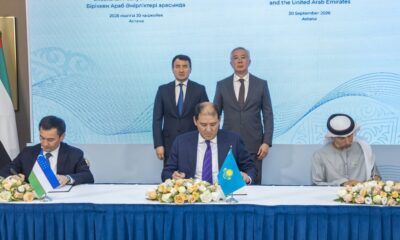
Kazakhstan, Uzbekistan and UAE sign MoU on CASA railway project via Afghanistan
-
 Regional4 days ago
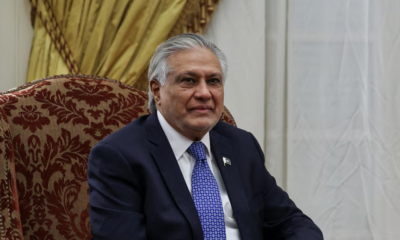
Pakistan says Mecca pact members to hold emergency talks on engaging Houthis
-
 Regional3 days ago
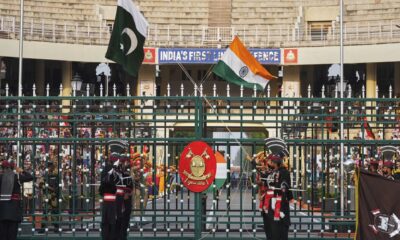
India, Pakistan summon top diplomats over border incident
-
 Sport4 days ago
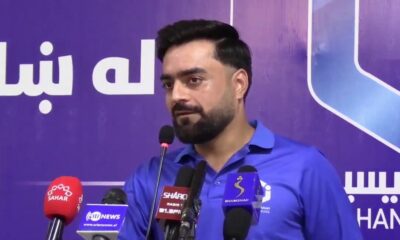
Rashid Khan plans to build cricket academy and stadium in Nangarhar
-
 Latest News3 days ago
Afghanistan inaugurates 121 km Wakhan road to China border
-
 Latest News5 days ago
US rejects American University of Afghanistan’s funding request