
Latest News
IOM helps Paktika rise from the rubble after deadly earthquake

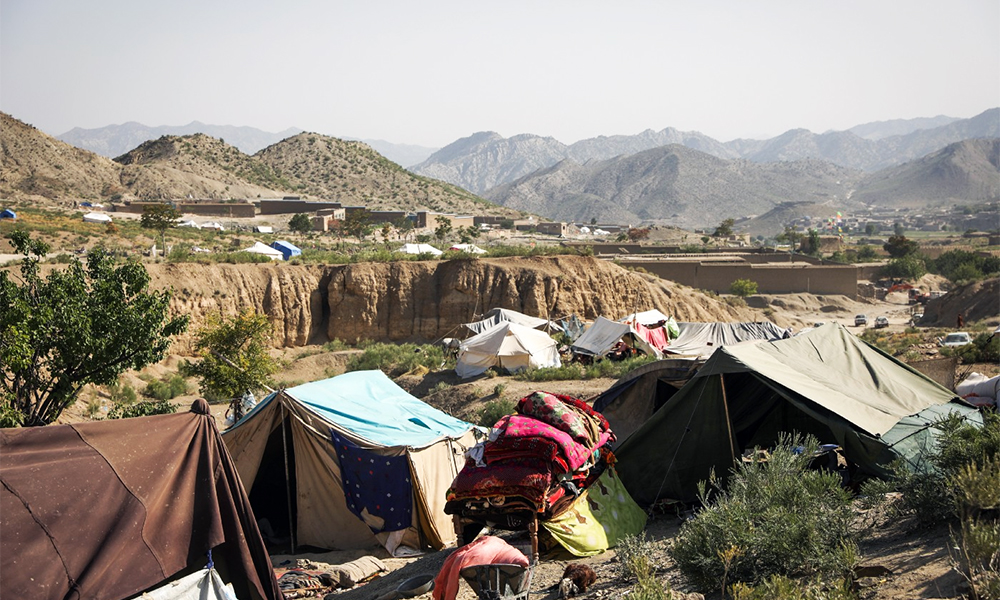
Thousands of Afghans in Paktika province say they face an uncertain future and have no idea how their communities will rebuild their lives after last month’s deadly earthquake that killed over 1,000 people and destroyed an estimated 10,000 homes.
In the early hours of June 22, a 6.1 magnitude earthquake struck the remote, mountainous region and while concerted efforts are being made by aid workers to help the survivors, their efforts are being hampered by the mountainous terrain and heavy rains.
IOM reported this week that the humanitarian community has mobilized funds and personnel for the response and that IOM teams were on the ground in the affected area following the earthquake, weathering aftershocks alongside the affected community.
Humanitarian actors are busy, the IOM reported and workers are meeting with community members to assess their needs, organizing the first emergency distributions and setting up tents, latrines and hand washing stations.
Trucks loaded with a variety of kits are also arriving in waves, having successfully navigated the remote mountains, riverbeds and roads that make the area particularly difficult to access.
Thousands of people are trying to get the basic items they need for immediate survival — food, water, health care and shelter.
“I was in my house asleep when it started shaking,” says Krushnal, a survivor from Barmal, still living with his four children on the site of their collapsed house.
“A piece of wall hit me, but I am not seriously injured. I saw bodies being pulled out of the rubble, injured people, and maybe dead people. I heard cries of pain everywhere I went,” he told IOM.
The majority of the fragile mud-brick houses in the area did not withstand the earthquake. While many currently lack the means to rebuild much of their community, the survivors have come together alongside humanitarian actors to plan for the recovery of the community.
A few kilometers from Gayan, IOM Mental Health and Psychosocial Support (MHPSS) staff hold counseling sessions with victims amidst the rubble. Three distinct groups are formed for the sessions: women, men and children.
Mobile clinics have also been operating in this mountainous area, which is located far from health centers. In addition, community members have identified psychological support as a key need, which has been included in the IOM earthquake response from the first day.
IOM reports that as of July 8, 140 trucks have successfully reached the impacted areas of Paktika and Khost provinces and some 30,000 emergency shelter and non-food item kits have been distributed to 5,600 families in need.
But now, according to the IOM, the focus has switched to post-disaster longer-term rebuilding of houses, and of lives.
IOM and other shelter actors are working together to support the communities to clear the rubble of the damaged homes and to build back their homes safely.
However, other public infrastructures will also need to be rehabilitated to ensure communities can return to normal. Water sources that have been contaminated must be treated and fixed to ensure access to safe and clean water again.
According to the IOM, repurposing of existing emergency funding enabled IOM to undertake a swift, immediate response to provide life-saving assistance to affected communities but now, longer-term funding from both humanitarian and development actors must be committed and made available immediately to ensure that houses and essential community infrastructure can be rebuilt before the harsh winter arrives in November.












Kazakhstan’s Foreign Minister Mukhtar Tileuberdi has called for pragmatic and coordinated international engagement with Afghanistan, saying the country’s long-term stability is closely linked to the security and sustainable development of Central Asia.
Speaking during the general debate of the 81st session of the United Nations General Assembly in New York on Friday, Tileuberdi said humanitarian assistance to Afghanistan remains essential but alone cannot break the cycle of poverty, displacement and dependency.
He said Kazakhstan supports a “pragmatic, coordinated and step-by-step” approach to international engagement with Afghanistan, with the United Nations playing a central role.
Tileuberdi also said Kazakhstan is working with the UN to operationalize the United Nations Regional Centre for the Sustainable Development Goals for Central Asia and Afghanistan in Almaty.
He said the success of the centre should be measured by the results and assistance it delivers to the region.


Abu Muslim Farah defeat Khurasan Faryab 2-0 in ACL season six

Saar: Concerns over Pakistan’s political crisis discussed

Afghanistan Champions League: Omar Zawak Herat beat Toofan Herat 1-0

Blast in Pakistan’s Dera Ismail Khan kills 11, injures 30

Ariana Afghan Airlines increases Kabul-Delhi cargo flights

Saudi energy group signs major Afghanistan deals covering gas exploration and pipeline plans

Trump floats idea of renaming Atlantic or Pacific Ocean

US hits Egyptian bank branches with Iran sanctions as war marks six months

Nepal flood rescue mission enters critical phase as thousands remain missing

Iranian clubs to face Gulf opponents at neutral venues in Asian Champions League Elite
Saar: Concerns over Pakistan’s political crisis discussed

Exclusive interview with Abdul Latif Mansoor, Minister of MRRD

Tawsia: Overview of Afghanistan’s iron mines

Tahawol: Discussion on fresh Pakistani airstrikes on Afghanistan

Saar: Calls for international support for Afghanistan discussed
-

 World5 days ago
CNN, MS NOW and Politico sue Trump, challenging White House ban
-

 Latest News3 days ago
Ariana Afghan Airlines ranks seventh among 45 Central Asian airlines
-

 Latest News5 days ago
UN reiterates call for respect for international law after Kunar airstrikes
-

 Regional4 days ago
US and Iran hold first talks since June after Trump’s ‘annihilation’ threat
-

 Latest News3 days ago
Silk Road highway in Wakhan corridor now reaches the China border
-

 Regional3 days ago
Iran airlines cancel flights as US sanctions hit
-

 Latest News5 days ago
Afghan Official: Pakistan’s airstrikes will not go unanswered
-

 Sport5 days ago
Afghan boxing referee heads to China for international festival