
Latest News
Iran pays Afghans to fight in Syria, Iraq, Yemen

![DEMONISTRATION _08_04_2015_DARI_SOT.avi_snapshot_00.04_[2015.04.07_15.42.45]](https://ariananews.af/wp-content/uploads/2015/04/DEMONISTRATION-_08_04_2015_DARI_SOT.avi_snapshot_00.04_2015.04.07_15.42.451.jpg)
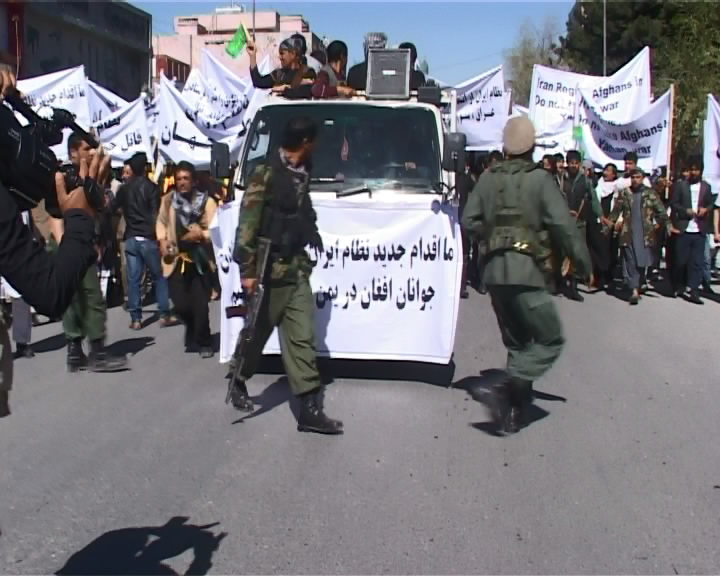
Iran pays Afghan refugees to present in Syria, Iraq and Yemen wars, head of Mushrekat-e Mili party said.
Najibullah Kabuli, head of Musharekat-e Mili party said that Iran has been recruiting “thousands” of Afghan refugees to fight in Syria, Iraq and Yemen offering 500 dollars a month.
Members of Musharekat-e Mili in a demonstration in Kabul called Afghan government and the United Nations to stop Iran not to persuade Afghans present in Arabic wars.
Musharekat-e Mili party warned that if national unity government officials does not pay serious attention regarding the issue they will wildly protest.
Iran’s role differs in Iraq, where it bolsters Shiite Muslim militias, versus Syria, where it reportedly supports Lebanese Hezbollah fighters. In Yemen, Iranian agents are reportedly trying to help overthrow the American-backed Sunni government, and such efforts are taking place against the backdrop of ongoing international negotiations regarding Iran’s nuclear program.
There have been a few reports to that effect in the international news media over the past months, detailing recruitment efforts mainly by the Iranian government among Hazaras in order to bolster the Assad regime’s manpower. However, there has never been evidence of Afghan fighters actually present in Syria – until now.
On 22 May, the Wall Street Journal published a report about Iranian efforts to recruit Shiite Afghans to fight for the regime of Bashar al-Assad in Syria.
It thus seems probable that Shiite Afghans are also approached for recruitment to fight in Syria. The Wall Street Journal report offered details of the recruitment policy, but gave no evidence of Afghan fighters actually present in Syria. There is also no information on the overall number of Afghan fighters in Syria from any side nor any official announcements about their presence from the government in Damascus. According to sources within the Syrian regime, its intention is to keep the presence of Afghan fighters a secret. This might be because the impression is increasingly gaining ground that the Syrian army is depending on foreign forces and would loose the war without their help.
There have been, however, approximately 2,000 mostly Hazara Afghan refugees living illegally (that is, without Syrian papers) in Syria since the fighting broke out in 2011, many of them stranded on their way to Turkey and Europe, most of them living in or around the capital Damascus and some seeking shelter near the Zainab shrine.
Reported by Nematullah Ahmadi

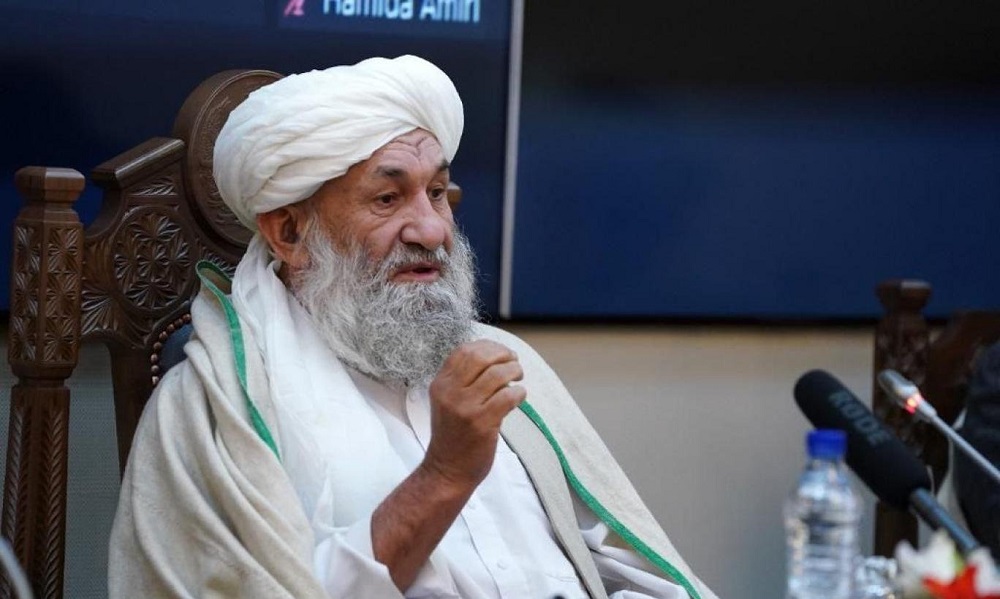
Mohammad Hassan Akhund, in his Eid message, has emphasized stronger support and assistance for returnees and victims of recent floods and earthquakes, saying the Islamic Emirate has worked to help affected families within its available capacity.
He said many of the challenges facing the Muslim world stem from division and self-interest, stressing that unity, cooperation, and solidarity must be strengthened at both individual and societal levels.
The prime minister noted that in recent months millions of migrants have returned to Afghanistan from neighboring countries, while others have been displaced due to natural disasters. He said the authorities have tried to provide assistance to these families to the extent possible.
Mohammad Hassan Akhund also instructed officials to visit families of martyrs, orphans, and people with disabilities during Eid and to listen to public concerns. He further directed security and defense forces to ensure heightened vigilance during the holiday period in order to maintain safety and allow citizens to celebrate Eid in peace.
Eid prayers were also held at the Sapidar Palace in Kabul with the participation of diplomatic representatives and senior officials, while across the country citizens gathered in mosques and open spaces to mark the occasion peacefully.
Residents in various provinces described Eid as a time of reconciliation and unity. A resident of Herat, Hamed, said Eid should be an opportunity to set aside grievances and strengthen bonds of friendship. Another resident, Sultan Ahmad Saber, said Eid is meant to remove divisions, embrace one another, and preserve purity of heart by forgetting past disputes.
In a separate message, former president Hamid Karzai called for the reopening of schools and universities for girls and the creation of job opportunities for women, stressing that Afghanistan’s progress depends on unity, education, and a shared sense of responsibility toward the country.
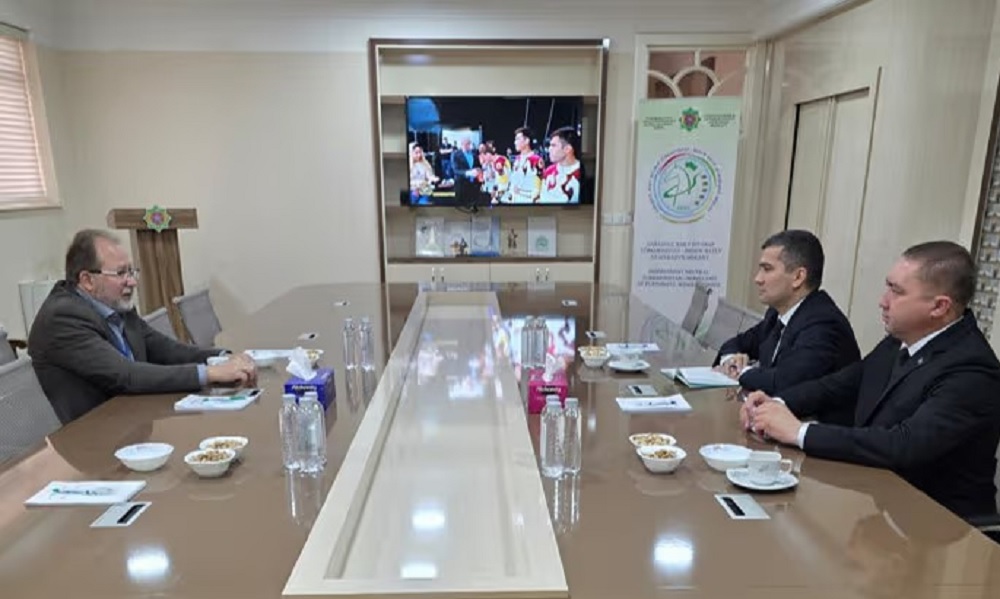
Turkmenistan and the United Nations Assistance Mission in Afghanistan (UNAMA) have discussed regional cooperation and major infrastructure projects aimed at supporting Afghanistan’s economic recovery, according to the Turkmen government.
The discussions took place during a meeting between Pavel Yershov, the newly appointed head of UNAMA’s office in Herat, and Batyr Yyolov, Turkmenistan’s consul general in Herat, Trend news agency reported.
Both sides emphasized Turkmenistan’s role in promoting stability and economic growth in Afghanistan through regional energy and transport projects, including the TAPI gas pipeline and electricity transmission initiatives.
The meeting also focused on ongoing railway development and modernization projects aimed at improving connectivity and trade links between Afghanistan and Turkmenistan.

Sheikh Hibatullah Akhundzada, supreme leader of the Islamic Emirate, has said that the Islamic Emirate would not compromise on Islam or Islamic law with any country or group, but remains ready to engage with the international community within the framework of Sharia.
In his Eid al-Adha sermon at the Eidgah in Kandahar, Akhundzada said Afghans are prepared to endure economic hardships and external pressure, but “will not bow to infidels” or abandon their religious values. “The world should not expect us to compromise on the religion of Allah or give up our faith,” he said.
The Supreme Leader also stressed the importance of unity and preventing discord, saying solidarity among the people is essential for maintaining peace and preventing conflict in the country.
“I do not protect myself with the lives of the people; I protect the people with my own life,” he said. “I stood for unity, harmony and peace among the people so that war and discord would not return, and I remain committed to that.”
Sheikh Hibatullah Akhundzada also referred to the amnesty announced for former government officials and urged them to return to Afghanistan and live without fear. He said the country belongs to all Afghans and that everyone has the right to live in their homeland.


Saar: IEA seeking Sharia-based global engagement

Prime Minister stresses support for returnees and disaster victims in Eid message

Turkmenistan, UNAMA review regional projects to boost Afghanistan’s economy

‘We will never bow our heads before infidels,’ says IEA Supreme Leader

Bayat Power, Ministry of Energy extend power production agreement for another 10 years

New Afghanistan-China transport corridor launched via Turkmenistan

Afghanistan signs $46 million deal to develop standard laboratory complexes

Germany to launch online visa system for Afghan study and work applicants in Pakistan

Afghanistan launches first 5G trial in Kabul to boost telecom services

Large blast near Beit Shemesh part of pre-planned test: Israeli defense firm
Saar: IEA seeking Sharia-based global engagement

Tahawol: Islamic Emirate defense minister’s visit to Russia

Saar: Calls to expand Afghanistan-Qatar ties discussed

Tahawol: Afghanistan-Japan relations reviewed

Saar: Afghanistan’s relations with regional countries, incl Russia and China discussed
-
 Business4 days ago
Major pharma firms eye investment in Afghanistan
-
 Latest News5 days ago
China restricts export of chemical substances to Afghanistan
-
 Latest News4 days ago
Deadly shooting near Kabul’s Sarai Shahzada leaves four dead
-
 Latest News5 days ago
Britain says recognition of IEA conditional on women’s rights, counterterrorism
-

 Sport3 days ago
IPL 2026 Playoffs Confirmed: RCB, GT, SRH and RR reach top four
-
 Regional4 days ago
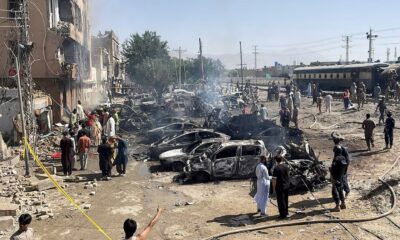
At least 24 killed in deadly train bombing in Pakistan’s Balochistan
-

 Latest News4 days ago
IEA Supreme Leader urges unity, preservation of Islamic system in Eid al-Adha message
-
 Latest News3 days ago
Moscow expects UNAMA mission in Afghanistan to continue under certain conditions: Kabulov