
Regional
Iranian delegation lands in Islamabad ahead of ‘make-or-break’ talks
Speaking from Islamabad, Qalibaf said Tehran had goodwill towards negotiations but no trust in the United States.

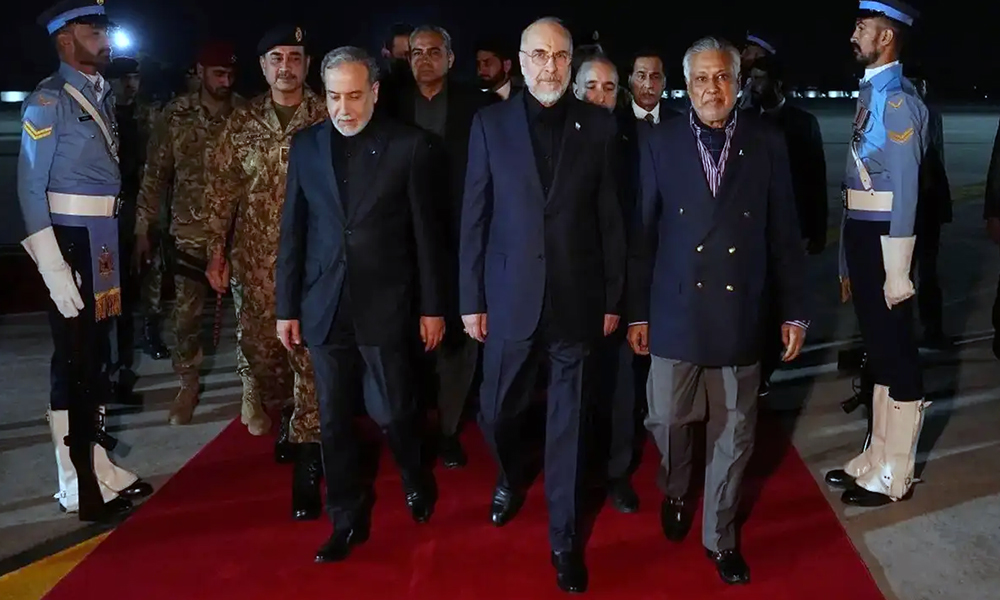
Iran’s negotiating team arrived in Islamabad on Friday for peace talks with the United States, even as Tehran insisted on measures it said needed to be addressed first, throwing last-minute doubt over the meetings, Reuters reported.
U.S. President Donald Trump announced a two-week ceasefire in the six-week war on Tuesday, just hours before a deadline after which Trump had threatened to destroy Iran’s civilisation.
The ceasefire has halted U.S. and Israeli airstrikes on Iran. But it has not ended Iran’s blockade of the Strait of Hormuz, which has caused the biggest-ever disruption to global energy supplies, or calmed a parallel war between Israel and Iran-backed Hezbollah in Lebanon.
Iran’s parliamentary Speaker Mohammad Baqer Qalibaf said on X that Washington had previously agreed to unblock Iranian assets and to a ceasefire in Lebanon, and added that talks would not start until those pledges are fulfilled.
The Iranian delegation, led by Qalibaf and Foreign Minister Abbas Araqchi, arrived in Islamabad, the nation’s foreign ministry said. Iran’s semi-official Tasnim news agency reported that the group consists of around 70 members, including technical specialists in economic, security and political fields as well as media personnel and support staff, reflecting what it described as the high sensitivity of the negotiations.
Speaking from Islamabad, Qalibaf said Tehran had goodwill towards negotiations but no trust in the United States, adding that Iran was ready to reach a deal if Washington offered what he described as a genuine agreement and granted Iran its rights, Iranian state media reported.
While there was no immediate comment from the White House on the Iranian demands, Trump said in a social media post that the only reason the Iranians were alive was to negotiate a deal.
“The Iranians don’t seem to realize they have no cards, other than a short term extortion of the World by using International Waterways. The only reason they are alive today is to negotiate!” he said.
U.S. Vice President JD Vance, who will lead the U.S. delegation, said he expected a positive outcome as he headed to Pakistan, but added: “If they’re going to try to play us, then they’re going to find the negotiating team is not that receptive.”
Pakistani Prime Minister Shehbaz Sharif, in a national address on Friday night, laid out the stakes of the talks, read the report.
“The permanent ceasefire is the next difficult phase, which is to resolve the complicated issues through negotiation. This, as called in English, is a make-or-break phase,” Sharif said.
The Israeli ambassador to the U.S., Yechiel Leiter, and his Lebanese counterpart, Nada Hamadeh Moawad, will hold talks in Washington on Tuesday, Israeli and Lebanese officials said. But the two sides have issued conflicting statements on what the talks would cover.
Lebanon’s presidency said the two held a phone call on Friday and agreed to discuss announcing a ceasefire and setting a start date for bilateral talks under U.S. mediation. But Israel’s embassy in Washington said the talks would constitute the start of “formal peace negotiations,” and that Israel had refused to discuss a ceasefire with Hezbollah.
Israel and the U.S. have said the campaign against militant group Hezbollah in Lebanon is not part of the Iran-U.S. ceasefire. Hours after it was announced, Israel launched the biggest attack of the war, killing more than 350 people in surprise strikes on heavily populated areas, Lebanese authorities said.
Israeli strikes continued across southern Lebanon on Friday. One strike on a government building in the city of Nabatieh killed 13 members of Lebanon’s state security forces, President Joseph Aoun said in a statement.
Hezbollah said in a statement on its Telegram channel that it fired rocket salvos at northern Israeli towns in response.
Lebanese authorities say at least 1,953 people have been killed in Israeli strikes since March 2.
The hard line taken by Iran’s leaders ahead of the negotiations followed a defiant message from its new Supreme Leader Ayatollah Mojtaba Khamenei on Thursday.
Khamenei, yet to be seen in public since taking over from his father, who was killed on the war’s first day, said Iran would demand compensation for all wartime damage, Reuters reported.
“We will certainly not leave unpunished the criminal aggressors who attacked our country,” he said.
Although Trump has declared victory and degraded Iran’s military capabilities, the war has not achieved many of the aims he set out at the start: to deprive Iran of the ability to strike its neighbours, dismantle its nuclear programme, and make it easier for its people to overthrow their government.
Iran still possesses missiles and drones capable of hitting its neighbours and a stockpile of more than 400 kg (900 pounds) of uranium enriched near the level needed to make a bomb. Its clerical rulers, who faced a popular uprising just months ago, withstood the onslaught with no sign of organised opposition.
Tehran’s agenda at the talks includes demands for major new concessions, including the end of sanctions that crippled its economy for years, and acknowledgment of its authority over the Strait of Hormuz, where it aims to collect transit fees and control access in what would amount to a huge shift in regional power.
Iran’s ships were sailing through the strait unimpeded on Friday, while those of other countries remained hemmed inside.
Disruption to energy supplies has fed inflation and slowed the global economy, with an impact expected to last for months even if negotiators succeed in reopening the strait.
U.S. monthly inflation data released on Friday, the first to show the war’s impact, showed consumer prices rose by 0.9% in March, the fastest rate since the mid-2022 inflation shock that eroded support for Trump’s predecessor Joe Biden.







Regional
Iran war doubles Russia’s main oil revenue to $9 bln in April, Reuters calculations show
For the whole of 2026, Russia has budgeted for 7.9 trillion roubles from the mineral extraction tax.
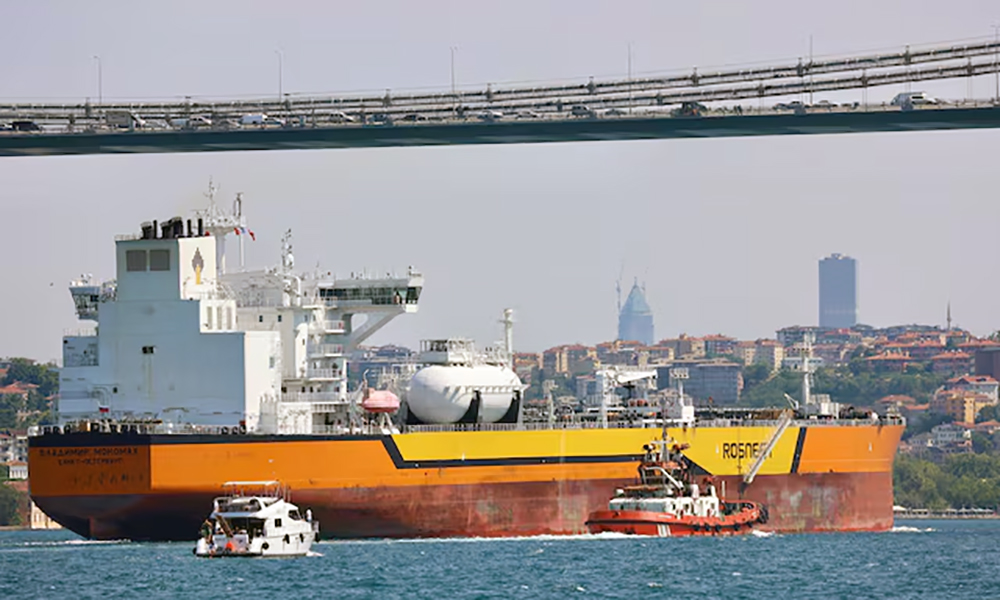
Russia will see revenue from its biggest single oil tax double to $9 billion in April due to the oil and gas crisis triggered by the U.S. and Israeli attack on Iran, Reuters calculations showed on Thursday.
The Reuters calculation is some of the first concrete evidence of a windfall for Russia, the world’s second-largest oil exporter, from the Iran war, which oil traders say has triggered the most serious energy crisis in recent history.
Iran effectively shut the Strait of Hormuz – a route for about a fifth of global oil and LNG flows – after U.S. and Israeli airstrikes on Iran at the end of February, sending Brent futures shooting well past $100 per barrel.
Russia’s main revenue from its vast oil and gas industry is based on production. Export duty on crude oil has been nullified from the start of 2024 as part of the so-called wider tax manoeuvre, a years-long tax reform of the industry.
According to Reuters calculations based on preliminary production data and oil prices, Russia’s mineral extraction tax on oil output will increase in April to around 700 billion roubles ($9 billion) from 327 billion roubles in March. The revenue is up by some 10% from April last year.
For the whole of 2026, Russia has budgeted for 7.9 trillion roubles from the mineral extraction tax.
The average price of Russia’s Urals crude, used for taxation, jumped to $77 per barrel in March, its highest since October 2023, according to economy ministry data.
That was up 73% from February’s $44.59 per barrel and above the level of $59 assumed in this year’s state budget.
The Kremlin said on Tuesday there were a huge number of requests for Russian energy from a range of different places amid a grave global energy crisis that was shaking the foundations of the oil and gas markets.
Still, there are limits on the windfall for Russia, and economists inside Russia have repeatedly cautioned that 2026 could be a tough year.
Russia ran a budget deficit of 4.58 trillion roubles, or 1.9% of gross domestic product, in January-March 2026, the finance ministry said on Wednesday.
And Ukraine’s attacks on Russian energy infrastructure, with an aim to cripple Moscow’s finances, have also contributed to lower earnings and threaten oil production cuts.
The size of the windfall for Russia will ultimately depend on how long the Iran crisis lasts.
Regional
Israel prepares for long conflict despite US–Iran ceasefire efforts
While Israel has reportedly halted direct strikes on Iran, it continues operations against Iran-aligned groups in neighbouring areas.
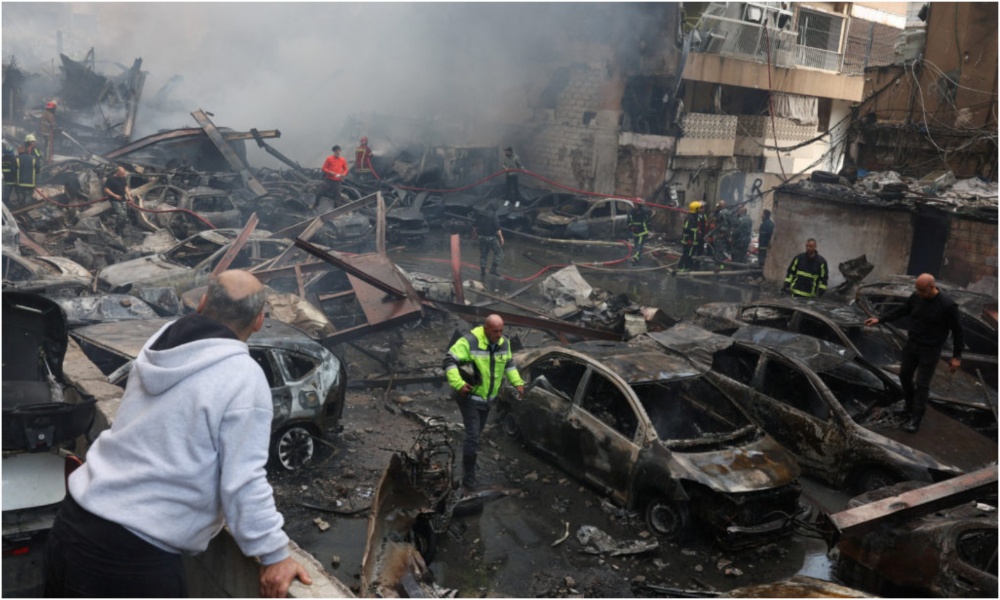
As the United States and Iran move toward cementing a ceasefire, Israeli military strategy appears increasingly focused on preparing for a prolonged and evolving regional conflict.
According to Israeli officials and analysts, the country has intensified efforts to establish and maintain “buffer zones” across multiple areas, including the Gaza Strip, southern Lebanon, and parts of Syria.
The approach reflects a shift in doctrine following the October 7 attacks, with an emphasis on containing threats rather than fully eliminating them.
Reuters reported that Israeli officials say the aim of these zones is to push potential threats further from border communities and reduce the risk of attacks. Military sources indicate that areas extending several kilometres beyond Israel’s borders are being cleared or monitored to limit the reach of armed groups such as Hezbollah and Hamas.
The developments come as Washington and Tehran agreed to a temporary pause in hostilities while negotiating a broader settlement following the latest escalation, which began in late February.
While Israel has reportedly halted direct strikes on Iran, it continues operations against Iran-aligned groups in neighbouring areas.
In southern Lebanon, Israeli forces have advanced into areas near the Litani River, with military officials describing efforts to establish a security belt aimed at preventing cross-border fire. The operation has reportedly involved evacuations and the destruction of structures suspected of being used for military purposes.
Israeli leaders have framed the strategy as necessary for long-term security.
In recent remarks, Benjamin Netanyahu said Israel has created defensive belts extending beyond its borders in multiple areas, including Gaza and Syria.
However, the approach has raised concerns among analysts and legal experts. Some warn that widespread destruction of civilian infrastructure may violate international law unless clearly justified by military necessity. Others caution that maintaining multiple fronts could place significant strain on Israeli forces over time.
The strategy also reflects deep scepticism within Israel about the prospects for lasting peace agreements. Surveys in recent years suggest limited public confidence in long-term stability with Palestinians or neighbouring states, reinforcing support for security-driven policies.
At the same time, statements from some members of Israel’s government have fuelled concern about possible territorial ambitions, particularly in Gaza and southern Lebanon. Still, military officials have indicated that buffer zones are intended as flexible security measures rather than permanent borders.
As diplomatic efforts continue, the contrast between ceasefire negotiations and military preparations highlights the uncertainty surrounding the region’s trajectory—raising the possibility that even if fighting subsides in the short term, a longer period of instability may lie ahead.
Regional
Pakistan PM holds 45-minute call with Iranian President
The call, described as “warm and cordial” and lasting more than 45 minutes, highlighted Pakistan’s role in helping secure a temporary ceasefire between the United States and Iran.
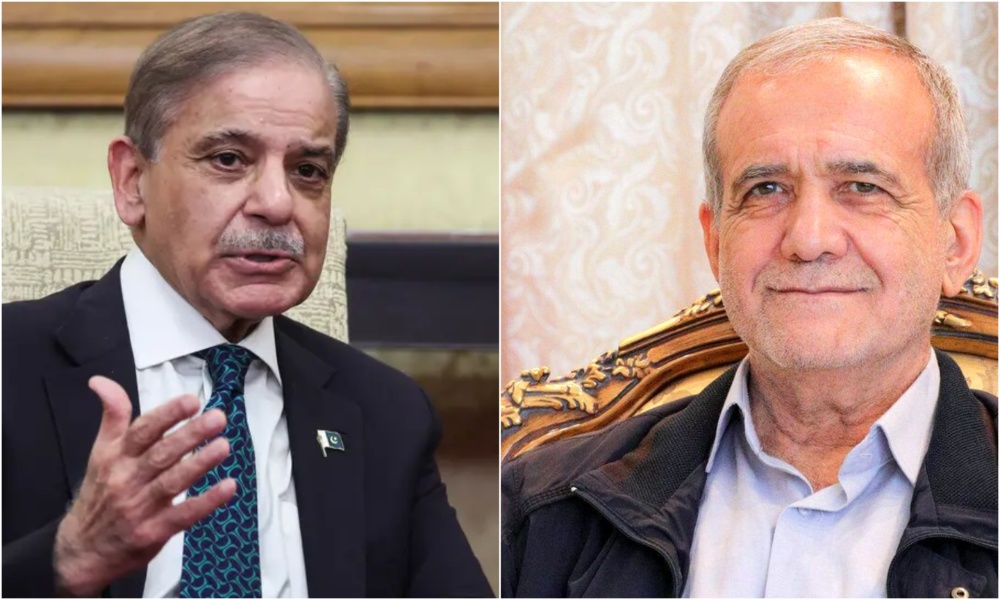
In a significant diplomatic development, Pakistan’s Prime Minister Shehbaz Sharif held a telephone conversation on Wednesday afternoon with Masoud Pezeshkian, the president of Iran, ahead of scheduled negotiations between Tehran and Washington in Islamabad later this week.
The call, described as “warm and cordial” and lasting more than 45 minutes, highlighted Pakistan’s role in helping secure a temporary ceasefire between the United States and Iran, following weeks of rising regional tensions.
During the conversation, Sharif expressed deep appreciation for the Iranian leadership’s wisdom in agreeing to the ceasefire and thanked Pezeshkian for accepting Pakistan’s offer to host the negotiations. He also conveyed his respects to Supreme Leader Mojtaba Khamenei.
Pezeshkian, in turn, thanked Sharif and praised Pakistan’s efforts in mediating the ceasefire. He confirmed that Iran would participate in the upcoming talks and sent best wishes to the people of Pakistan. Both leaders agreed to remain in close contact.
The Islamabad-hosted negotiations follow a two-week ceasefire agreement between the United States and Iran, aimed at preventing further escalation and stabilizing the region.
Pakistan has actively called for an end to hostilities, citing economic disruptions and security concerns. Tehran has agreed to ensure safe passage through the Strait of Hormuz for commercial shipping during the ceasefire.
International observers see the Islamabad talks as a critical opportunity to transform a temporary pause into a lasting settlement.
While global leaders have cautiously welcomed the ceasefire, they stress that sustained diplomacy will be necessary to achieve long-term peace. Analysts note that significant hurdles remain, and the outcome of the talks will have broad implications for regional stability and global markets.


UN warns of deepening humanitarian crisis in Afghanistan, calls for urgent aid

Iranian delegation lands in Islamabad ahead of ‘make-or-break’ talks

Tawsia: New transit route with Tatarstan, MoU with Uzbekistan discussed

7 killed, 13 injured in shooting by unidentified gunmen in Herat

Vance warns Iran not to “play us” as he leaves for talks

IEA Supreme Leader issues Eid-ul-Fitr message urging unity and support for Islamic system

IEA supreme leader orders replacement of foreign terminology in official documents

14 Pakistani soldiers killed after military post falls along Durand line: MoD

Afghan airstrikes target Pakistani military sites in retaliation for air attacks

Turkmenistan, Afghanistan discuss steps to speed up land acquisition for TAPI pipeline
Tawsia: New transit route with Tatarstan, MoU with Uzbekistan discussed

Tahawol: China to host 2nd round of Kabul–Islamabad talks discussed

Saar: Fragile ceasefire in the Middle East reviewed

Tahawol: Two‑week truce agreement between Iran-US reviewed

Saar: US–Iran two-week ceasefire agreement discussed
-
 Latest News4 days ago
China seeking to build trust between Afghanistan and Pakistan
-
 Latest News5 days ago
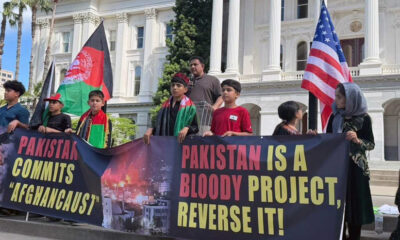
Afghan community in California condemns Pakistani strikes amid growing global protests
-
 Business4 days ago
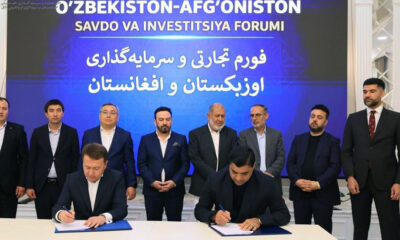
Afghanistan, Uzbekistan sign $400 million trade deals in push to deepen ties
-
 Regional5 days ago
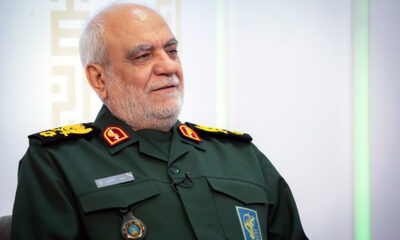
IRGC intelligence chief killed as wave of strikes continues against Iran’s leadership
-

 International Sports4 days ago
IPL 2026: Rain scuppers KKR vs PBKS match
-
 Business5 days ago
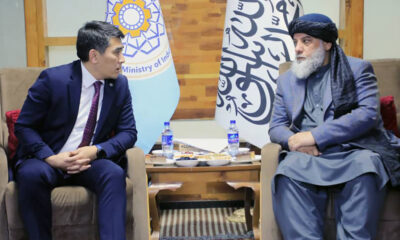
Afghanistan, Kyrgyzstan aim to boost trade to $1 billion
-

 Sport5 days ago
Afghanistan U-17s open their CAFA campaign against Kyrgyzstan
-
 Latest News4 days ago
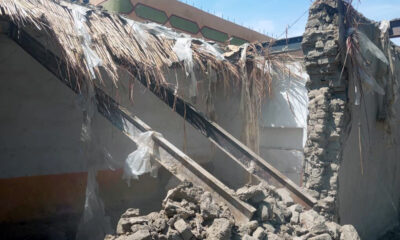
Heavy rains in Nangarhar leave 16 dead and injured