
Latest News
Israel says jets strike school containing Hamas compound, Gaza media says 27 killed

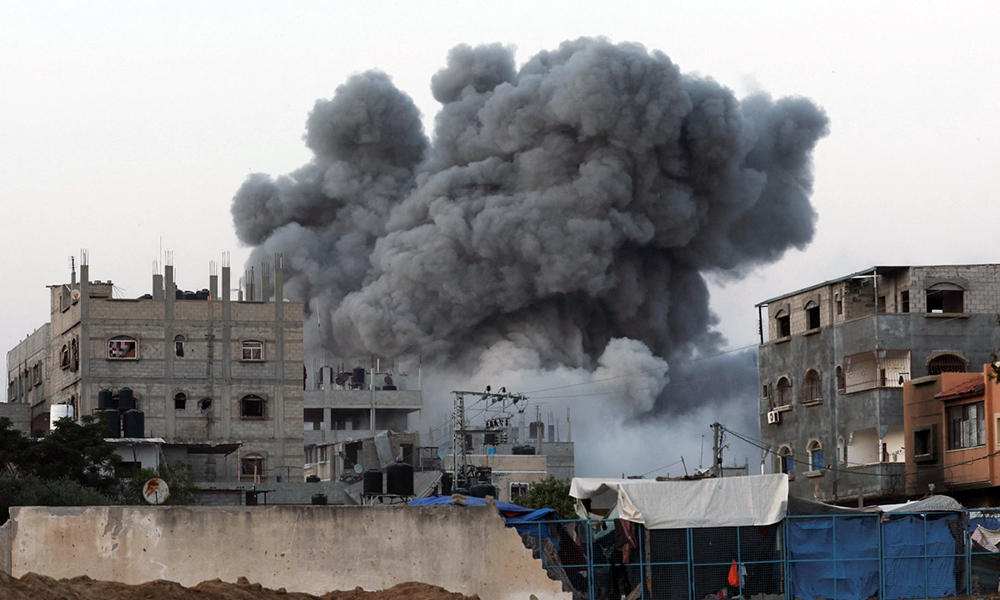
Israel targeted a Gaza school on Thursday that it said contained a Hamas compound, killing fighters involved in the Oct. 7 attack that sparked the eight-month war, but Gaza media said the strike killed at least 27 people seeking shelter.
Ismail Al-Thawabta, the director of the Hamas-run government media office, rejected Israel’s claims that the U.N. school in Nuseirat, in central Gaza, had hidden a Hamas command post.
“The occupation uses lying to the public opinion through false fabricated stories to justify the brutal crime it conducted against dozens of displaced people,” Thawabta told Reuters.
Israel’s military said that before the strike by Israeli fighter jets, the military took steps to reduce the risk of harm to civilians.
The attack happened after Israel announced a new military campaign in central Gaza as it battles a group of fighters relying on hit-and-run insurgency tactics. Israel has said there will be no halt to fighting during ceasefire talks.
In an apparent blow to a truce proposal touted last week by U.S. President Joe Biden, the leader of Hamas on Wednesday said the group would demand a permanent end to the war in Gaza and Israeli withdrawal as part of a ceasefire plan.
The remarks by Ismail Haniyeh appeared to deliver the Palestinian militant group’s reply to the proposal that Biden unveiled last week. Washington had said it was waiting to hear an answer from Hamas to what Biden described as an Israeli initiative.
“The movement and factions of the resistance will deal seriously and positively with any agreement that is based on a comprehensive ending of the aggression and the complete withdrawal and prisoners swap,” Haniyeh said.
Asked whether Haniyeh’s remarks amounted to the group’s reply to Biden, a senior Hamas official replied to a text message from Reuters with a “thumbs up” emoji.
Since a brief week-long truce in November, all attempts to arrange a ceasefire have failed, with Hamas insisting on its demand for a permanent end to the conflict, while Israel says it is prepared to discuss only temporary pauses until the militant group is defeated.
Washington is still pressing hard to reach an agreement. CIA director William Burns met senior officials from mediators Qatar and Egypt on Wednesday in Doha to discuss the ceasefire proposal.
Biden has repeatedly declared that ceasefires were close over the past several months, only for no truce to materialise.
Last week’s announcement came with far greater fanfare from the White House, and at a time when Israeli Prime Minister Benjamin Netanyahu is under mounting domestic political pressure to chart a path to end the eight-month-old war and negotiate the release of Israeli hostages held by Hamas.
Hamas, which rules Gaza, precipitated the war by attacking Israeli territory on Oct. 7, killing around 1,200 people and capturing more than 250 hostages, according to Israeli tallies. Around half of the hostages were freed in the war’s only truce so far, which lasted a week in November.
Israel’s military assault on Gaza has killed more than 36,000 people, according to health officials in the territory, who say thousands more dead are feared buried under the rubble.
Meanwhile, a conflict between Israel and the Lebanon-based Hezbollah is threatening to escalate, with the U.S. State Department warning against a full-blown war.
ISRAEL LUKEWARM
Although Biden described the ceasefire proposal as an Israeli offer, Israel’s government has been lukewarm in public. A top Netanyahu aide confirmed on Sunday that Israel had made the proposal even though it was “not a good deal”.
Far-right members of Netanyahu’s government have pledged to quit if he agrees to a peace deal that leaves Hamas in place, a move that could force a new election and end the political career of Israel’s longest-serving leader.
Centrist opponents who joined Netanyahu’s war cabinet in a show of unity at the outset of the conflict have also threatened to quit, saying his government has no plan.
Meanwhile, Defence Minister Yoav Gallant said there would be no let-up in Israel’s offensive while negotiations over the ceasefire proposal were under way.
“Any negotiations with Hamas would be conducted only under fire,” Gallant said in remarks carried by Israeli media after he flew aboard a warplane to inspect the Gaza front.
The armed wings of Hamas and Islamic Jihad said they had fought gun battles with Israeli forces on Wednesday in areas throughout the enclave and fired anti-tank rockets and shells.
Two children were among the dead laid out on Wednesday in the city’s Al Aqsa Martyrs Hospital, one of the last hospitals functioning in Gaza. Mourners said the children had been killed along with their mother, who had been unable to leave when others in the neighbourhood did.
“This is not war, it is destruction that words are unable to express,” said their father Abu Mohammed Abu Saif.

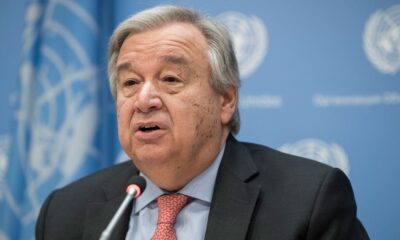





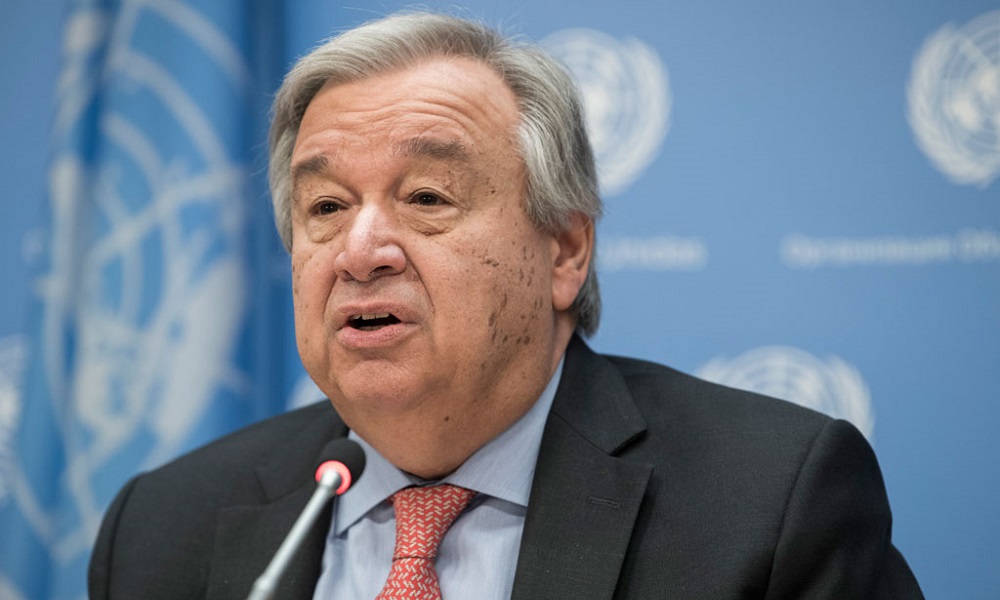
Marking World Water Day, UN Secretary-General António Guterres on Sunday stressed that access to safe water and sanitation is essential for protecting the rights and health of women and girls, urging governments to take stronger action.
In his message, the Secretary-General warned that women and girls bear the greatest burden where water and sanitation services are inadequate. Many are forced to use unsafe facilities, care for relatives affected by waterborne diseases and spend hours each day collecting water—often missing out on education and opportunities.
Highlighting this year’s theme, “Where water flows, equality grows,” Guterres said improving water access can play a key role in advancing gender equality.
He called on governments to boost investment in water and sanitation systems by improving service delivery, strengthening workforce capacity and ensuring sustainable financing. He also urged developed nations to support these efforts by sharing technology, expertise and funding to build resilient infrastructure.
The UN chief emphasized the importance of including women in decision-making processes to ensure water systems effectively meet community needs.
While noting that water scarcity can contribute to conflict, Guterres said it can also foster cooperation and peace. He pointed to the upcoming UN Water Conference as an opportunity for countries to accelerate progress toward universal access to water and sanitation.
“Together, let’s make water a force for gender equality,” he said, calling for global efforts to ensure no community is left behind.
Latest News
Water crisis deepens in Afghanistan as families struggle for access
Traditional sources such as wells and karezes—underground channels that have sustained communities for generations—are now under severe strain.
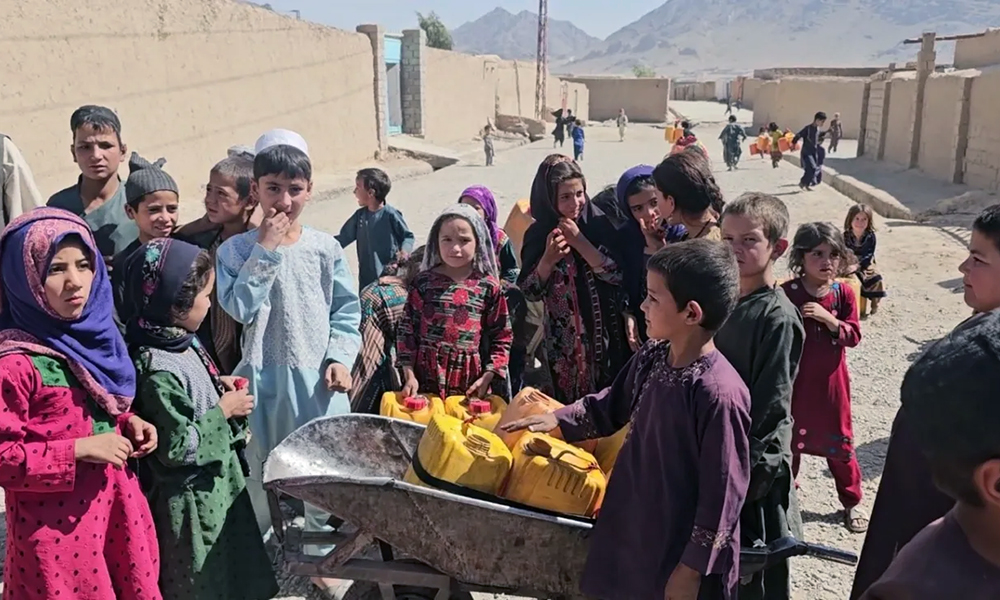
As the world marks World Water Day, Afghanistan is facing a worsening water crisis, with millions of people struggling to access safe and reliable supplies.
Years of drought, declining rainfall, rapid population growth and the return of families from neighbouring countries have placed increasing pressure on already fragile water systems.
Traditional sources such as wells and karezes—underground channels that have sustained communities for generations—are now under severe strain.
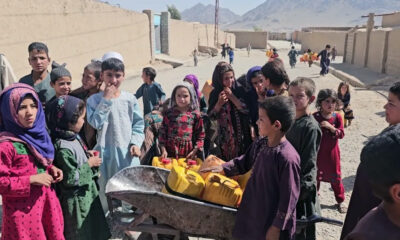
In many rural areas, families are forced to rely on unsafe surface water or travel long distances to meet daily needs. Women and children are most affected, often spending hours each day collecting water.
Urban centres, including Kabul, Mazar-e-Sharif and Kandahar, are also grappling with shortages. Rapid population growth and unregulated groundwater extraction have led to significant depletion, leaving many households dependent on private wells or water deliveries.
The situation in Kandahar is particularly severe. Reports indicate that numerous wells have dried up, while others have dropped to depths of more than 100 metres.
Local community leader Fazil Rahman described water shortages as the most pressing challenge in his area, noting that even deep boreholes are failing to produce sufficient supply. He added that the crisis is disrupting education and livelihoods, as children are often forced to spend hours fetching water instead of attending school.
In response, the International Committee of the Red Cross (ICRC), in partnership with the Urban Water Supply and Sewage State-Owned Corporation, launched a water infrastructure project in Kandahar in 2025. The initiative aims to improve access for more than 100,000 residents through expanded pipelines, new household connections and solar-powered pumping systems.
The ICRC has also upgraded a major water pumping station in Herat, now supplying water to more than 400,000 people through tens of thousands of household connections.
Beyond urban areas, water scarcity is also affecting agriculture, the backbone of many rural livelihoods. Reduced irrigation has led to lower crop yields and increased risks of food insecurity and malnutrition.
To support affected communities, the ICRC has rehabilitated irrigation canals, karezes and flood protection systems in several provinces, including projects in Parwan Province.
Despite these efforts, humanitarian organisations warn that aid alone will not be enough. Long-term investment in infrastructure, improved water management and stronger policies will be essential to address the crisis.
Without sustained and coordinated action, experts caution that water shortages could continue to threaten public health, food security and stability across Afghanistan.


UN chief urges investment in water systems to advance gender equality

North Korea’s Kim Jong Un reappointed as president of state affairs, KCNA says

Tahawol: Possibility of US ground forces entering Iran war discussed

Water crisis deepens in Afghanistan as families struggle for access

Saar: Using US prisoners as political pressure

Pakistani military jet downed in Afghanistan’s Jalalabad, pilot captured alive

Afghan Air Force conducts airstrikes in Islamabad, other cities

Prominent Muslim scholar issues fatwa calling for Afghanistan-Pakistan ceasefire

Afghan air force strikes key Pakistani military installations in retaliatory operation

IEA: Special circle in Pakistan has launched mission to destabilize region
Tahawol: Possibility of US ground forces entering Iran war discussed
Saar: Using US prisoners as political pressure

Tahawol: Pakistan’s efforts to destabilise Afghanistan

Saar: Decline in international assistance to Afghanistan

Tawsia: Assessment of Afghanistan’s economic activities in 1404
-
 Latest News5 days ago
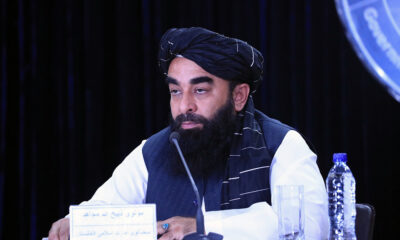
IEA announces temporary pause in defensive operations against Pakistan for Eid
-
 Latest News5 days ago
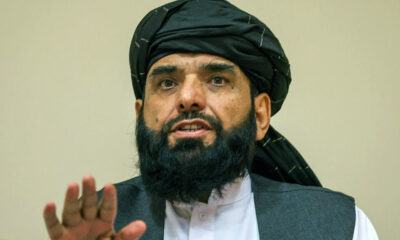
Pakistan opposes normal Afghanistan–India relations: Shaheen
-
 Latest News5 days ago
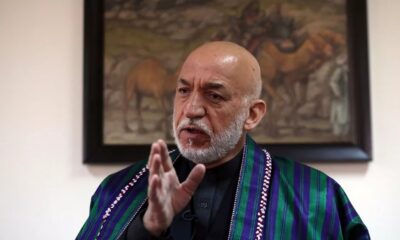
Karzai accuses Pakistan of seeking to destabilise Afghanistan after Kabul strike
-
 Latest News4 days ago
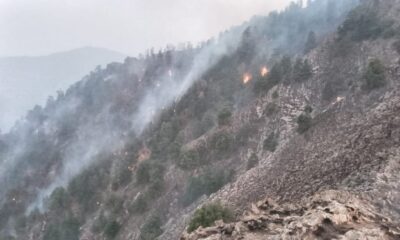
Pakistani shelling hits Kunar districts despite ‘pause in hostility’ over Eid
-

 Sport3 days ago
Afghanistan national buzkashi falls short in Kokpar World Championship semifinals
-

 Regional4 days ago
Pakistan among top nuclear threats to America, US intelligence chief tells senate
-
 Latest News5 days ago
Muslim scholars condemn Kabul hospital attack, urge ceasefire
-
 Latest News4 days ago
Peshawar High Court grants bail to 68 detained Afghan nationals, including minors