
Latest News
No Justice for Thousands of Civilians Killed in US/NATO Operations: Amnesty International

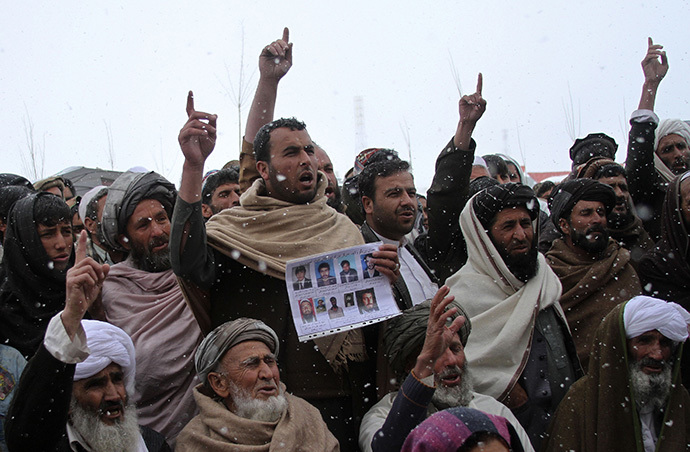

The families of thousands of Afghan civilians killed by US/NATO forces in Afghanistan have been left without justice, Amnesty International said in a new report released today (Monday).
Focusing primarily on air strikes and night raids carried out by US forces, including Special Operations Forces, Left in the Dark finds that even apparent war crimes have gone uninvestigated and unpunished.
“Thousands of Afghans have been killed or injured by US forces since the invasion, but the victims and their families have little chance of redress. The US military justice system almost always fails to hold its soldiers accountable for unlawful killings and other abuses,” said Richard Bennett, Amnesty International’s Asia Pacific Director.
“None of the cases that we looked into – involving more than 140 civilian deaths – were prosecuted by the US military. Evidence of possible war crimes and unlawful killings has seemingly been ignored.”
The report documents in detail the failures of accountability for US military operations in Afghanistan. It calls on the Afghan government to ensure that accountability for unlawful civilian killings is guaranteed in any future bilateral security agreements signed with NATO and the United States.
Amnesty International conducted detailed investigations of 10 incidents that took place between 2009 and 2013, in which civilians were killed by US military operations. At least 140 civilians were killed in the incidents that Amnesty International investigated, including pregnant women and at least 50 children. The organization interviewed some 125 witnesses, victims and family members, including many who had never given testimony to anyone before.
Two of the case studies — involving a Special Operations Forces raid on a house in Paktia province in 2010, and enforced disappearances, torture, and killings in Nerkh and Maidan Shahr districts, Wardak province, in November 2012 to February 2013 — involve abundant and compelling evidence of war crimes. No one has been criminally prosecuted for either of the incidents.
Qand Agha, a former detainee held by US Special Forces in Nerkh in late 2012, spoke of the daily torture sessions he endured. “Four people beat me with cables. They tied my legs together and beat the soles of my feet with a wooden stick. They punched me in the face and kicked me. They hit my head on the floor.” He also said he was dunked in a barrel of water and given electrical shocks.
Agha said that both US and Afghan forces participated in the torture sessions. He also said that four of the eight prisoners held with him were killed while he was in US custody, including one person, Sayed Muhammad, whose killing he witnessed.
Formal criminal investigations into the killing of civilians in Afghanistan are extremely rare. Amnesty International is aware of only six cases since 2009 in which US military personnel have faced trials.
Under international humanitarian law (the laws of war), not every civilian death occurring in armed conflict implies a legal breach. Yet if civilians appear to have been killed deliberately or indiscriminately, or as part of a disproportionate attack, the incident requires a prompt, thorough and impartial inquiry. If that inquiry shows that the laws of war were violated, a prosecution should be initiated.
Of the scores of witnesses, victims and family members Amnesty International spoke to when researching this report, only two people said that they had been interviewed by US military investigators. In many of the cases covered in the report, US military or NATO spokespeople would announce that an investigation was being carried out, but would not release any further information about the progress of the investigation or its findings – leaving victims and family members in the dark.
“We urge the US military to immediately investigate all the cases documented in our report, and all other cases where civilians have been killed. The victims and their family members deserve justice,” said Richard Bennett.
The main obstacle to justice for Afghan victims and their family members is the deeply flawed US military justice system.
Essentially a form of self-policing, the military justice system is “commander-driven” and, to a large extent, relies on soldiers’ own accounts of their actions in assessing the legality of a given operation. Lacking independent prosecutorial authorities, it expects soldiers and commanders to report potential human rights violations themselves. The conflict of interest is clear.
In the rare instances when a case actually reaches the prosecution stage, there are serious concerns about the lack of independence of US military courts. It is extremely rare that Afghans themselves are invited to testify in these cases.
“There is an urgent need to reform the US military justice system. The US should learn from other countries, many of which have made huge strides in recent years in civilianizing their military justice systems,” said Richard Bennett.
The report also documents the lack of transparency on investigations and prosecutions of unlawful killings of civilians in Afghanistan. The US military withholds overall data on accountability for civilian casualties, and rarely provides information on individual cases. The US government’s freedom of information system, meant to ensure transparency when government bodies fail to provide information, does not function effectively when civilian casualties are at issue.
Amnesty International also urges the Afghan government to immediately establish its own mechanism to investigate abuses by the Afghan National Security forces, who will assume full combat responsibility by the end of 2014.

Latest News
Two children killed, mother injured in unexploded ordnance blast in Helmand
The two children were killed instantly, while their mother sustained serious injuries and was transferred for medical treatment.
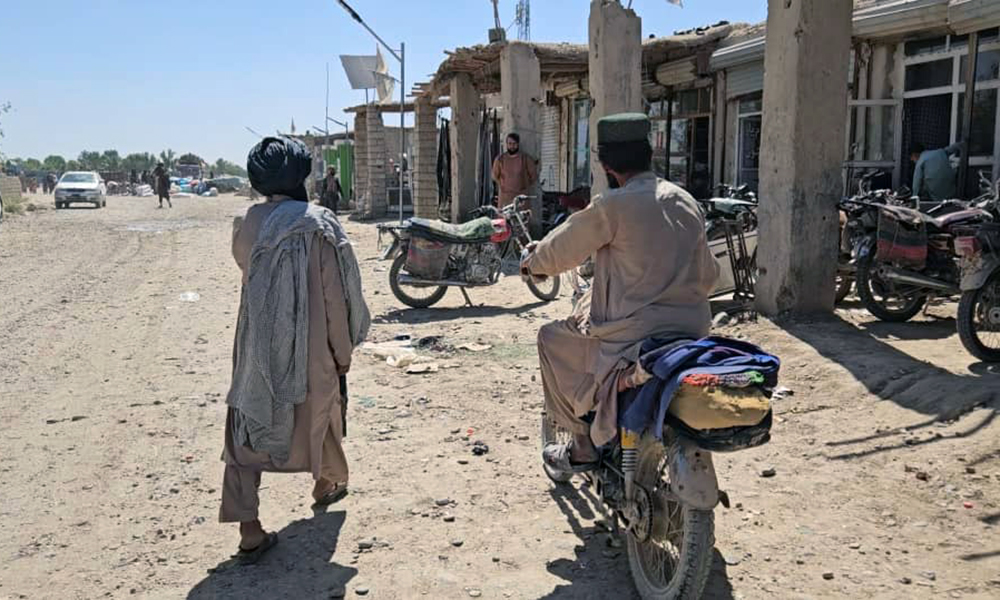
Two children were killed and their mother seriously injured after an unexploded device detonated inside their home in southern Helmand Province, local officials said on Wednesday.
According to Nasir Ahmad Mahajer, spokesperson for the Helmand police command, the incident occurred at around 9:00 a.m. in the village of Kala Sabz in Khanashin District.
Officials said the children had reportedly brought an unidentified object into the house. While preparing tea, the device was placed into a fire, triggering a powerful explosion.
The two children were killed instantly, while their mother sustained serious injuries and was transferred for medical treatment.
Authorities have once again warned residents against touching or handling suspicious objects, stressing that unexploded ordnance remains a major danger in areas affected by years of conflict.
Latest News
India announce squads for Afghanistan Test and ODI series
Veteran batters Virat Kohli and Rohit Sharma remain key figures in India’s ODI setup as selectors gradually shape the squad for the next World Cup cycle.
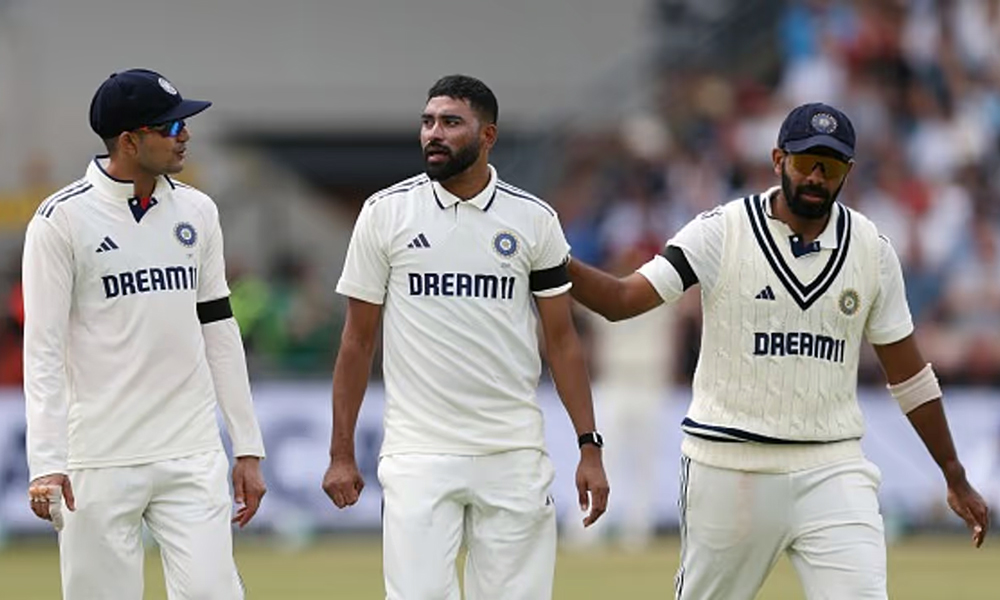
The Board of Control for Cricket in India (BCCI) has announced India’s Test and ODI squads for the upcoming series against Afghanistan, with Shubman Gill set to captain both sides.
The series, scheduled for June, includes a one-off Test match and a three-match ODI series and is being viewed as an important step in India’s preparations for a busy international calendar.
Selectors largely retained a familiar core of experienced players while also rewarding several younger talents following strong performances in IPL 2026.
The squad announcement came amid discussions surrounding workload management for key players, including fast bowler Jasprit Bumrah, as well as the leadership role of wicketkeeper-batter Rishabh Pant.
According to reports, chief selector Ajit Agarkar and BCCI officials also considered the importance of the Afghanistan series in shaping India’s plans for the ongoing World Test Championship cycle and the 2027 ODI World Cup.
Despite the one-off Test not carrying World Test Championship points, India named a strong batting lineup as the team management looks to build momentum ahead of a demanding Test season later this year, including overseas tours and the Border-Gavaskar Trophy.
Veteran batters Virat Kohli and Rohit Sharma remain key figures in India’s ODI setup as selectors gradually shape the squad for the next World Cup cycle.
India’s Test squad for the Afghanistan series includes Shubman Gill as captain, with Yashasvi Jaiswal, KL Rahul, Sai Sudharsan, Rishabh Pant, Devdutt Padikkal, Nitish Kumar Reddy, Washington Sundar, Kuldeep Yadav and Mohammed Siraj among those selected.
The ODI squad also features Rohit Sharma, Virat Kohli, Hardik Pandya, Shreyas Iyer and Ishan Kishan.
The one-off Test match between India and Afghanistan will be played from June 6 to 10 at the MYS International Cricket Stadium in Mullanpur, New Chandigarh.
The ODI series will begin on June 14 in Dharamsala, followed by matches in Lucknow on June 17 and Chennai on June 20.
Latest News
Fazlur Rehman says Pakistan’s Afghanistan policy has failed
He said issues between Afghanistan and Pakistan should be resolved through political dialogue and diplomacy rather than the use of force.
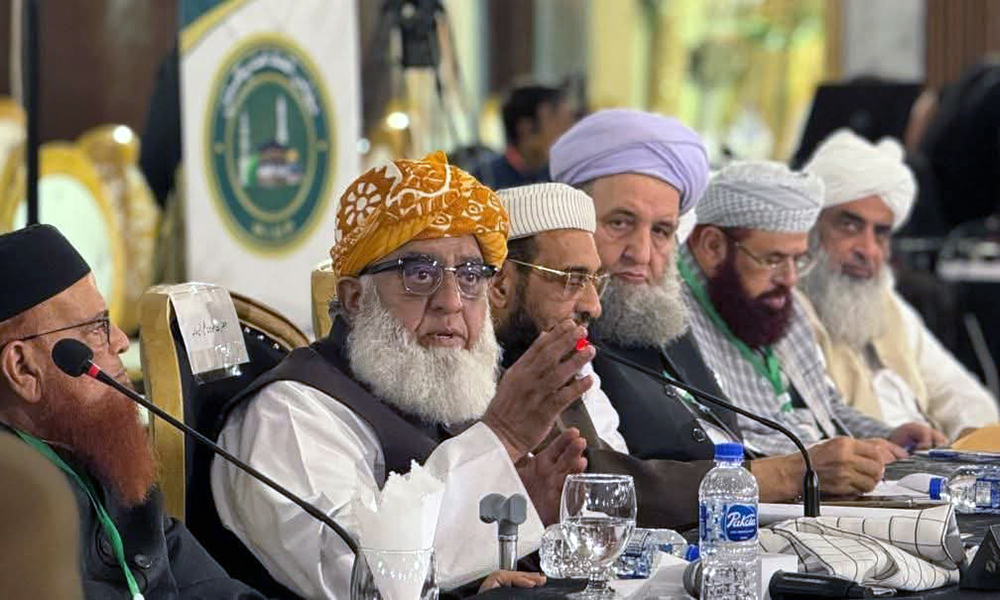
Pakistani religious and political leader Fazlur Rehman has said Islamabad’s long-standing interventionist approach toward Afghanistan has failed and contributed to growing mistrust between the two neighboring countries.
Speaking at a press conference in Karachi, the chief of Pakistan’s Jamiat Ulema-e-Islam party said Pakistan had at times supported Afghan governments and at other times opposed them, describing the policy as unsuccessful.
He said issues between Afghanistan and Pakistan should be resolved through political dialogue and diplomacy rather than the use of force.
Without naming specific groups, Fazlur Rehman also criticized what he described as failed state policies, saying that even groups once regarded as close to Pakistan are now acting against the country.
He called for serious diplomatic and political engagement to address ongoing disputes between Kabul and Islamabad, including trade, border management, refugee issues and security concerns.
His remarks come amid continued tensions between Afghanistan and Pakistan over clashes, mutual security accusations and Pakistan’s deportation of Afghan refugees.


Two children killed, mother injured in unexploded ordnance blast in Helmand

British woman detained in Iran resumes hunger strike alongside husband

India announce squads for Afghanistan Test and ODI series

Fazlur Rehman says Pakistan’s Afghanistan policy has failed

OIC pledges support for preservation and modernization of Afghanistan’s cultural heritage

New Afghanistan-China transport corridor launched via Turkmenistan

Afghanistan signs $46 million deal to develop standard laboratory complexes

Bayat Power extends gas supply deal with Afghan Gas

Germany to launch online visa system for Afghan study and work applicants in Pakistan

Afghanistan, Uzbekistan and Kyrgyzstan agree on framework to boost trade and transit

Tahawol: Reason for postponing US attack on Iran reviewed

Saar: Talks between Afghanistan and Pakistan discussed

Tahawol: Central Asia’s security link to Afghanistan stability

Saar: Afghanistan’s engagement with the world

Tahawol: Fragile U.S.-Iran ceasefire
-
 World3 days ago
Large blast near Beit Shemesh part of pre-planned test: Israeli defense firm
-

 World3 days ago
Trump returns from China with stability but little progress
-

 Latest News5 days ago
Afghan migrant arrested over alleged assault of schoolgirl in Germany
-

 Latest News4 days ago
Russia asked to send medical teachers to Afghanistan: Overchuk
-

 Latest News4 days ago
U.S. reups $6 million reward for information on American missing in Afghanistan since 2014
-
 Regional5 days ago
Iran has ‘no trust’ in US, will negotiate only if it is serious, Araqchi says
-

 Sport4 days ago
IPL: Chennai Super Kings drop to sixth place after defeat against Lucknow Super Giants
-

 Business3 days ago
Chinese and Uzbek investors express interest in Afghanistan’s mining sector