
Latest News
No recognition of IEA until women’s rights and constitution issues are addressed: UN envoy
“We are trying to establish a process and preserve an important mechanism of consultation. We must be realistic about how much each meeting in this process can deliver, especially at this early stage where confidence and trust are insufficient,” she said.

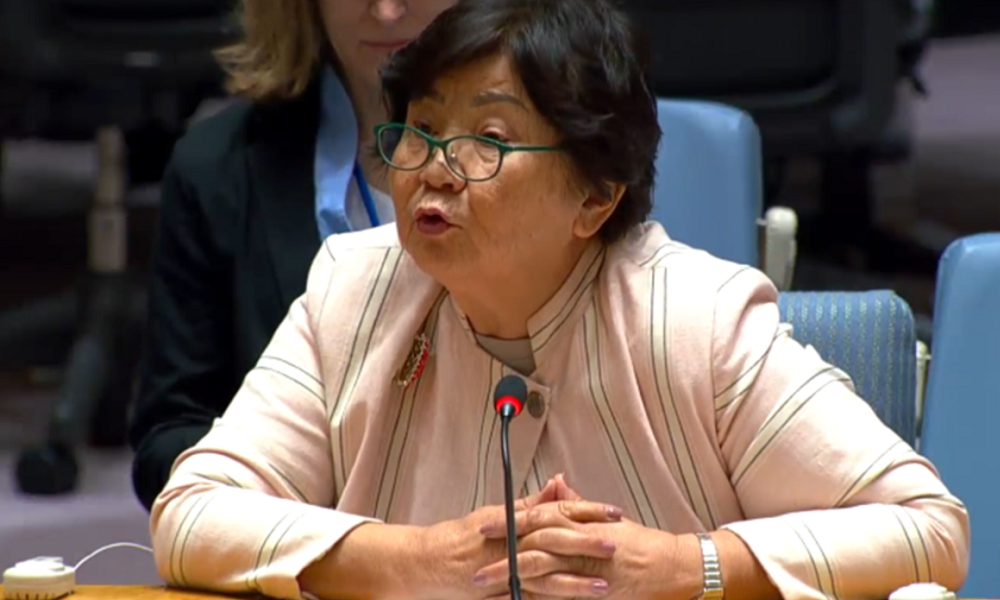
The United Nations envoy for Afghanistan, Roza Otunbayeva, said on Friday Afghans broadly agree that it is important for the Islamic Emirate of Afghanistan (IEA) to attend the upcoming Doha format meeting, but that there should also be no recognition of IEA until the issues of women’s rights, girls’ education, and an acceptable constitution were broadly addressed.
Addressing the Security Council in New York, Otunbayeva said that Afghans expect that the restrictions on women’s rights will be forcefully addressed in the upcoming meeting, but noted that expectations cannot realistically be met in a single meeting.
“We are trying to establish a process and preserve an important mechanism of consultation. We must be realistic about how much each meeting in this process can deliver, especially at this early stage where confidence and trust are insufficient,” she said.
The envoy said that engagement has led to some flexibility by IEA. “It has at the very least led to greater understanding and trust-building on all sides,” she said.
US deputy envoy Robert Wood said that the international community must insist on reversing IEA restrictions on women and girls.
“We must ensure that women and civil society participants have a voice in Doha at the UN-hosted meeting of Special Envoys coming up in a few weeks. Their concerns must be highlighted in all deliberations on Afghanistan’s future,” he said.
The envoy noted that the UN has an important role to play in Afghanistan’s re-integration into the international system.
UK Political Counsellor Fergus Eckersley also called for the IEA to reverse all policies restricting human rights and fundamental freedoms in Afghanistan.
Noting that the 2024 Afghanistan Humanitarian Needs and Response Plan is only 20 percent funded, he urged the international community to increase their support. He said that the UK is on track to deliver over $190 million in aid this year.
The Islamic Emirate has repeatedly emphasized that it is committed to ensuring the Shariah rights of women and girls, and that countries should not interfere in this matter.
The third Doha meeting on Afghanistan is scheduled to be held on June 30. The Islamic Emirate, which did not attend the previous meetings, has announced that it will participate in the upcoming meeting.
Zakir Jalali, Director of the Third Political Division of the Ministry of Foreign Affairs of Afghanistan, said on Friday that the discussions of the third Doha meeting on Afghanistan will focus on private sector, financial, banking, counter-narcotics and alternative livelihood issues.
Related stories:
Doha meeting on Afghanistan to focus on private sector, finance, banking, drugs: IEA
UN’s remarks on women’s rights violations ‘damaging’ ahead of Doha meeting: IEA

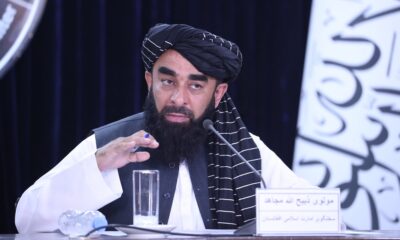


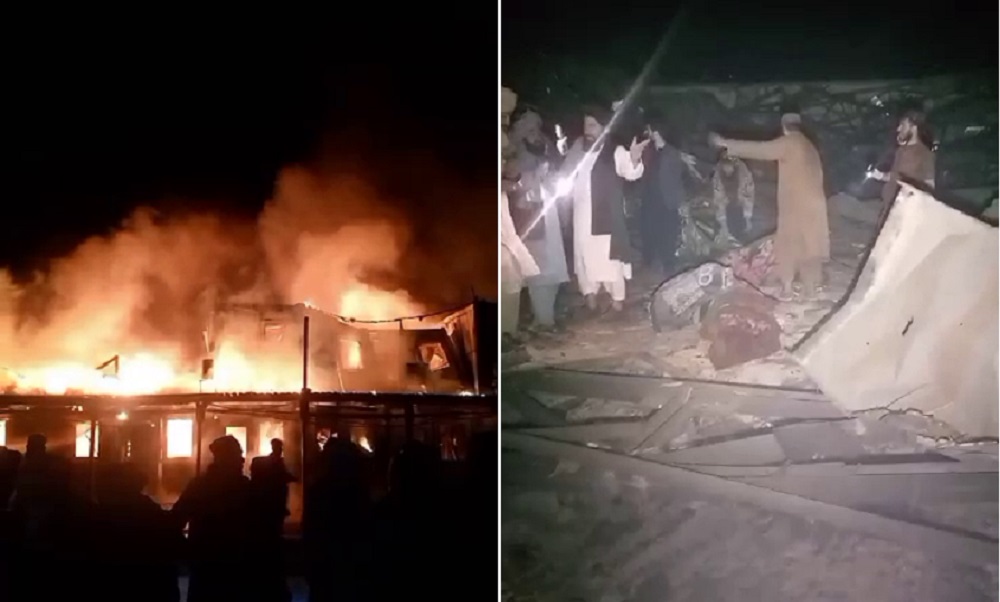
The spokesman of the Islamic Emirate of Afghanistan (IEA), Zabihullah Mujahid, has strongly condemned what he described as a violation of Afghanistan’s sovereignty following an alleged airstrike that targeted a drug treatment hospital in Kabul.
In a statement, Mujahid said the facility, where patients were undergoing treatment for drug addiction, was struck, resulting in several casualties among those receiving medical care.
“Pakistan’s military regime has once again violated our country’s airspace and targeted a drug treatment hospital in Kabul, causing a number of patients under treatment to be martyred and wounded,” Mujahid said.
He described the incident as a serious breach of humanitarian principles and international norms.
“We strongly condemn this crime in the harshest terms and consider it an act that goes against all human and moral standards,” the statement added.
Mujahid emphasized that targeting a medical facility where vulnerable patients were receiving treatment represents a clear disregard for humanitarian values and internationally recognized rules protecting medical institutions.
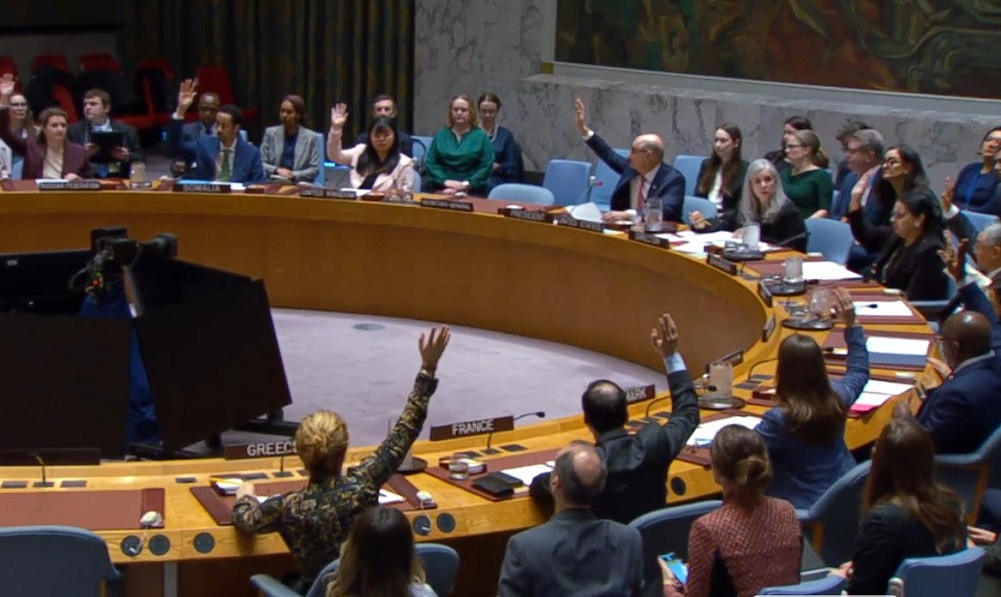
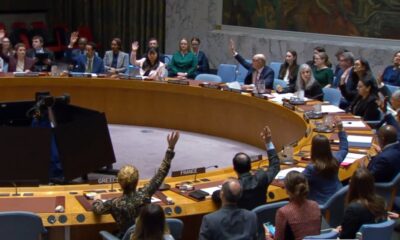
The United Nations Security Council has approved a three-month extension of the mandate for the UN Assistance Mission in Afghanistan (UNAMA), shortening the mission’s usual renewal period following a call by the United States for a review of international engagement in the country.
The council voted on Monday to continue the mission’s mandate temporarily, allowing time for further discussions among members on the future role of the UN in Afghanistan.
UNAMA was established in 2002 after US-led forces removed the Islamic Emirate from power. Its mandate has typically been renewed annually, although a six-month extension was granted in 2021 following the Islamic Emirate’s return to power to assess possible adjustments to the mission.
China, which is responsible for drafting UN resolutions on Afghanistan, said the shorter extension was agreed to accommodate requests from some council members to review and potentially adjust UNAMA’s mandate before a longer renewal is considered.
The United States had called for the review last week.
US Ambassador to the United Nations Mike Waltz noted that UNAMA has the largest budget of any UN special political mission and said the Security Council must carefully assess the funds allocated to it.
Waltz also criticized the IEA for obstructing the mission’s work, detaining American citizens, and maintaining strict restrictions on women’s rights.
According to diplomatic sources, China initially proposed a one-year extension supported by most council members, but Washington insisted on a three-month “technical rollover” to allow time for further evaluation.
Meanwhile, the UN has warned that Afghanistan continues to face one of the world’s most severe humanitarian crises.
Acting UNAMA head Georgette Gagnon recently told the council that humanitarian needs remain urgent and have worsened due to declining international funding.
Humanitarian agencies aim to assist about 17.5 million Afghans in 2026 through a $1.71 billion aid appeal, but the plan is currently only around 10 percent funded.
The UN World Food Programme estimates that more than 17 million people in Afghanistan — roughly one-third of the population — are experiencing acute food shortages, including 4.7 million facing emergency levels of hunger.
The United States, which has reduced global aid spending during President Donald Trump’s second term, has maintained sanctions on the IEA and continues to block the release of approximately $4 billion in Afghan central bank assets held in a Swiss-based trust fund.
Latest News
Mujahid: Sanctions on Islamic Emirate officials violate human rights and should be lifted
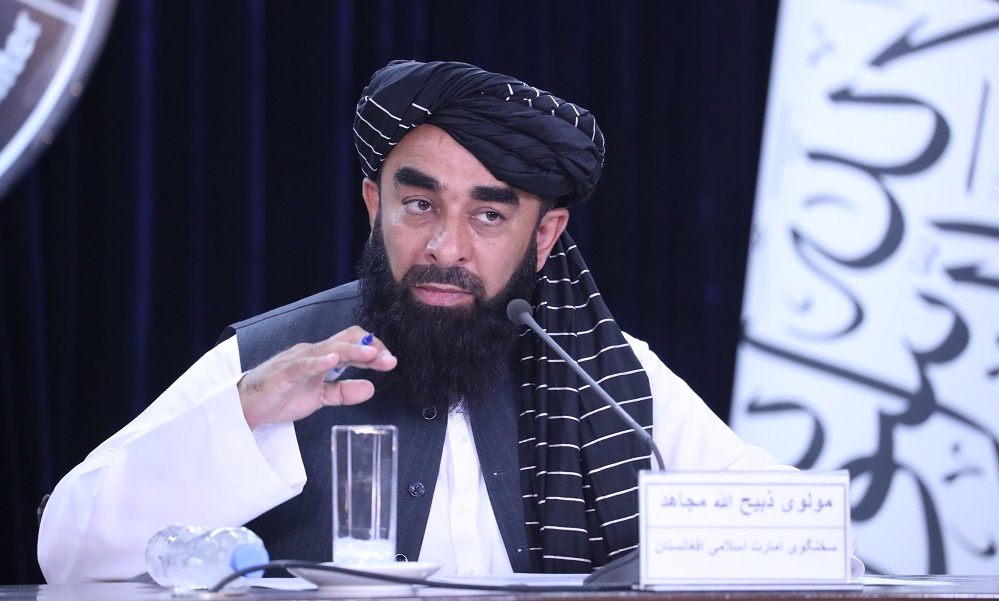
Zabihullah Mujahid, spokesperson for the Islamic Emirate of Afghanistan, has criticized the United Nations Security Council for updating its sanctions list, saying the continued measures against Afghan officials violate human rights and should be lifted.
Mujahid said sanctions imposed on officials of the Islamic Emirate over the years have failed to produce results and their renewal reflects a continuation of an ineffective policy.
“Imposing sanctions deprives individuals of their rights and has been done without cause,” Mujahid said. “These sanctions have produced no results over the years and have not been a successful experience. Renewing the list again is simply repeating the same failed policy.”
He added that placing senior officials on sanctions lists restricts their ability to travel and engage internationally, which he said ultimately harms the country and its people.
“This is a violation of the rights of individuals and of the nation,” Mujahid said. “When senior figures are on the sanctions list, their travel is naturally restricted, which directly affects society. These sanctions should be lifted because they are unjustified and have brought no benefit.”
The UN Security Council 1988 Sanctions Committee, established under United Nations Security Council Resolution 1988 (2011), recently amended entries for 22 individuals on its sanctions list. Those listed are subject to asset freezes, travel bans and an arms embargo under United Nations Security Council Resolution 2816, adopted under Chapter VII of the UN Charter.
Among the officials included on the list are Mohammad Hassan Akhund, Prime Minister; Abdul Ghani Baradar, Deputy Prime Minister for Economic Affairs; Abdul Salam Hanafi, Administrative Deputy Prime Minister; Amir Khan Muttaqi, Foreign Minister; Sirajuddin Haqqani, Interior Minister; Abdul Kabir, Minister of Refugees and Repatriation; Abdul Latif Mansoor, Minister of Rural Rehabilitation and Development; and Din Mohammad Hanif, Minister of Economy.
Individuals included on the list may travel to UN member states only with prior approval from the Security Council sanctions committee.


IEA condemns alleged airstrike by Pakistan on drug treatment hospital in Kabul

UN Security Council extends UNAMA mandate for three months after US review call

Mujahid: Sanctions on Islamic Emirate officials violate human rights and should be lifted

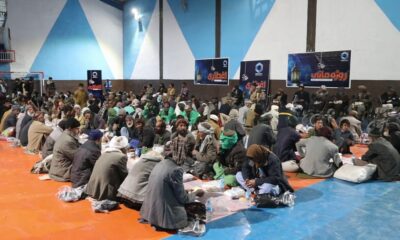
AWCC distributes iftar meals to hundreds in Herat

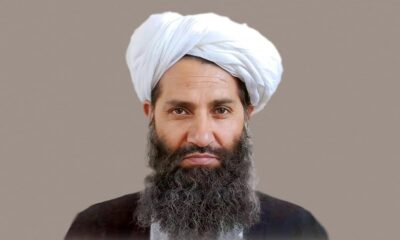
IEA Supreme Leader issues Eid-ul-Fitr message urging unity and support for Islamic system

Pakistani military jet downed in Afghanistan’s Jalalabad, pilot captured alive

Afghan Air Force conducts airstrikes in Islamabad, other cities

IEA releases three Pakistani soldiers to mark Ramadan

Afghanistan’s Chief of Armed Forces underscores readiness and equipment for national defense

Afghanistan welcomes investment and technology partnerships with India

Tahawol: China’s efforts for Afghanistan-Pakistan talks

Saar: UNSC’s upcoming vote on UNAMA mandate

Tahawol: Afghan, Chinese FMs’ phone talks discussed

Saar: UN meeting on UNAMA mission in Afghanistan discussed

Exclusive interview with Stephen Rodriguez, UN Development Programme Representative in Afghanistan
-
 Latest News3 days ago
Afghan airstrikes target Pakistani military sites in retaliation for air attacks
-
 Latest News2 days ago
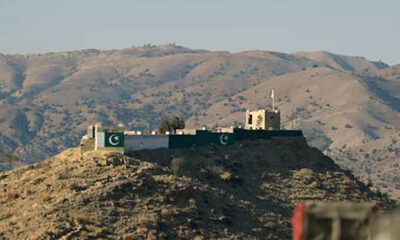
14 Pakistani soldiers killed after military post falls along Durand line: MoD
-
 Latest News4 days ago
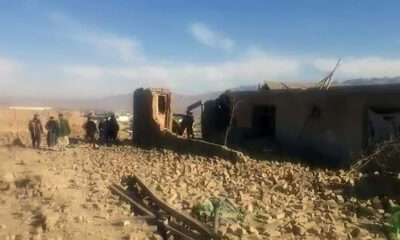
IEA condemns Pakistan’s airstrikes in several Afghan provinces
-
 Sport4 days ago
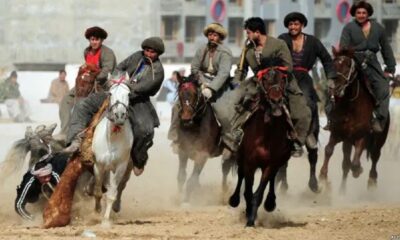
Afghanistan’s national buzkashi team set to compete in Kazakhstan
-
 Latest News5 days ago
China urges de-escalation in Iran crisis and Afghanistan–Pakistan tensions
-
 Latest News5 days ago
China to build nine border facilities along Tajik-Afghan frontier: report
-
 World4 days ago
Iran claims it targeted a US-linked oil tanker in Strait of Hormuz
-
 Business5 days ago
UNHCR launches largest carpet-weaving centre in western Afghanistan