
Latest News
No terrorist groups present in Afghanistan: Interior Ministry

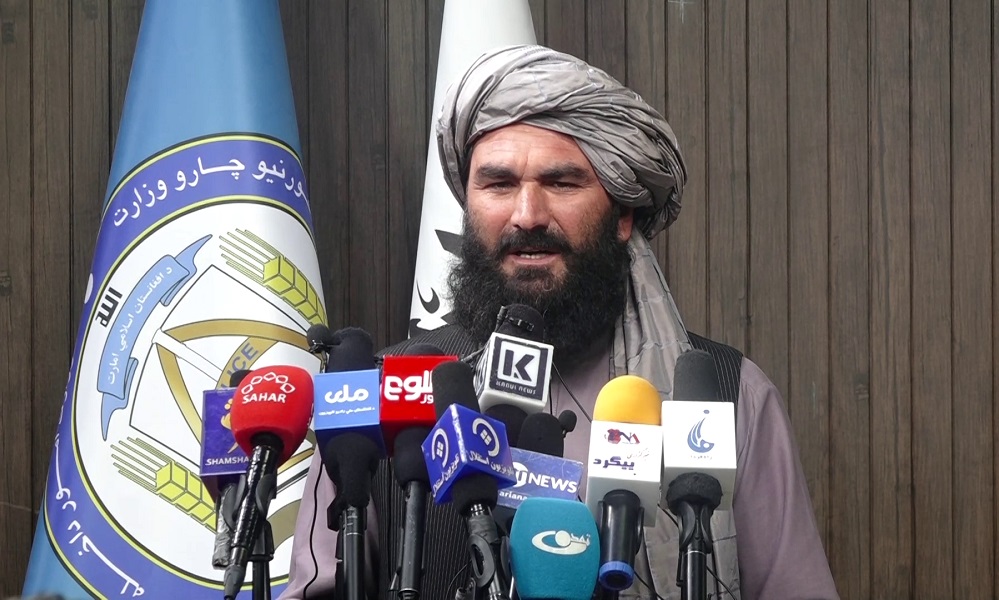
There are no terrorist groups present in Afghanistan, a spokesman for the Interior Ministry said on Tuesday.
Speaking at a press conference Abdul Nafi Takoor said the Islamic Emirate of Afghanistan (IEA) will not “allow them to have presence. We will never allow anyone to pose a threat from Afghanistan to other countries.”
On Monday, a quarterly report on Afghanistan issued by the UN Secretary-General Antonio Guterres noted growing security concerns in Afghanistan, saying foreign terrorist groups continue to have a presence in the country.
“The security situation reveals a worrisome trend in recent months, particularly the series of attacks by ISIL-K, recurring armed opposition clashes with Taliban (IEA) de facto security forces and the continuing presence of foreign terrorist groups in Afghanistan,” the report said.
The report also said that the announcement by the US of the death of the leader of Al-Qaeda, Ayman al-Zawahiri, in Kabul “brought to the fore the continuing ties between the terrorist group and the Taliban (IEA), which would be contrary to the latter’s counter-terrorism commitments.”
The report highlighted that the overall number of conflict-related security incidents and civilian casualties decreased significantly between 22 May and 16 August compared with the same period in 2021.
The United Nations recorded 1,642 security-related incidents, a 77.5 per cent decrease from the 7,314 incidents recorded during the same period in 2021
Armed clashes decreased by 97 per cent, from 4,620 to 129 incidents; air strikes fell by 99.5 per cent, from 564 to 3; detonations from improvised explosive devices decreased by 87 per cent, from 590 to 76; and assassinations decreased by 70 per cent, from 294 to 88, according to the report.
As a result of the deteriorating economic and humanitarian situation, crime-related security incidents remained consistently high, with 373 such incidents reported between 22 May and 16 August, compared with 300 reported during the same period in 2021, the report said.
Attacks claimed or attributed to ISIL-K decreased. Between 22 May and 16 August, the United Nations recorded 48 attacks by the group in 11 provinces, compared with 113 attacks in 8 provinces during the same period in 2021.





Latest News
Khalilzad urges Pakistan to heed UN call for dialogue with Afghanistan
His comments came after Guterres urged all parties to protect civilians and comply with international humanitarian law following Pakistani airstrikes in Afghanistan’s eastern provinces.
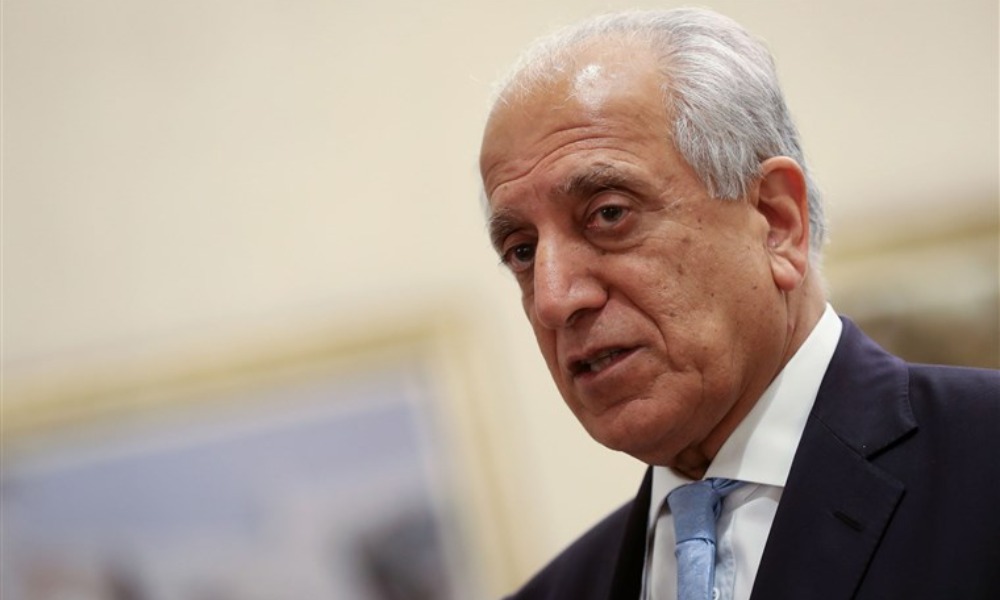
Former US Special Representative for Afghanistan Reconciliation Zalmay Khalilzad has called on Pakistan to respond positively to the United Nations’ appeal for dialogue, saying Afghanistan has consistently sought a diplomatic solution to tensions between the two neighboring countries.
In a post on X, Khalilzad referred to UN Secretary-General António Guterres’ call for Afghanistan and Pakistan to end hostilities and resolve their differences through diplomacy.
He said Afghanistan has repeatedly made clear that it prefers dialogue over conflict and has presented several proposals aimed at reducing tensions.
“Will the Pakistani establishment listen to the UN Secretary-General? I hope so, but I am not optimistic,” Khalilzad wrote.
His comments came a day after Guterres urged all parties to protect civilians and comply with international humanitarian law following Pakistani airstrikes in Afghanistan’s eastern provinces of Paktia, Paktika and Kunar.
Speaking on behalf of the UN chief, spokesperson Stéphane Dujarric said the Secretary-General was deeply concerned by the escalation and called on both countries to settle their differences through diplomatic means.
“We continue to call on all parties to uphold their obligations under international humanitarian law and stress that civilians and civilian infrastructure must be protected at all times,” Dujarric said.
The UN Assistance Mission in Afghanistan (UNAMA) said numerous civilians were killed and injured in the overnight airstrikes, while humanitarian agencies warned that the attacks had also displaced families and created urgent humanitarian needs.
According to Afghan authorities, at least 36 civilians were killed and more than 160 others wounded in the strikes, with women, children and elderly people among the casualties.
The Islamic Emirate of Afghanistan condemned the strikes as a violation of the country’s sovereignty and airspace, describing them as a “crime” and a “cowardly act.”
Relations between Kabul and Islamabad have deteriorated sharply in recent months over Durand Line security and militancy, with both sides accusing each other of failing to prevent cross-frontier attacks. The latest exchange has heightened concerns of further escalation, prompting renewed international calls for restraint and dialogue.
International Sports
Paraguay stun Germany on penalties to reach FIFA World Cup last 16
Ranked 41st in the world before the tournament, Paraguay eliminated a German side ranked 10th, marking one of the greatest shocks ever seen in the World Cup knockout stages.

Paraguay produced one of the biggest upsets in FIFA World Cup history on Monday, defeating four-time champions Germany 4-3 in a penalty shootout after a 1-1 draw to book their place in the Round of 16.
Germany struggled to find their rhythm in the opening half and fell behind in the 42nd minute when Julio Enciso headed home from a Matias Galarza cross to give Paraguay a deserved lead.
The Germans responded after the break, with Kai Havertz equalising in the 53rd minute, glancing a header into the net from Florian Wirtz’s cross.
Germany thought they had taken the lead later in the match when Jonathan Tah scored from a corner, but the goal was ruled out following a VAR review for a foul on Paraguay’s goalkeeper.
With neither side able to find a winner in extra time, the match was decided by penalties.
Germany endured a disastrous shootout, with Kai Havertz, Nick Woltemade and Jonathan Tah all missing from the spot. Paraguay also missed two penalties but held their nerve as Jose Canale converted the decisive kick to seal a famous victory.
Ranked 41st in the world before the tournament, Paraguay eliminated a German side ranked 10th, marking one of the greatest shocks ever seen in the World Cup knockout stages.
The defeat also ended Germany’s long-standing record of never losing a World Cup penalty shootout and continued a disappointing run at recent tournaments, with the 2014 champions again failing to make a deep run.
Paraguay will now face the winner of the Round of 32 clash between France and Sweden in the last 16 on July 4 in Philadelphia.
Latest News
Afghanistan, UNDP discuss expanding cooperation in agriculture and rural development
The minister also said the government is pursuing policies to increase domestic agricultural production and reduce dependence on imports.
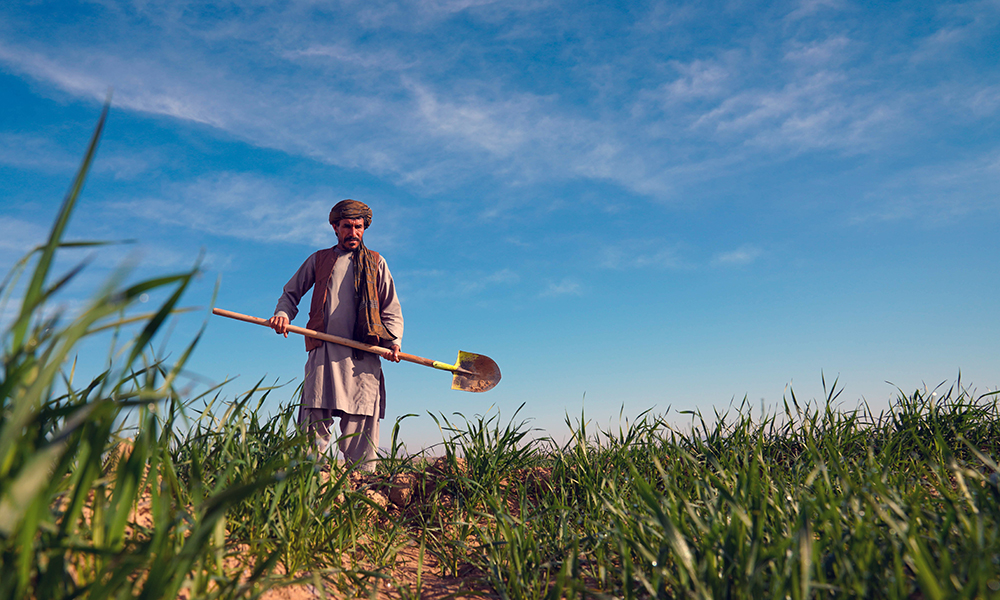
Afghanistan’s Ministry of Agriculture, Irrigation and Livestock and the United Nations Development Programme (UNDP) have discussed expanding cooperation to strengthen agriculture, irrigation, rural livelihoods and infrastructure across the country.
During a meeting with Agriculture Minister Ataullah Omari, UNDP Resident Representative Stephen Rodriques outlined the agency’s ongoing efforts to support Afghanistan’s rural economy through alternative livelihood and development programs.
Rodriques said UNDP has provided chemical fertilizer to 2,000 farmers, established greenhouses, developed agricultural marketplaces and launched several initiatives aimed at boosting agricultural production under its alternative livelihoods program.
He added that UNDP has also completed 270 rural infrastructure projects, including irrigation canals, check dams and other water management facilities. The projects are designed to improve water resource management, increase agricultural productivity, promote mechanization and raise rural household incomes.
Omari welcomed the UNDP’s continued support and emphasized the importance of ensuring the completed projects are used effectively. He reaffirmed the ministry’s commitment to working closely with development partners to strengthen Afghanistan’s agriculture sector and improve the livelihoods of farmers and livestock owners.
The minister also said the government is pursuing policies to increase domestic agricultural production and reduce dependence on imports. As part of that effort, tariffs on several imported agricultural products, including vegetables, fruit and powdered milk, have been increased to encourage local production and support the rural economy.


Afghanistan U-15 team qualifies for FIFA U-15 World Cup

Khalilzad urges Pakistan to heed UN call for dialogue with Afghanistan

Paraguay stun Germany on penalties to reach FIFA World Cup last 16

Afghanistan, UNDP discuss expanding cooperation in agriculture and rural development

UN chief calls for civilian protection after Pakistani airstrikes in Afghanistan

Norway’s Viking-inspired World Cup team photo goes viral

TAPI project advances in Afghanistan as 84kms of pipeline laid

Afghanistan’s trade with Central Asia records sharp growth

Gaikwad set to replace injured Kohli for Afghanistan ODI Series

Iran banks hit by major cyber attack

Tahawol: Pakistan’s attacks on civilians in Afghanistan

Saar: Pakistani airstrikes on Afghanistan

Tahawol: Calls for diplomacy between Kabul, Islamabad

Saar: US and Iran exchanging attacks

Saar: Concerns over Afghan deportations from Europe discussed
-
 Latest News4 days ago
TAPI project sees rapid progress in Afghanistan
-
 Business2 days ago
Afghanistan eyes direct Basmati rice imports from India amid tensions with Pakistan
-
 International Sports3 days ago
FIFA World Cup: Iran held by Egypt after controversial late goal Is disallowed
-
 Latest News3 days ago
Delawar says Afghanistan has achieved security and unity after 47 years
-
 Latest News3 days ago
EU announces major funding to support Afghan small businesses
-
 Latest News4 days ago
Ashura observed across Afghanistan with calls for unity and justice
-
 Latest News2 days ago
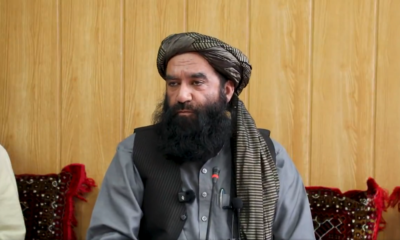
Afghan minister says ‘outsiders’ should not claim to support Afghanistan’s independence
-
 Sport2 days ago
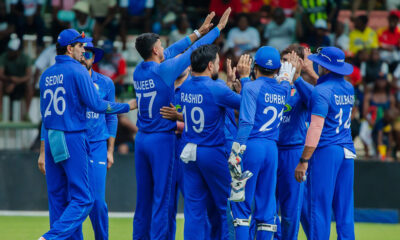
Afghanistan, Uzbekistan set for friendly cricket clash in Khost