
Latest News
Number of Afghans Displaced Internally Reaches to One Million: ARCS

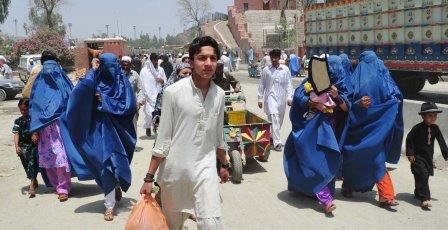
 Nearly one million people have been displaced by war from all across Afghanistan, Afghan Red Crescent Society said on Saturday.
Afghan Red Crescent Society says the number of internally displaced for the current year is unprecedented comparing to the past four years.
“Around one million people have been displaced this year and which is an unprecedented figure,” said Merwais Akram, head of Afghan Red Crescent Society.
Meanwhile, UN Commissioner for Afghan Refugees expresses concern over the return of Afghans from the neighboring countries and the displaced people of insecure provinces.
“UN commissioner is concerning over the return of Afghan refugees from the neighboring countries and the displaced people of the insecure provinces of Afghanistan,” said deputy commissioner of UN in refugee affairs.
While the displaced people and returnees criticize the government, but the ministry of refugee complaint over the lack of financial resources.
“We have a number of plans for displaced people and returnees to not face a humanitarian disaster in the upcoming winter, but we do not have enough financial resources,” said Sayed Alemi Balkhi, minister of refugees.
The war in Afghanistan killed or wounded a record 11,000 civilians last year a quarter of them children taking the total toll to 60,000 since the United Nations began compiling the data in 2009.
The conflict against the Taliban, now in its 15th year, has cost the U.S. more than $700 billion and killed more than 2,300 American soldiers.
Afghanistan has one of the highest refugee populations in the world, estimated at 2.6 million people living outside its borders. Last year, some 178,000 Afghans risked their lives on the dangerous journeys to reach European shores and apply for asylum, Amnesty’s report said.

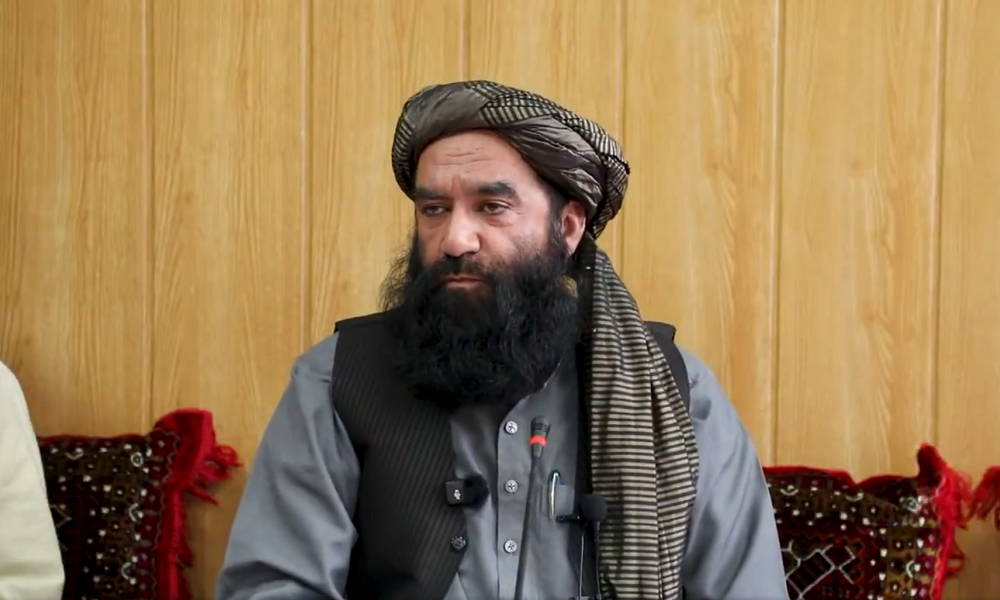
Noorullah Noori, Afghanistan’s Minister of Borders, Ethnic Affairs and Tribes, says the barbed-wire fencing along the disputed Durand Line is viewed by Afghans as a wire placed on the chest of the nation, stressing that Afghans will never accept a foreign barrier imposed on their land.
Noori made the remarks during a meeting with a number of political analysts, tribal elders and university professors at his office, where he emphasized that Afghanistan does not recognize an official border with Pakistan and that this position has been clearly communicated on multiple occasions.
Speaking at the gathering, the minister said the current governing system has emerged from among the people and that public cooperation and support have played a key role in reaching this stage.
He added that the system belongs to all Afghans and that all citizens of the country are treated equally. According to him, since the Islamic Emirate came to power, thousands of tribal and local disputes across the country have been resolved, and serious measures have been taken to safeguard the country’s borders.
Meanwhile, Mohammad Ali Jan Ahmad, Deputy Minister for Jirgas and Tribal Coordination at the ministry, said one of the most important factors behind the success of any society and political system is intellectual and ideological unity among the people.
He noted that such unity exists among the Afghan nation.
During the meeting, political analysts and tribal elders also emphasized the importance of unity and solidarity with the current system, stating that the people of Afghanistan will stand alongside the country’s security and defense forces to protect the nation and its territorial integrity.
Latest News
CSTO claims security risks from Afghanistan remain high
The alert was issued at the 43rd meeting of the Afghanistan working group under the CSTO Council of Foreign Ministers.
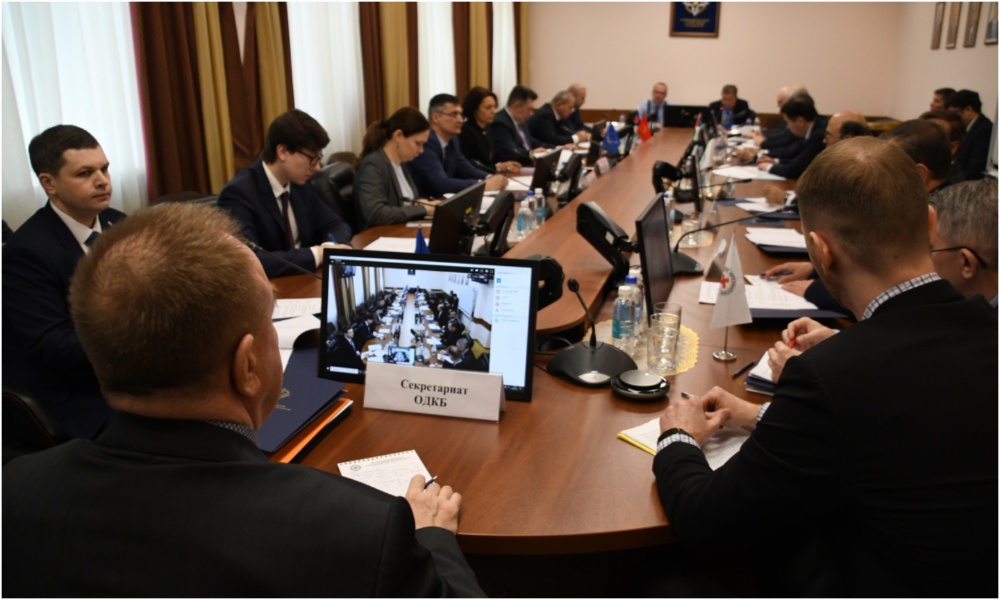
The Collective Security Treaty Organization (CSTO) has warned that security threats originating from Afghanistan remain high, following a review of the situation by officials and regional representatives in Moscow.
The alert was issued at the 43rd meeting of the Afghanistan working group under the CSTO Council of Foreign Ministers, held Wednesday at the organization’s secretariat.
Delegations from CSTO member states joined representatives from the U.N. Office of Counter-Terrorism, the Shanghai Cooperation Organization, CIS anti-terror bodies, and the International Committee of the Red Cross. Participants exchanged assessments of Afghanistan’s military, political, and humanitarian situation and discussed its implications for regional stability.
In a statement, the CSTO emphasized the importance of continuing humanitarian and economic support for the Afghan population.
Officials also called for sustained monitoring of developments in the country and efforts to promote peaceful processes, aiming to reduce the risk of regional spillover.
The Moscow meeting highlights continuing concern among Central Asian and Russian-led security institutions over potential threats from Afghanistan. The CSTO has repeatedly cautioned that extremist groups could exploit various issues including porous borders, and regional tensions.
Neighboring countries remain wary of cross-border militancy, trafficking, and armed group movements. Regional security organizations have increasingly coordinated assessments, as Afghanistan—while outside formal security frameworks—continues to influence the region.
International organizations also highlight Afghanistan’s fragile humanitarian and economic situation. Millions remain reliant on aid, and reduced funding alongside the return of large numbers of Afghans from neighboring countries has intensified existing pressures.
Afghanistan has long been considered a primary external security concern for CSTO members, particularly Tajikistan and Kyrgyzstan.
The latest warning underscores that, while no immediate crisis has emerged, Afghanistan remains central to overlapping security and humanitarian challenges.
International Sports
IPL 2026: Gujarat Titans edge Delhi Capitals in last-ball thriller
The result adds important points for Gujarat as the competition intensifies, while Delhi will look to bounce back after falling just short in one of the closest matches of the season so far.

The Indian Premier League (IPL) delivered another dramatic contest on Wednesday, April 8, as Gujarat Titans narrowly defeated Delhi Capitals in a high-scoring encounter in Delhi.
In a match that went down to the final ball, Gujarat held their nerve to secure a thrilling one-run victory. The game featured standout batting performances, including a commanding innings from Delhi’s top order, while Gujarat’s bowlers, led by Rashid Khan, produced crucial breakthroughs at key moments to seal the win.
The result adds important points for Gujarat as the competition intensifies, while Delhi will look to bounce back after falling just short in one of the closest matches of the season so far.
Attention now turns to Thursday’s clash between Kolkata Knight Riders and Lucknow Super Giants.
Kolkata will be aiming to build momentum with a strong all-round performance, while Lucknow will look to capitalise on their balanced squad and secure a key win in the early stages of the tournament. With both teams boasting explosive batting line-ups and quality bowling attacks, fans can expect another competitive and entertaining contest.
Broadcast Information
Cricket fans in Afghanistan can watch all the action live, as Ariana Radio and Television Network (ATN) holds exclusive rights to broadcast the IPL matches.
Games are being aired nationwide on Ariana Television, bringing the excitement of the tournament directly to viewers at home.


Afghans will never accept Durand Line fencing, says Borders Minister

Afghanistan faces economic strains following a ‘series of shocks’ last year

NATO chief says Trump frustrated by allies’ stance on Iran conflict

CSTO claims security risks from Afghanistan remain high

IPL 2026: Gujarat Titans edge Delhi Capitals in last-ball thriller

IEA Supreme Leader issues Eid-ul-Fitr message urging unity and support for Islamic system

14 Pakistani soldiers killed after military post falls along Durand line: MoD

IEA supreme leader orders replacement of foreign terminology in official documents

Afghan airstrikes target Pakistani military sites in retaliation for air attacks

Turkmenistan, Afghanistan discuss steps to speed up land acquisition for TAPI pipeline

Tahawol: Two‑week truce agreement between Iran-US reviewed

Saar: US–Iran two-week ceasefire agreement discussed

Tahawol: Ongoing negotiations between Kabul-Islamabad discussed

Saar: Afghanistan in spotlight of SCO discussed

Tahawol: Continuation of Middle East crisis discussed
-
 Latest News4 days ago
IEA supreme leader orders replacement of foreign terminology in official documents
-
 Latest News4 days ago
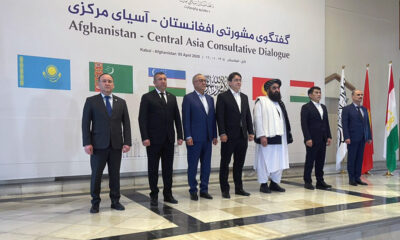
Afghanistan hosts inaugural Afghanistan–Central Asia Consultative Dialogue to strengthen regional cooperation
-
 Latest News4 days ago
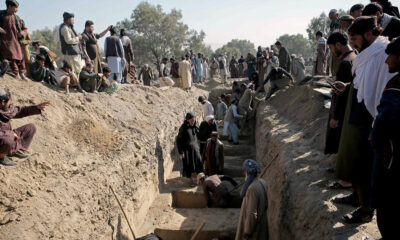
IEA accuses Pakistan of war crimes amid heavy civilian losses
-
 Latest News5 days ago
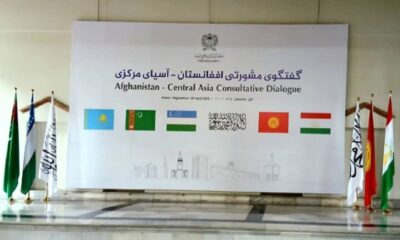
Kabul to host ‘Afghanistan–Central Asia Consultative Dialogue’ tomorrow
-

 World4 days ago
US rescues 2nd F-15 pilot hit above Iran: Trump
-
 Saar5 days ago
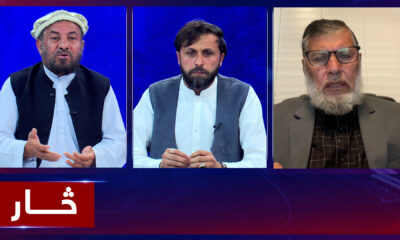
Saar: Ongoing Kabul-Islamabad talks in China discussed
-
 Latest News2 days ago
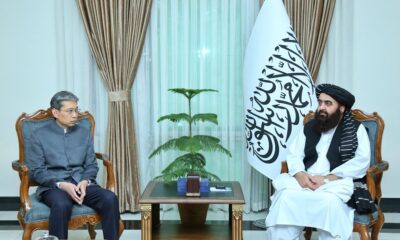
China seeking to build trust between Afghanistan and Pakistan
-
 Latest News3 days ago
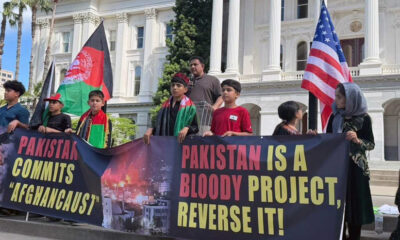
Afghan community in California condemns Pakistani strikes amid growing global protests