
World
Powerful 7.6 earthquake hits northern Japan, tsunami warnings issued
At Kuji Port in Iwate, a 70-centimeter tsunami was recorded, while Hokkaido observed waves of 50 centimeters in Urakawa Town and 40 centimeters at Mutsuogawara Port.

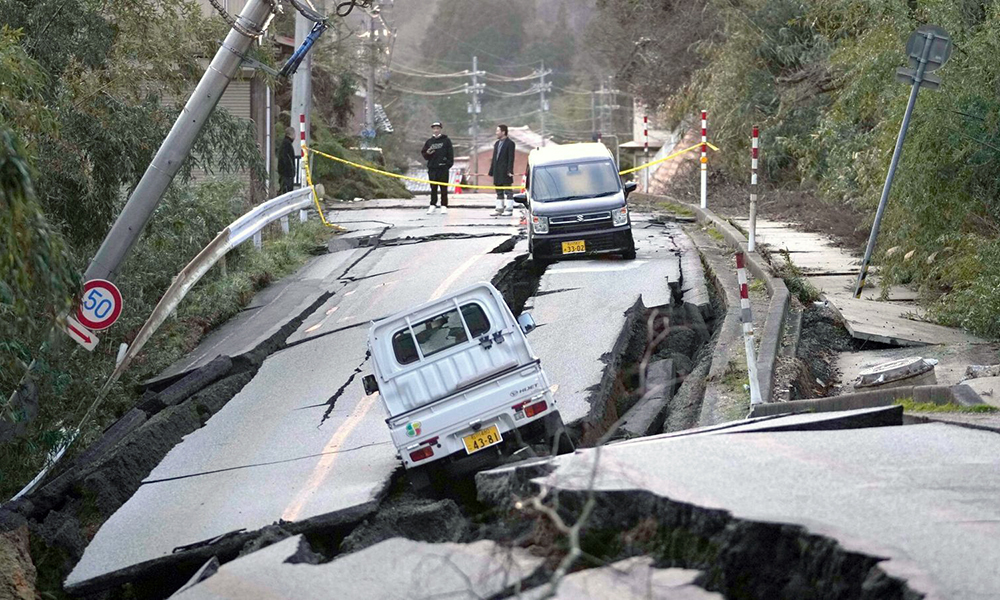
A powerful magnitude 7.6 earthquake struck northern Japan late Monday night, prompting tsunami advisories and an unprecedented alert for a potential “mega quake” along the country’s Pacific coast.
The quake occurred at 11:15 p.m. off the eastern coast of Aomori Prefecture at a depth of 54 kilometers. Authorities initially issued tsunami warnings for Iwate Prefecture as well as coastal areas of Hokkaido and Aomori.
USGS has recorded the quakes magnitude at 7.6. However, Japanese officials have stated it was a 7.5 magnitude quake.
At Kuji Port in Iwate, a 70-centimeter tsunami was recorded, while Hokkaido observed waves of 50 centimeters in Urakawa Town and 40 centimeters at Mutsuogawara Port.
As of 1:00 a.m., officials confirmed six injuries in Aomori, with residents hurt by falling objects or during attempts to evacuate. More than three hours after the quake, the tsunami warnings were downgraded to advisories, though authorities continue to urge residents to stay clear of the shoreline.
Japan’s Meteorological Agency has issued a rare alert warning that a much larger earthquake could follow. A potential mega quake—magnitude 8 or higher—could generate tsunamis along the Pacific coast from Hokkaido down to Chiba.
Residents in the affected areas have been urged to review evacuation routes, prepare emergency supplies, secure household furniture, and ensure access to food, water, and portable toilets. Officials say people along the Pacific coastline should remain on high alert for the next week, although no formal evacuation recommendation is currently in place.
This is the first time Japan has issued an alert under this category since it was created in 2022.
Morikubo Tsukasa, a disaster preparedness official with the Cabinet Office, said: “Based on global earthquake statistics, there is a possibility that a large-scale earthquake with a magnitude of 8 or higher could occur as a follow-up along the Japan Trench or Chishima Trench off Hokkaido. It is unclear whether such an event will happen, but everyone should take precautions to protect their lives.”




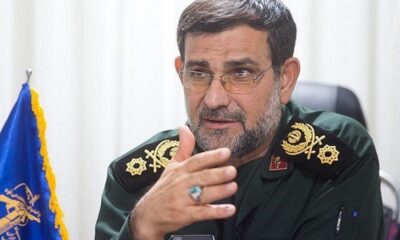

World
Trump rejects efforts to launch Iran ceasefire talks, sources say
The war’s impact on global oil markets has significantly increased the cost for the United States.
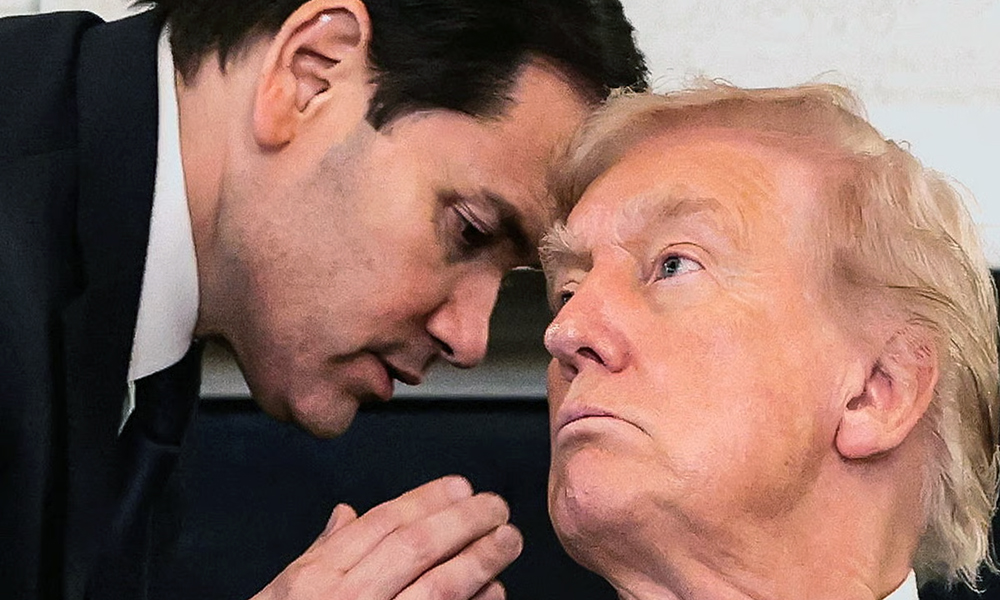
President Donald Trump’s administration has rebuffed efforts by Middle Eastern allies to start diplomatic negotiations aimed at ending the Iran war that started two weeks ago with a massive U.S.-Israeli air assault, according to three sources familiar with the efforts, Reuters reported.
Iran, for its part, has rejected the possibility of any ceasefire until U.S. and Israeli strikes end, two senior Iranian sources told Reuters, adding that several countries had been trying to mediate an end to the conflict.
The lack of interest from Washington and Tehran suggests both sides are digging in for an extended conflict, even as the widening war inflicts civilian casualties and Iran’s closure of the Strait of Hormuz sends oil prices soaring.
U.S. strikes on Iran’s Kharg Island, the country’s main oil export hub, on Friday night underscored Trump’s determination to press ahead with his military assault. Iran’s new Supreme Leader Mojtaba Khamenei has vowed to keep the Strait of Hormuz shut and threatened to step up attacks on neighboring countries.
The war has killed more than 2,000 people, mostly in Iran, and created the biggest-ever oil supply disruption as maritime traffic has halted in the Strait of Hormuz, through which a fifth of the world’s oil is transported.
Oman, which mediated talks before the war, has tried multiple times to open a line of communication, but the White House has made clear it is not interested, according to two sources, who like others in this story were granted anonymity in order to speak freely about diplomatic matters.
A senior White House official confirmed Trump has rebuffed those efforts to start talks and is focused on pressing ahead with the war to further weaken Tehran’s military capabilities, read the report.
“He’s not interested in that right now, and we’re going to continue with the mission unabated. Maybe there’s a day, but not right now,” the official said.
During the first week of the war, Trump wrote on his Truth Social platform that Iran’s leadership and military were so battered by U.S.-Israeli strikes that they wanted to talk, but that it was “Too Late!” He has a history of shifting foreign policy stances without warning, making it hard to rule out that he might test the waters for restarting diplomacy.
“President Trump said new potential leadership in Iran has indicated they want to talk and eventually will talk. For now, Operation Epic Fury continues unabated,” a second senior White House official said when asked to comment on this story.
The Iranian sources said Tehran has rejected efforts by several countries to negotiate a ceasefire until the U.S. and Israel end their airstrikes and meet Iran’s demands, which include a permanent end to U.S. and Israeli attacks and compensation as part of a ceasefire.
Egypt, which was involved in mediation before the war, has also tried to reopen communications, according to three security and diplomatic sources. While the efforts do not appear to have made progress, they have secured some military restraint from neighboring countries hit by Iran, according to one of the sources.
Egypt’s foreign ministry, the government of Oman and the Iranian government did not respond to requests for comment, Reuters reported.
The war’s impact on global oil markets has significantly increased the cost for the United States.
Some U.S. officials and advisers to Trump urge a quick end to the war, warning that surging gasoline prices could exact a high political price from the president’s Republican Party, with U.S. midterm elections looming.
Others are pressing Trump to maintain the offensive against the Islamic Republic to destroy its missile program and prevent it from obtaining a nuclear weapon, according to Reuters reporting.
Trump’s rejection of diplomatic efforts could indicate that, for now, the administration has no plans for a quick end to the war.
Indeed, both the United States and Iran appear even less willing to engage than during the opening days of the war, when senior U.S. officials reached out to Oman to discuss de-escalating, according to several sources.
One source said Iran’s top security official, Ali Larijani, and Foreign Minister Abbas Araghchi had also sought to use Oman as a conduit for ceasefire discussions that would have involved U.S. Vice President JD Vance.
But those discussions have not materialized.
Instead, Iran’s position has hardened, said a third senior Iranian source.
“Whatever was communicated previously through the diplomatic channels is irrelevant now,” said the source.
“The Guards strongly believe that if they lose control over the Strait of Hormuz, Iran will lose the war,” the source added, referring to the Islamic Revolutionary Guard Corps, an elite paramilitary force that controls large parts of the economy.
“Therefore, the Guards will not accept any ceasefire, ceasefire talks, or diplomatic efforts, and Iran’s political leaders will not engage in such talks despite attempts by several countries.”
World
White House AI czar says US should ‘declare victory and get out’ of Iran war
“This is a good time to declare victory and get out,” Sacks, Trump’s crypto and AI czar, said in an appearance on the “All-In Podcast.”
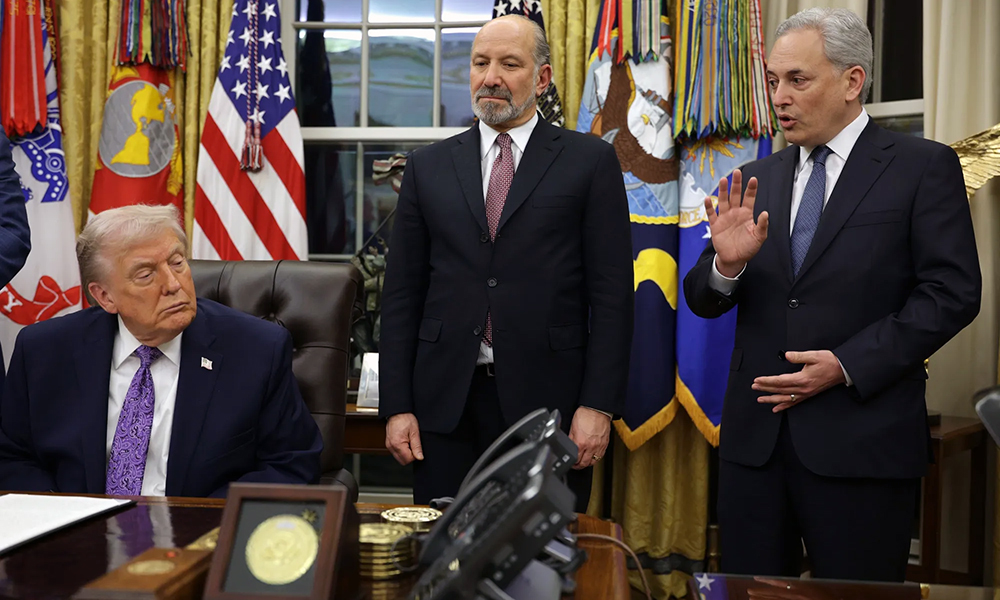
White House AI czar David Sacks said on Friday the U.S. should “declare victory and get out” of its war on Iran, a rare instance of a prominent figure in Donald Trump’s administration calling for an exit from the Iran conflict, Reuters reported.
Here are some details:
“This is a good time to declare victory and get out,” Sacks, Trump’s crypto and AI czar, said in an appearance on the “All-In Podcast.”
Sacks said the U.S. had degraded Iran’s military capabilities.
“I agree that we should try to find the off-ramp,” he added.
“If escalation doesn’t lead anywhere good, then you have to think about, well, how do you de-escalate? De-escalation, I think, involves reaching some sort of ceasefire agreement or some sort of negotiated settlement with Iran,” he said.
The U.S. and Israel attacked Iran on February 28. Iran and its ally in Lebanon, Hezbollah, have responded with strikes on Israel and other countries in the Middle East.
The war has shaken global markets and raised oil prices.
Iran’s U.N. ambassador says over 1,300 people have been killed in Iran in U.S. and Israeli attacks. Israel says 12 people have been killed in Israel by Iranian attacks. The U.S. military says seven of its members have been killed.
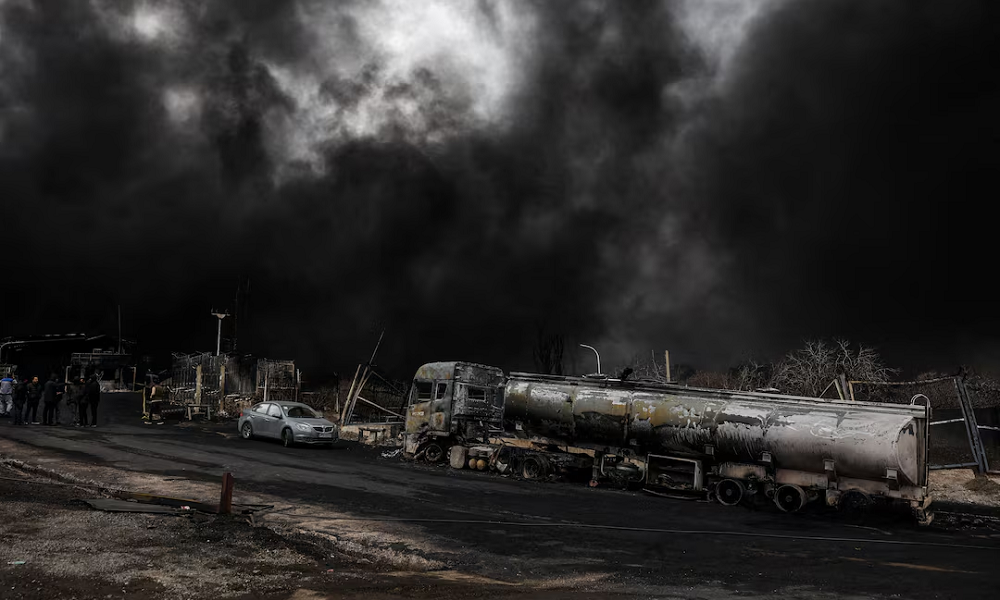
The U.S. has issued a 30-day waiver for countries to buy sanctioned Russian petroleum products currently at sea, hoping to ease oil and gas prices driven up by the war the U.S. and Israel are waging on Iran.
However, the waiver appeared to have little effect, with benchmark Brent crude back up to $101 by 1000 GMT on Friday, with Asian shares also under pressure.
The Israeli military said it had launched strikes across Tehran and continued to carry out strikes on the Iranian-allied Hezbollah militia across Lebanon, including on the capital Beirut, as Iranian media reported rallies for Quds (Jerusalem) Day beginning across Iran in support of the Palestinians.
The sounds of explosions and fighter jets were heard in the Iranian capital and in Karaj to the west of Tehran, Iranian media said.


Regional criticism grows amid Pakistan strikes inside Afghanistan

Afghanistan expands exports through Lapis Lazuli Corridor

Afghanistan’s national buzkashi team travels to Kazakhstan for international tournament

Trump rejects efforts to launch Iran ceasefire talks, sources say

Tahawol: Afghan, Chinese FMs’ phone talks discussed

Pakistani military jet downed in Afghanistan’s Jalalabad, pilot captured alive

Afghan Air Force conducts airstrikes in Islamabad, other cities

IEA releases three Pakistani soldiers to mark Ramadan

Afghanistan’s Chief of Armed Forces underscores readiness and equipment for national defense

Afghanistan welcomes investment and technology partnerships with India
Tahawol: Afghan, Chinese FMs’ phone talks discussed

Saar: UN meeting on UNAMA mission in Afghanistan discussed

Exclusive interview with Stephen Rodriguez, UN Development Programme Representative in Afghanistan

Tawsia: Trade agreement between Afghanistan-Uzbekistan

Tahawol: Discussion on intensification of attacks in Middle East
-

 Sport4 days ago
Afghanistan’s white-ball series against Sri Lanka postponed
-
 Latest News2 days ago
Afghan airstrikes target Pakistani military sites in retaliation for air attacks
-
 Latest News2 days ago
IEA condemns Pakistan’s airstrikes in several Afghan provinces
-

 Sport3 days ago
Afghanistan’s national buzkashi team set to compete in Kazakhstan
-

 Business4 days ago
Uzbekistan ratifies preferential trade agreement with Afghanistan
-
 Latest News3 days ago
China urges de-escalation in Iran crisis and Afghanistan–Pakistan tensions
-
 Latest News3 days ago
China to build nine border facilities along Tajik-Afghan frontier: report
-

 Latest News4 days ago
Azizi meets Chinese envoy to discuss expanding trade and investment in Afghanistan