
Latest News
President’s 3rd Legislative Decree Prepared for Cabinet Approval

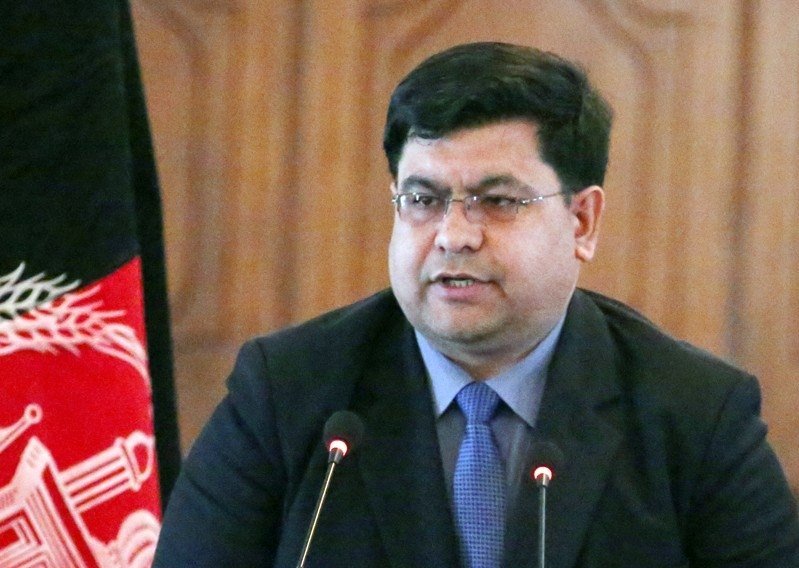

The National Unity Government (NUG) has prepared the draft of President’s Third Legislative Decree for the approval in the Cabinet.
The Presidential Palace said the draft was reviewed by government’s legislative committee, led by Sarwar Danish, Second Vice President and in consultation with political parties and civil society institutions.
“The prepared draft will be submitted at the cabinet’s next session. The National Unity Government leadership board has prepared the electoral law draft after receiving the legal opinion of commission for overseeing the implementation of the Constitution,” said Shah Hussain Murtazawi, the President’s Deputy Spokesman.
Meanwhile, the Executive Office said the reform process and setting the election date have been victimized by political tensions within the government.
The Executive Office has said that the Sipedar Palace is committed in brining reforms in electoral commissions and will meet key benchmarks in time for the Brussels summit.
“Tensions between the Presidency and Executive Office would affect any types of reforms; election is the same. CEO, Abdullah Abdullah wants to solve the electoral crisis,” said Jawid Faisal, Deputy Spokesman of the CEO.
Afghanistan’s electoral reform process, a precondition for the next ballot, has been excruciatingly slow and has culminated in a watered-down version of its original mandate. The delays mean that it has by now become practically impossible to hold elections this year.
In the meantime, the electoral observing institutions are said to believe that the recent tensions between the two leaders of the government will lead them to have no achievements at the Brussels summit.
On 5 October, the European Union and the government of Afghanistan will co-host the Brussels Conference on Afghanistan. This conference will bring together up to 70 countries and 30 international organizations and agencies. The Conference will provide a platform for the government of Afghanistan to set out its vision and track record on reform.
For the international community, it will be the opportunity to signal sustained political and financial support to Afghan peace, state-building and development.

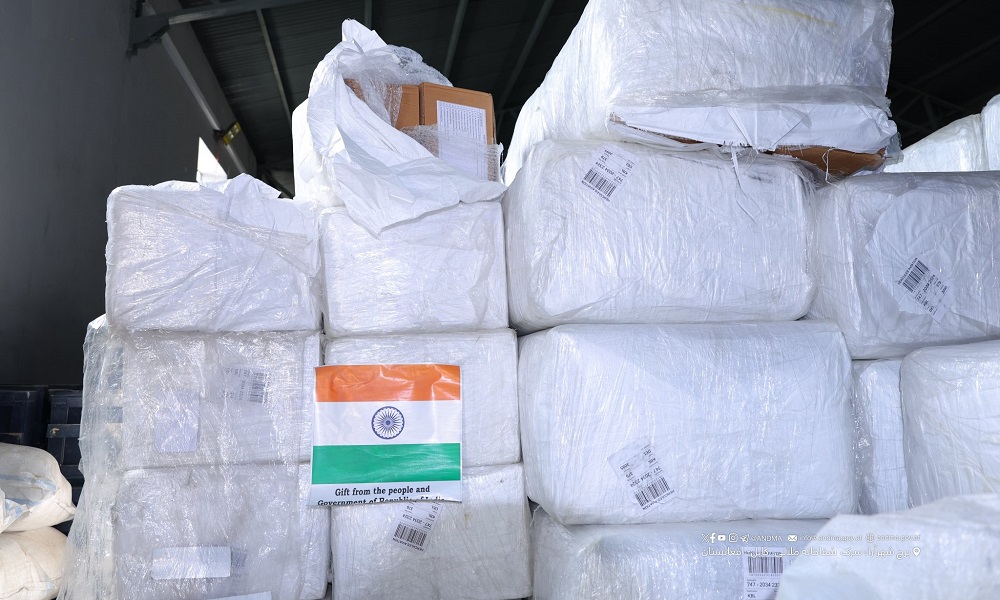
India has delivered three tons of humanitarian assistance to Afghanistan to support families impacted by recent flooding, the Afghanistan National Disaster Management Authority (ANDMA) said on Thursday.
Officials confirmed the aid shipment was received the same day and includes essential relief items such as 300 medical kits, 50 kitchen sets, 495 blankets, and 165 tarpaulins.
ANDMA expressed appreciation for India’s continued humanitarian support, noting that the assistance will help address urgent needs in flood-affected areas.
The authority added that a formal assessment is underway and that the aid will be distributed in a transparent and equitable manner to the most affected and vulnerable families.
Flooding has repeatedly affected several regions of Afghanistan, leaving communities in need of immediate relief and longer-term recovery support.
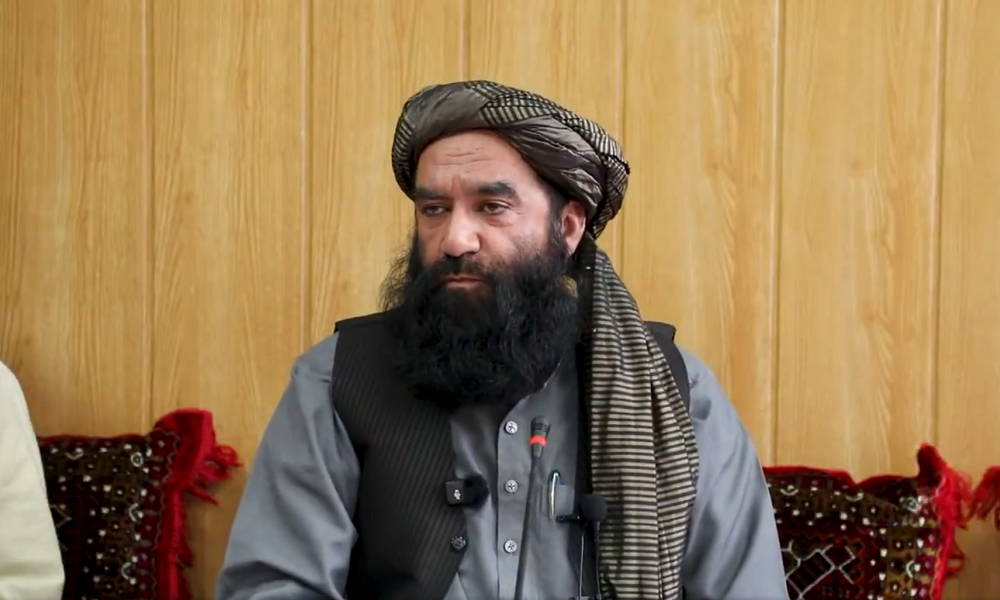
Noorullah Noori, Afghanistan’s Minister of Borders, Ethnic Affairs and Tribes, says the barbed-wire fencing along the disputed Durand Line is viewed by Afghans as a wire placed on the chest of the nation, stressing that Afghans will never accept a foreign barrier imposed on their land.
Noori made the remarks during a meeting with a number of political analysts, tribal elders and university professors at his office, where he emphasized that Afghanistan does not recognize an official border with Pakistan and that this position has been clearly communicated on multiple occasions.
Speaking at the gathering, the minister said the current governing system has emerged from among the people and that public cooperation and support have played a key role in reaching this stage.
He added that the system belongs to all Afghans and that all citizens of the country are treated equally. According to him, since the Islamic Emirate came to power, thousands of tribal and local disputes across the country have been resolved, and serious measures have been taken to safeguard the country’s borders.
Meanwhile, Mohammad Ali Jan Ahmad, Deputy Minister for Jirgas and Tribal Coordination at the ministry, said one of the most important factors behind the success of any society and political system is intellectual and ideological unity among the people.
He noted that such unity exists among the Afghan nation.
During the meeting, political analysts and tribal elders also emphasized the importance of unity and solidarity with the current system, stating that the people of Afghanistan will stand alongside the country’s security and defense forces to protect the nation and its territorial integrity.
Latest News
CSTO claims security risks from Afghanistan remain high
The alert was issued at the 43rd meeting of the Afghanistan working group under the CSTO Council of Foreign Ministers.
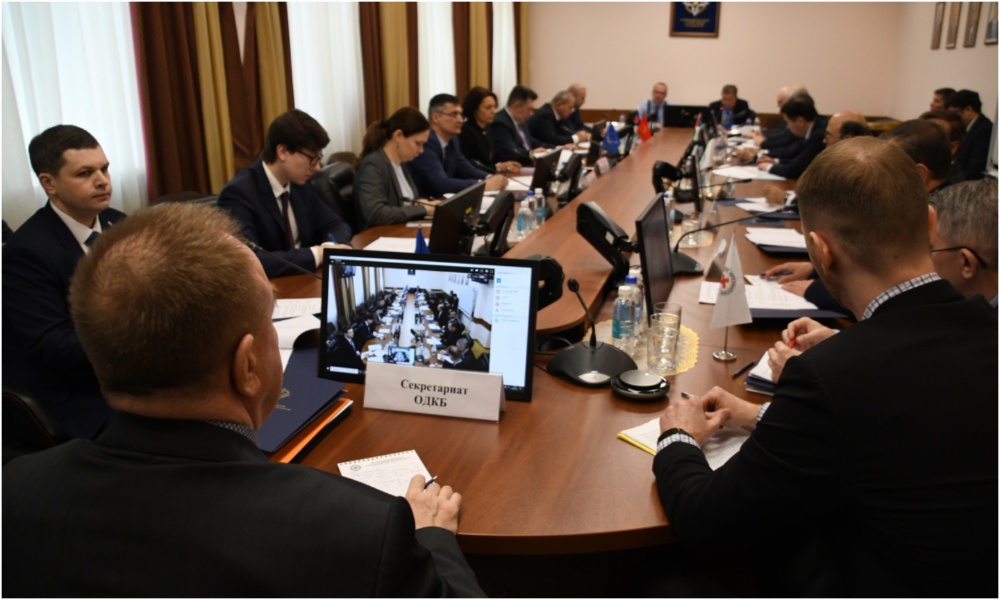
The Collective Security Treaty Organization (CSTO) has warned that security threats originating from Afghanistan remain high, following a review of the situation by officials and regional representatives in Moscow.
The alert was issued at the 43rd meeting of the Afghanistan working group under the CSTO Council of Foreign Ministers, held Wednesday at the organization’s secretariat.
Delegations from CSTO member states joined representatives from the U.N. Office of Counter-Terrorism, the Shanghai Cooperation Organization, CIS anti-terror bodies, and the International Committee of the Red Cross. Participants exchanged assessments of Afghanistan’s military, political, and humanitarian situation and discussed its implications for regional stability.
In a statement, the CSTO emphasized the importance of continuing humanitarian and economic support for the Afghan population.
Officials also called for sustained monitoring of developments in the country and efforts to promote peaceful processes, aiming to reduce the risk of regional spillover.
The Moscow meeting highlights continuing concern among Central Asian and Russian-led security institutions over potential threats from Afghanistan. The CSTO has repeatedly cautioned that extremist groups could exploit various issues including porous borders, and regional tensions.
Neighboring countries remain wary of cross-border militancy, trafficking, and armed group movements. Regional security organizations have increasingly coordinated assessments, as Afghanistan—while outside formal security frameworks—continues to influence the region.
International organizations also highlight Afghanistan’s fragile humanitarian and economic situation. Millions remain reliant on aid, and reduced funding alongside the return of large numbers of Afghans from neighboring countries has intensified existing pressures.
Afghanistan has long been considered a primary external security concern for CSTO members, particularly Tajikistan and Kyrgyzstan.
The latest warning underscores that, while no immediate crisis has emerged, Afghanistan remains central to overlapping security and humanitarian challenges.


Rutte presses NATO allies as Trump demands concrete support over Hormuz

India sends 3 tons of humanitarian aid to flood-affected families in Afghanistan

Afghans will never accept Durand Line fencing, says Borders Minister

Afghanistan faces economic strains following a ‘series of shocks’ last year

NATO chief says Trump frustrated by allies’ stance on Iran conflict

IEA Supreme Leader issues Eid-ul-Fitr message urging unity and support for Islamic system

14 Pakistani soldiers killed after military post falls along Durand line: MoD

IEA supreme leader orders replacement of foreign terminology in official documents

Afghan airstrikes target Pakistani military sites in retaliation for air attacks

Turkmenistan, Afghanistan discuss steps to speed up land acquisition for TAPI pipeline

Tahawol: Two‑week truce agreement between Iran-US reviewed

Saar: US–Iran two-week ceasefire agreement discussed

Tahawol: Ongoing negotiations between Kabul-Islamabad discussed

Saar: Afghanistan in spotlight of SCO discussed

Tahawol: Continuation of Middle East crisis discussed
-
 Latest News4 days ago
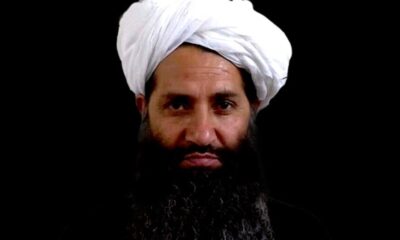
IEA supreme leader orders replacement of foreign terminology in official documents
-
 Latest News4 days ago
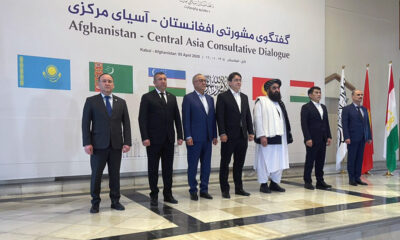
Afghanistan hosts inaugural Afghanistan–Central Asia Consultative Dialogue to strengthen regional cooperation
-
 Latest News5 days ago
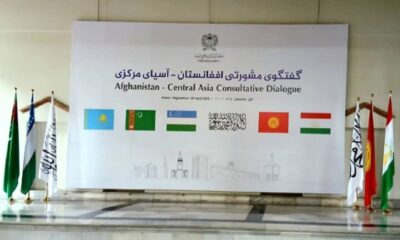
Kabul to host ‘Afghanistan–Central Asia Consultative Dialogue’ tomorrow
-
 Latest News4 days ago
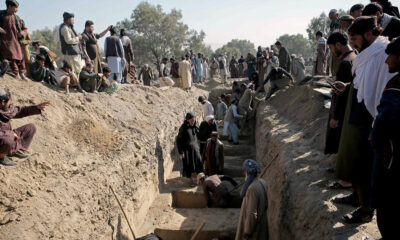
IEA accuses Pakistan of war crimes amid heavy civilian losses
-

 World4 days ago
US rescues 2nd F-15 pilot hit above Iran: Trump
-
 Saar5 days ago
Saar: Ongoing Kabul-Islamabad talks in China discussed
-
 Latest News2 days ago
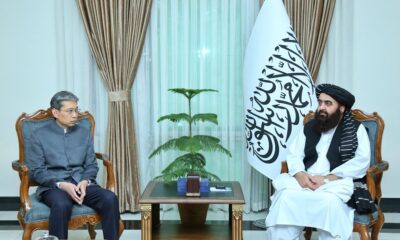
China seeking to build trust between Afghanistan and Pakistan
-
 Latest News3 days ago
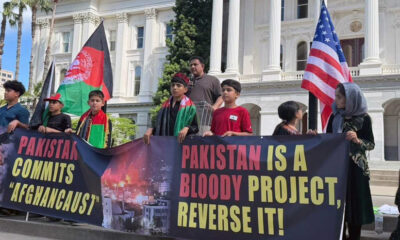
Afghan community in California condemns Pakistani strikes amid growing global protests