
Business
Russian firms show interest in Panjshir-to-Kabul water transfer project
During the meeting, the Russian side reportedly conveyed readiness to engage not only in the water transfer project but also in a broader range of infrastructure and energy development ventures across Afghanistan.


Several Russian companies have expressed strong interest in participating in Afghanistan’s ambitious Panjshir-to-Kabul water transfer project, a major infrastructure initiative aimed at addressing the capital’s worsening water shortage, the Ministry of Water and Energy announced.
According to the ministry, a delegation of Russian business representatives — accompanied by an official from the Russian Embassy in Kabul — met with Deputy Minister for Energy Abdul Hadi Yaqub to explore potential investment opportunities.
During the meeting, the Russian side reportedly conveyed readiness to engage not only in the water transfer project but also in a broader range of infrastructure and energy development ventures across Afghanistan.
Yaqub welcomed the proposal, saying the ministry is open to partnerships that support the country’s long-term development goals.
“The Ministry of Water and Energy welcomes all constructive cooperation in the fields of water management, power generation, and infrastructure,” Yaqub said. “The Islamic Emirate supports initiatives that contribute to Afghanistan’s sustainable growth and the well-being of its people.”
A strategic infrastructure priority
The Panjshir-to-Kabul water transfer project is among Afghanistan’s most significant planned infrastructure undertakings. The project aims to channel water from the Panjshir River to Kabul, where rapid population growth has placed severe strain on existing water resources.
Experts say that, if completed, the project could provide a critical lifeline for the capital, ensuring a more stable water supply for households, agriculture, and industry. It could also serve as a model for future large-scale hydrological and energy projects in the country.
The initiative aligns with the Islamic Emirate’s broader strategy to attract foreign investment and technical expertise, particularly from countries with a history of engagement in Afghanistan’s development.
Strengthening Afghan–Russian ties
Russia has in recent months increased its diplomatic and economic engagement with Afghanistan, signaling interest in sectors such as energy, mining, and infrastructure. Several Russian companies have previously explored opportunities in Afghanistan’s power generation and oil industries, and Moscow has hosted multiple meetings with Afghan officials to discuss cooperation.
Analysts view the latest discussions as part of a gradual deepening of economic ties between the two countries, amid Afghanistan’s ongoing efforts to rebuild its economy and reduce dependency on Western aid.
“Russia sees Afghanistan as a potential partner for regional energy connectivity and resource development,” said a Kabul-based economic analyst. “Projects like the Panjshir–Kabul water transfer could become a stepping stone for broader collaboration.”
Looking ahead
While no formal agreements have yet been signed, the ministry described the discussions with Russian companies as positive and forward-looking. Officials say technical assessments and feasibility studies will be required before construction can begin.
If realized, the project would mark one of the first major foreign-backed infrastructure initiatives under the current government — signaling renewed international confidence in Afghanistan’s stability and investment potential.









Business
Turkmenistan, Afghanistan discuss steps to speed up land acquisition for TAPI pipeline
By the end of the year, the vessels are expected to deliver about 11,700 pipes as part of preparations for construction of the TAPI pipeline.
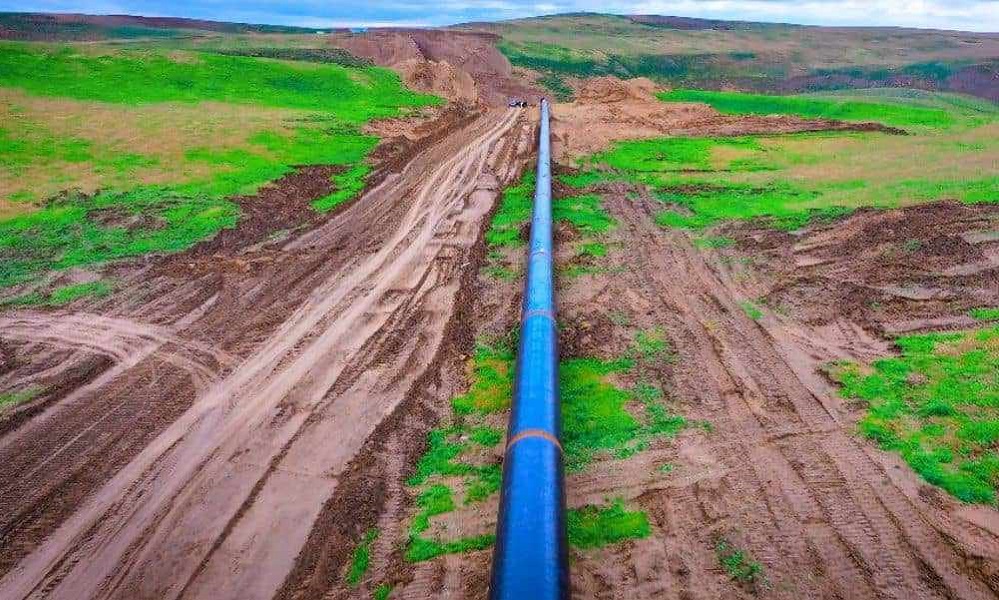
Officials from Turkmenistan and Afghanistan have held talks aimed at accelerating land acquisition for the long-planned Turkmenistan-Afghanistan-Pakistan-India (TAPI) pipeline, according to Afghanistan’s Ministry of Agriculture, Irrigation, and Livestock.
The issue was discussed during a meeting between TAPI project head Murad Amanov, Afghanistan’s acting Minister of Agriculture, Irrigation, and Livestock Mullah Attaullah Omari, and Turkmenistan’s ambassador to Afghanistan Hoja Ovezov.
Amanov briefed Afghan officials on recent progress and emphasized the need to accelerate procedures related to land acquisition and the determination of land prices in line with the framework agreement signed by the four participating countries.
Meanwhile, vessels operated by the Azerbaijan Caspian Shipping Company (ASCO), part of AZCON Holding, have begun transporting pipes for the project. The shipments are being carried from the Port of Baku to the Turkmenbashi International Seaport.
By the end of the year, the vessels are expected to deliver about 11,700 pipes as part of preparations for construction of the TAPI pipeline.
Business
Afghanistan expands exports through Lapis Lazuli Corridor
A transport company is scheduled to move the shipments on Sunday, March 15, along the route that links Afghanistan with Turkmenistan, Azerbaijan, and Georgia before reaching Turkey.

Afghanistan’s Ministry of Transport and Civil Aviation has announced the dispatch of eight export shipments through Torghundi port via the Lapis Lazuli Corridor to international markets.
In a statement, the ministry said the move is part of ongoing efforts to facilitate transit and strengthen the country’s export sector. Officials confirmed that coordination has been completed for eight commercial consignments to be transported along the corridor.
According to the ministry, a transport company is scheduled to move the shipments on Sunday, March 15, along the route that links Afghanistan with Turkmenistan, Azerbaijan, and Georgia before reaching Turkey.
The consignments include dried fruits, jam, pressure cookers and energy drinks. After arriving in Turkey, the goods are expected to be re-exported to markets in Saudi Arabia, the United States, Australia and the Netherlands.
The Lapis Lazuli Corridor is a regional trade and transit route launched in 2018 to connect Afghanistan with European markets through the Caucasus and Turkey, providing an alternative pathway for Afghan exports beyond traditional routes.
The Ministry of Transport and Civil Aviation said expanding transit corridors, supporting export and import growth, and facilitating international transport operations remain among its key priorities.
Officials added that practical steps are being taken to strengthen Afghanistan’s role in regional trade and connectivity.
Business
Uzbek exploration company launches energy survey project in Afghanistan
The new seismic survey marks the second major energy exploration initiative by Uzbek companies in Afghanistan in recent years.
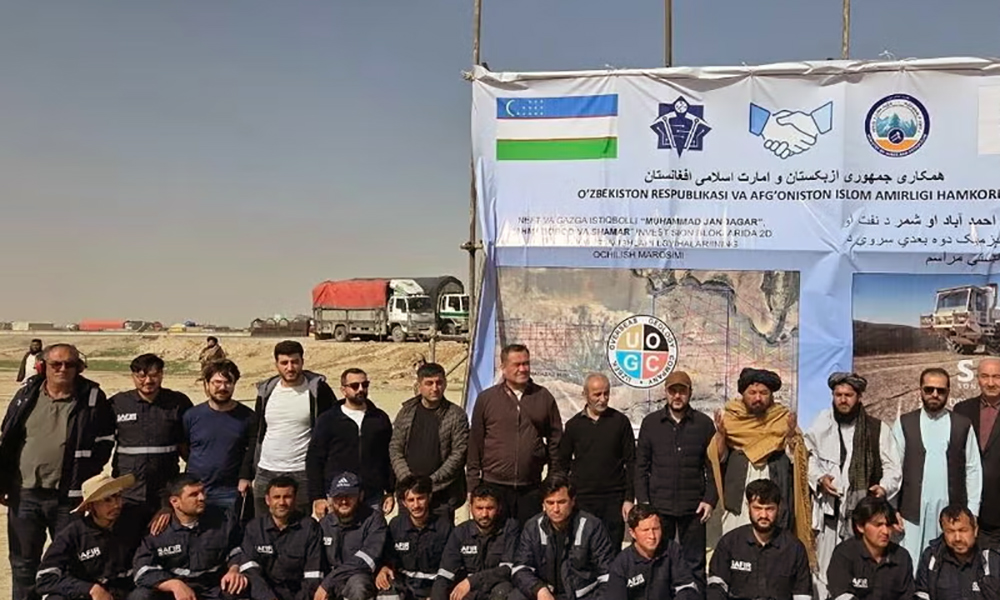
An exploration company backed by the government of Uzbekistan has begun collecting seismic data in northern Afghanistan as part of a new energy exploration project agreed between the two neighboring countries last year.
According to Uzbekistan’s Ministry of Mining Industry and Geology of Uzbekistan, the Uzbek Overseas Geology Company (UOGC) has started work to gather 2D seismic data across three exploration blocks in northern Afghanistan: Ahmadabad, Muhammad-Jandagar, and Shamar.
The three blocks cover more than 7,600 square kilometers near Afghanistan’s border with Tajikistan. Initial seismic surveys are expected to focus on about 600 square kilometers of the area.
Officials say the project will be fully financed by UOGC and aims to identify potential hydrocarbon reserves, while also assessing the area for other mineral resources, including iron and copper deposits.
The exploration work follows a cooperation agreement signed in 2025 between Uzbekistan’s mining ministry and Afghanistan’s Ministry of Mines and Petroleum of Afghanistan. Under the deal, the Uzbek side has two years of exclusive exploration rights in the blocks.
If commercially viable resources are discovered, Afghan authorities have agreed to give priority development rights to an operating company formed by the Uzbek partners.
The Uzbek Overseas Geology Company was established in early 2025 by two state-linked Uzbek exploration firms, Uzbekgeologorazvedka and Uzbekgeofizika, the latter being affiliated with Uzbekistan’s state energy producer Uzbekneftegaz.
Growing Uzbek energy involvement in Afghanistan
The new seismic survey marks the second major energy exploration initiative by Uzbek companies in Afghanistan in recent years.
In 2024, authorities in Tashkent announced that Eriell KAM—a joint venture between Uzbekistan’s oilfield service provider Eriell Group and Afghanistan’s Kam Group—had taken over exploration plans for the Totimaidan gas block.
The Totimaidan block is located in Faryab Province near the border with Turkmenistan and spans roughly 7,000 square kilometers. The area is believed to contain the undeveloped Juma and Bashikurd sour gas fields, according to energy consultancy Wood Mackenzie.
Although Afghanistan originally auctioned the block in 2014, a production-sharing contract was never finalized.
Regional cooperation and economic integration
Analysts say Uzbekistan’s growing involvement in Afghanistan’s resource sector reflects both geographic proximity and broader regional economic interests.
Tashkent-based investment consultant Farkhodjon Israilov said exploration projects in Afghanistan are not only about energy resources but also about encouraging infrastructure development and economic activity in the country.
According to Israilov, greater regional investment and economic integration could contribute to long-term stability and mutually beneficial growth for Afghanistan and its neighbors.
Uzbek officials say the seismic surveys represent an important step toward identifying Afghanistan’s untapped natural resources while expanding energy cooperation between the two countries.


Tahawol: Global reactions to Pakistan’s recent attacks discussed

IEA announces temporary pause in defensive operations against Pakistan for Eid

Saar: Consequences of Pakistani airstrikes on Afghans discussed

UNAMA puts death toll from Pakistan’s attack on Kabul’s Omid Hospital at 143

Karzai accuses Pakistan of seeking to destabilise Afghanistan after Kabul strike

Pakistani military jet downed in Afghanistan’s Jalalabad, pilot captured alive

Afghan Air Force conducts airstrikes in Islamabad, other cities

IEA releases three Pakistani soldiers to mark Ramadan

Afghanistan’s Chief of Armed Forces underscores readiness and equipment for national defense

Afghanistan welcomes investment and technology partnerships with India
Tahawol: Global reactions to Pakistan’s recent attacks discussed
Saar: Consequences of Pakistani airstrikes on Afghans discussed

Tahawol: Pakistan’s new attacks on Kabul hospital discussed

Saar: Pakistani military’s airstrike on Kabul hospital discussed

Tahawol: China’s efforts for Afghanistan-Pakistan talks
-

 Latest News3 days ago
IEA Supreme Leader issues Eid-ul-Fitr message urging unity and support for Islamic system
-
 Latest News5 days ago
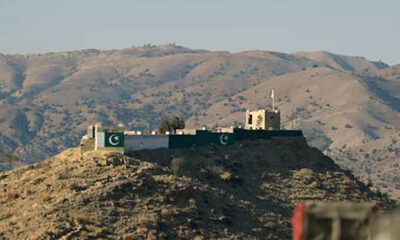
14 Pakistani soldiers killed after military post falls along Durand line: MoD
-

 Latest News4 days ago
Regional criticism grows amid Pakistan strikes inside Afghanistan
-
 Latest News4 days ago
Afghan airstrike targets a military camp in South Waziristan
-

 Business3 days ago
Turkmenistan, Afghanistan discuss steps to speed up land acquisition for TAPI pipeline
-

 World5 days ago
White House AI czar says US should ‘declare victory and get out’ of Iran war
-

 Sport4 days ago
IPL 2026 kicks off in under two weeks; Afghan players set to shine
-

 Business4 days ago
Afghanistan expands exports through Lapis Lazuli Corridor