
Science & Technology
Scientists say eruption of Hawaii volcano continues to ease

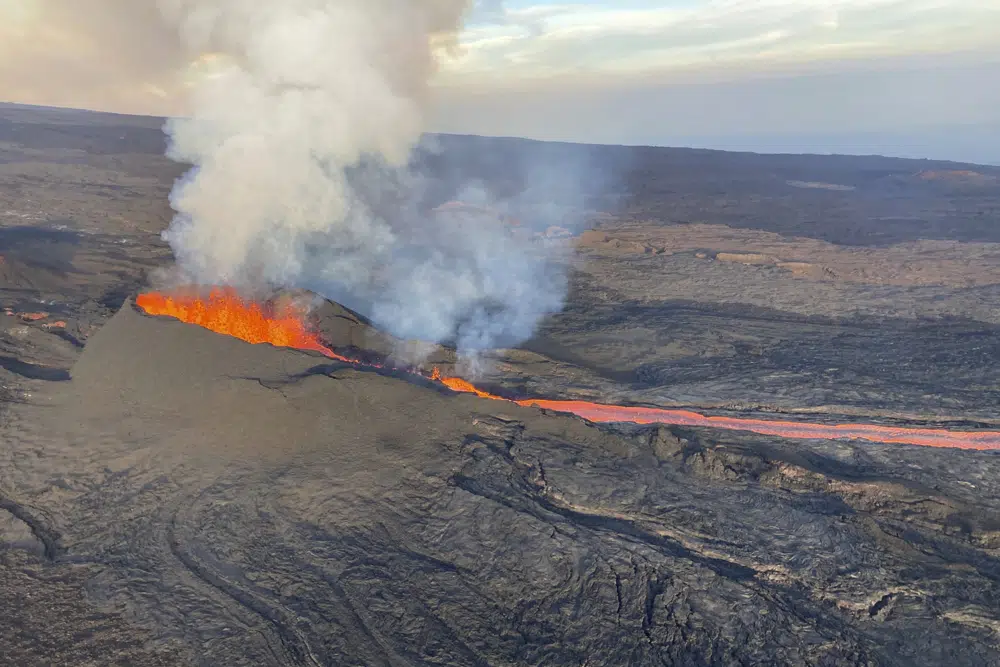
The eruption of the Mauna Loa volcano on Hawaii’s Big Island continues to ease, scientists said Sunday, reinforcing an earlier pronouncement that the mountain’s first flare-up in nearly 40 years might soon end.
“We have good news to report,” Ken Hon, the scientist in charge of the U.S. Geological Survey at the Hawaii Volcano Observatory, said during a briefing. “The eruption is still at an extremely low level at this point.”
Hon said the eruption is contained entirely within the volcano’s cinder cone, Associated Press reported. The USGS said a small amount of light remained visible at night through a vent in the cone, but the channels below that vent “appear drained of lava.”
The inactive front of the lava flow may inch northward very slowly as it continues to settle, the agency said.
Hon said Mauna Loa’s eruption appears to be ramping down and that nearby Kilauea has now reached a “full pause,” with its lava lake stagnant and crusted over.
Mauna Loa began spewing molten rock Nov. 27 after being quiet for 38 years. The incandescent spectacle drew onlookers and set some nerves on edge among people who’ve lived through past eruptions, AP reported.
Sunday’s update came a day after scientists lowered the alert level for the volcano from a warning to a watch and said the eruption could be in its final days.





Science & Technology
Trump administration set to receive $10 billion fee for brokering TikTok deal, WSJ reports
Vice President JD Vance had in September said that the new U.S. company will be valued at around $14 billion.

President Donald Trump’s administration is set to receive a roughly $10 billion fee from investors in the recently completed deal to take control of TikTok’s U.S. business, the Wall Street Journal reported on Friday, citing people familiar with the matter.
TikTok’s Chinese owner, ByteDance, in January finalized a deal to establish a majority American-owned joint venture that will secure U.S. data, to avoid a U.S. ban on the short video app used by over 200 million Americans.
TikTok USDS Joint Venture LLC will secure U.S. user data, apps and algorithms through data privacy and cybersecurity measures. It disclosed few details about the divestiture.
Vice President JD Vance had in September said that the new U.S. company will be valued at around $14 billion.
The payment is part of the agreement through which investors friendly with the administration gained control of TikTok’s U.S. operations from ByteDance, WSJ said. It is on top of the investments already made to establish a new entity to operate the app in the U.S.
Investors Oracle (ORCL.N), Silver Lake, Abu Dhabi’s MGX and other backers paid about $2.5 billion to the Treasury Department when the deal closed and are to make a number of subsequent payments until the total reaches $10 billion, per the Journal.
TikTok and the White House did not immediately respond to Reuters requests for comment.
Officials from the administration have said the fee is justified, citing Trump’s role in rescuing TikTok’s U.S. operations and guiding negotiations with China to complete the deal while tackling lawmakers’ concerns over national security, according to WSJ.
Earlier this month, Trump and U.S. Attorney General Pam Bondi were sued by retail investors in two social media rivals of TikTok seeking to reverse the U.S. president’s approval of a deal by the company’s Chinese owner ByteDance to form a majority American-owned joint venture.
Science & Technology
NASA eyes March 6 launch of astronaut moon mission
Artemis program managers completed a comprehensive simulation of the Space Launch System’s launch-day countdown, but said remaining work could still push the launch date further into March.
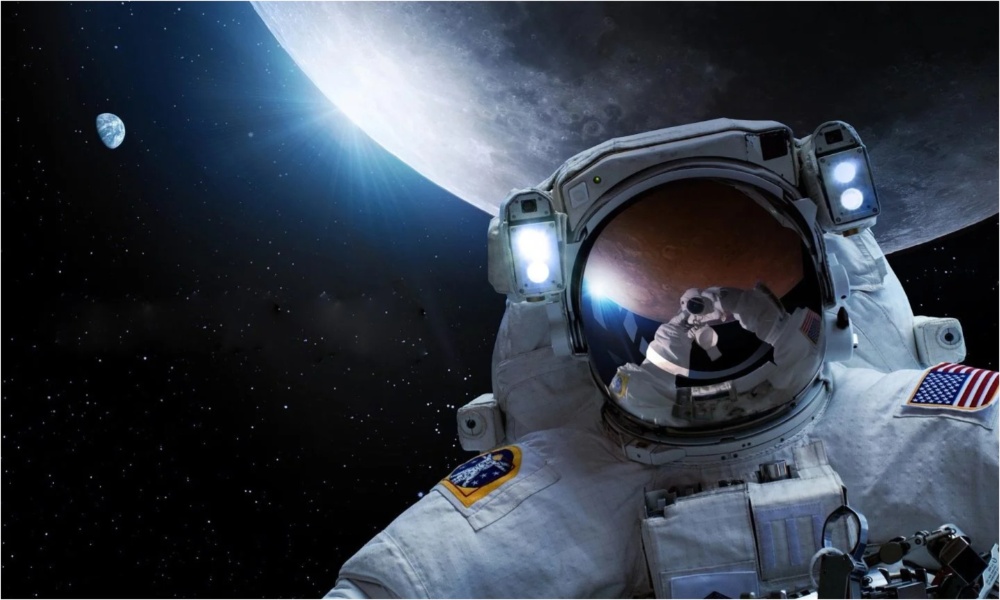
NASA officials said the agency was targeting March 6 for the launch of four astronauts around the moon and back as part of its Artemis II mission after overcoming rocket-fueling snags in a second key launch rehearsal this week, but cautioned that remaining prep work could warrant more time.
The U.S. space agency on Thursday night capped a nearly 50-hour rehearsal of the Artemis II launch countdown, fueling the rocket with some 730,000 gallons of propellant without running into the pesky hydrogen leaks that hobbled an initial rehearsal last month, officials said during a news conference.
Artemis program managers were elated that the Wet Dress Rehearsal, a comprehensive simulation of the Space Launch System’s launch-day countdown, went smoothly, but said remaining work ahead could still push the launch date further into NASA’s March launch window.
“I felt like last night was a big step in us earning our right to fly. So, felt really good, very proud of the team,” said NASA launch director Charlie Blackwell-Thompson.
Remaining work includes testing the rocket’s flight termination system and conducting a sweeping Flight Readiness Review, a day-long meeting of agency management during which they effectively double-check all rocket hardware and mission procedures before liftoff. – Reuters
Science & Technology
Musk’s Starlink faces high-profile security test in Iran crackdown
Starlink, which is harder for Iran to tamper with than cable and cellphone tower networks, has become crucial for documenting events on the ground.
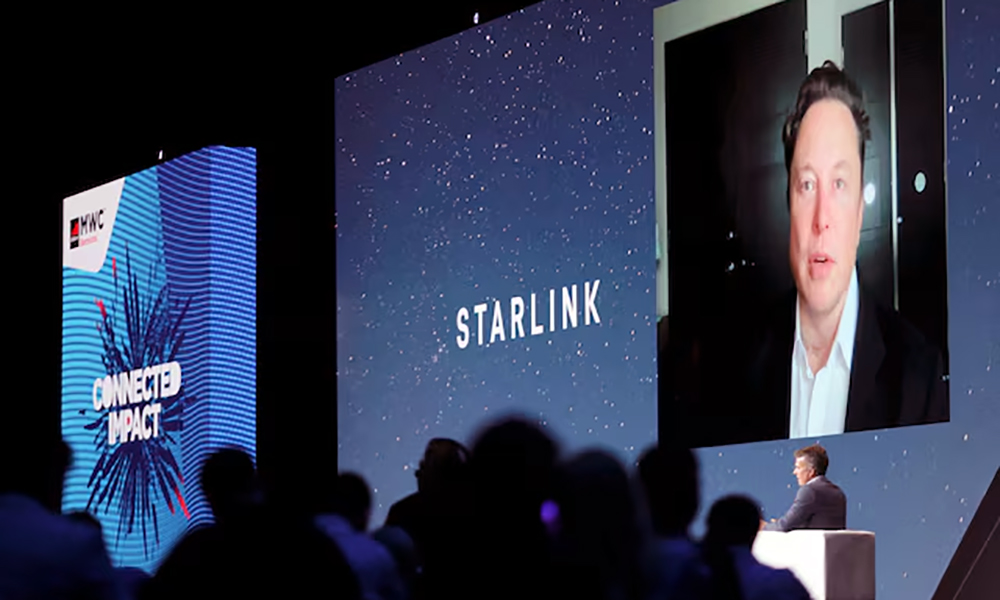
Iran’s crackdown on dissidents is shaping up as one of the toughest security tests yet for Elon Musk’s Starlink, which has served as a lifeline against state-imposed internet blackouts since its deployment during the war in Ukraine, Reuters reported.
SpaceX, which owns Starlink, made the satellite service free for Iranians this week, placing Musk’s space company at the center of another geopolitical hot spot and pitting a team of U.S.-based engineers against a regional power armed with satellite jammers and signal-spoofing tactics, according to activists, analysts and researchers.
How SpaceX withstands Iranian attacks on its most lucrative line of business is expected to be closely watched by U.S. military forces and intelligence agencies that use Starlink and its military-grade variant Starshield, as well as China, whose own nascent satellite internet constellations are set to rival Starlink in the coming years. With SpaceX weighing a public listing this year, the situation in Iran also represents a high-profile showcase for Starlink to investors.
“We’re in this weird early part of the history of space-delivered communications where SpaceX is the only true provider at this scale,” said John Plumb, the former Pentagon space policy chief under President Joe Biden.
“And these repressive regimes think they can still turn off communications, but I think the day is coming where that’s just not possible,” he said.
Victoria Samson, chief director of space security and stability at the think tank Secure World Foundation, said Russia, which has deployed an array of technologies to counter Starlink in Ukraine, might be keen to examine the effectiveness of Iran’s Starlink interference.
“I think a lot of actors are watching how Starlink fares here,” she said.
Thousands of people protesting Iran’s clerical rule are reported to have been killed in the past week, while Tehran’s order to restrict communications makes it difficult to discern the full extent of its violent crackdown on dissent.
Starlink, which is harder for Iran to tamper with than cable and cellphone tower networks, has become crucial for documenting events on the ground, read the report.
Raha Bahreini, an Iran researcher at Amnesty International, said they had verified dozens of videos from Iran, including footage of protesters killed or injured by Iranian forces, and believe that almost all of them came from people who had access to Starlink. She added, however, that the ongoing communications restrictions have impeded human rights organizations’ communications with people in Iran in efforts to assess the scale of the violence.
Starlink is banned in Iran, yet tens of thousands of terminals may have been smuggled into the country, although it remains unclear how many are in use, according to Holistic Resilience, a U.S. nonprofit that has helped deliver Starlink terminals to Iranians and says it is working with SpaceX to monitor what it describes as Iranian attempts to jam the system.
Consumer Starlink terminals are rectangular antenna dishes that come in two sizes – one roughly the size of a pizza box and a smaller “mobile” one the size of a laptop.
SpaceX did not respond to requests for comment.
The Iranian mission to the United Nations in New York declined to comment on Thursday in response to Reuters’ questions.
Iranian Foreign Minister Abbas Araqchi, speaking to Al Jazeera TV on Monday, said the internet had been cut off “after we confronted terrorist operations and realized orders were coming from outside the country.”
Starlink, the first massive internet-from-space constellation of its kind, has emerged as a crucial tool for communications in wartime and remote areas. The network, which drove SpaceX’s $15 billion revenue in 2024, has expanded the geopolitical power of Musk, who in 2022 asserted control over how and where it was being used by Ukrainian troops fighting back Russian forces.
Roughly 10,000 low-orbiting Starlink satellites zipping above user terminals at an orbital velocity of some 17,000 miles per hour (27,360 kph) make its signals much harder to locate and disrupt than traditional satellite systems designed with a larger, single satellite fixed over a given territory.
Iran is likely using satellite jammers to disrupt the Starlink signals, according to Holistic Resilience and other specialists. Iran also appears to be engaging in so-called spoofing, or broadcasting fake GPS signals to confuse and disable Starlink terminals, according to Nariman Gharib, an Iranian opposition activist and independent cyber espionage investigator based in Britain, Reuters reported.
The GPS spoofing wreaks havoc on a Starlink terminal’s connection and slows internet speeds, said Gharib, who analyzed data from a terminal inside Iran.
“You might be able to send text messages, but forget about video calls,” he said.
Though Starlink is not licensed to operate in Iran, Musk has repeatedly confirmed its presence on his social media platform X, spurring a yearslong effort by the Iranian government to counter the service. Amid protests over the death of Mahsa Amini in December 2022, Musk posted that nearly 100 Starlink terminals were active in the country.
Following the 12-day war between Iran and Israel in June, Iran’s parliament passed a law banning the use of Starlink, introducing severe penalties for those who use or distribute the unlicensed technology, according to Iranian state media.
Iran has also pursued diplomatic channels, urging a panel at the United Nations’ International Telecommunication Union last year to force the United States and Norway — where Starlink is internationally registered — to block the service.
At a July meeting, Iran told the board that Starlink’s use in the country is illegal and said an “invading country” had deployed its terminals on drones during a recent attack.
Iran told the board in November that it was struggling to locate and disable the terminals itself.


Afghanistan to face Myanmar in crucial AFC clash

Afghanistan highlights water diplomacy at Tashkent ministerial forum

Russia sought to blackmail US using intelligence to Iran, Zelenskiy says

Trump to hit Iran harder if Tehran does not accept defeat, White House says

Tahawol: Efforts to release Mohammad Rahim from Guantanamo Bay Detention Camp

Pakistani military jet downed in Afghanistan’s Jalalabad, pilot captured alive

Afghan Air Force conducts airstrikes in Islamabad, other cities

Prominent Muslim scholar issues fatwa calling for Afghanistan-Pakistan ceasefire

Afghan air force strikes key Pakistani military installations in retaliatory operation

IEA: Special circle in Pakistan has launched mission to destabilize region
Tahawol: Efforts to release Mohammad Rahim from Guantanamo Bay Detention Camp

Saar: End of ceasefire between Afghanistan-Pakistan reviewed

Tahawol: Escalating threats between Iran-US discussed

Tahawol: Possibility of US ground forces entering Iran war discussed

Saar: Using US prisoners as political pressure
-
 Latest News4 days ago
Deadly violence likely without dialogue between Afghanistan and Pakistan: ICG
-
 Latest News3 days ago
Pakistan seeks Russian mediation to resolve Afghanistan tensions
-

 International Sports4 days ago
FIFA World Cup 2026: Play-Off Tournament takes centre stage
-

 Sport4 days ago
Afghanistan secures third place at 2026 World Kokpar Championship
-
 Business4 days ago
Afghani strengthens nearly 10% against US dollar amid banking sector reforms
-
 Latest News3 days ago
World must re-engage to prevent all-out Afghanistan-Pakistan war: Financial Times
-

 Regional5 days ago
Trump says US considering ‘winding down’ Iran war
-

 Sport2 days ago
Afghanistan squad hit by withdrawals ahead of AFC Asian Cup Qualifiers