
Latest News
SIGAR blasts Washington for withholding key information on Afghanistan


The Special Inspector General for Afghanistan Reconstruction (SIGAR), John Sopko, said on Friday he has faced recent pressure from the U.S. State Department to redact some of the organization’s reports while noting the Pentagon classified much of its work detailing the failings of Afghanistan’s military forces.
He also referenced numerous attempts to “impede” his work, adding that “U.S. agencies have not made honest reporting easy for SIGAR.”
Sopko’s comments, published on SIGAR’s website, came at the Military Reporters & Editors Association’s annual conference, where the inspector general detailed multiple efforts by the State Department to get SIGAR to redact information from its reports, and remove all mentions of former Afghan president Ashraf Ghani.
“Those of you who have followed SIGAR’s work know that many of the reasons for the unexpectedly quick collapse of the Afghan government are problems that SIGAR has reported on for years – corruption; ghost soldiers; the dependence of the Afghan military on U.S. airpower, contractors, and other enablers; and incompetent Afghan leadership, to name but a few,” he said.
He also said SIGAR may be the only U.S. government agency that told “inconvenient truths” about the situation for the last 10 years.
“But we all know that U.S. agencies have not made honest reporting easy for SIGAR,” he stated.
Sopko’s address coincided with the release of its 53rd quarterly report, which includes information that shortly after the fall of Kabul, the State Department wrote to him and other oversight agencies requesting to “temporarily suspend access” to all “audit, inspection, and financial audit…reports” on SIGAR’s website because the state department “was
afraid that information included in those reports could put Afghan allies at risk”.
He said while he felt strongly that Afghans at genuine risk of reprisal should be protected, the state department was never able to give specific details on threats to individuals as a result of SIGAR’s reports.
He also said the state department did not explain how removing SIGAR reports could protect anyone since many were years old and already extensively disseminated worldwide.
“Nevertheless, with great reservation, I acceded to State’s initial request because it was made at the height of the emergency evacuation from Afghanistan,” he said.
After Sopko complied, the state department returned with another request, this time passing along a spreadsheet listing some 2,400 items it wanted redacted — something SIGAR reviewed and “found all but four to be without merit.”
“Given how hard the Department reportedly was working to evacuate Americans from Afghanistan and resettle Afghan refugees, I was surprised they found the time to go through every one of our reports and compile such an exhaustive list,” he said.
“Upon reviewing their request, it quickly became clear to us that State had little, if any, criteria for determining whether the information actually endangered anyone,” he added.
Among the requests was a plea to remove the name of a USAID official who publicly testified before Congress in 2017 and whose testimony is still posted on the committee’s site. It also asked SIGAR to remove Ghani’s name from all of its reports.
“While I’m sure the former president (Ghani) may wish to be excised from the annals of history, I don’t believe he faces any threats simply from being referenced by SIGAR,” Sopko said.
Addressing conference delegates he said: “No audience better understands the dangers of limiting public access to information in the name of ‘security’. And simply because the war in Afghanistan has
concluded does not mean the American people – or its elected representatives – do not have a right to know the truth about what happened in Afghanistan over the last 20 years.”
Sopko said that Congress has now tasked SIGAR with a number of assignments that include reports on why the Afghan government collapsed in spite of the $146 billion reconstruction effort; why the Afghan security forces collapsed; and whether Afghan government officials fled the country with U.S. taxpayer dollars; among others.
“In my opinion, the full picture of what happened in August – and all the warning signs that could have predicted the outcome – will only be revealed if the information that the Departments of Defense and State have already restricted from public release is made available,” he said.
He pointed out that the Department of Defense restricted from public release a range of information going back to 2015 on the performance of the Afghan security forces, purportedly at the request of the Afghan government.
This included information such as casualty data, unit strength, training and operational deficiencies, tactical and operational readiness of Afghan military leadership, comprehensive assessments of Afghan security force
headquarters leadership; and operational readiness rates down to the corps level.
“In essence, nearly all the information you needed to know to determine whether the Afghan security forces were a real fighting force or a house of cards waiting to fall.
“In light of recent events, it is not surprising that the Afghan government, and likely some in DOD, wanted to keep that information under lock and key,” he said.
“This information almost certainly would have benefited Congress and the public in assessing whether progress was being made in Afghanistan and, more importantly, whether we should have ended our efforts there earlier,” he added.
In recognition that this information will be essential for SIGAR to effectively respond to its Congressional directives, he said the bipartisan leadership of the House Oversight and Reform Committee and its National Security Subcommittee have formally requested that all information in SIGAR’s classified appendices be declassified by the originating agencies.
“At a bare minimum, DOD should immediately make available to SIGAR and the public the information restricted at the request of the Ghani government, for the simple reason that there no longer is a Ghani government and the Afghan security forces have already completely collapsed,” he said.
Sopko also called on Washington to declassify and make available to SIGAR and Congress all internal Department of Defense and State Department cables, reports and other material reflecting the security situation on the ground over the last few years – especially reports that differed from the public statements of the agencies in Washington.
“It is also important for SIGAR and Congress to have access to any reporting related to the reaction of the Ghani government and Afghan people to the withdrawal agreement signed between the Trump administration and the Taliban (IEA) in February 2020,” he said.
“What possible reason could remain for keeping all of this historical information out of public view?”
“Rather than attempt to impede SIGAR’s work, I believe the current administration should have every incentive to help us deliver the answers Congress has demanded,” Sopko said.
He also stated: “To answer these questions, we must find out what our government knew, when it knew it, and what it did, if anything,
with that information.
“SIGAR’s investigators are already interviewing Afghans who were evacuated to the United States to see what information they may be able to provide about corruption and other nefarious activities by former Afghan officials; SIGAR’s auditors and subject matter experts have already interviewed U.S. and Afghan government and military officials to start to put together the full picture of everything that happened that ultimately led to the Taliban (IEA) takeover just over two months ago.
“We already know a lot,” adding that while SIGAR has identified key lessons, “there is without question much more to be learned as we dig into what happened in Washington and Kabul during the months, weeks, days, and hours before Ghani fled and the Taliban (IEA) marched into his presidential palace without resistance.”


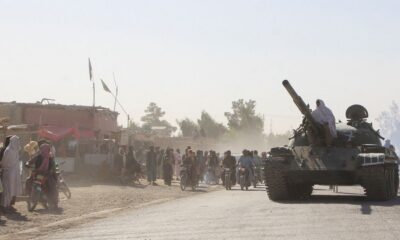


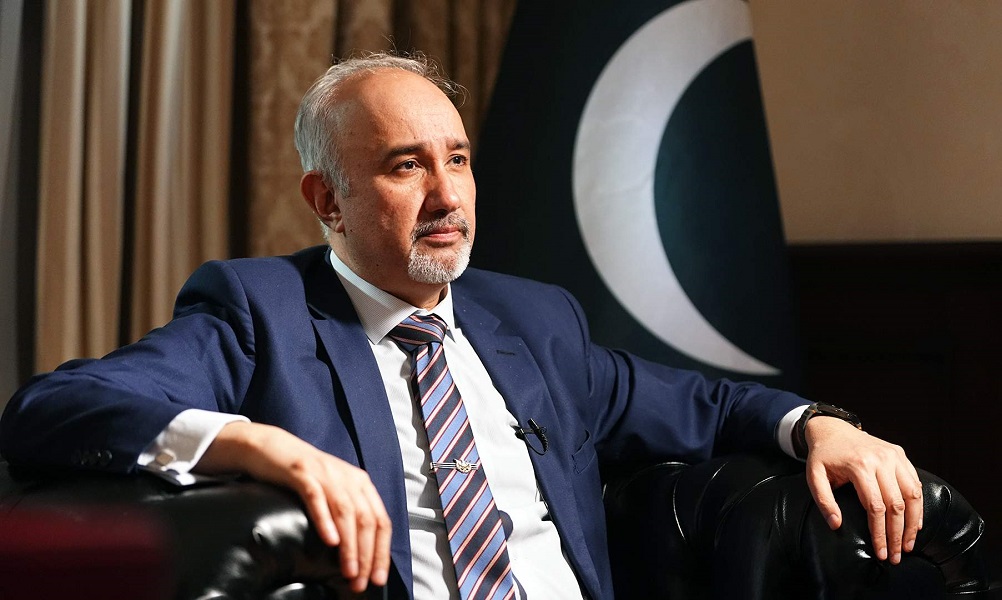
Pakistan’s ambassador to Russia, Faisal Niaz Tirmizi, has confirmed that Islamabad has asked Moscow to mediate in the ongoing conflict with Afghanistan.
In an interview with Russian daily Izvestia, Tirmizi said Pakistan is engaging with Russia and appreciates the “wonderful offer” to help resolve tensions. He noted that proposals from Russia, China, Qatar, Turkey, and Saudi Arabia led to an agreement on a temporary ceasefire.
“We tell all our interlocutors: please tell the Taliban (IEA) not to use this opportunity simply to regroup, recuperate, rearm, and re-attack,” Tirmizi said. “Because such large states as Russia or Pakistan cannot be destabilized by terrorist acts.”
The ambassador emphasized that decades of war in Afghanistan have affected not only Kabul and Islamabad but also neighboring countries, including Iran, Tajikistan, Turkmenistan, Uzbekistan, and even Russia. “Therefore, we must all trade with each other, develop education, art, and culture. Terrorism is the wrong way to go,” he added.
The appeal for mediation comes amid rising cross-Durand Line tensions and violence that have killed hundreds and displaced thousands in recent weeks.
Pakistani officials have repeatedly claimed that militant attacks in the country are organized in Afghanistan.
The IEA however denies the claim saying that Afghanistan is not responsible for Pakistan’s “security failure.”
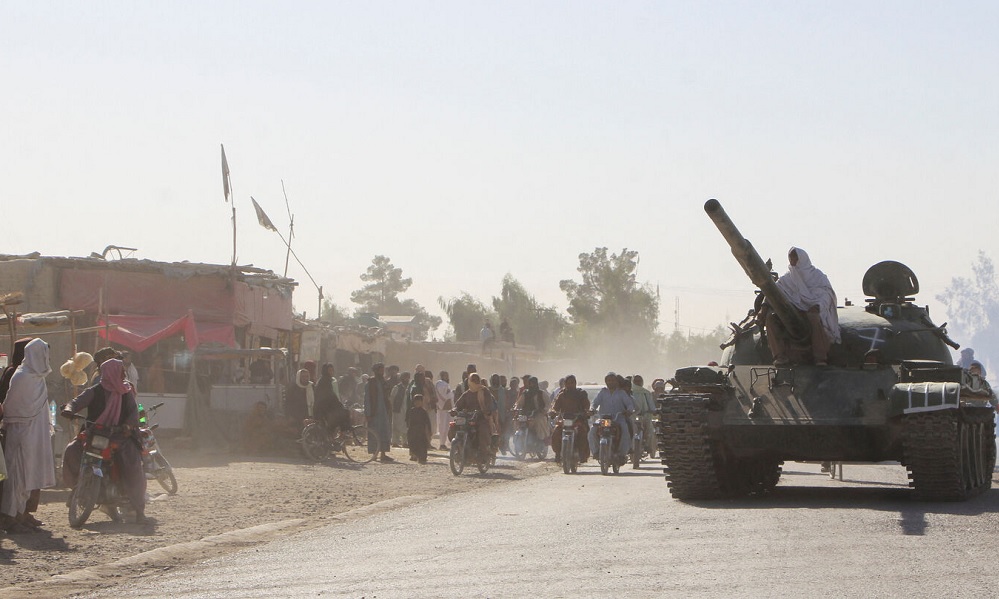
In an opinion article published on Sunday, Financial Times warned that rising tensions between Afghanistan and Pakistan risk spiraling into a wider conflict, and urged the international community to urgently re-engage with the troubled region.
The publication noted that nearly five years after the Islamic Emirate’s return to power, global attention has largely faded, despite growing instability. It highlighted restrictions on women’s rights and the worsening relationship between Kabul and Islamabad, once close allies.
According to the article, Pakistan’s ties with the IEA have sharply deteriorated since 2021. Islamabad accuses Afghan authorities of harboring militant groups responsible for attacks inside Pakistan—an allegation the IEA denies.
Recent weeks have seen a surge in violence, including cross-Durand Line airstrikes and clashes that have reportedly killed over 1,000 people and displaced more than 100,000. One of the deadliest incidents involved an airstrike on a drug rehabilitation center in Kabul, which Afghan officials say killed hundreds.
The newspaper warned that continued escalation could destabilize South and Central Asia and risk turning Afghanistan into a hub for militant activity once again.
It criticized Pakistan’s military approach, saying airstrikes alone cannot end insurgencies, and called for sustained ceasefire efforts following a temporary truce during Eid al-Fitr.
The editorial urged major powers, including the United States and China, to play a more active diplomatic role. It also pointed to China’s strategic interests in the region and suggested Beijing could step forward as a mediator.
Despite past failed attempts at peace, the Financial Times stressed that the risks are too high for the world to remain disengaged.
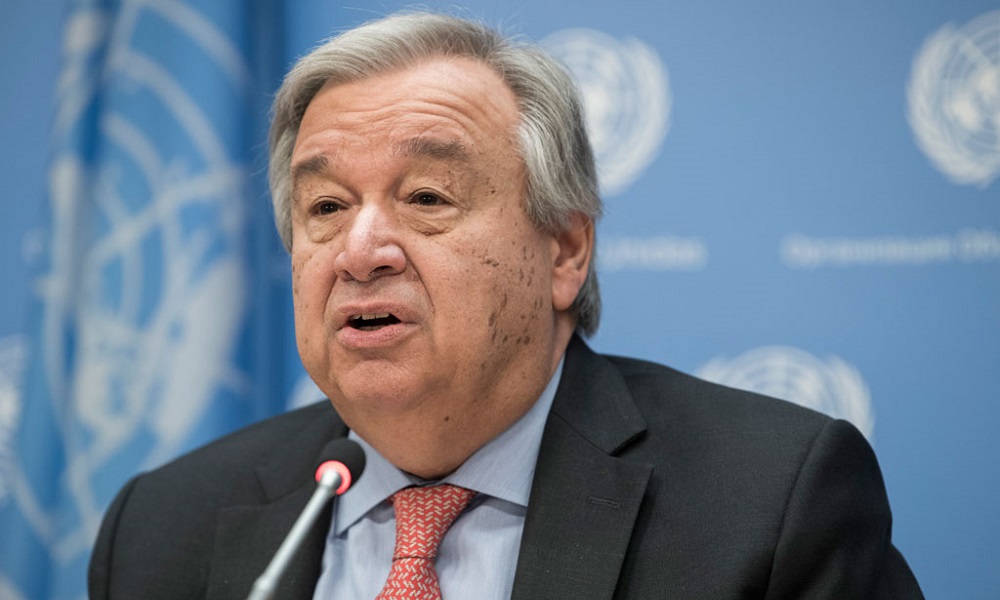
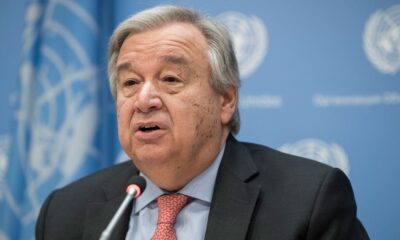
Marking World Water Day, UN Secretary-General António Guterres on Sunday stressed that access to safe water and sanitation is essential for protecting the rights and health of women and girls, urging governments to take stronger action.
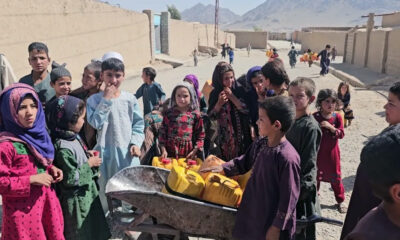
In his message, the Secretary-General warned that women and girls bear the greatest burden where water and sanitation services are inadequate. Many are forced to use unsafe facilities, care for relatives affected by waterborne diseases and spend hours each day collecting water—often missing out on education and opportunities.
Highlighting this year’s theme, “Where water flows, equality grows,” Guterres said improving water access can play a key role in advancing gender equality.
He called on governments to boost investment in water and sanitation systems by improving service delivery, strengthening workforce capacity and ensuring sustainable financing. He also urged developed nations to support these efforts by sharing technology, expertise and funding to build resilient infrastructure.
The UN chief emphasized the importance of including women in decision-making processes to ensure water systems effectively meet community needs.
While noting that water scarcity can contribute to conflict, Guterres said it can also foster cooperation and peace. He pointed to the upcoming UN Water Conference as an opportunity for countries to accelerate progress toward universal access to water and sanitation.
“Together, let’s make water a force for gender equality,” he said, calling for global efforts to ensure no community is left behind.


Pakistan seeks Russian mediation to resolve Afghanistan tensions

World must re-engage to prevent all-out Afghanistan-Pakistan war: Financial Times

UN chief urges investment in water systems to advance gender equality

North Korea’s Kim Jong Un reappointed as president of state affairs, KCNA says

Tahawol: Possibility of US ground forces entering Iran war discussed

Pakistani military jet downed in Afghanistan’s Jalalabad, pilot captured alive

Afghan Air Force conducts airstrikes in Islamabad, other cities

Prominent Muslim scholar issues fatwa calling for Afghanistan-Pakistan ceasefire

Afghan air force strikes key Pakistani military installations in retaliatory operation

IEA: Special circle in Pakistan has launched mission to destabilize region
Tahawol: Possibility of US ground forces entering Iran war discussed

Saar: Using US prisoners as political pressure

Tahawol: Pakistan’s efforts to destabilise Afghanistan

Saar: Decline in international assistance to Afghanistan

Tawsia: Assessment of Afghanistan’s economic activities in 1404
-
 Latest News5 days ago
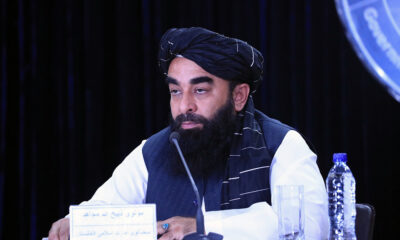
IEA announces temporary pause in defensive operations against Pakistan for Eid
-
 Latest News4 days ago
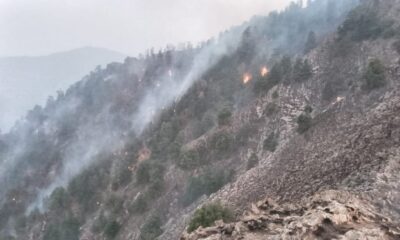
Pakistani shelling hits Kunar districts despite ‘pause in hostility’ over Eid
-

 Sport3 days ago
Afghanistan national buzkashi falls short in Kokpar World Championship semifinals
-
 Regional4 days ago
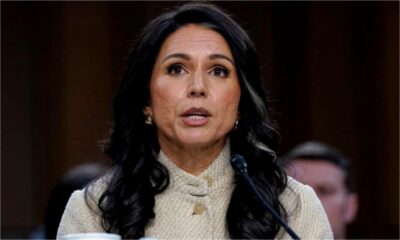
Pakistan among top nuclear threats to America, US intelligence chief tells senate
-
 Latest News4 days ago
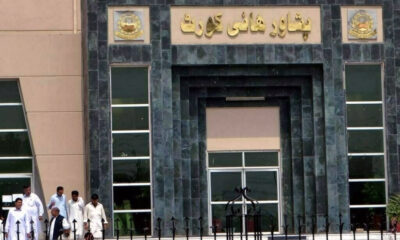
Peshawar High Court grants bail to 68 detained Afghan nationals, including minors
-

 Latest News5 days ago
UNAMA puts death toll from Pakistan’s attack on Kabul’s Omid Hospital at 143
-

 Sport2 days ago
Ireland to host Afghanistan for ODI series in August
-
 World4 days ago
US weighs troop deployment as Iran war enters new phase