
Latest News
SIGAR reviews reasons for collapse of former Afghan government

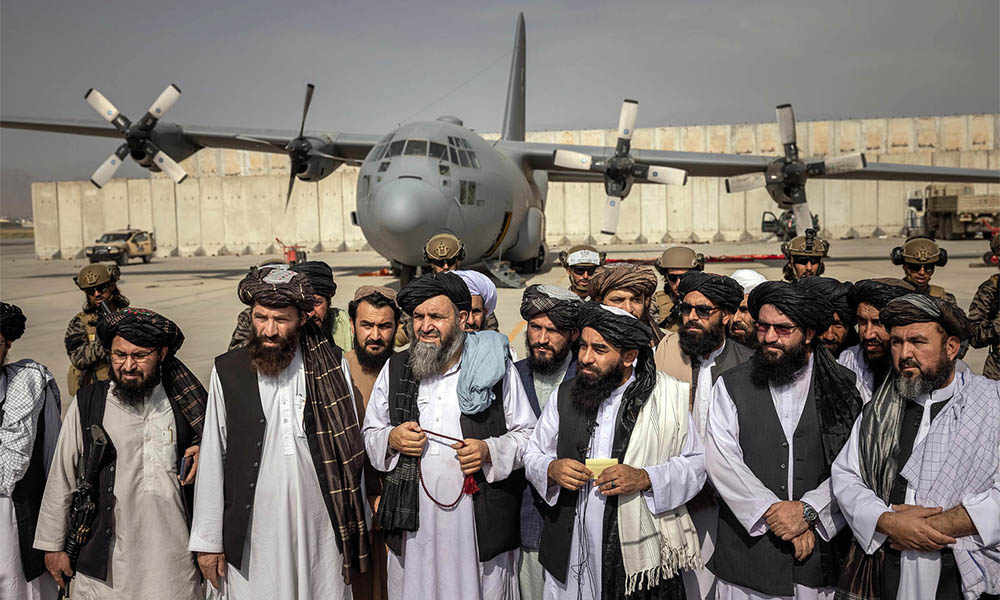
The US Special Inspector for Afghanistan Reconstruction (SIGAR) has assessed the underlying factors behind the collapse of the former Afghan government and listed nine factors that led to the Islamic Emirate of Afghanistan’s take over.
SIGAR found the single most important factor in the former ANDSF’s collapse in August 2021 was the US decision to withdraw military forces and contractors from Afghanistan, which was based on the US-IEA agreement signed in February 2020 under the Trump administration.
According to SIGAR, the Afghan government was fundamentally unprepared to manage a fight against the Islamic Emirate of Afghanistan’s (IEA) forces.
Due to the ANDSF’s dependency on U.S. military forces, these events destroyed Afghan National Defense and Security Forces (ANDSF) “morale” that eventually led to the fall.
SIGAR stated the reasons for the collapse of the republic government were as follows:
1st Factor: No country or agency had complete ownership of the ANDSF development mission, leading to an uncoordinated approach;
2nd Factor: The length of the U.S. commitment was disconnected from the reality of the time required to build an entire security sector;
3rd Factor: The U.S. created long-term dependencies that would require significant time to overcome, such as providing the ANDSF with advanced equipment they could not sustain and leaving them out of the equipping process;
4th Factor: The U.S. military, driven by political deadlines, struggled to balance winning battles with letting the ANDSF gain experience by fighting on their own;
5th Factor: The U.S. metrics created to measure the development of the ANDSF were unable to effectively measure ANDSF capabilities;
6th Factor: Afghan corruption harmed ANDSF capabilities and readiness;
7th Factor: The U.S. control of the battlespace and of key governance systems restricted Afghan ownership of important military and governance systems;
8th Factor: The U.S. and Afghan governments failed to develop a police force effective at providing justice and responsive to criminal activities that plagued the lives of Afghan citizens.




Latest News
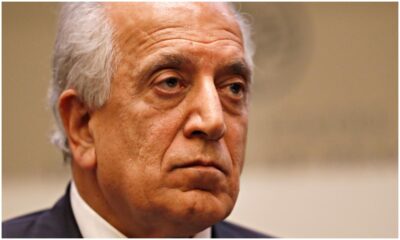
Khalilzad calls for end to Pakistan’s ‘double game’, urges new chapter with Afghanistan
“Playing this double game must stop,” Khalilzad wrote, adding that it was time for Afghanistan and Pakistan to “turn a new page.”
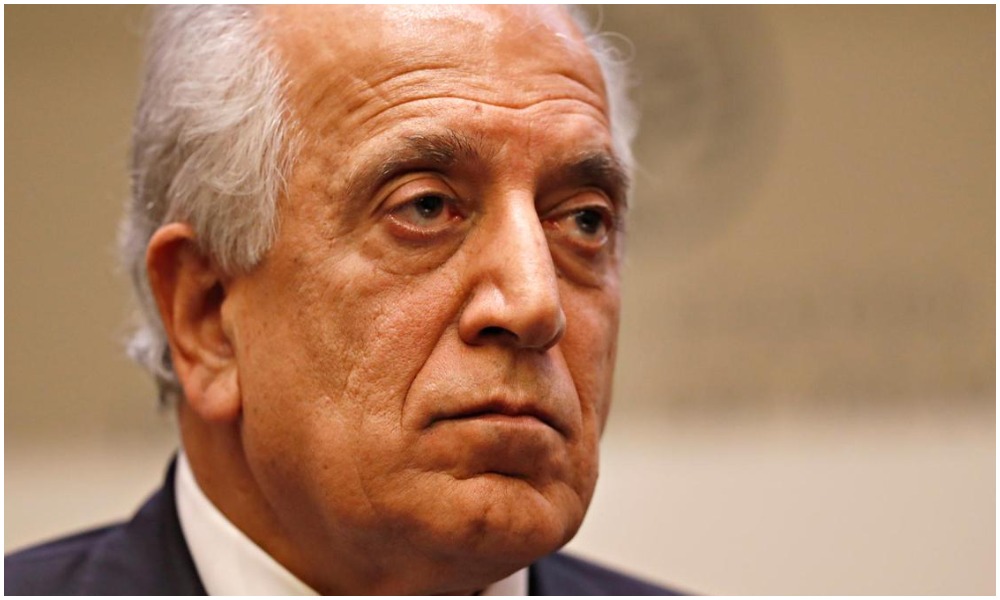
Former U.S. Special Representative for Afghanistan Reconciliation Zalmay Khalilzad has called for an end to what he described as Pakistan’s “double game” over its alleged support for militant groups operating in Afghanistan, urging the two neighbouring countries to open a new chapter in their relations.
In a post on X, Khalilzad said he believed the past 30 years had demonstrated a significant gap between Pakistan’s public statements and its actions regarding armed groups involved in fighting in Afghanistan.
Referring to the period of the U.S. military presence in Afghanistan, Khalilzad alleged that Pakistan provided sanctuary and support to militants fighting U.S. and Afghan forces while publicly denying doing so.
“Playing this double game must stop,” Khalilzad wrote, adding that it was time for Afghanistan and Pakistan to “turn a new page.”
He called for greater economic cooperation and development between the two countries and said they should agree not to allow their respective territories to be used to threaten each other’s security.
Khalilzad’s comments come amid renewed tensions between Kabul and Islamabad over cross-border militancy and security allegations.
Pakistan has repeatedly accused the Islamic Emirate of Afghanistan of allowing Tehreek-e-Taliban Pakistan (TTP) and other militant groups to operate from Afghan territory. Kabul has denied providing sanctuary to groups planning attacks against Pakistan.
The dispute has increasingly spilled into military confrontation. Pakistan carried out airstrikes in Afghanistan on September 21, saying it had targeted militant positions, while Afghan officials and the United Nations said three civilians, including a woman and a girl, were killed. Pakistan said the strikes killed 28 militants.
Islamabad has also continued to accuse Kabul of failing to prevent attacks originating from Afghan territory. Pakistani authorities have said their military actions are carried out in response to security threats and in self-defence.
Pakistan, meanwhile, has rejected recent Afghan allegations that its security forces or intelligence agencies were involved in violence in Afghanistan’s Nuristan province, calling the claims baseless.
Against this backdrop, Khalilzad said improved relations should focus on economic cooperation, development and mutual security guarantees, with neither country allowing its territory to be used against the other.
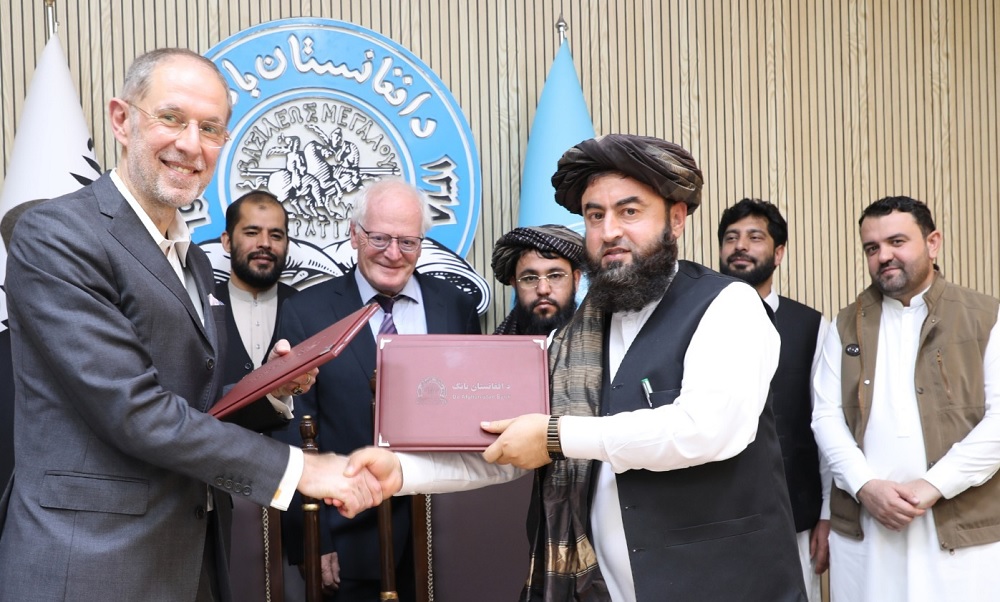
Da Afghanistan Bank (DAB) and the Afghan Credit Guarantee Foundation (ACGF) have signed a cooperationmemorandum of understanding (MoU) aimed at strengthening the financial sector and expanding access to financial resources for small, medium and large businesses.
The agreement was signed during a ceremony at the DAB Supreme Council Hall, where DAB First Deputy Governor Sediqullah Khalid said such agreements create opportunities to provide suitable and diverse Islamic financial services to citizens and expand access to financing for small and medium-sized enterprises.
Khalid said that under the agreement, banks and financial institutions will initially receive technical and professional support. He added that five banks and one microfinance institution will receive grants worth around $1 million in the first phase to support financing for small and medium-sized businesses.
He said other banks and financial institutions that meet the required criteria would benefit from the grants and related facilities in later phases.
Khalid also said that attention would be given to facilitating the creation and financing of small businesses for Afghans returning from other countries.
Under the agreement, the two sides will cooperate on strengthening the financial sector, expanding access to financial resources for businesses, promoting Islamic financial services and building the capacity of financial institutions.
Technical and professional assistance, training programs and capacity-building opportunities will also be provided to banking and non-banking financial institutions.
Roger Thomas Piltzer, chairman of the ACGF Board of Trustees, also welcomed the agreement and stressed the importance of continuing and expanding cooperation with Da Afghanistan Bank.
The agreement aims to establish a framework for cooperation between the two sides to strengthen Afghanistan’s financial sector, expand access to Islamic financial services and provide financial resources for small and medium-sized businesses.
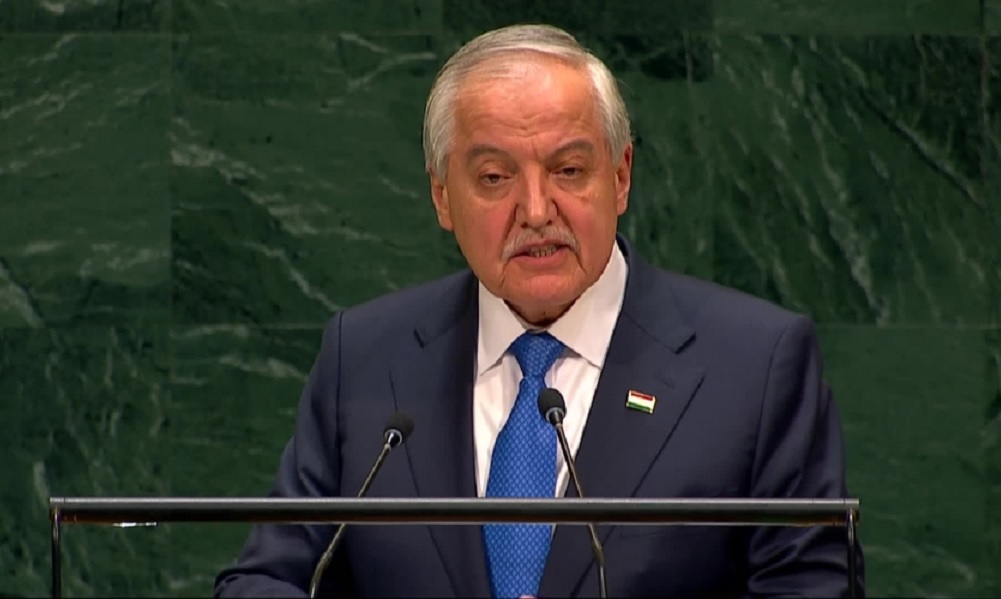
Tajikistan has reaffirmed its support for the Afghan people, stressing that peace, stability and economic opportunities in Afghanistan are closely linked to security and sustainable development in the region.
Speaking at the 81st session of the United Nations General Assembly in New York on Saturday, Tajik Foreign Minister Sirodjiddin Muhriddin said lasting security and sustainable development in the region are closely connected to the situation in Afghanistan.
“Afghanistan needs peace, stability and economic opportunity,” Muhriddin said.
He added that Tajikistan would continue to support the Afghan people and constructive regional cooperation aimed at achieving a peaceful and stable Afghanistan.
“When Tajikistan speaks about peace, we also speak from experience,” Muhriddin said.


Khalilzad calls for end to Pakistan’s ‘double game’, urges new chapter with Afghanistan

Afghanistan-Kazakhstan trade reaches $581 million in six months

Trump says men arrested at UK air base used by US planned ‘big damage’

Serbia’s President Vucic resigns ahead of October parliamentary elections

Floods, landslides kill 56 in India and 14 in Nepal

Saudi energy group signs major Afghanistan deals covering gas exploration and pipeline plans

Trump floats idea of renaming Atlantic or Pacific Ocean

Nepal flood rescue mission enters critical phase as thousands remain missing

Iranian clubs to face Gulf opponents at neutral venues in Asian Champions League Elite

Khalilzad: Afghanistan ready to attract major investment

Saar: Afghanistan’s image at UNGA

Saar: Concerns over Pakistan’s political crisis discussed

Exclusive interview with Abdul Latif Mansoor, Minister of MRRD

Tawsia: Overview of Afghanistan’s iron mines

Tahawol: Discussion on fresh Pakistani airstrikes on Afghanistan
-

 Latest News5 days ago
Ariana Afghan Airlines ranks seventh among 45 Central Asian airlines
-

 Regional4 days ago
Iran airlines cancel flights as US sanctions hit
-

 Latest News5 days ago
Silk Road highway in Wakhan corridor now reaches the China border
-

 Sport4 days ago
Afghanistan open Asian Games cricket campaign with win over Japan
-
 World4 days ago
Trump welcomes Chinese President Xi as US-China summit gets underway
-
 Latest News5 days ago
Refugees minister, UNAMA deputy discuss challenges facing returnees
-
 Latest News4 days ago
Khalilzad warns Pakistan-Afghanistan tensions likely to worsen after fresh airstrikes
-
 Latest News1 day ago
Afghanistan says 28 killed, 32 captured in Nuristan operation