
Latest News
Taliban seek ‘lion’s share of power’ in deadlocked peace talks: Khalilzad

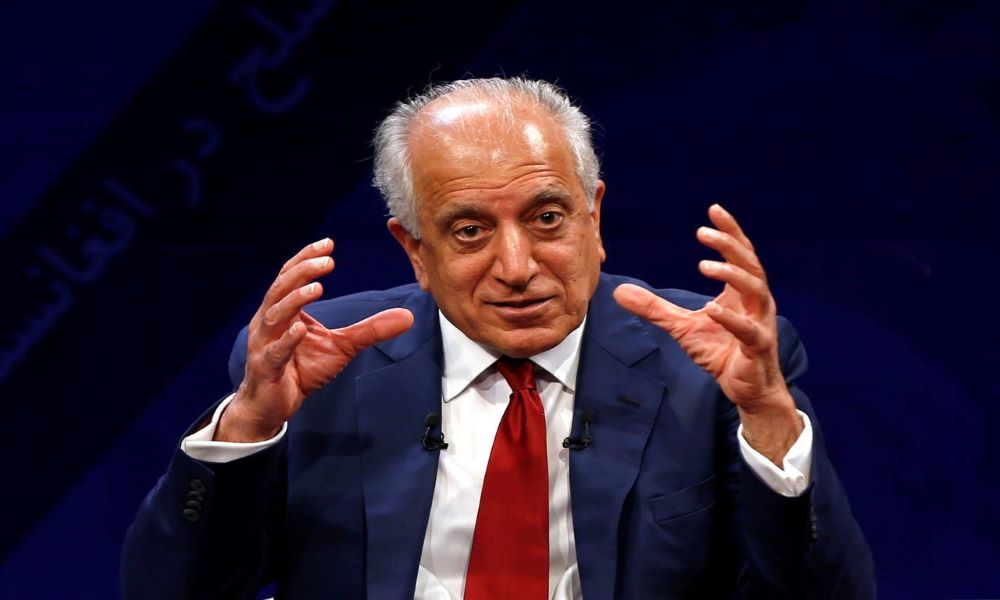
The Taliban and the Kabul government are far apart in U.S.-backed talks on bringing peace to Afghanistan, with the insurgents demanding “the lion’s share of power” in any new government, the special U.S. envoy said on Tuesday.
Afghan-born veteran U.S. diplomat Zalmay Khalilzad’s bleak assessment of the peace process coincides with Taliban advances on provincial capitals that have uprooted tens of thousands of civilians as the U.S. troop pullout nears completion after 20 years of war.
“At this point, they (the Taliban) are demanding that they take the lion’s share of power in the next government given the military situation as they see it,” Khalilzad told the Aspen Security Forum in an online conference.
The deadlocked negotiations in Doha were the subject of a telephone call on Tuesday between U.S. Secretary of State Antony Blinken and Afghan President Ashraf Ghani, with them agreeing on the need accelerate talks, the U.S. State Department said.
Blinken and Ghani also “condemned the ongoing Taliban attacks and displacement of the civilian population,” State Department spokesman Ned Price said in a statement.
The Taliban’s rapid advances have fueled fears that the insurgents aim to re-establish by force their harsh brand of Islamist rule ended by the 2001 U.S.-led invasion, including the repression of women and the independent media.
The insurgents say they want a peace deal.
Price told reporters that the insurgents would become “international pariahs” if they renege on their commitment to the negotiations “and the concern on the part of all of us, one of the many concerns, is that the result will be civil war.”
A car bomb blast followed by sporadic gunfire hit Kabul on Tuesday near the heavily fortified “Green Zone,” leaving three civilians and three attackers dead.
Khalilzad was the architect of the U.S.-Taliban deal for a U.S. troop pullout reached in February 2020.
In his rare public assessment of the Doha talks started under that deal, Khalilzad said peace can only be reached through a ceasefire and negotiations that would establish a transitional government.
Ghani’s administration says the talks should focus on “bringing the Taliban into the current government,” he said.
The Taliban contend that Ghani’s government “is the result of military occupation” and they want an agreement on a transitional government and constitution, Khalilzad continued.
“They are far apart,” he said. “They are trying to affect each other’s calculus and the terms by what they are doing on the battlefield.”
Khalilzad said that 40 years of continuous conflict “has no legitimacy any more.”
“It’s a struggle for a balance of power, dispensation of power between various factions, and no Afghans, especially civilian Afghans, should die because of that,” he added in remarks that risked angering the U.S.-backed Ghani government.












Kazakhstan’s Foreign Minister Mukhtar Tileuberdi has called for pragmatic and coordinated international engagement with Afghanistan, saying the country’s long-term stability is closely linked to the security and sustainable development of Central Asia.
Speaking during the general debate of the 81st session of the United Nations General Assembly in New York on Friday, Tileuberdi said humanitarian assistance to Afghanistan remains essential but alone cannot break the cycle of poverty, displacement and dependency.
He said Kazakhstan supports a “pragmatic, coordinated and step-by-step” approach to international engagement with Afghanistan, with the United Nations playing a central role.
Tileuberdi also said Kazakhstan is working with the UN to operationalize the United Nations Regional Centre for the Sustainable Development Goals for Central Asia and Afghanistan in Almaty.
He said the success of the centre should be measured by the results and assistance it delivers to the region.


Abu Muslim Farah defeat Khurasan Faryab 2-0 in ACL season six

Saar: Concerns over Pakistan’s political crisis discussed

Afghanistan Champions League: Omar Zawak Herat beat Toofan Herat 1-0

Blast in Pakistan’s Dera Ismail Khan kills 11, injures 30

Ariana Afghan Airlines increases Kabul-Delhi cargo flights

Saudi energy group signs major Afghanistan deals covering gas exploration and pipeline plans

Trump floats idea of renaming Atlantic or Pacific Ocean

US hits Egyptian bank branches with Iran sanctions as war marks six months

Nepal flood rescue mission enters critical phase as thousands remain missing

Iranian clubs to face Gulf opponents at neutral venues in Asian Champions League Elite
Saar: Concerns over Pakistan’s political crisis discussed

Exclusive interview with Abdul Latif Mansoor, Minister of MRRD

Tawsia: Overview of Afghanistan’s iron mines

Tahawol: Discussion on fresh Pakistani airstrikes on Afghanistan

Saar: Calls for international support for Afghanistan discussed
-

 World5 days ago
CNN, MS NOW and Politico sue Trump, challenging White House ban
-

 Latest News3 days ago
Ariana Afghan Airlines ranks seventh among 45 Central Asian airlines
-

 Latest News5 days ago
UN reiterates call for respect for international law after Kunar airstrikes
-

 Regional4 days ago
US and Iran hold first talks since June after Trump’s ‘annihilation’ threat
-

 Latest News4 days ago
Silk Road highway in Wakhan corridor now reaches the China border
-

 Regional3 days ago
Iran airlines cancel flights as US sanctions hit
-

 Latest News5 days ago
Afghan Official: Pakistan’s airstrikes will not go unanswered
-

 Sport5 days ago
Afghan boxing referee heads to China for international festival