
World
Trump furious after Supreme Court upends his global tariffs, imposes new 10% levy

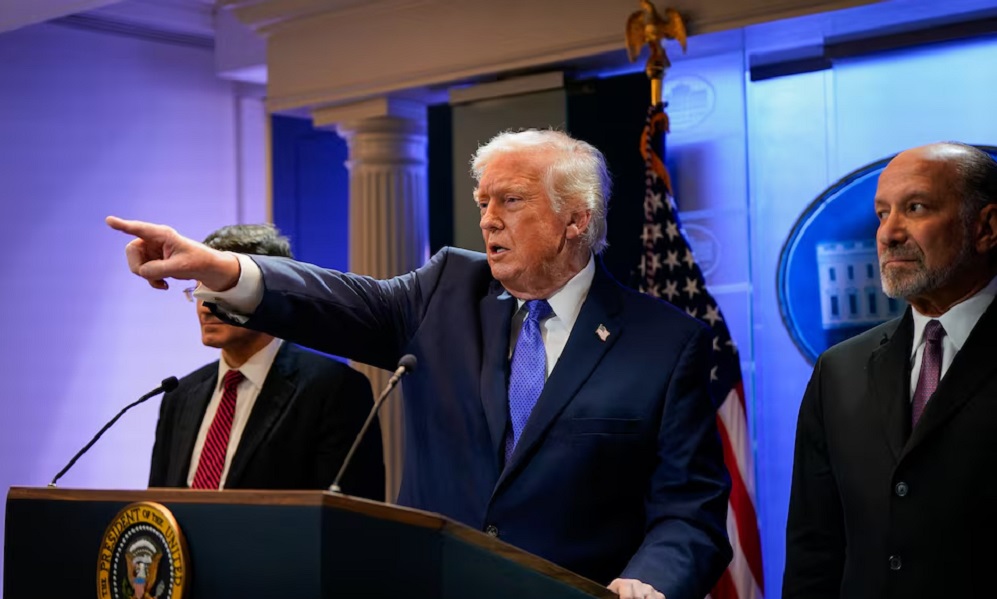
U.S. President Donald Trump responded with fury to Friday’s Supreme Court ruling that he lacked the power to unilaterally set tariffs on imports, denouncing individual justices as he vowed to continue a global trade war that has kept the world on edge for a year.
Saying he was undeterred by what he repeatedly called a ridiculous ruling, Trump announced an immediate new 10% tariff on imports from all countries, on top of any existing tariffs, and then issued a proclamation putting them into effect. The law allows him to impose a levy of up to 15% for 150 days, although it could face legal challenges, Reuters reported.
The court’s landmark 6-3 ruling upended the leverage Trump and his trade envoys have wielded over foreign governments at negotiating tables to reshape diplomatic relations and global markets.
The ruling briefly sent U.S. stock indexes surging, before ending modestly higher as analysts warned of renewed confusion in global markets while they await Trump’s next moves.
Hours after the ruling, Trump signed an executive order repealing the tariffs that the court struck down, and he also issued a proclamation imposing a 10% duty on most goods imported into the U.S. for 150 days, granting exemptions for certain items including critical minerals, metals and energy products, the White House said.
TRADE DEALS, REVENUE IN QUESTION
The ruling called into question the trade deals Trump’s envoys have negotiated in recent months under the threat of high tariffs. It left open the fate of the $175 billion Trump has collected from U.S. importers under what the court said was his incorrect reading of the law.
“I’m ashamed of certain members of the court, absolutely ashamed, for not having the courage to do what’s right for our country,” Trump told reporters at the White House, complaining that foreign countries were ecstatic and “dancing in the street.”
He insinuated, without evidence, that the majority of the court caved to foreign influence: “They’re very unpatriotic and disloyal to our Constitution. It’s my opinion that the court has been swayed by foreign interests and a political movement that is far smaller than people would ever think.”
Since returning to the White House 13 months ago, Trump has said he had what the court summarized as the “extraordinary power to unilaterally impose tariffs of unlimited amount, duration, and scope.” Citing a national emergency, he said the International Emergency Economic Powers Act (IEEPA) meant he could set tariffs at any rate he chose.
The court grounded its opinion, which was written by Chief Justice John Roberts, with a quote from the U.S. Constitution: “The Congress shall have Power To lay and collect Taxes, Duties, Imposts and Excises.”
The argument by the Trump administration that it had identified a war-like emergency to justify a loophole failed to persuade the court.
“The Government thus concedes, as it must, that the President enjoys no inherent authority to impose tariffs during peacetime,” Roberts wrote.
“And it does not defend the challenged tariffs as an exercise of the President’s warmaking powers. The United States, after all, is not at war with every nation in the world.”
Despite the court’s bluntness in ruling the president had exceeded his authority, Trump told reporters: “It’s ridiculous, but it’s OK, because we have other ways, numerous other ways.”
ECONOMIC UNCERTAINTY RISES
After a year of Trump’s often ad hoc tariff announcements whipsawing markets and the global economy, the ruling and Trump’s response reintroduced a hefty dose of uncertainty that economists, investors and policymakers had hoped was in the rearview mirror.
“I think it will just bring in a new period of high uncertainty in world trade, as everybody tries to figure out what the U.S. tariff policy will be going forward,” said Varg Folkman, analyst at the European Policy Centre think tank.
U.S. Treasury Secretary Scott Bessent said the court ruling could have mixed results.
“The Supreme Court has taken away the President’s leverage, but in a way, they have made the leverage that he has more draconian because they agreed he does have the right to a full embargo,” Bessent told “The Will Cain Show” on Fox News.
“We will get back to the same tariff level for the countries. It will just be in a less direct and slightly more convoluted manner,” he said.
In announcing his new temporary 10% tariff, Trump became the first president to invoke Section 122 of the Trade Act of 1974, which allows the president to levy tariffs of up to 15% for up to 150 days to fix “fundamental international payments problems.” That, too, could draw legal challenges. Such tariffs can only be extended with Congress’ authorization.







World
Houthi advance in Yemen puts U.S. in a new bind
The U.S. administration can’t afford to have the Houthis close the strait, driving up energy prices and disrupting global trade.
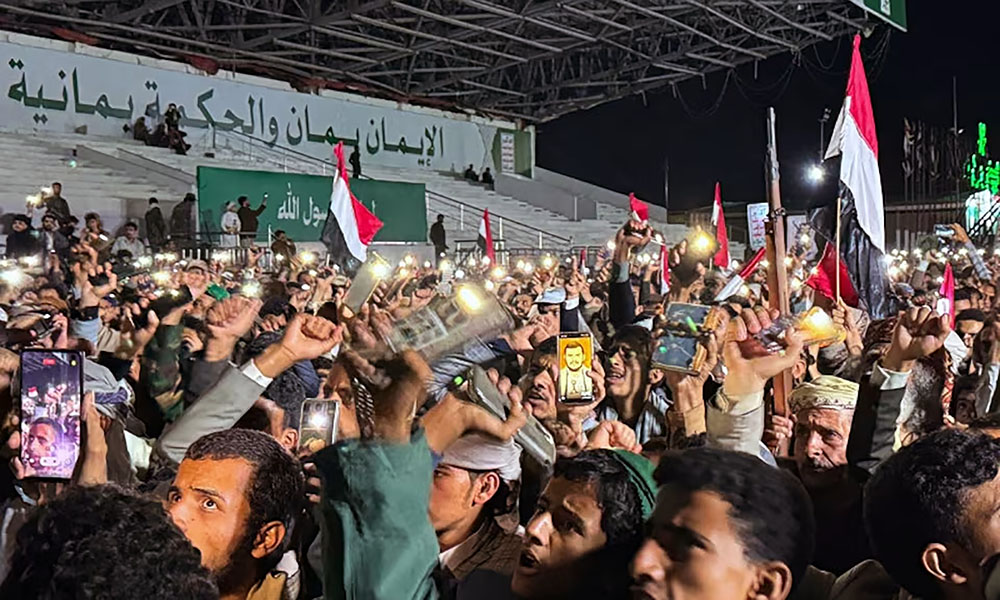
A lightning offensive by the Iran-aligned Houthis has put the militants in a position to control a crucial Middle East waterway, creating a major new problem for U.S. President Donald Trump as his war with Iran grinds on in its seventh month, Reuters reported.
Widening the Middle East conflict, Houthi fighters have advanced south along Yemen’s coast, increasing their ability to choke off the Bab el-Mandeb Strait — the “Gate of Tears” at the mouth of the Red Sea — giving Tehran potential leverage over both of the region’s main oil-shipping corridors.
The militants reached the island of Perim on Friday, in the middle of the strait between Yemen and Africa. That is bad news for Saudi Arabia, which has been shipping much of its oil from Red Sea ports since the war effectively closed the Strait of Hormuz, on the opposite side of the Arabian Peninsula.
It also comes at a difficult time for Trump, who is already grappling with record-low approval ratings and searching for a way out of the conflict, most recently by announcing an economic pressure campaign designed to force concessions from Iran’s government.
High U.S. gasoline prices driven by the conflict have jeopardized his Republican Party’s chances of keeping control of Congress in the November midterm elections. Iran remains defiant despite being hurt militarily and economically.
“Just weeks ago, Trump adopted a strategy of squeezing Iran’s economy while keeping military conflict at levels too low to squeeze the American economy,” said Stephen Wertheim, a senior fellow at Carnegie Endowment for International Peace. “The Houthis have shattered Trump’s plan.”
The U.S. administration can’t afford to have the Houthis close the strait, driving up energy prices and disrupting global trade.
But at the same time, entering a fight with a foe that has withstood previous attacks by Saudi Arabia and the U.S. would be a dangerous new mission for a U.S. military already stretched by the fighting in Iran.
Saudi Arabia’s de facto ruler, Crown Prince Mohammed bin Salman, phoned Trump on Thursday and asked for U.S. military help fighting the Houthis, three sources told Reuters. He was told Washington would not intervene directly for now but would help with intelligence, the sources said.
Trump confirmed on Saturday that he had spoken to the crown prince, and said the Houthis had also phoned his administration and asked for Washington not to become directly involved in the conflict, read the report.
A senior Trump administration official declined to address specific questions, but said the U.S. is focused on national security interests such as ensuring freedom of navigation in the Red Sea “while empowering our regional partners to take the lead in managing and resolving regional security challenges”.
Saudi Arabia, Iran and the Houthis did not respond to a request for comment. Iran’s foreign ministry said in a statement on Thursday that the Yemen conflict could not be solved by blockade or military action against the Houthis and called for dialogue, without addressing Iran’s own role.
Iran responded to U.S. and Israeli attacks earlier this year by disrupting the Strait of Hormuz, the outlet to the Gulf through which around a fifth of global oil supplies flowed before the war.
If the Houthis close the Bab el-Mandeb, that would deal another economic blow, constraining another 7% of global petroleum supplies and about 12% of global trade.
“This was always the worst-case scenario, that the Iranians exert control not only of Strait of Hormuz but Bab el-Mandeb, two of the leading energy choke points in the world,” said David Schenker, who served as Assistant Secretary of State for Near East Affairs during Trump’s first term and is now at the Washington Institute for Near East Policy, a think tank.
“It’s an enormous amount of leverage that [the Iranians] have in hand.”
Analysts and former officials say Trump now faces a choice: devote U.S. forces and scarce air-defense munitions to pushing back the Houthis, or leave Saudi Arabia and its allies, a Yemeni government based in the south, to confront them alone.
The Houthis seized Yemen’s capital 12 years ago, and a Saudi-led military intervention has failed to dislodge them since.
Taking on the Houthis would effectively end a deal Trump struck last year in which the U.S. would stop bombing the group in exchange for a halt to strikes on Red Sea shipping. That would be likely to expose U.S. forces to missile attacks from Yemen.
It would also be another burden for the U.S. military.
U.S. officials say a fight with the Houthis could require significant naval and aerial resources and divert U.S. intelligence assets, given the need to pinpoint Houthi positions that have changed since last year.
If U.S. Navy vessels and aircraft have to start shooting down Houthi drones and missiles, it could also worsen diminished stockpiles of U.S. munitions and air-defense interceptors.
The senior administration official denied that the U.S. was concerned about its resources being stretched. “The United States Military has more than enough munitions, ammo, and stockpiles to serve all of the Commander-in-Chief’s strategic goals and beyond,” the official said.
Tim Lenderking, who served as U.S. special envoy on Yemen under former President Joe Biden and is now a principal at law firm Squire Patton Boggs, said that with Trump signaling an unwillingness to get directly involved militarily against the Houthis, the U.S. needs to do more to share intelligence with the Saudis for their air campaign and step up diplomatic and material support for Yemen’s internationally recognized government.
“This administration came in asking the question, ‘What can Yemen do for us?’” Lenderking said during a webcast sponsored by the Middle East Institute think-tank in Washington. “Well, Yemen can spoil our day.”
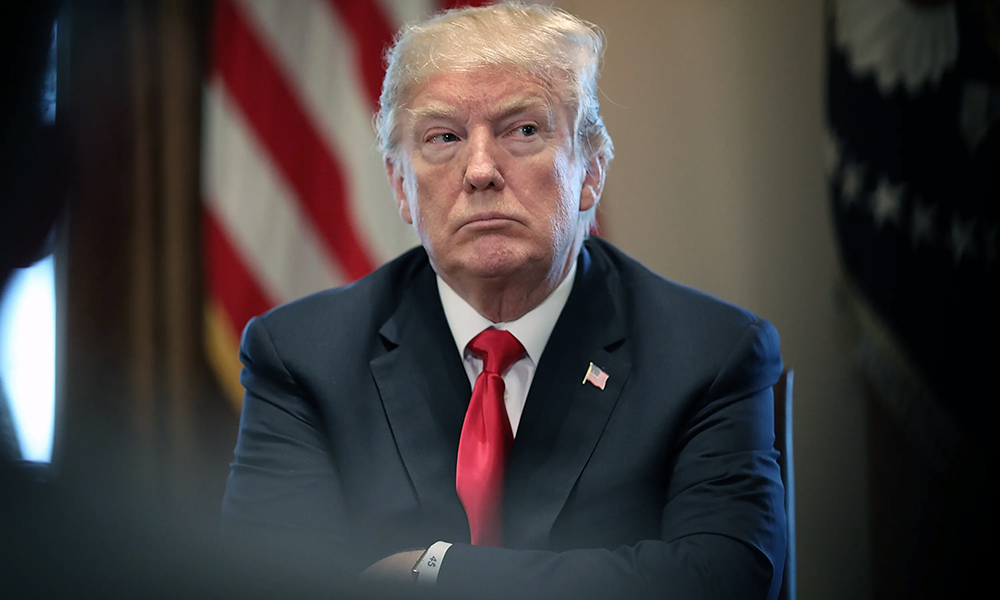
U.S. President Donald Trump says he does not regret launching the war against Iran, despite its potential impact on the November midterm elections.
In an interview with Fox News host Laura Ingraham, Trump said that if given the choice again, he would take the same course of action, adding that he does not believe in the word “regret.”
Trump also dismissed suggestions that some of his supporters had become upset or demoralized over the war, saying they were proud that he was preventing Iran from obtaining a nuclear weapon.
He also reiterated his claim that the war would end immediately after the midterm elections, saying, “It ends right after the election.”
The conflict and the resulting rise in oil and gas prices have become a major political issue for Republicans ahead of the elections.
The United States and Israel launched attacks on Iran on February 28, while Iran responded with strikes on Israel and Gulf states hosting U.S. military bases. The fighting has reportedly killed thousands and displaced millions.
Trump has cited the weakening of Iran’s nuclear capabilities as one of the main objectives of the war. Iran, however, says its uranium-enrichment program is peaceful and maintains that it does not possess nuclear weapons.
World
Trump touts $5,000 payout if Republicans win as Vance waits in wings
It was not immediately clear how the $5,000 payments would work or whether they would be legal. The proposal would likely cost more than $1 trillion, with approximately 270 million U.S. adults, and could require the approval of Congress.
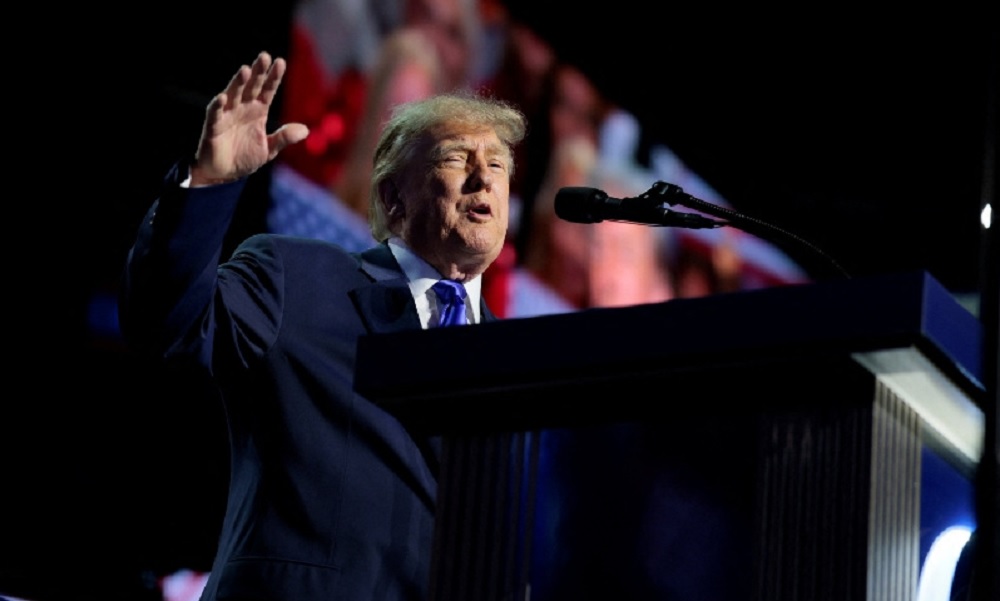
President Donald Trump capped the first day of his Republican Party’s first-ever midterm convention by proposing to pay every U.S. adult a $5,000 “Trump dividend” if his party wins November’s congressional elections.
Trump delivered the extraordinary overture during a primetime speech that lasted nearly two hours and firmly placed him at the center of the midterm campaign at a time when his sagging approval ratings could weigh on Republicans’ chances, Reuters reported.
Vice President JD Vance will give the keynote address on Thursday night, though Trump is scheduled to make closing remarks to bring the made-for-television two-day event in Dallas to an end.
With Trump constitutionally barred from seeking a third term, Vance’s speech could serve as an early audition for the 2028 presidential election and offer clues about how he would lead a party reshaped by Trump.
It was not immediately clear how the $5,000 payments would work or whether they would be legal. The proposal would likely cost more than $1 trillion, with approximately 270 million U.S. adults, and could require the approval of Congress.
The convention’s focus on Trump – some Republicans have dubbed it “Trumpapalooza” – amounts to a risky bet that he can mobilize the voters who carried him to the presidency two years ago, despite opinion polls showing his popularity is at an all-time low.
But it remains to be seen whether his campaign-style speech will appeal to the critical swing voters who have drifted away from Trump’s party amid growing dissatisfaction with the cost of living and the war on Iran.
‘PRETEND THAT I’M ON THE BALLOT’
“I’m asking you to pretend that I’m on the ballot,” Trump said, a line that may have pleased Democratic campaign strategists just as much as MAGA voters.
Republican efforts got a boost from an unlikely source on Wednesday, when Democratic U.S. Senator John Fetterman appeared in a pretaped video segment introducing his “great friend,” fellow Pennsylvania Senator Dave McCormick, a Republican.
Fetterman said he would always “reject the extremes in socialism,” a comment that is likely to bolster Republican attacks on Democrats as too left-wing. Fetterman, who has increasingly broken with his fellow Democrats, has nevertheless rejected speculation that he might leave the party.
Some vulnerable Republicans in tough races, perhaps mindful of tying themselves too closely to the unpopular Trump, elected to skip the affair, including Senator Dan Sullivan of Alaska and Senator Susan Collins of Maine.
DEMOCRATS PORTRAYED AS ‘SOCIALISTS’ AND ‘COMMUNISTS’
While Republican officials had described the convention as an opportunity to tout Trump’s policies, most speakers focused on attacking Democrats as extreme on topics such as transgender women in sports and border security – political red meat for core Trump supporters.
Alabama state Representative Ernie Yarbrough, a convention attendee, said Trump needs to give voters a clearer sense of how long the war in Iran could last.
“People want to feel like we’re not getting stuck in an endless cycle,” he said.
Trump defended his decision to attack Iran, saying he acted to prevent Tehran from developing a nuclear weapon. He also promised that oil prices would drop “as soon as we win the war with Iran,” which he vowed would happen soon.
But the conflict shows little sign of ending more than six months after the U.S. and Israel launched strikes on Iran, and analysts have said Iran’s nuclear program has not been eliminated. Iran denies seeking a nuclear weapon.
Before Trump took the stage, a parade of speakers called Democrats “socialists” and “communists,” echoing one of Trump’s favorite attack lines. Democrats are “dangerous, radical and weird,” said Senator Tim Scott of South Carolina, the chairman of the party’s Senate campaign arm.
The stakes are high for both parties. With the elections less than two months away, Republicans face the prospect of losing control of at least one chamber of Congress, with public polling showing Democrats more motivated to vote and Trump’s approval ratings deeply underwater.


India beat Afghanistan by seven wickets in first T20I

Tahawol: Calls for U.S. engagement with Afghanistan

Saar: End of Chinese ambassador’s mission in Kabul

IEA rejects claims of al-Qaeda presence in Afghanistan

Afghanistan faces cancer treatment crisis

Four mediators struggle to secure lasting Pakistan-Afghanistan ceasefire

Juma Khan Fateh surrenders to IEA forces in Badakhshan

Afghanistan’s trade diversification challenges Pakistan

Syria and Saudi Arabia condemn Kabul bombing, express solidarity with Afghanistan

Afghanistan crowned champions of five-match ODI series against Ireland
Tahawol: Calls for U.S. engagement with Afghanistan
Saar: End of Chinese ambassador’s mission in Kabul

Tahawol: Norwegian delegation’s call for engagement with Afghanistan discussed

Saar: Pakistan’s dual policy towards Afghanistan reviewed

Exclusive interview with ACB CEO Naseeb Khan
-
 Latest News4 days ago
Muttaqi and Bangladeshi delegation discuss expansion of bilateral ties
-

 Sport4 days ago
Afghanistan Champions League Season 6 kicks off today: Abu Muslim Farah face Sarsabz Yashlar
-

 Regional5 days ago
Iran attacks US base in Jordan, ships near Hormuz after tankers sunk
-
 World5 days ago
US Treasury ratchets up pressure on Iran with sweeping new aviation sanctions
-

 Business5 days ago
UAE firm eyes investment in Salang’s second tunnel and pharmaceutical factories
-

 Sport5 days ago
Afghanistan to host Bangladesh and Zimbabwe in the UAE in three-format home season
-
 Latest News5 days ago
Afghanistan, Bangladesh discuss expanding economic ties
-
 Latest News5 days ago
Mujahid calls Pakistan’s order to expel Afghan medical students ‘inhumane’