
Regional
Trump says Israel would hand over Gaza after fighting is over, no US troops needed

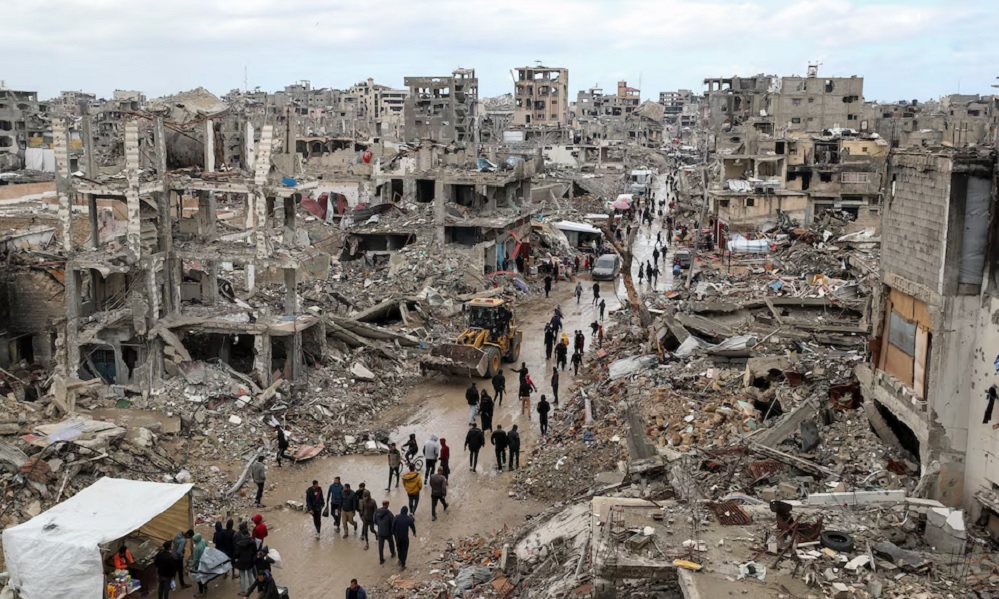
U.S. President Donald Trump said on Thursday Israel would hand over Gaza to the United States after fighting was over and the enclave’s population was already resettled elsewhere, which he said meant no U.S. troops would be needed on the ground.
A day after worldwide condemnation of Trump’s announcement that he aimed to take over and develop the Gaza Strip into the “Riviera of the Middle East”, Israel ordered its army to prepare to allow the “voluntary departure” of Gaza Palestinians, Reuters reported.
Trump, who had previously declined to rule out deploying U.S. troops to the small coastal territory, clarified his idea in comments on his Truth Social web platform.
“The Gaza Strip would be turned over to the United States by Israel at the conclusion of fighting,” he said. Palestinians “would have already been resettled in far safer and more beautiful communities, with new and modern homes, in the region.” He added: “No soldiers by the U.S. would be needed!”
Earlier, amid a tide of support in Israel for what Prime Minister Benjamin Netanyahu called Trump’s “remarkable” proposal, Defence Minister Israel Katz said he had ordered the army to prepare a plan to allow Gaza residents who wished to leave to exit the enclave voluntarily.
“I welcome President Trump’s bold plan. Gaza residents should be allowed the freedom to leave and emigrate, as is the norm around the world,” Katz said on X.
He said his plan would include exit options via land crossings, as well as special arrangements for departure by sea and air.
Trump, a real-estate-developer-turned-politician, sparked anger around the Middle East with his unexpected announcement on Tuesday, just as Israel and Hamas were expected to begin talks in Doha on the second stage of a ceasefire deal for Gaza, intended to open the way for a full withdrawal of Israeli forces, a further release of hostages and an end to a nearly 16-month-old war.
Regional heavyweight Saudi Arabia rebuffed the proposal outright and Jordan’s King Abdullah, who will meet Trump at the White House next week, said on Wednesday he rejected any attempts to annex land and displace Palestinians.
Egypt also weighed in, saying it would not be part of any proposal to displace Palestinians from neighbouring Gaza, where residents reacted with fury to the suggestion.
“We will not sell our land for you, real estate developer. We are hungry, homeless, and desperate but we are not collaborators,” said Abdel Ghani, a father of four living with his family in the ruins of their Gaza City home. “If (Trump) wants to help, let him come and rebuild for us here.”
It was unclear whether Trump would go ahead with his proposal or, in keeping with his self-image as a shrewd dealmaker, has simply laid out an extreme position as a bargaining tactic. His first term in 2017-21 was replete with what critics said were over-the-top foreign policy pronouncements, many of which were never implemented.
U.S. Secretary of State Marco Rubio told reporters on Thursday that people would have to live elsewhere while Gaza was rebuilt. He did not say whether they would be able to return under Trump’s plan to develop the enclave, home to more than 2 million Palestinians.
Axios reported Rubio planned to visit the Middle East in mid-February with an itinerary that includes Israel, the United Arab Emirates and Saudi Arabia.
DISPLACEMENT
What effect Trump’s shock proposal may have on the ceasefire talks remains unclear. Only 13 of a group of 33 Israeli hostages due for release in the first phase have so far been returned, with three more due to come out on Saturday. Five Thai hostages have also been released.
Hamas official Basem Naim accused Israel’s defence minister of trying to cover up “for a state that has failed to achieve any of its objectives in the war on Gaza”, and said Palestinians are too attached to their land to ever leave.
Displacement of Palestinians has been one of the most sensitive issues in the Middle East for decades. Forced or coerced displacement of a population under military occupation is a war crime, banned under the 1949 Geneva Conventions.
Details of how any such plan might work have been vague. Israeli Foreign Minister Gideon Saar said different thinking was needed on Gaza’s future but that any departures would have to be voluntary and states would have to be willing to take them.
“We don’t have details yet, but we can talk about principles,” Saar told a press conference with his Italian counterpart Antonio Tajani. “Everything must be based on the free will of (the) individual and, on the other hand, of a will of a state that is ready to absorb,” he said.
A number of far-right Israeli politicians have openly called for Palestinians to be moved from Gaza and there was strong support for Trump’s push among both security hawks and the Jewish settler movement, which wants to reclaim land in Gaza used for Jewish settlements until 2005.
Giora Eiland, an Israeli former general who attracted wide attention in an earlier stage of the war with his “Generals’ Plan” for a forced displacement of people from northern Gaza, said Trump’s plan was logical and aid should not be allowed to reach displaced people returning to northern Gaza.
Israel’s military campaign has killed tens of thousands of people since Hamas’ October 7, 2023, cross-border attack on Israel touched off the war, and has forced Palestinians to repeatedly move around within Gaza in search of safety.
But many say they will never leave the enclave because they fear permanent displacement, like the “Nakba”, or catastrophe, when hundreds of thousands were dispossessed from homes in the war at the birth of the state of Israel in 1948.
Katz said countries that have opposed Israel’s military operations in Gaza should take in the Palestinians.
“Countries like Spain, Ireland, Norway, and others, which have levelled accusations and false claims against Israel over its actions in Gaza, are legally obligated to allow any Gaza resident to enter their territories,” he said.






Regional
Twelve US troops wounded in Iran strike on base in Saudi Arabia, US official says
Earlier on Friday, the U.S. military said 273 of them had already returned to duty. Thirteen U.S. troops have been killed in the conflict.

Twelve U.S. troops were wounded, two of them seriously, in an Iranian military strike on Prince Sultan Air Base in Saudi Arabia, a U.S. official told Reuters on Friday.
The latest casualties add to the more than 300 U.S. military service members who have been wounded since the war against Iran started on February 28.
Earlier on Friday, the U.S. military said 273 of them had already returned to duty. Thirteen U.S. troops have been killed in the conflict.
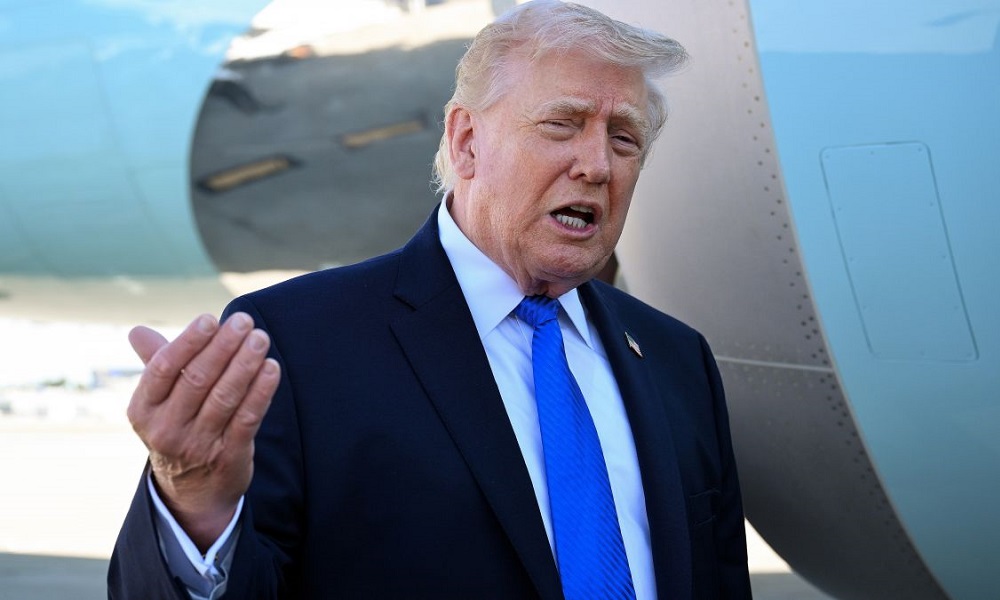
U.S. President Donald Trump announced a new extension of his deadline for Iran to reopen the Strait of Hormuz or face the destruction of its energy plants, after Iran rejected his 15-point proposal to end the war he launched with Israel.
Iran gave no direct indication that it was ready for negotiation or compromise. The Islamic Revolutionary Guard Corps issued a statement reaffirming that all shipping “to and from ports of allies and supporters of the Israeli-American enemies” to any destination was prohibited.
The war has spread across the Middle East, killing thousands of people and causing the biggest disruption in history to energy supplies, hitting the global economy with soaring oil, gas and fertiliser prices that have fuelled inflation fears.
The U.S. and Israel launched strikes on Iran on February 28 during talks with Tehran about its nuclear programme that had not yet yielded a deal. Attacks on Israel by Iran’s Lebanese ally Hezbollah then triggered an Israeli onslaught there that has displaced a fifth of Lebanon’s population.
On Thursday, Trump threatened during a cabinet meeting to increase pressure on Iran if it did not make a deal. He later posted on social media that he would pause threatened attacks on Iranian energy plants for 10 days until April 6 at 8 p.m. Eastern daylight time (0000 GMT on April 7).
“Talks are ongoing and, despite erroneous statements to the contrary by the Fake News Media, and others, they are going very well,” he added in his Truth Social post.
Regional
Russia sought to blackmail US using intelligence to Iran, Zelenskiy says
Zelenskiy, who said on Monday that Ukraine’s military intelligence has “irrefutable” evidence that Russia is continuing to provide intelligence to Iran.
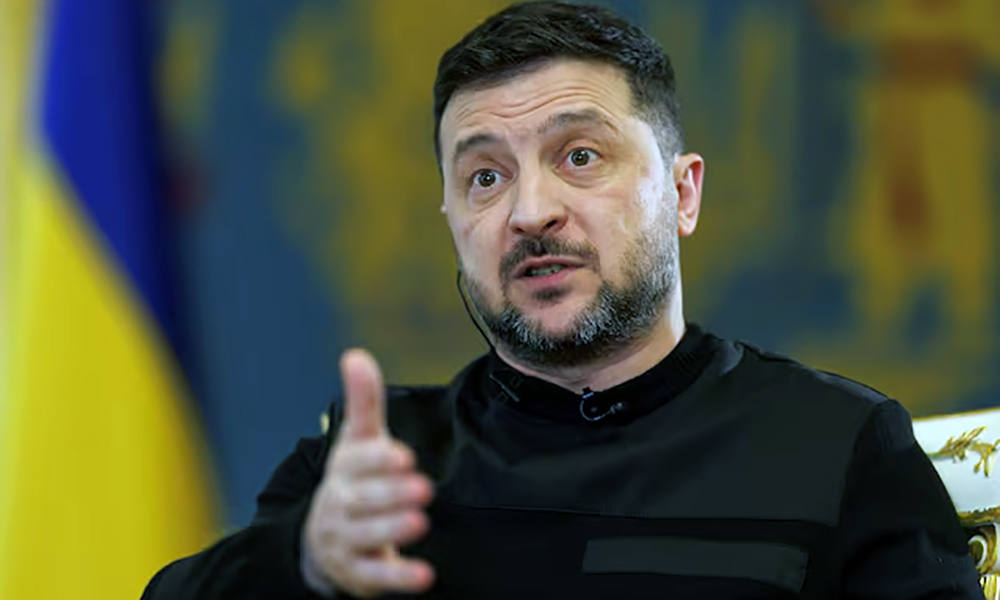
Russia sought to blackmail the United States by offering to stop sharing military intelligence with Iran if, in return, Washington would cut off Ukraine from its intelligence data, President Volodymyr Zelenskiy said on Wednesday.
Zelenskiy, who said on Monday that Ukraine’s military intelligence has “irrefutable” evidence that Russia is continuing to provide intelligence to Iran, told Reuters he had seen the data but provided no further details, Reuters reported.
Speaking in his presidential compound in Kyiv, Zelenskiy said that some Iranian drones, used to attack U.S. military assets and its allies during the war in the Middle East, contained Russian components.
“I have reports from our intelligence services showing that Russia is doing this and saying: ‘I will not pass on intelligence to Iran if America stops passing intelligence to Ukraine.’ Isn’t that blackmail? Absolutely,” Zelenskiy said.
He did not say who, according to the reports, Russia was addressing the comments to. Russia has denied assisting Iran in its month-old conflict with the United States and Israel – a denial that Washington said earlier this month that it had also received directly from Moscow when the issue was discussed.
Ukraine, which has faced sustained attacks by Iranian-designed Shahed drones since Russia launched its invasion in 2022, is helping several Gulf states – including Saudi Arabia, the United Arab Emirates, and Qatar – to counter drone attacks on their territory, the president said.
Zelenskiy said he hoped that Ukraine would be able to reach long-term deals with some Gulf countries that would raise funds for the production of Ukrainian drone interceptors or receiving much-needed air-defence missiles, read the report.


Herat Chamber of Commerce donates 15 million AFN to the people of Iran

Severe floods in Badghis leave five dead

13 mountaineers in Balkh summit Alborz at 1,650 meters

Fazlur Rehman urges policy review on Afghanistan, warns of Pakistan’s regional isolation

US regime change efforts in Afghanistan ended in failure, says Merz

Pakistani military jet downed in Afghanistan’s Jalalabad, pilot captured alive

Afghan Air Force conducts airstrikes in Islamabad, other cities

Prominent Muslim scholar issues fatwa calling for Afghanistan-Pakistan ceasefire

Afghan air force strikes key Pakistani military installations in retaliatory operation

IEA: Special circle in Pakistan has launched mission to destabilize region

Exclusive interview with Indrika Ratwatte, Deputy UN Special Representative for Afghanistan

Tawsia: Efforts to boost Afghanistan’s domestic production and economic diplomacy

Tahawol: Discussion on day 27 of Iran–US war

Saar: Islamic Emirate confident of Durand Line control

Tahawol: Efforts to release Mohammad Rahim from Guantanamo Bay Detention Camp
-

 Latest News2 days ago
Tajikistan shifts stance on Afghanistan amid rising border tensions
-

 Latest News4 days ago
Around 2.3 million tourists visited Afghanistan’s recreational areas during Eid: Ghufran
-

 Sport4 days ago
Afghanistan squad hit by withdrawals ahead of AFC Asian Cup Qualifiers
-

 Latest News4 days ago
Islamic Emirate releases American prisoner Dennis Coyle
-
 Latest News3 days ago
Two civilians killed, eight injured in fresh shelling by Pakistan in Kunar
-
 Regional4 days ago
US allies in Middle East ‘edging closer’ to joining conflict
-
 Regional4 days ago
Tehran rejects Trump’s claims of talks, accuses US of spreading ‘fake news’
-

 Sport3 days ago
IPL 2026: RCB sold for $1.78 billion in landmark deal