
World
Trump says second Venezuela strike possible if government does not cooperate
Trump also said U.S. oil companies need “total access” to the country’s vast reserves and suggested that an influx of Venezuelan emigrating to the United States also factored into the decision to capture Maduro.

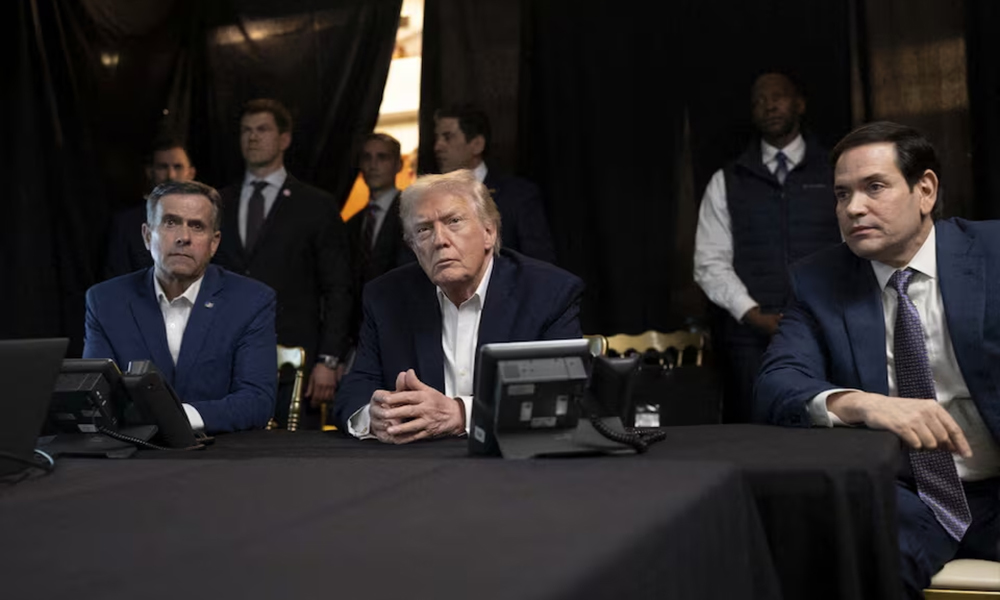
U.S. President Donald Trump said on Sunday that the United States might launch a second military strike on Venezuela following the capture of President Nicolas Maduro if remaining members of the administration do not cooperate with his efforts to get the country “fixed.”
Trump’s comments to reporters aboard Air Force One raised the possibility of further U.S. military interventions in Latin America, and suggested Colombia and Mexico could also face military action if they do not reduce the flow of illicit drugs to the United States, Reuters reported.
“Operation Colombia sounds good to me,” Trump said. He also said that Cuba, a close ally of Venezuela, “looks like it’s ready to fall” on its own without U.S. military action.
Maduro is in a New York detention center awaiting a Monday court appearance on drug charges. His capture by the United States has sparked deep uncertainty about what is next for the oil-rich South American nation.
Trump said his administration will work with remaining members of the Maduro regime to clamp down on drug trafficking and overhaul its oil industry, rather than push for immediate elections to install a new government.
Top officials in Maduro’s government are still in charge and have called the detentions of Maduro and his wife Cilia Flores a kidnapping.
“Here there is only one president, whose name is Nicolas Maduro Moros. Let no one fall for the enemy’s provocations,” Interior Minister Diosdado Cabello said in an audio recording released by the ruling PSUV socialist party.
Images of the 63-year-old Maduro, blindfolded and handcuffed stunned Venezuelans. The operation was Washington’s most controversial intervention in Latin America, since the invasion of Panama 37 years ago.
Defense Minister General Vladimir Padrino said on state television the U.S. attack killed soldiers, civilians and a “large part” of Maduro’s security detail “in cold blood.” Venezuela’s armed forces have been activated to guarantee sovereignty, he said.
The Cuban government said 32 of its citizens were killed during the raid.
Vice President Delcy Rodriguez — who also serves as oil minister — has taken over as interim leader with the blessing of Venezuela’s top court and has said Maduro remains president.
Rodriguez has long been considered the most pragmatic member of Maduro’s inner circle. But she has publicly contradicted Trump’s claim she is willing to work with the United States.
Trump said Rodriguez may pay a bigger price than Maduro “if she doesn’t do what’s right,” according to an interview with The Atlantic magazine on Sunday.
The Venezuelan communications ministry did not immediately respond to a request for comment on that remark.
Trump’s administration has described Maduro’s capture as a law-enforcement mission to force him to face U.S. criminal charges filed in 2020, including narco-terrorism conspiracy. Maduro has denied criminal involvement.
But Trump also said U.S. oil companies need “total access” to the country’s vast reserves and suggested that an influx of Venezuelan emigrating to the United States also factored into the decision to capture Maduro.
“What really played (into the decision to capture Maduro) is the fact that he sent millions of people into our country from prisons and from mental institutions, drug dealers, every drug addict in his country was sent into our country,” Trump said.
The Venezuelan government has said for months Trump was seeking to take the country’s natural resources, especially its oil, and officials made much of a previous Trump comment that major U.S. oil companies would move in.
“We are outraged because in the end everything was revealed — it was revealed that they only want our oil,” Cabello said.
Once one of the most prosperous nations in Latin America, Venezuela’s economy tanked in the 2000s under President Hugo Chavez and nosedived further under Maduro, sending about one in five Venezuelans abroad in one of the world’s biggest exoduses.
U.S. Secretary of State Marco Rubio said Venezuela’s next leader should keep Venezuela’s oil industry out of the hands of U.S. adversaries and stop drug trafficking and cited an ongoing U.S. blockade on tankers.
“That means their economy will not be able to move forward until the conditions that are in the national interest of the United States and the interest of the Venezuelan people are met,” he said on ABC’s “This Week.”
Some Maduro supporters gathered at a government-sponsored protest march on Sunday afternoon in Caracas.
Once ruled by Spain, Venezuela’s “people must not surrender, nor should we ever become a colony of anyone again,” said demonstrator Reinaldo Mijares. “This country is not a country of the defeated.”
Maduro opponents in Venezuela have been wary of celebrating his seizure, and the presence of security forces seemed, if anything, lighter than usual on Sunday.
Despite a nervous mood, some bakeries and coffee shops were open and joggers and cyclists were out as usual. Some citizens were stocking up on essentials.
“Yesterday I was very afraid to go out, but today I had to. This situation caught me without food and I need to figure things out. After all, Venezuelans are used to enduring fear,” said a single mother in oil city Maracaibo who bought rice, vegetables and tuna.
To the disappointment of Venezuela’s opposition, Trump has given short shrift to the idea of 58-year-old opposition leader and Nobel Peace Prize winner Maria Corina Machado taking over, saying she lacked support.
Machado was banned from standing in the 2024 election but has said her ally Edmundo Gonzalez, 76, who the opposition and some international observers say overwhelmingly won that vote, has a democratic mandate to take the presidency.
U.S. Senate Democratic leader Chuck Schumer said the White House has failed to say how long the U.S. intends to be in Venezuela and how many American troops might be required.
“The American people are worried that this is creating an endless war — the very thing that Donald Trump campaigned against,” Schumer said on ABC’s “This Week.” He said lawmakers would weigh a measure to constrain further Trump administration action in Venezuela, though its prospects could be uncertain given that Congress is controlled by Trump’s Republicans, read the report.
While many Western nations oppose Maduro, there were many calls for the U.S. to respect international law and questions arose over the legality of seizing a foreign head of state.
The U.N. Security Council planned to meet on Monday to discuss the attack. Russia and China, both major backers of Venezuela, have criticized the U.S.




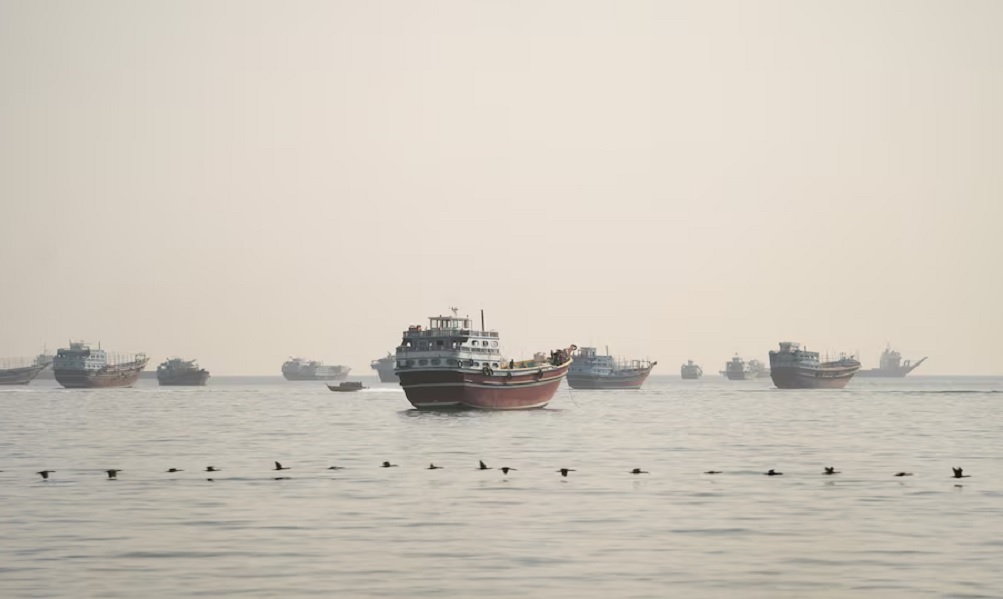
The United States launched new strikes against multiple targets overnight in Iran, the U.S. military said on Wednesday, as President Donald Trump vowed even more attacks if no peace deal is secured.
The military’s Central Command announced the strikes were complete about four hours after they began shortly after midnight in Tehran, saying in a post on X that the targets included “military surveillance capabilities, communication systems, and air defense sites across Iran.”
“The strikes are in response to Iran’s unwarranted and continued aggression,” Central Command said, Reuters reported.
The attacks were the latest development in an escalating exchange of strikes that threatens to reignite a full-scale war, which was paused in early April when the two sides agreed to a fragile ceasefire.
Iran’s Islamic Revolutionary Guard Corps said early on Thursday they had launched counter-attacks on 18 U.S. military targets at airbases in Kuwait and Bahrain, and Bahrain’s interior ministry said sirens were sounded.
Iran’s top joint military command also warned it would fire on any vessel attempting to pass through the Strait of Hormuz, which has been largely closed for months. Iranian media reported that two ships were fired upon.
U.S. Central Command denied that the strait was closed, saying commercial ships were still transiting the strait despite Iran’s threats. Trump said earlier in the day that vessels have been crossing the strait without Iran’s permission as part of a clandestine military mission.
Trump told Fox News reporter Trey Yingst on Wednesday evening that the strikes would stop shortly but that he would “bomb the shit out of them” if Iran’s leaders did not sign an agreement with the U.S. immediately, Yingst wrote on X.
Iranian news agencies reported explosions in several cities, including Sirik, Kargan, Bandar Abbas, Minab, Varamin and Karaj.
U.S. Defense Secretary Pete Hegseth presented the move as an effort to force Iran into a deal to end the conflict, telling reporters during a visit to Central Command in Florida that the strikes would “advance our military interests and also enhance our diplomatic position.”
“We will strike them hard tonight, and hopefully Iran makes a good decision,” he said. “If we need to negotiate with bombs, we’ll negotiate with bombs.”
The United States and Iran have traded fire several times since the tentative ceasefire took hold, even as negotiators have unsuccessfully sought an end to the war, now in its fourth month. Trump has repeatedly said a deal is close, though there has been no sign of a breakthrough, while also threatening to resume bombing.
The U.S. military earlier targeted air defenses and radar sites around the Strait of Hormuz after a U.S. attack helicopter was downed near the strategic waterway on Monday. Iran responded with missile and drone attacks on U.S. bases in Jordan, Kuwait and Bahrain. A U.S. official said there was no significant damage.
Iran accused the U.S. of striking reservoirs that supplied drinking water to 10 villages and violating international law.
“This is not collateral damage — it is a calculated war crime and a flagrant violation of human rights,” Foreign Ministry spokesperson Esmaeil Baghei said.
The Pentagon did not immediately respond to a request for comment.
Trump, who has threatened before to destroy Iran’s civilian infrastructure, did not say whether the coming strikes would target power plants and bridges.
Despite the belligerent language from both sides, there were signs of continuing diplomatic efforts.
A delegation from Qatar, which has been mediating between the United States and Iran, landed in Tehran on Wednesday to hold talks on the latest developments, Iranian media reported.
TRUMP CLAIMS A SECRET MISSION
The war has killed thousands and disrupted roughly one-fifth of the world’s supply of oil and natural gas, sending prices sharply higher. Iran has blocked traffic through the Strait of Hormuz, while the U.S. has maintained its own blockade on Iranian ports.
The conflict has become a political headache for the White House, with public polls showing Trump’s approval ratings sinking amid voter anger over high gasoline prices. Some Republicans have openly worried the war’s unpopularity could cost them control of Congress in November’s midterm elections.
Oil prices rose nearly $3 following Trump’s threat of escalation, and extended gains in early Asian trade on Thursday.
Trump told reporters at the White House on Wednesday that vessels carrying 100 million barrels of oil have defied Iran to travel through the strait as part of a secret military mission.
Hegseth said ships have been transiting the strait “in the middle of the night, protected by the United States in a way that Iran can’t stop, they can’t see it.”
Separately, the U.S. military said it disabled an oil tanker transporting Iranian crude in the Gulf of Oman on Tuesday for a second consecutive day.
FIGHTING IN LEBANON CONTINUES
Fighting in a parallel war between Israel and Iran-backed Hezbollah militants in Lebanon has continued. Israeli airstrikes in southern Lebanon killed at least 13 people on Wednesday, Lebanese security sources said, while Hezbollah claimed fresh attacks against Israeli forces.
Tehran’s demands include an end to Israel’s attacks in Lebanon, the lifting of sanctions on Iran, the release of billions of dollars in frozen assets, and recognition of its control of the strait.
Trump says Iran must end its restrictions on shipping through Hormuz. He also says any peace deal must ensure Iran cannot develop a nuclear weapon.
Iran denies any such ambition.
The U.N. nuclear watchdog’s 35-nation Board of Governors passed a U.S.-backed resolution on Wednesday telling Iran to declare its remaining enriched uranium stocks and let inspectors verify them. Iran branded the resolution as “political”.
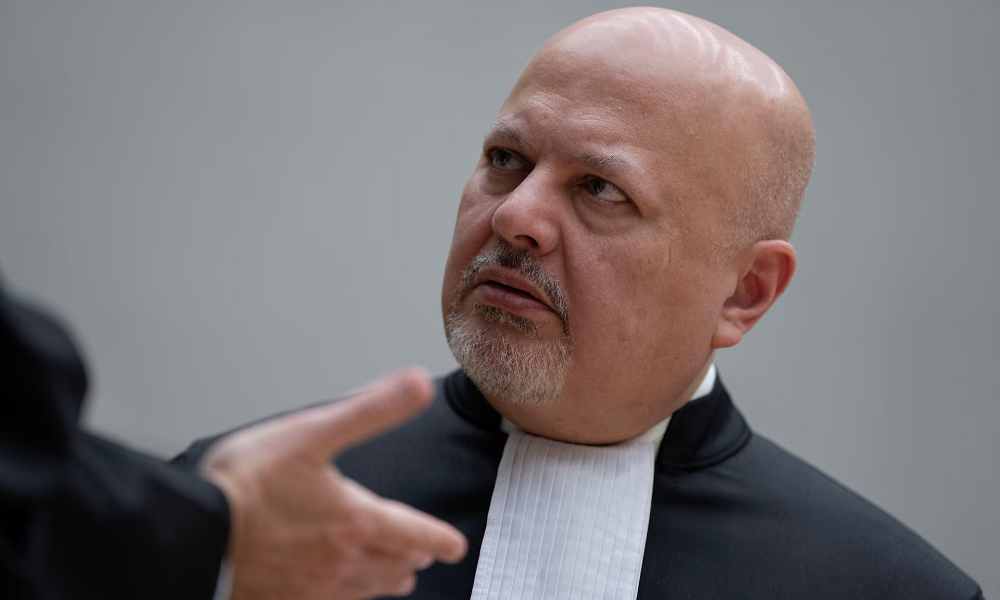
The International Criminal Court’s chief prosecutor Karim Khan has been suspended pending a vote by member states on his fate, the court’s governing body said on Monday, following a probe into accusations of sexual harassment made against him.
A diplomatic source briefed on the decision told Reuters the court’s governing body’s executive bureau has ruled Khan had committed serious misconduct following an 18-month-long probe into accusations that the prosecutor had non-consensual sexual interactions with a lawyer in his office. The source added that the bureau has recommended the prosecutor should be removed from office, Reuters reported.
The ICC’s governing body will send its conclusion on to all 125 ICC member states which will vote on Khan’s fate in a special session convened at a later date.
In its press release, the bureau said it had made a decision on the disciplinary proceedings against Khan and referred the matter to the ICC’s Assembly of States Parties, but did not give details about what it decided.
“The decision of the Bureau and the related documentation will remain confidential,” the press release said.
Khan’s lawyers said in a statement that he rejected the decision in the strongest terms, and repeated he denies any wrongdoing. “The decision is unlawful, procedurally unfair and unsupported by evidence,” the statement said.
The International Criminal Court has been thrust into crisis by the investigations into Khan — its most prominent official — as well as by U.S. sanctions over the court’s actions, including arrest warrants for Israeli officials for alleged war crimes.
Khan has not been at the helm of the ICC office of the prosecutor since last May when he took a voluntary leave of absence pending the outcome of the inquiry. He is the first ICC prosecutor to be formally suspended from his role by the court’s oversight body.
Sources told Reuters earlier that a report by United Nations investigators found a “factual basis” for the allegations of sexual misconduct made by a female aide and that witness accounts “lend support to her claims”.
However, a second report by three judges that analysed the U.N. report found the evidence insufficient to establish the truth of the allegations “beyond a reasonable doubt”, they added.
Lawyers for Khan had told Reuters that the judges unanimously concluded that the “factual findings do not establish misconduct or breach of duty.”
World
Earthquake of magnitude 7.8 strikes off southern Philippines, 15 feared killed
The Philippine seismology agency said at least nine strong aftershocks were felt across Mindanao on Monday morning, the highest at a magnitude 6.7.
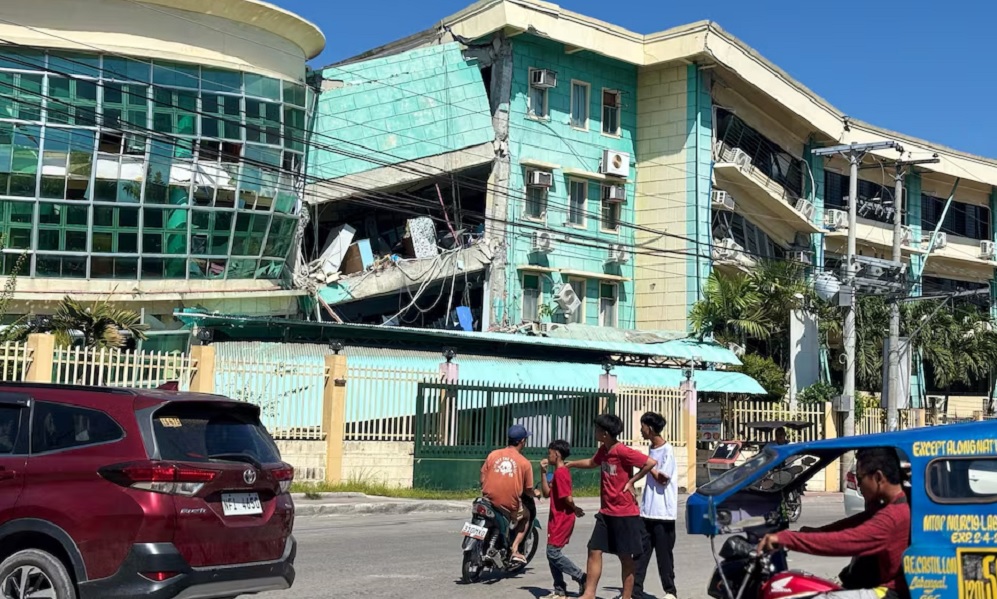
At least 15 people were feared dead in the southern Philippines on Monday after a powerful magnitude 7.8 earthquake struck off the island of Mindanao, triggering tsunami warnings across several countries.
The quake came early in the morning as schools were reopening in the Philippines after a long break, with the tremors felt strongly in a dozen provinces and 420 km (261 miles) away in the city of Manado on the Indonesian island of Sulawesi, Reuters reported.
Tsunami alerts were issued in the southern Philippines, northern Indonesia and the Malaysian state of Sabah on Borneo island after the quake with an epicentre located about 20 km (12.4 miles) off Mindanao’s Sarangani province.
Philippine authorities were assessing the damage from the quake, with the office of civil defence seeking to verifying initial reports that 15 people had been killed and 129 injured in the region, mostly from falling debris.
‘WE WILL NOT LEAVE MINDANAO BEHIND,’ PRESIDENT SAYS
President Ferdinand Marcos Jr ordered an immediate disaster response in Mindanao, an island the size of South Korea, with agencies directed to prepare relief supplies and evacuation centres and be ready for possible rescue operations.
“The national government is moving and we will not leave Mindanao behind,” he said in a statement.
It comes eight months after the Philippines suffered its deadliest tremor in 12 years when a shallow 6.9 magnitude quake hit off the island of Cebu, killing 79 people. Two powerful quakes struck Mindanao two weeks later, the strongest at a magnitude 7.4.
The Philippines and Indonesia experience hundreds of quakes each year and sit on tectonically complex parts of the “Pacific Ring of Fire”, a seismically active belt stretching from South America to the Russian Far East.
The Philippine seismology agency said at least nine strong aftershocks were felt across Mindanao on Monday morning, the highest at a magnitude 6.7.
The full extent of the damage was not yet clear and authorities said assessments were underway.
Video shared by the local government in General Santos, a city of about 700,000 people, showed the collapse of a building housing a fast food restaurant, with panicked onlookers fleeing as a cloud of dust spread quickly through the air.
One General Santos hospital was evacuated due to concerns about cracks on higher floors, while one of the buildings at the city’s Notre Dame of Dadiangas University collapsed, but no one was inside.
“I had to duck and shelter myself under the table. And it was very long and strong,” the university’s president Manuel de Leon told broadcaster DZMM.
Images from authorities in Sarangani province showed damaged shop fronts with collapsed signs, smashed windows and piles of rocks from crumbled concrete.
MILITARY DEPLOYED, MALAYSIA OFFERS ASSISTANCE
The Philippine military said its disaster response units had been deployed to affected areas.
A video shared by a local school the moment the quake struck showed a large group of children sitting on the floor swaying rapidly from side to side, some hugging teachers, before fleeing en masse as a makeshift shelter collapsed behind them.
Benjie Ancheta, police chief of Sarangani’s Alabel town, said the quake occurred during a police flag-raising ceremony, causing some people to faint.
“This is the strongest earthquake we’ve experienced,” Ancheta said by phone.
Malaysian Prime Minister Anwar Ibrahim said his government was ready to assist the Philippines.
“I pray for the safety and wellbeing of all those affected, wishing them strength and courage in the difficult days ahead,” Anwar posted on X.
INDONESIAN ISLANDERS MOVE TO HIGHER GROUND
The U.S. Tsunami Warning System said multiple countries could be affected and Australia initially warned of potential tsunami waves on its northern coasts. Japan’s meteorological agency issued an advisory and said a tsunami of 0.2 m or lower had been observed, with some disruption to ferries and precautionary beach closures.
Witnesses in Indonesia’s Manado said they felt the quake strongly. Only minor damage was reported, according to Abdul Muhari, spokesperson for Indonesia’s disaster mitigation agency.
A tsunami with a wave height up to 0.75 m was detected in some regions in North Sulawesi, where people started moving to safer areas, including residents of the remote Sangihe Islands, among the closest to the Philippines.
“They are now evacuating to the higher ground… away from the coast, to avoid the potential tsunami,” resident Jufry Dalita said, according to state news agency Antara.


At least 15 killed, dozens injured as protests rock Pakistan-administered Kashmir

Mexico and South Africa set to open historic 2026 World Cup

Russia backs revival of SCO-Afghanistan Contact Group

Afghanistan-Pakistan dialogue held in Türkiye amid efforts to ease tensions

Etihad Airways to launch twice-daily Kabul flights from July

Afghanistan signs $46 million deal to develop standard laboratory complexes

Large blast near Beit Shemesh part of pre-planned test: Israeli defense firm

Trump returns from China with stability but little progress

Norway’s Viking-inspired World Cup team photo goes viral

Afghanistan announce squad for India series

Tahawol: Fresh Pakistani military attacks on Afghanistan discussed

Saar: Emphasis on continued Indian support for Afghanistan discussed

Tahawol: Calls for Afghanistan’s integration discussed

Saar: Alleviating impact of pressure on Afghanistan discussed

Tahawol: The Shadow of War Returns to the Middle East
-
 International Sports2 days ago
Norway’s Viking-inspired World Cup team photo goes viral
-

 Latest News4 days ago
UNAMA voices concern over reported detention of women in Herat
-

 International Sports3 days ago
World Cup 2026: Ten attacking stars set to steal the show in North America
-

 International Sports1 day ago
One Day to Go: Everything you need to know about FIFA World Cup 2026
-

 International Sports4 days ago
Midfield Maestros: 10 players set to control the 2026 FIFA World Cup
-
 Latest News4 days ago
UN Security Council to review Afghanistan situation as UNAMA mandate nears expiry
-
 Business3 days ago
Afghan banks to finance Herat–Mazar railway project
-
 Regional4 days ago
US eyes Iranian assets for Gulf allies’ reconstruction, source says