
World
World reacts to US strikes on Venezuela
“Congratulations, President Donald Trump for your bold and historic leadership on behalf of freedom and justice. I salute your decisive resolve and the brilliant action of your brave soldiers.”


Following are reactions to Saturday’s U.S. strikes on Venezuela.
FRENCH PRESIDENT EMMANUEL MACRON
“The transition to come must be peaceful, democratic, and respectful of the will of the Venezuelan people. We hope that President Edmundo Gonzalez Urrutia, elected in 2024, will be able to ensure this transition as quickly as possible,” Macron wrote on X.
GERMAN CHANCELLOR FRIEDRICH MERZ
Merz said the legal assessment of the U.S. operation is complex and “we will take our time” to evaluate it, adding that principles of international law must apply. He urged that “a transition to a government legitimised by elections must be ensured” and warned that “political instability must not arise in Venezuela”.
SPANISH PRIME MINISTER PEDRO SANCHEZ
“Spain did not recognize the Maduro regime. But neither will it recognize an intervention that violates international law and pushes the region toward a horizon of uncertainty and belligerence”, Sanchez wrote on X.
UN SECRETARY-GENERAL ANTONIO GUTERRES
“These developments constitute a dangerous precedent,” Guterres’ spokesperson said. “The Secretary-General continues to emphasize the importance of full respect – by all – of international law, including the UN Charter. He’s deeply concerned that the rules of international law have not been respected.”
ISRAELI PRIME MINISTER BENJAMIN NETANYAHU
“Congratulations, President Donald Trump for your bold and historic leadership on behalf of freedom and justice. I salute your decisive resolve and the brilliant action of your brave soldiers.”
CHINESE FOREIGN MINISTRY
“China is deeply shocked and strongly condemns the use of force by the U.S. against a sovereign country and the use of force against the president of a country,” a ministry statement said.
SOUTH AFRICAN DEPARTMENT OF INTERNATIONAL RELATIONS
“South Africa calls on the UN Security Council, the body mandated to maintain international peace and security, to urgently convene to address this situation,” a statement by the South African department of international relations said.
RUSSIA FOREIGN MINISTRY
“This morning, the United States committed an act of armed aggression against Venezuela. This is deeply concerning and condemnable.”
“The pretexts used to justify such actions are unfounded. Ideological animosity has prevailed over business pragmatism and the willingness to build relationships based on trust and predictability.”
“In the current situation, it is important, first and foremost, to prevent further escalation and to focus on finding a way out of the situation through dialogue.”
ARGENTINE PRESIDENT JAVIER MILEI, IN MEDIA INTERVIEW
“What we have to understand is that it’s the collapse of the regime of a dictator that was rigging elections, that in the last election was badly defeated and, despite that, he clung on to power.”
“That’s why I’d say that today’s news is excellent news for the free world.”
MEXICAN MINISTRY OF FOREIGN AFFAIRS
“The Mexican government strongly condemns and rejects the military actions carried out unilaterally in recent hours by the armed forces of the United States of America against targets in the territory of the Bolivarian Republic of Venezuela, in clear violation of Article 2 of the Charter of the United Nations.”
CANADIAN FOREIGN MINISTER ANITA ANAND
“Canada calls on all parties to respect international law and we stand by the people of Venezuela and their desire to live in a peaceful and democratic society. Canada is engaging with its international partners and monitoring developments closely.”
PARAGUAY GOVERNMENT
“Paraguay is closely monitoring current developments in Venezuela and calls for prioritizing democratic means that guarantee an orderly transition.”
BOLIVIA’S FOREIGN AFFAIRS MINISTRY
“Bolivia reiterates its commitment to peace, democracy, and coordination with the international community for humanitarian assistance, the protection of the civilian population, and support for a credible and definitive process of institutional reconstruction”.
PANAMA’S PRESIDENT JOSE RAUL MULINO ON X
“In light of the events that took place early this morning in Venezuela, my government reiterates our position in favor of democratic trials and in favor of accepting the legitimate wishes of the Venezuelan people, as expressed emphatically at the polls, where Edmundo Gonzalez was elected.”
PERU’S FOREIGN MINISTRY
“The Government of Peru calls for a prompt solution to the political situation in Venezuela, in favor of a transition with full respect for international law and human rights, as well as attention to the legitimate and genuine aspirations of the Venezuelan people to live in democracy with the support of the regional community.”
BRITISH PRIME MINISTER KEIR STARMER
“I want to establish the facts first. I want to speak to President Trump. I want to speak to allies. I can be absolutely clear that we were not involved … and I always say and believe we should all uphold international law,” Starmer said in a statement to British broadcasters.
BRAZIL’S PRESIDENT LUIZ INACIO LULA DA SILVA ON X
“The bombings on Venezuelan territory and the capture of its president cross an unacceptable line. These acts represent a grave affront to Venezuela’s sovereignty and yet another extremely dangerous precedent for the entire international community.”
“Attacking countries in flagrant violation of international law is the first step toward a world of violence, chaos, and instability, where the law of the strongest prevails over multilateralism.”
UKRAINE’S FOREIGN MINISTER ANDRII SYBIHA
“Ukraine has consistently defended the right of nations to live freely, free of dictatorship, oppression, and human rights violations. The Maduro regime has violated all such principles in every respect. We stand for further developments in accordance with the principles of international law, prioritising democracy, human rights, and the interests of Venezuelans.”
DENMARK PRIME MINISTER METTE FREDERIKSEN
“The Danish government is closely monitoring the situation in Venezuela with our allies. Now is the time for de-escalation. International law must be respected.”
BELARUS PRESIDENT ALEXANDER LUKASHENKO
“The President of Belarus CATEGORICALLY CONDEMNS the act of American aggression against Venezuela. Alexander Lukashenko spoke about the consequences just recently in an interview with American journalists,” Belta news agency cited Natalia Eismont, spokesperson for Lukashenko, as saying.
ECUADOR PRESIDENT DANIEL NOBOA
“The time is coming for all the narco-Chavista criminals. Their structure will finally collapse across the entire continent,” he wrote on X.
URUGUAY FOREIGN MINISTRY
“Uruguay rejects, as it always has, military intervention by one country in the territory of another and reaffirms the importance of respecting international law and the UN Charter, in particular the basic principle that States must refrain from resorting to the threat or use of force against the territorial integrity or political independence of any State, or in any other manner inconsistent with the Purposes of the United Nations.”
EUROPEAN COMMISSION PRESIDENT URSULA VON DER LEYEN
“Following very closely the situation in Venezuela. We stand by the people of Venezuela and support a peaceful and democratic transition. Any solution must respect international law and the UN Charter.”
CHILE’S PRESIDENT GABRIEL BORIC ON X
“As the Government of Chile, we express our concern and condemnation of the military actions of the United States in Venezuela and call for a peaceful solution to the serious crisis affecting the country.”
COLOMBIA’S PRESIDENT GUSTAVO PETRO ON X
“The Government of the Republic of Colombia views with deep concern the reports of explosions and unusual air activity in recent hours in the Bolivarian Republic of Venezuela, as well as the resulting escalation of tension in the region.”
NICARAGUAN GOVERNMENT
“From this Nicaragua, blessed and dignified, we raise the voice of our people… to demand respect for the sovereignty of the people of Venezuela.”
IRANIAN FOREIGN MINISTRY
The ministry condemned the U.S. attack on Venezuela “as a blatant violation of its national sovereignty and territorial integrity.” It called on the UN Security Council to “act immediately to halt the unlawful aggression” and hold those responsible accountable.
TRINIDAD AND TOBAGO PRIME MINISTER KAMLA PERSAD-BISSESSAR
“Trinidad and Tobago is NOT a participant in any of these ongoing military operations. Trinidad and Tobago continues to maintain peaceful relations with the people of Venezuela.”
BRITAIN’S REFORM UK PARTY LEADER NIGEL FARAGE
“The American actions in Venezuela overnight are unorthodox and contrary to international law – but if they make China and Russia think twice, it may be a good thing.”
“I hope the Venezuelan people can now turn a new leaf without Maduro.”
OFFICE OF ITALIAN PRIME MINISTER GIORGIA MELONI
“In line with Italy’s long-standing position, the Government believes that external military action is not the way to end totalitarian regimes, but at the same time considers defensive intervention against hybrid attacks to its security to be legitimate, as in the case of state entities that fuel and promote drug trafficking.”
NORWAY FOREIGN MINISTER ESPEN BARTH EIDE
“International law is universal and binding for all states. The American intervention in Venezuela is not in accordance with international law.
“A peaceful transition to democratic rule is the only viable path in Venezuela. This requires inclusive political processes that respect the rights of the population.”
SLOVAKIA PRIME MINISTER ROBERT FICO
“The US military action in Venezuela is further evidence of the breakdown of the world order created after World War II.”
CZECH REPUBLIC, FOREIGN MINISTER PETR MACINKA
“We now consider it important to calm the situation and initiate diplomatic negotiations, including with the participation of the Venezuelan opposition.”
MALAYSIAN MINISTRY OF FOREIGN AFFAIRS
“As a matter of principle, Malaysia opposes all forms of foreign intervention in the internal affairs of other States, as well as the threat or use of force. These are fundamental principles enshrined in the Charter of the United Nations and international law. Malaysia consistently upholds the importance of peaceful resolution of disputes through dialogue, respect for sovereignty, and adherence to international norms.
“At this critical time, it is crucial for the concerned parties to exercise maximum restraint, and seek peaceful solutions through dialogue and diplomacy.”
JAPAN FOREIGN MINISTRY
“Japan has long valued the fundamental principles of freedom and democracy. We have also consistently attached importance to upholding the principles of international law within the international community. On the basis of this consistent position, Japan will continue to work closely with relevant countries, including the G7 and regional partners, while doing everything possible to protect Japanese nationals and pursuing diplomatic efforts toward the restoration of democracy and the stabilisation of the situation in Venezuela.”



World
New poll shows weak U.S. support for Iran conflict
Approval of the conflict has been below 40% since the U.S. and Israel launched strikes on February 28 — a stark contrast to the opening months of other recent conflicts.
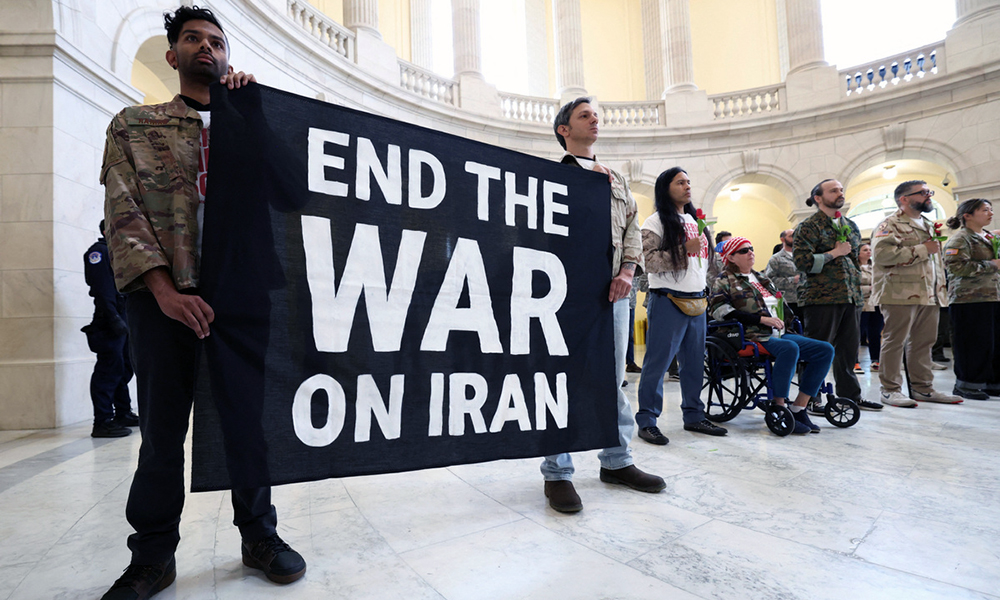
Just one in three Americans support the war on Iran, the lowest reading in a Reuters/Ipsos poll since the five-month-old conflict’s early days, with most respondents saying that President Donald Trump has failed to explain his goals, Reuters reported.
The poll, conducted Friday through Sunday, also showed the Republican president’s approval rating ticking higher to 37%, up three points from last month when his rating tied the lowest of his presidency.
Trump has offered shifting objectives for the conflict such as aiding Iranians to topple their leaders, taking out Iran’s ballistic-missile capabilities and preventing it from obtaining a nuclear weapon. The poll found that 69% of Americans — including four in 10 Republicans – think Trump has not “clearly explained the goals of U.S. military involvement in Iran.”
White House spokeswoman Olivia Wales said Trump will not make decisions based on “fluid opinion polls” and reiterated the president’s resolve to prevent Iran from ever acquiring a nuclear weapon. “What matters most to the American people is having a commander in chief who takes bold action to keep them safe,” Wales said.
Approval of the conflict has been below 40% since the U.S. and Israel launched strikes on February 28 — a stark contrast to the opening months of other recent conflicts.
While each had different context, the Iraq War from 2003 to 2011 had the support of about 70% of Americans in its early months. During the early days of the Afghanistan War, which lasted from 2001 to 2021, about 90% of the country backed the war, to polling, by Gallup.
Public disapproval of the war is weighing on Trump and his Republican Party ahead of the November midterm elections when the president’s allies will defend slim majorities in the U.S. Congress.
“It’s not clear why we started a war with them. I have no idea,” said Alex Womack, a retired turbine repair specialist from Stockbridge, Georgia, who became a Republican in part because he liked how Republican President George H.W. Bush handled the Gulf War in 1991.
Womack, who served in the U.S. Marine Corps during that conflict, said his support for Trump has ebbed because of the war. “I don’t think he’s doing very well, personally,” he said.
To date, 18 American soldiers have died in the conflict while thousands have died in Iran and in Lebanon, where Iran-allied fighters have battled Israeli forces.
The war has pushed gasoline prices sharply higher, a blow to the finances of many Americans. Gasoline prices are averaging just over $4 a gallon nationwide, up from about $3 a gallon just before the war started on February 28, read the report.
“This puts pressure on the party in a myriad of ways, all of them bad,” said Alex Conant, a Republican political strategist and a White House spokesman during the presidency of George W. Bush. “The White House officials have been saying since January that they need to win economic arguments. It’s hard to win the economic arguments when you’re clearly focused on foreign policy.”
Independent registered voters in the latest Reuters/Ipsos poll said they were favoring the Democratic congressional candidate over the Republican by 36% to 20%. Independent voters also favored Democrats over Republicans on economic policy, the poll found
In campaigning for the 2024 presidential election, Trump said he would keep the U.S. out of enduring conflicts. He initially estimated the Iran war would last four to five weeks. He has bristled over comparisons to other wars, including the Vietnam War, which lasted two decades and claimed the lives of more than 58,000 U.S. soldiers.
Rhyan Anderson, an independent from Fairburn, Georgia, who voted for Trump in 2024, said he thinks Trump should focus on domestic problems rather than on helping Israel or other allies.
“My biggest thing is just focus on the people who are actually in the country,” said Anderson, who works two jobs in security and data collection and said he voted for Democrat Joe Biden in 2020. “I know we have allies and things like that, but there’s a lot of people here that really need help.”
Since mid-March, the Reuters/Ipsos survey has asked respondents whether they support or oppose military strikes on Iran. At that time, 37% said they supported the war.
That compared to 27% approval on the day the war began, when the Reuters/Ipsos survey also gave respondents the option to choose unsure, which 29% did.
The latest Reuters/Ipsos survey, which was conducted online and nationwide, gathered responses from 1,246 U.S. adults and had a margin of error of 3 percentage points in either direction.
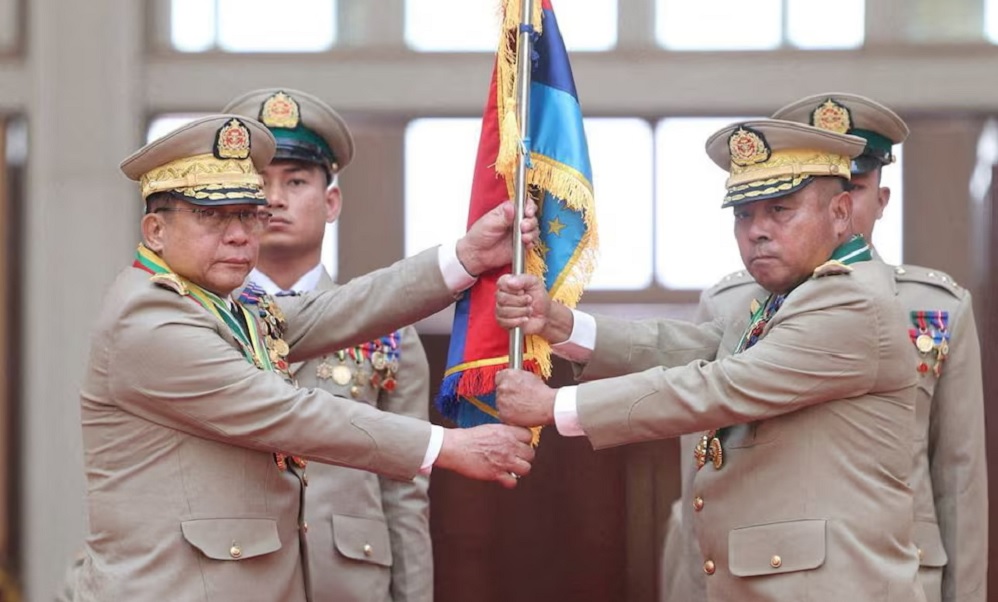
Myanmar’s military has sharply escalated attacks on civilians since a new administration took office in the war-torn country, a conflict monitor said on Monday, even as regional governments ramp up diplomatic engagement.
The Armed Conflict Location & Event Data Project (ACLED) said the onslaught was a result of the tactics deployed by Myanmar’s new military chief who took over in late March as his predecessor prepared to become the country’s president, Reuters reported.
“Since the ruling junta in Myanmar reconfigured its military command structure in March, civilians have been subject to the military’s worsening repression and intensified aerial bombing campaign,” ACLED said.
“These adjustments included the regular deployment of specialised groups of two to five jet fighters executing sustained airstrikes against single targets.”
A Myanmar government spokesperson did not immediately respond to questions from Reuters.
ACLED gathers data on Myanmar’s ongoing conflict from media reports and local partners, as well as reports by the UN, international monitoring groups and local human rights organisations.
Myanmar was plunged into turmoil after the military ousted Aung San Suu Kyi’s elected government in February 2021, sparking a civil war that has killed some 100,000 people and displaced millions.
Days before becoming president after an election that banned most opposition, Min Aung Hlaing appointed long-time loyalist and former spymaster Ye Win Oo as the military’s new commander-in-chief.
Under his command, the military has launched renewed offensives into several border regions, including a frontier area with critical rare earth deposits and other vital trade routes.
“Reprieve for civilians is unlikely as the junta focuses its efforts on consolidating control following coup leader Min Aung Hlaing’s transition from commander of the military to civilian president in April,” ACLED said.
MASS KILLINGS
During the first half of 2026, ACLED said it recorded more than a dozen mass killings, resulting in over 450 civilian fatalities, around 40% of them in Myanmar’s central dry zone known as the Anyar region.
In May, hundreds of junta troops swept through parts of Myit Chay township, across the river from the ancient temples of Bagan, killing at least 40 people, three residents of the area told Reuters.
“About 700 soldiers came into the town, grabbed the belongings of the people here and then beat them and killed them,” said Ye Naung, 35.
Reuters could not independently verify accounts of the incident at Myit Chay, which is part of ACLED’s event database with at least five fatalities and was reported by local media.
“The military’s tactics in 2026 so far show merely shifting modalities of civilian repression rather than any reduction in its severity,” ACLED said.
The political transition in Myanmar has triggered a flurry of diplomacy, with Min Aung Hlaing travelling to key neighbours India and China.
There has also been tentative re-engagement with the 11-member Association of Southeast Asian Nations bloc, which barred Myanmar’s ruling generals from its summits after the coup.
Min Aung Hlaing will make an official visit to Thailand on August 6 to 7, as he pushes for further legitimacy.
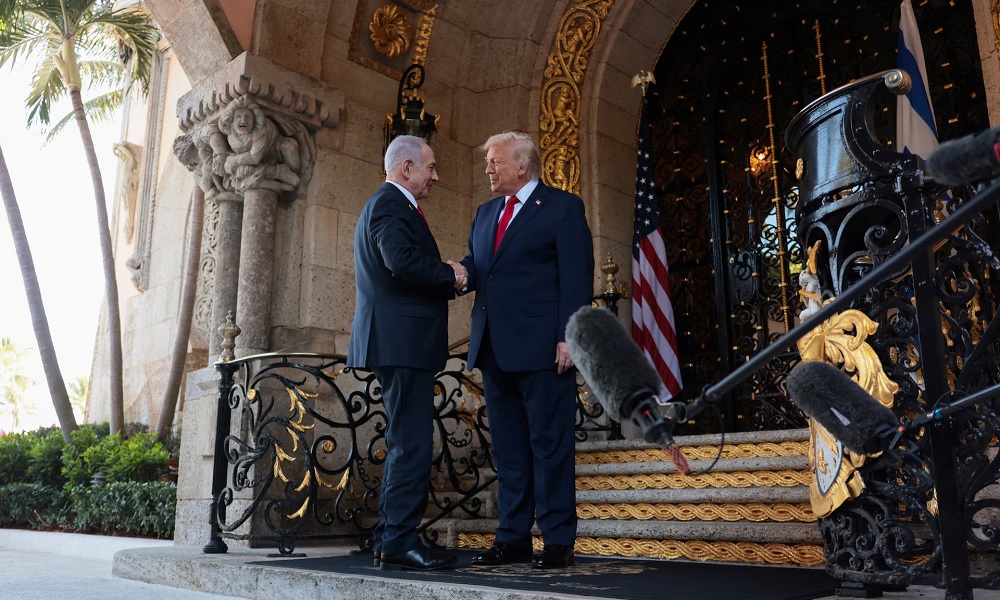
President Donald Trump said on Friday that Israeli Prime Minister Benjamin Netanyahu will visit the U.S. next week.
Trump’s comments came in his speech at the White House Correspondents’ Association Dinner on Friday, while he was falsely casting U.S. Senator Chuck Schumer as Palestinian, Reuters reported.
“I am going to send him (Schumer) a beautiful Palestinian outfit tomorrow, so he can greet Bibi Netanyahu when he comes to town next week,” Trump said.
“He turned Palestinian,” Trump said of Schumer, who is Jewish, while also joking that sharia law was Schumer’s “new founding.”
U.S. Muslim and Jewish advocacy groups have previously criticized Trump for calling Schumer, the top Senate Democrat, a Palestinian, with the rights groups saying Trump uses the term disrepectfully as a slur and as an insult.
Netanyahu’s office said earlier that he will travel to Washington on Monday and will meet with Trump on Tuesday. Netanyahu will also attend deceased U.S. Senator Lindsey Graham’s funeral, his office said.
The Trump-Netanyahu meeting will come as the U.S.-Israeli war on Iran completes five months.


Muttaqi discusses development projects with new UNDP envoy in Afghanistan

Naeem, Japanese ambassador discuss continued Kabul-Tokyo cooperation

Zidane appointed France head coach after 2026 World Cup

Economic Commission approves expansion of Sher Khan port to boost regional trade

Mujahid: Afghanistan’s borders secure, territory will not be used against other countries

India offers 1,000 online scholarships for Afghan students for 2026-27 academic year

Cricket world pays tribute to Afghanistan fast bowler Shapoor Zadran

Turkey spent over $120 million to prepare airport for Qatar-donated U.S. presidential aircraft

Thousands pay final respects as Afghan cricketer Shapoor Zadran buried in Kabul

Afghanistan U-15 team qualifies for FIFA U-15 World Cup

Tahawol: Afghanistan–Uzbekistan Economic Cooperation Enters New Phase

Saar: Growing Criticism in Pakistan Over Islamabad’s Afghanistan Policy

Tahawol: Trump halting major Iran escalation

Saar: Afghanistan-Uzbekistan economic ties

Tahawol: New developments ahead in the Middle East discussed
-
 Latest News2 days ago
Badakhshan Governor, Army Chief reaffirm commitment to Afghanistan’s security
-
 Latest News4 days ago
Five armed men killed while attempting to cross Durand Line into Badakhshan
-
 Latest News3 days ago
U.S. government plan to interview Afghan refugees raises deportation concerns
-
 Latest News4 days ago
Iran reiterates call for inclusive government in Afghanistan
-
 Latest News3 days ago
Afghanistan, Turkey discuss expanding agricultural cooperation
-

 Business4 days ago
Over 205,000 Afghans visit Uzbekistan for trade and business in six months
-
 Regional2 days ago
US pauses strikes on Iran as diplomatic efforts gather pace amid regional tensions
-
 World5 days ago
Trump links Saudi nuclear deal to Israel normalization through Abraham Accords