
World
Trump U-turns on tariffs but keeps trade war heat on China

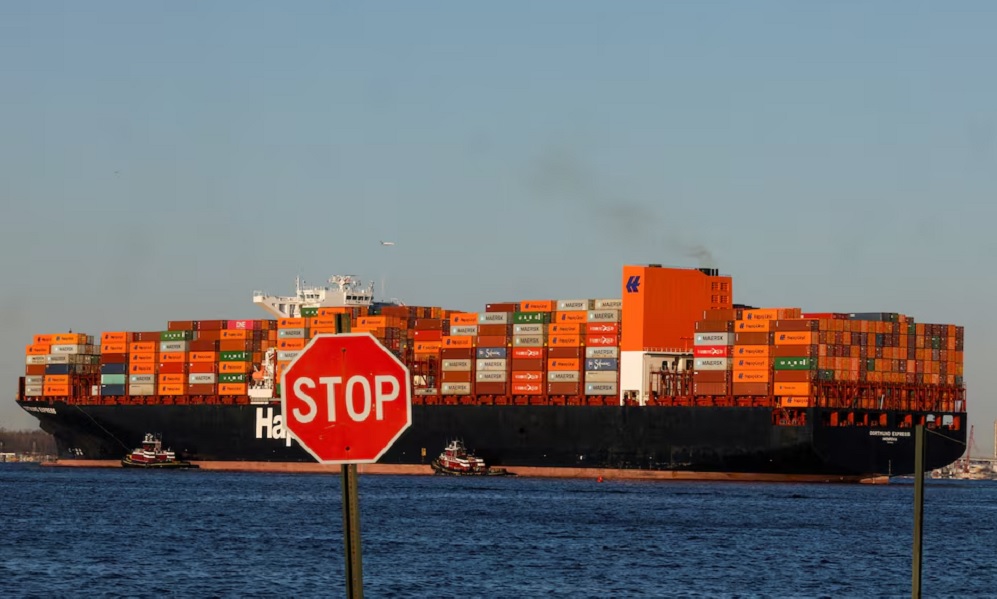
U.S. President Donald Trump’s stunning decision to pause the hefty duties he had just imposed on dozens of countries sent battered global stock markets surging on Thursday even as he ratcheted up a trade war with the world’s No. 2 economy China.
Trump’s turnabout on Wednesday, which came less than 24 hours after steep new tariffs kicked in on most trading partners, followed the most intense episode of financial market volatility since the early days of the COVID-19 pandemic, Reuters reported.
The upheaval erased trillions of dollars from stock markets and led to an unsettling surge in U.S. government bond yields that appeared to catch Trump’s attention.
“I thought that people were jumping a little bit out of line, they were getting yippy, you know,” Trump told reporters after the announcement, referring to jitters sportpeople sometimes get.
U.S. stock indexes shot higher on the news, with the benchmark S&P 500 index closing 9.5% higher. Bond yields came off earlier highs and the dollar rebounded against safe-haven currencies.
The relief spread through Asian markets as they opened on Thursday with Japan’s Nikkei index surging 8% while European futures also pointed to a sharp rebound. Even Chinese stocks rose, propped up by hopes of state support, although its yuan currency fell to the lowest level since the global financial crisis.
Since returning to the White House in January, Trump has repeatedly threatened an array of punitive measures on trading partners, only to revoke some of them at the last minute. The on-again, off-again approach has baffled world leaders and spooked business executives.
U.S. Treasury Secretary Scott Bessent asserted that the pullback had been the plan all along to bring countries to the bargaining table. Trump, though, later indicated that the near-panic in markets that had unfolded since his April 2 announcements had factored in to his thinking.
Despite insisting for days that his policies would never change, he told reporters on Wednesday: “You have to be flexible.”
But he kept the pressure on China, the second biggest provider of U.S. imports. Trump said he would raise the tariff on Chinese imports to 125% immediately from the 104% level that took effect at midnight.
Beijing on Wednesday slapped 84% tariffs on U.S. imports to match Trump’s earlier tariff salvo and has vowed to “fight to the end” in an escalating tit-for-tat trade dispute between the world’s top two economies.
Chinese companies that sell products on Amazon are preparing to hike prices for the U.S. or quit that market due to the “unprecedented blow” from the tariff hikes, the head of China’s largest e-commerce association said.
‘GOADED CHINA’
Trump’s reversal on the tariffs imposed on other countries is also not absolute. A 10% blanket duty on almost all U.S. imports will remain in effect, the White House said. The announcement also does not appear to affect duties on autos, steel and aluminum that are already in place.
The 90-day freeze also does not apply to duties paid by Canada and Mexico, because their goods are still subject to 25% fentanyl-related tariffs if they do not comply with the U.S.-Mexico-Canada trade agreement’s rules of origin. Those duties remain in place for the moment, with an indefinite exemption for USMCA-compliant goods.
Trump’s tariffs had sparked a days-long selloff that erased trillions of dollars from global stocks and pressured U.S. Treasury bonds and the dollar, which form the backbone of the global financial system. Canada and Japan said they would step in to provide stability if needed – a task usually performed by the United States during times of economic crisis.
Analysts said the sudden spike in share prices might not undo all of the damage. Surveys have found slowing business investment and household spending due to worries about the impact of the tariffs, and a Reuters/Ipsos survey found that three out of four Americans expect prices to increase in the months ahead.
Goldman Sachs cut its probability of a recession back to 45% after Trump’s move, down from 65%, saying the tariffs left in place were still likely to result in a 15% increase in the overall tariff rate.
Treasury Secretary Bessent shrugged off questions about market turmoil and said the abrupt reversal rewarded countries that had heeded Trump’s advice to refrain from retaliation. He suggested Trump had used the tariffs to create maximum negotiating leverage. “This was his strategy all along,” Bessent told reporters. “And you might even say that he goaded China into a bad position.”
Bessent is the point person in the country-by-country negotiations that could address foreign aid and military cooperation as well as economic matters. Trump has spoken with leaders of Japan and South Korea, and a delegation from Vietnam met with U.S. officials on Wednesday to discuss trade matters, the White House said.
Bessent declined to say how long negotiations with the more than 75 countries that have reached out might take.
Trump said a resolution with China was possible as well. But officials have said they will prioritize talks with other countries.
“China wants to make a deal,” Trump said. “They just don’t know how quite to go about it.”
Trump told reporters that he had been considering a pause for several days. On Monday, the White House denounced a report that the administration was considering such a move, calling it “fake news.”
Earlier on Wednesday, before the announcement, Trump tried to reassure investors, posting on his Truth Social account, “BE COOL! Everything is going to work out well. The USA will be bigger and better than ever before!”
Later, he added: “THIS IS A GREAT TIME TO BUY!!!”



World
G7 foreign ministers demand an end to attacks on civilians in Iran war
The ministers also reiterated the need to restore safe and toll-free freedom of navigation in the Strait of Hormuz.
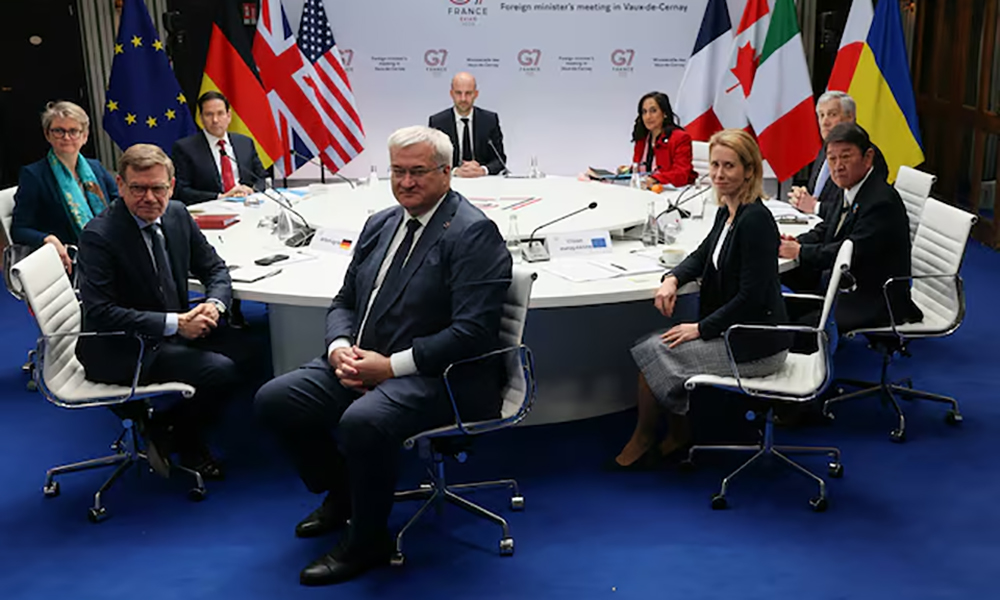
The foreign ministers of the G7 group of nations called on Friday for an immediate stop to attacks against civilians and civilian infrastructure in the Iran war.
In a joint statement agreed on the second day of a G7 meeting in France – this year’s host country – the ministers said they had underscored the importance of minimising the impact of the conflict on regional partners, civilian populations and critical infrastructure.
“We focused on the value of diverse partnerships, coordination, and supporting initiatives, including to mitigate global economic shocks such as disruptions to economic, energy, fertilizer and commercial supply chains, which have direct impacts on our citizens,” they said in the statement seen by Reuters.
The ministers also reiterated the need to restore safe and toll-free freedom of navigation in the Strait of Hormuz.
The G7 members are the United States, Britain, Canada, France, Germany, Italy and Japan, along with the European Union.
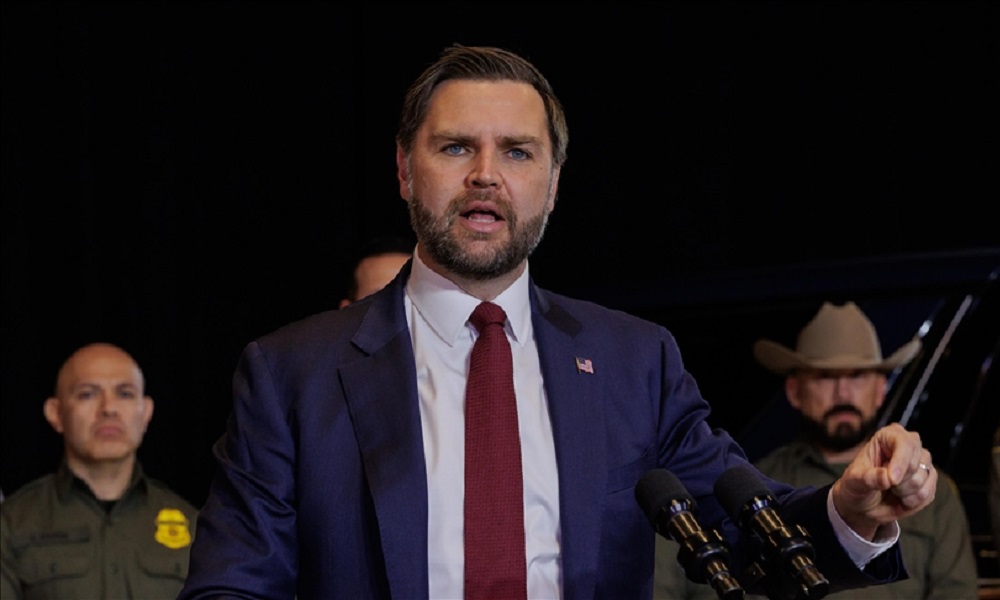
US Vice President JD Vance has taken a leading role in Washington’s efforts to broker peace with Iran, nearly a month into the ongoing conflict, according to US media reports on Friday.
An Axios report says Vance has been actively engaged in behind-the-scenes diplomacy, holding multiple discussions with Israeli Prime Minister Benjamin Netanyahu and coordinating with Gulf allies, while maintaining indirect communication channels with Iranian officials.
The White House reportedly views Vance as a central negotiator due to his senior position and his skepticism toward prolonged military engagements, making him a suitable envoy for sensitive negotiations.
Vance’s efforts include coordination with countries such as the United Arab Emirates and Qatar, focusing on de-escalation, potential peace talks, and regional security.
US President Donald Trump formally confirmed Vance’s role on Thursday, noting that he is working alongside Middle East Envoy Steve Witkoff and Jared Kushner on ongoing negotiations and will brief officials on developments regarding Iran.
White House officials told Axios that Vance’s seniority and opposition to extended foreign conflicts make him a more appealing interlocutor for Iran than other envoys, with Witkoff recommending him as the lead negotiator. “If the Iranians can’t strike a deal with Vance, they don’t get a deal. He’s the best they’re gonna get,” a senior administration official said.
While Vance assumes a larger diplomatic role, Witkoff and Kushner continue handling negotiations. Reports of a confrontation between Vance and Netanyahu were dismissed by US and Israeli sources as inaccurate.
According to the report, Vance initially expressed skepticism about the war’s duration, objectives, and resource impact but supported a strategy of overwhelming force once Trump decided to proceed. Vance remains aligned with Israel while carefully navigating differences between US and Israeli objectives, advisers said.
“He has his own views, but he is going to work according to Trump’s instructions and try to achieve an outcome that the president likes,” a source close to Vance added.
World
Trump signature to appear on US currency, ending 165-year tradition
The Treasury is still producing notes bearing the signatures of former President Joe Biden’s Treasury secretary, Janet Yellen, and former Treasurer Lynn Malerba.
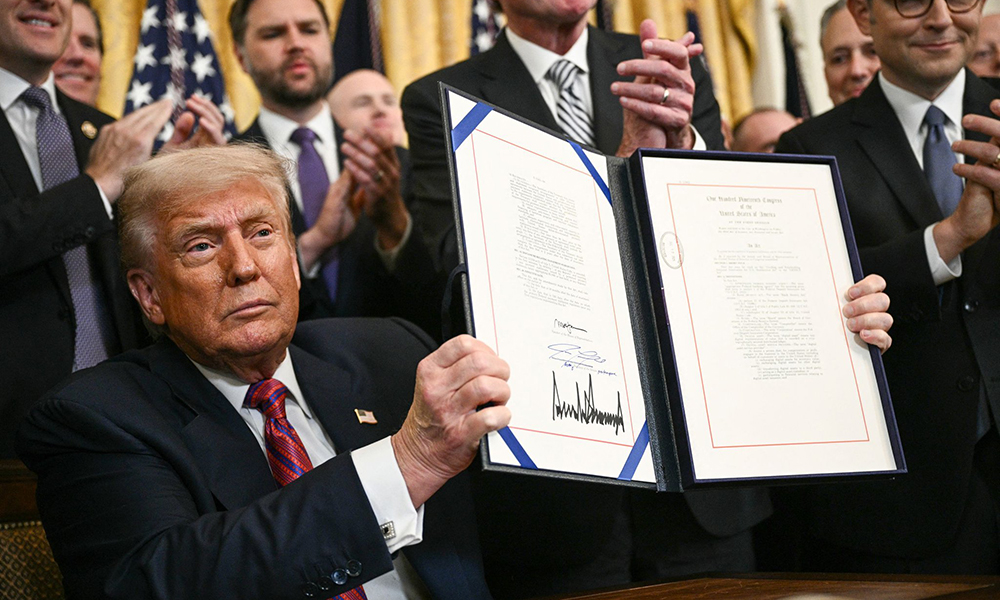
U.S. paper currency will bear President Donald Trump’s signature starting this summer, the first time a sitting president has signed American money, the Treasury Department said on Thursday.
The redesigned notes, planned to mark the 250th anniversary of American independence, will also for the first time in 165 years drop the signature of the U.S. treasurer, who reports to the Treasury Secretary and oversees the Bureau of Engraving and Printing, the U.S. Mint and other Treasury functions, Reuters reported.
The first $100 bills with Trump’s signature and that of U.S. Treasury Secretary Scott Bessent will be printed in June, followed by other bills in subsequent months. The new bills may take several weeks to circulate through banks.
The Treasury is still producing notes bearing the signatures of former President Joe Biden’s Treasury secretary, Janet Yellen, and former Treasurer Lynn Malerba.
Malerba will be the last of an unbroken line of treasurers whose signatures have appeared on U.S. federal currency since 1861, when the U.S. government first issued it.
The signature change is the latest effort by the Trump administration and its allies to put the president’s name on buildings, institutions, government programs, warships and coins. A federal arts panel, whose members Trump appointed, approved last week the design for a commemorative gold coin with Trump’s image.
Bessent said in a statement that the move was appropriate for the U.S. 250th anniversary, given strong U.S. economic growth and financial stability during Trump’s second term, read the report.
“There is no more powerful way to recognize the historic achievements of our great country and President Donald J. Trump than U.S. dollar bills bearing his name, and it is only appropriate that this historic currency be issued at the Semiquincentennial,” Bessent said.
An effort for a circulating $1 Trump coin was set back by laws prohibiting the depiction of living individuals on U.S. coins.
A statute governing the printing of Federal Reserve notes gives the Treasury broad discretion to change designs to guard against counterfeiting. The law requires keeping certain elements, including the words “In God We Trust,” and only allows portraits of deceased individuals.
The overall designs of bills will not change, except for Trump’s signature replacing the Treasurer’s, Treasury officials said. A mock-up of the $100 bill with Trump’s signature was not immediately available.
Malerba, the former treasurer, declined comment on the Trump administration’s move.
Her predecessor, Jovita Carranza, who served as treasurer in Trump’s first term, called the change “a powerful symbol of American resilience, the enduring strength of free enterprise and the promise of continued greatness.”
The current treasurer, Brandon Beach, whose name has not appeared on the currency, also issued a supportive statement, saying Trump was the architect of a “golden age economic revival.”


Severe floods in Badghis leave five dead

13 mountaineers in Balkh summit Alborz at 1,650 meters

Fazlur Rehman urges policy review on Afghanistan, warns of Pakistan’s regional isolation

US regime change efforts in Afghanistan ended in failure, says Merz

Afghan defense forces stand ready to protect national sovereignty: MoD

Pakistani military jet downed in Afghanistan’s Jalalabad, pilot captured alive

Afghan Air Force conducts airstrikes in Islamabad, other cities

Prominent Muslim scholar issues fatwa calling for Afghanistan-Pakistan ceasefire

Afghan air force strikes key Pakistani military installations in retaliatory operation

IEA: Special circle in Pakistan has launched mission to destabilize region

Exclusive interview with Indrika Ratwatte, Deputy UN Special Representative for Afghanistan

Tawsia: Efforts to boost Afghanistan’s domestic production and economic diplomacy

Tahawol: Discussion on day 27 of Iran–US war

Saar: Islamic Emirate confident of Durand Line control

Tahawol: Efforts to release Mohammad Rahim from Guantanamo Bay Detention Camp
-
 Latest News2 days ago
Tajikistan shifts stance on Afghanistan amid rising border tensions
-

 Latest News4 days ago
Around 2.3 million tourists visited Afghanistan’s recreational areas during Eid: Ghufran
-

 Sport4 days ago
Afghanistan squad hit by withdrawals ahead of AFC Asian Cup Qualifiers
-

 Latest News4 days ago
Islamic Emirate releases American prisoner Dennis Coyle
-
 Latest News3 days ago
Two civilians killed, eight injured in fresh shelling by Pakistan in Kunar
-
 Regional4 days ago
US allies in Middle East ‘edging closer’ to joining conflict
-
 Latest News5 days ago
Airstrike on Kabul drug rehabilitation centre sparks legal concerns
-
 Regional4 days ago
Tehran rejects Trump’s claims of talks, accuses US of spreading ‘fake news’