
Latest News
UN experts urge Australia to pay compensation to victims of war crimes in Afghanistan
The experts also urged other states who fought in Afghanistan to thoroughly review their own activities, especially any allegations of war crimes, with a view to ensuring criminal accountability and reparations.

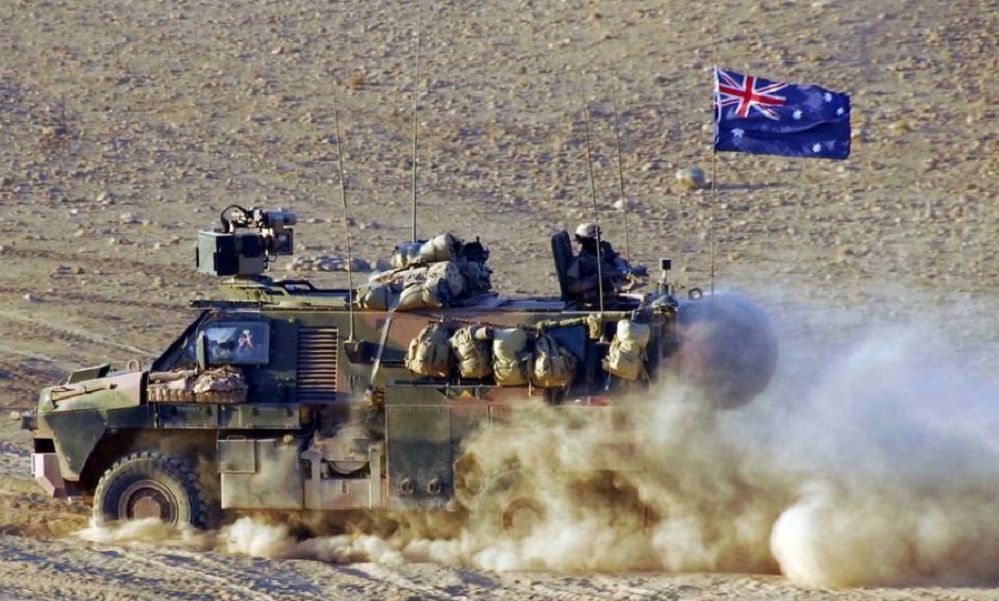
A group of UN experts on Wednesday called on Australia to immediately fulfil its commitment to compensate the families of 39 murdered victims of war crimes committed by the Australian military in Afghanistan.
In 2020, a military inquiry found that Australian soldiers killed 39 unarmed prisoners in Afghanistan, when deployed in the NATO-led mission. Some victims were tortured before being killed.
“Australia has a duty to compensate victims of summary executions and torture under international human rights law and international humanitarian law,” the experts said. “It is unconscionable that families of deceased victims such as Mr. Nazar Gul, Mr. Yaro Mama Faqir and Mr. Ali Jan, all murdered in 2012, have been left destitute in the harsh living conditions of rural Afghanistan for over a decade.” Gul had three wives and 17 children depending on him.
The experts acknowledged that the Australian government is making genuine, albeit slow, efforts to criminally investigate and prosecute the perpetrators and has pledged to compensate the victims.
“The inquiry established that compensation is owed to the victims and their families and as such, it is unacceptable that compensation has still not been paid almost four years since the Australian Government agreed to pay, and 12 years since some murders occurred,” they said.
In July 2024, Australia finally adopted regulations to enable compensation. However, Australia approaches compensation as a form of charity at the discretion of its military, not as a legal right of victims under international law.
“The scheme fails to provide an enforceable right to compensation, there are no clear and human rights-consistent criteria as to the grounds and amount of compensation, due process and judicial safeguards are inadequate, and there is no requirement to provide information to or consult with the victims,” the experts said.
In addition to compensation, international law requires Australia to provide measures of rehabilitation including medical and psychological care, legal assistance and educational or other support to the victims’ families, including their children, spouses, and other family members recognized under Afghan law. Full recovery and rehabilitation may also require acknowledgement of the truth, apologies, and public commemoration of the victims.
“Regrettably, Australia has not directly apologised to the victims and their families or informed them about its investigations, prosecutions or military reforms, and has not yet enabled their families to participate in Australian proceedings”, they said. “The Australian War Memorial even publicly recognizes one person found responsible for murders in a civil case as a war hero, ignoring and degrading the victims.”
The experts acknowledged the challenges of paying compensation given the political and security environment in Afghanistan and the lack of diplomatic relations with the Islamic Emirate. “However, there are feasible solutions available to facilitate compensation. We offer our assistance to that end,” they said.
The experts also urged other states who fought in Afghanistan to thoroughly review their own activities, especially any allegations of war crimes, with a view to ensuring criminal accountability and reparations.
Related stories:
Australia announces compensation plan for Afghan war crime victims
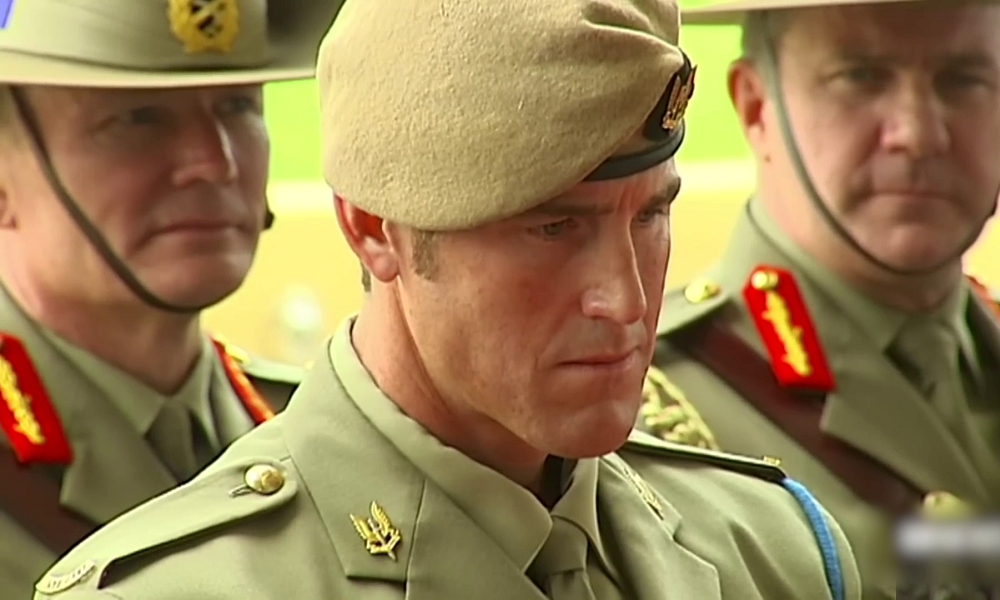
Australian who blew whistle on alleged war crimes in Afghanistan pleads guilty




Latest News
UN envoy urges progress on women’s rights during Afghanistan visit
She also reaffirmed the UN’s readiness to support Afghans returning from neighboring countries.
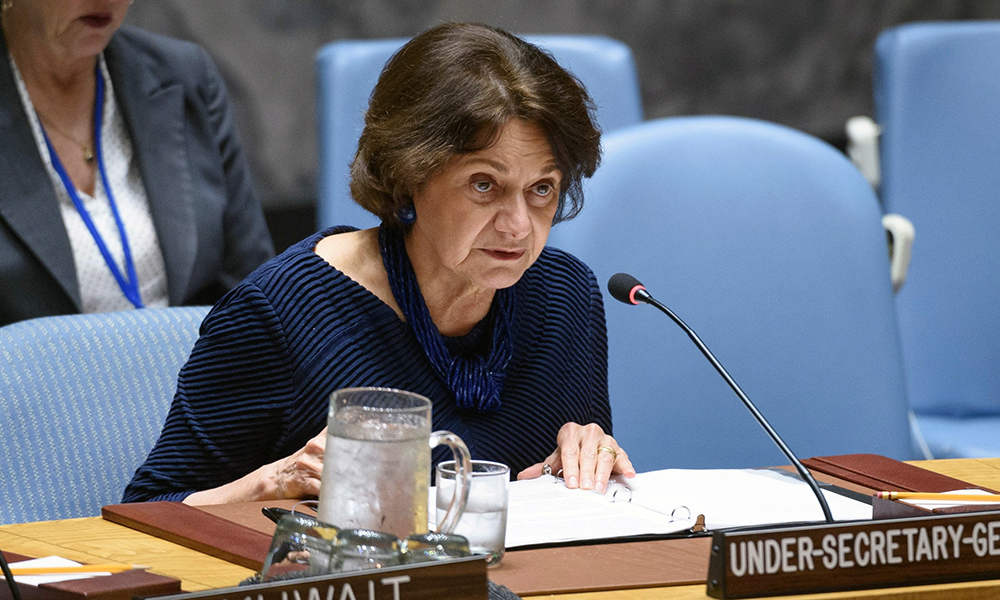
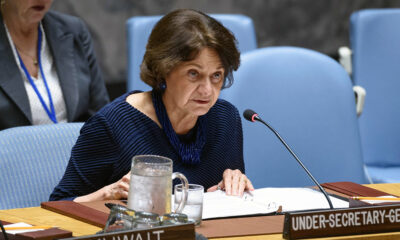
United Nations Under-Secretary-General for Political and Peacebuilding Affairs Rosemary DiCarlo concluded her visit to Afghanistan on Sunday after holding meetings with the Islamic Emirate authorities, civil society representatives, women leaders and Afghan female UN personnel.
During meetings with the IEA, DiCarlo reaffirmed the UN’s commitment to advancing the Doha process and noted progress made by its two working groups on counter-narcotics and the private sector.
She stressed the importance of turning dialogue into practical results for the Afghan people, while both sides reaffirmed their commitment to continued engagement.
DiCarlo also conveyed concerns raised by UN member states over the situation of women and girls, particularly restrictions on girls’ access to education.
She said progress on women’s and girls’ rights would contribute to Afghanistan’s development and also raised concerns over restrictions affecting Afghan female UN personnel.
The UN official highlighted the challenges facing Afghanistan, including economic and social pressures, climate change and natural disasters.
She also reaffirmed the UN’s readiness to support Afghans returning from neighboring countries.
During meetings with civil society representatives and women leaders, DiCarlo recognized their important contributions to communities across Afghanistan.
Latest News
Muttaqi, Lavrov discuss expanding Afghanistan-Russia ties
The two sides also discussed regional stability, counter-narcotics efforts and security issues, with Russia acknowledging Afghanistan’s efforts in these areas.
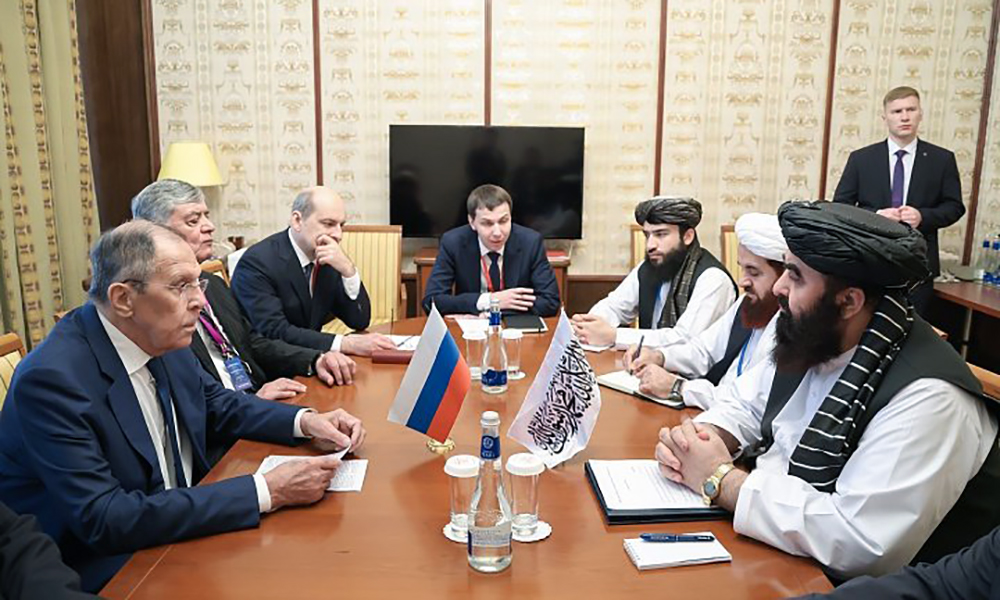
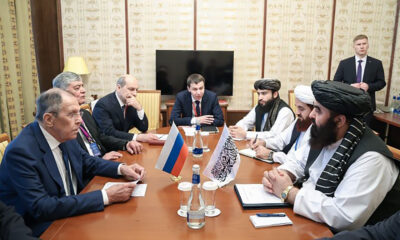
Afghanistan’s Foreign Minister Amir Khan Muttaqi met with Russian Foreign Minister Sergey Lavrov in Moscow to discuss bilateral relations, economic and trade cooperation, regional developments and continued political consultations.
According to Afghanistan’s Ministry of Foreign Affairs, Muttaqi called for deeper political understanding between the two countries and greater cooperation in trade, transit and economic affairs.
He stressed Afghanistan’s interest in developing long-term and mutually beneficial relations with Russia.
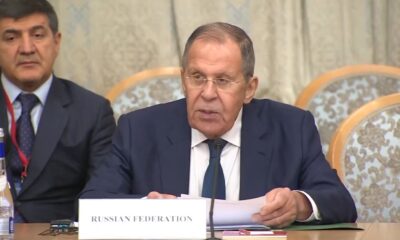
Lavrov emphasized the importance of continued political consultations and expressed Moscow’s interest in further expanding economic and trade ties with Afghanistan.
The two sides also discussed regional stability, counter-narcotics efforts and security issues, with Russia acknowledging Afghanistan’s efforts in these areas.
Latest News
Afghan FM says issues with Pakistan can be resolved through dialogue and diplomacy
Muttaqi further said the Islamic Emirate would continue to formulate its foreign policy independently and would not abandon its core policies under external pressure.
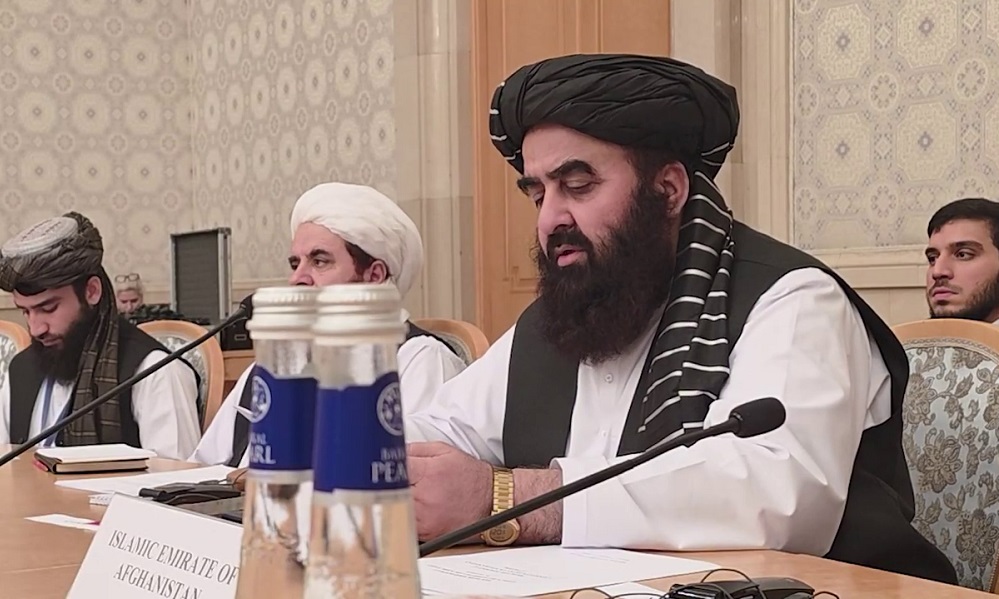
Afghanistan’s Foreign Minister Amir Khan Muttaqi has said all security, political and economic disputes between Afghanistan and Pakistan can be resolved through dialogue and diplomacy.
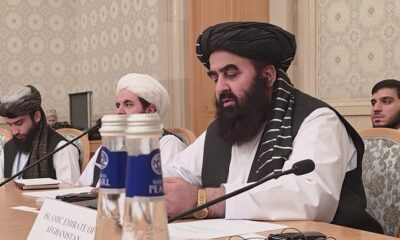
Speaking at the Moscow Format meeting on Monday, Muttaqi said Kabul does not want its relations with Islamabad to descend into mutual accusations and propaganda, stressing that Afghanistan’s objective is to resolve existing problems rather than prolong them.
“Our fundamental position is that the existing problems between Afghanistan and Pakistan, whether security, political or economic, can be resolved through dialogue and diplomacy,” he said.
Muttaqi criticized the Pakistani government for what he described as its approach of using “military language” instead of political engagement in dealing with Afghanistan.
He accused Pakistan of violating Afghanistan’s sovereignty through military actions in recent years and said civilians were killed in recent attacks in Kunar, Helmand and Paktika provinces.
The Afghan foreign minister also called for greater regional cooperation on security, countering Daesh, combating narcotics and preventing smuggling. He said Afghanistan was ready to work with neighboring and regional countries to strengthen border security and jointly combat organized crime.
Muttaqi further said the Islamic Emirate would continue to formulate its foreign policy independently and would not abandon its core policies under external pressure.
“Afghanistan considers self-defense against any aggression its inalienable right,” he said.
Turning to economic issues, Muttaqi urged regional countries to expand trade and investment ties with Afghanistan. He said Kabul wants Afghanistan to become a hub for regional cooperation and connectivity


Omar Zawak beat Ariana FC 2-0 in Afghanistan Champions League clash

UN envoy urges progress on women’s rights during Afghanistan visit

Muttaqi, Lavrov discuss expanding Afghanistan-Russia ties

ACL: Abu Muslim Farah maintain momentum with 2-0 win over Arman FC

Tahawol: Afghanistan-Iran: shared opportunities and challenges discussed

Saudi energy group signs major Afghanistan deals covering gas exploration and pipeline plans

Khalilzad: Afghanistan ready to attract major investment

Messi returns to Inter Miami after Argentina retirement

Imam Abu Hanifa exhibition to draw exhibitors from more than 20 countries

Maryam Nawaz says Punjab faces greater security threats from neighbouring provinces
Tahawol: Afghanistan-Iran: shared opportunities and challenges discussed

Saar: Pakistan’s hostile policy toward Afghanistan discussed

Tahawol: Doha process seeks new cooperation opportunities

Saar: Moscow forum 8th consultative meeting on Afghanistan

Tahawol: Escalation of internal political crisis in Pakistan discussed
-
 Latest News5 days ago
Four members of one family killed in Helmand in Pakistan airstrike
-
 Sport4 days ago
ACB announces Afghanistan squads for Bangladesh, Zimbabwe series
-
 Latest News5 days ago
Moscow to host 8th meeting of Afghanistan consultations on October 5
-
 Latest News4 days ago
Russia expects to ease Afghanistan-Pakistan tensions at Moscow Format meeting
-

 Sport5 days ago
Rashid Khan, Azmatullah Omarzai maintain top spots in ICC ODI rankings
-
 International Sports4 days ago
Afghanistan to face Pakistan, India and Australia at 2027 Cricket World Cup
-
 Regional4 days ago
Saudi-led coalition says Houthis attacked power station for Prophet’s Mosque in Medina
-
 Regional4 days ago
Cargo stacks up as Pakistan seizes containers to block capital routes