
Latest News
UN rights office urges Pakistan to halt Afghan deportations

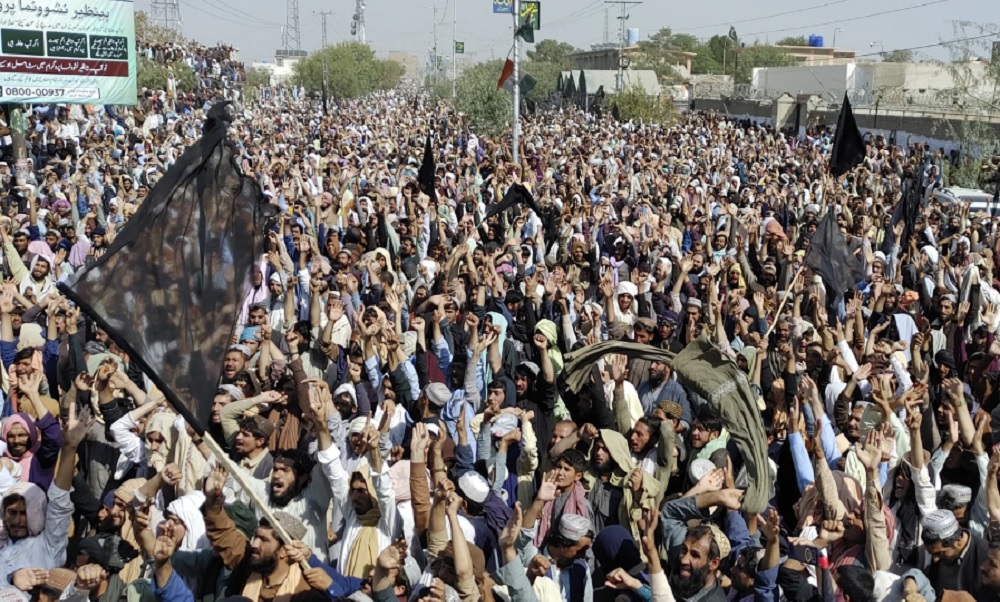
As November 1 deadline approaches, the Office of the United Nations High Commissioner for Human Rights (OHCHR) on Friday called on the Pakistani government to “suspend forcible returns of Afghan nationals before it is too late to avoid a human rights catastrophe”.
“We call on them to continue providing protection to those in need and ensure that any future returns are safe, dignified and voluntary, and fully consistent with international law,” OHCHR spokesperson Ravina Shamdasani said in a statement.
“We believe many of those facing deportation will be at grave risk of human rights violations if returned to Afghanistan, including arbitrary arrest and detention, torture, cruel and other inhuman treatment, spokesperson said.
She said, “We are extremely alarmed by Pakistan’s announcement that it plans to deport ‘undocumented’ foreign nationals remaining in the country after Nov 1, a measure that will disproportionately impact more than 1.4 million undocumented Afghans who remain in Pakistan.”
There are more than two million undocumented Afghans living in Pakistan, with at least 600,000 of them leaving Afghanistan after the Islamic Emirate of Afghanistan (IEA) takeover in August 2021.
“Those at particular risk are civil society activists, journalists, human rights defenders, former government officials and security force members, and of course women and girls as a whole, who, as a result of the abhorrent policies currently in place in Afghanistan, are banned from secondary and tertiary education, working in many sectors and other aspects of daily and public life,” she said.
The UN refugee agency, UNHCR, and the International Organisation for Migration (IOM) have already documented a sharp increase in returns to Afghanistan since the deadline was announced on Oct 3. A recent flash report by UNHCR and IOM placed the number of Afghans who left Pakistan in the month up to Oct 15 at 59,780 individuals.
Seventy-eight per cent of those returning cited the fear of arrest as the reason for leaving Pakistan.
The spokesperson stated that deportations without individualised determinations of personal circumstances, including any mass deportations, would amount to refoulement in violation of international human rights law, in particular the convention against torture and other cruel, inhuman or degrading treatment or punishment, to which Pakistan is a state party, and of international refugee law.
And as winter approaches, any mass deportations are bound to deepen the dire humanitarian crisis in Afghanistan, as it grapples with the devastating impact of a series of earthquakes that struck Herat province this month, leaving at least 1,400 people dead and 1,800 injured, as per official figures, spokesperson said.
According to the United Nations Office for the Coordination of Humanitarian Affairs, close to 30 million people currently need relief assistance in Afghanistan, out of a population of 43 million, and 3.3 million are internally displaced.
“We remind the de facto authorities of the international human rights obligations that continue to bind Afghanistan as a state and their obligations to protect, promote and fulfil human rights.” OHCHR spokesperson said.

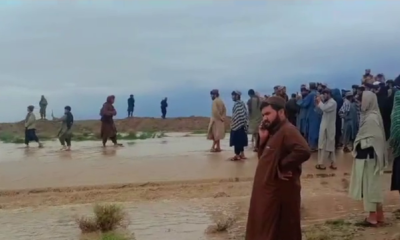




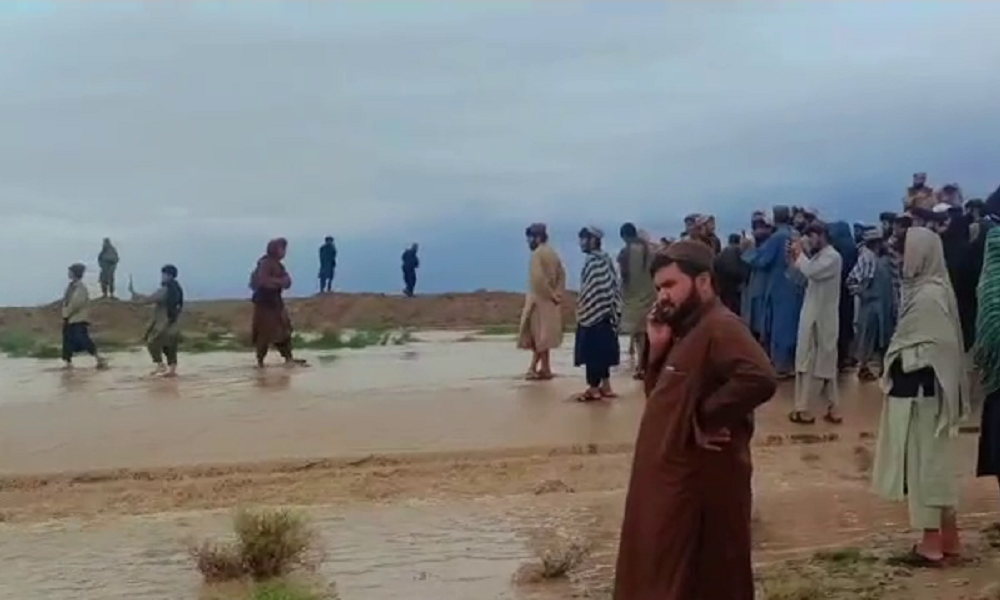
Local officials in Badghis have reported that heavy rainfall from midnight until Saturday morning claimed the lives of five people in the province.
According to officials, three people died in Qadis district, while two others, including a three-year-old child, lost their lives in Dara-e-Bum district.
The Badghis Department for Disaster Management stated that the floods not only caused fatalities but also inflicted significant financial losses on local residents and destroyed agricultural land.
However, complete information on the extent of damage and casualties is not yet available. Staff from various government departments have been dispatched to affected areas to conduct preliminary surveys.
Meanwhile, heavy rains and floods in western Afghanistan temporarily blocked the Herat–Kandahar Highway.
According to Mohammad Israil Sayar, head of the Disaster Management Department in Farah province, recent rainfall has caused the Farah River to swell significantly. He added that the situation has now returned to normal, and traffic along the highway has resumed.
Latest News
Fazlur Rehman urges policy review on Afghanistan, warns of Pakistan’s regional isolation
Rehman further warned that Pakistan’s relations with India, Iran, and Afghanistan are under strain, while several regional states are strengthening partnerships with India.
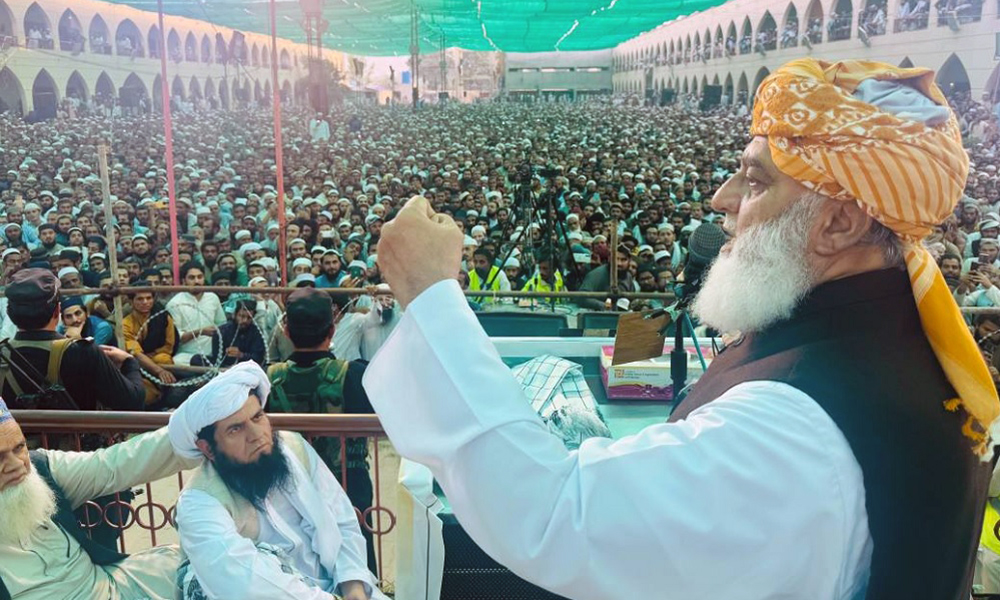
Maulana Fazlur Rehman, the leader of Pakistan’s Jamiat Ulema-e-Islam (JUI-F), has called on the Pakistani government to reassess its Afghanistan policy, warning that the country risks increasing diplomatic isolation across the region.
Addressing a ceremony organized by JUI-F leader Kafeel Nizami, Rehman criticized what he described as contradictory state narratives toward Afghanistan. He questioned why bilateral relations have failed to improve despite more than seven decades of engagement.
“We must reflect on whether all the mistakes lie on Afghanistan’s side,” he said, urging policymakers to abandon efforts aimed at maintaining influence over Kabul. He emphasized that a stable and sovereign Afghanistan would better serve regional peace and long-term strategic interests.
The JUI-F chief also cautioned against repeated attempts at regime change, arguing that such approaches have historically deepened instability. He linked past conflicts and interventionist policies to ongoing regional tensions.
Criticizing United States foreign policy, Rehman described Washington’s approach as inconsistent, saying it shifts positions depending on circumstances. He urged Pakistan to avoid entanglement in great-power rivalries and instead pursue an independent, sovereignty-driven diplomatic strategy.
Rehman further warned that Pakistan’s relations with India, Iran, and Afghanistan are under strain, while several regional states are strengthening partnerships with India.
He concluded by calling for a unified national foreign policy, stressing the need for collective decision-making among political stakeholders rather than reliance on a single party’s approach.
Latest News
US regime change efforts in Afghanistan ended in failure, says Merz
The Chancellor pointed out that, in his view, the only successful regime change in recent decades occurred in Panama.

German Chancellor Friedrich Merz has criticized the United States’ efforts at regime change in countries like Afghanistan, describing them as largely unsuccessful.
Speaking at a forum in Frankfurt on Friday, organized by the FAZ newspaper, Merz questioned the effectiveness of regime change as a strategy. “Is regime change really the goal?” he asked, adding that such efforts have “mostly gone wrong” in past conflicts, particularly the war in Afghanistan.
Merz expressed significant doubts about the existence of a coherent and successful strategy for regime change, remarking, “I have serious doubts as to whether there is a strategy and whether that strategy is being successfully implemented.” He warned that without a clear plan, such efforts could take even longer to achieve, if at all.
The Chancellor pointed out that, in his view, the only successful regime change in recent decades occurred in Panama. In contrast, Merz stated that most other attempts, including in Afghanistan, have failed to deliver the intended outcomes.
His comments come amid widespread domestic and international criticism of the U.S. military presence and withdrawal from Afghanistan, following nearly two decades of conflict that culminated in the Islamic Emirate’s return to power.


Severe floods in Badghis leave five dead

13 mountaineers in Balkh summit Alborz at 1,650 meters

Fazlur Rehman urges policy review on Afghanistan, warns of Pakistan’s regional isolation

US regime change efforts in Afghanistan ended in failure, says Merz

Afghan defense forces stand ready to protect national sovereignty: MoD

Pakistani military jet downed in Afghanistan’s Jalalabad, pilot captured alive

Afghan Air Force conducts airstrikes in Islamabad, other cities

Prominent Muslim scholar issues fatwa calling for Afghanistan-Pakistan ceasefire

Afghan air force strikes key Pakistani military installations in retaliatory operation

IEA: Special circle in Pakistan has launched mission to destabilize region

Exclusive interview with Indrika Ratwatte, Deputy UN Special Representative for Afghanistan

Tawsia: Efforts to boost Afghanistan’s domestic production and economic diplomacy

Tahawol: Discussion on day 27 of Iran–US war

Saar: Islamic Emirate confident of Durand Line control

Tahawol: Efforts to release Mohammad Rahim from Guantanamo Bay Detention Camp
-
 Latest News2 days ago
Tajikistan shifts stance on Afghanistan amid rising border tensions
-
 Latest News4 days ago
Around 2.3 million tourists visited Afghanistan’s recreational areas during Eid: Ghufran
-

 Sport4 days ago
Afghanistan squad hit by withdrawals ahead of AFC Asian Cup Qualifiers
-
 Latest News4 days ago
Islamic Emirate releases American prisoner Dennis Coyle
-
 Latest News3 days ago
Two civilians killed, eight injured in fresh shelling by Pakistan in Kunar
-
 Regional4 days ago
US allies in Middle East ‘edging closer’ to joining conflict
-
 Latest News5 days ago
Airstrike on Kabul drug rehabilitation centre sparks legal concerns
-
 Regional4 days ago
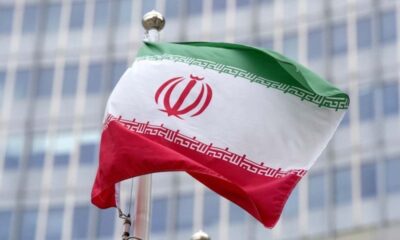
Tehran rejects Trump’s claims of talks, accuses US of spreading ‘fake news’