
Latest News
UN Special Rapporteurs urge Pakistan to stop planned mass deportation of Afghans

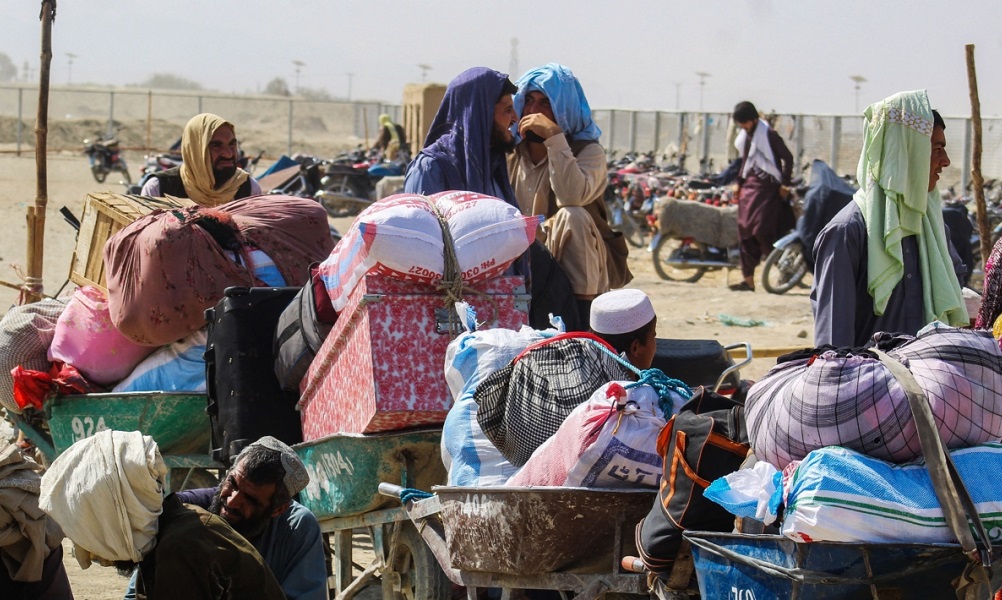
Pakistan should immediately cancel plans to deport 1.4 million Afghan nationals back to their country, UN experts said on Tuesday.
The government of Pakistan, which has hosted millions of Afghans for decades, recently announced that all “undocumented” foreign nationals must leave the country by 1 November or face deportation to their countries of origin.
The UN said these plans would impact in particular over 1.4 million Afghan nationals, including many who fled to Pakistan seeking safety and protection due to serious human rights concerns and a humanitarian crisis in Afghanistan.
“We urge Pakistan to uphold the absolute and non-derogable principle of non-refoulement and prevent collective expulsion and forced return,” the experts said.
“The lack of domestic asylum laws and procedures does not absolve States of their obligations to uphold the principle of non-refoulement under international human rights and customary law,” they said. The prohibition of refoulement is explicitly included in the Convention against Torture and Other Cruel, Inhuman or Degrading Treatment or Punishment, to which Pakistan is a State party.
A group of UN experts urged Pakistan to halt deportations of Afghan nationals following the Islamic Emirate takeover, until the circumstances and human rights situation in Afghanistan allow for safe and dignified returns in a letter dated 23 December 2021.
“Pakistan should stop all forced returns and continue to host Afghan nationals who fled for safety,” the experts said. “The government must also ensure their full access to procedures where their individual human rights protection needs and their need for effective protection in line with international human rights and refugee standards, are fully assessed,” they said.
“We are also concerned by reports that Afghans living in Pakistan have been subjected to arrests, exploitation and undignified treatment, including since Pakistan announced its repatriation plans.”
“Priority should be given to those with heightened protection needs; Afghan women, girls, the elderly, as well as former Afghan government officials and security personnel, human rights defenders, other civil society activists and media workers who may have a well-founded fear of persecution based on gender, religious, or ethnic grounds deserve particular attention,” they said.
“We appreciate Pakistan’s hosting of Afghan nationals over many years, noting that they also make a positive contribution to Pakistan, and request the international community and Member States to continue to facilitate the safe resettlement of Afghans at risk in other countries, and ensure their protection.”
The experts urged Pakistan to continue its collaboration with relevant UN entities to ensure protection for those seeking safety in the country.








Latest News
Afghan defense forces stand ready to protect national sovereignty: MoD
Sediqullah Nasrat, deputy spokesperson for the Ministry, released a video message stressing that Afghan forces stationed in the eastern zone are steadfast in their positions, remaining vigilant to defend the nation’s sovereignty against any external threats.
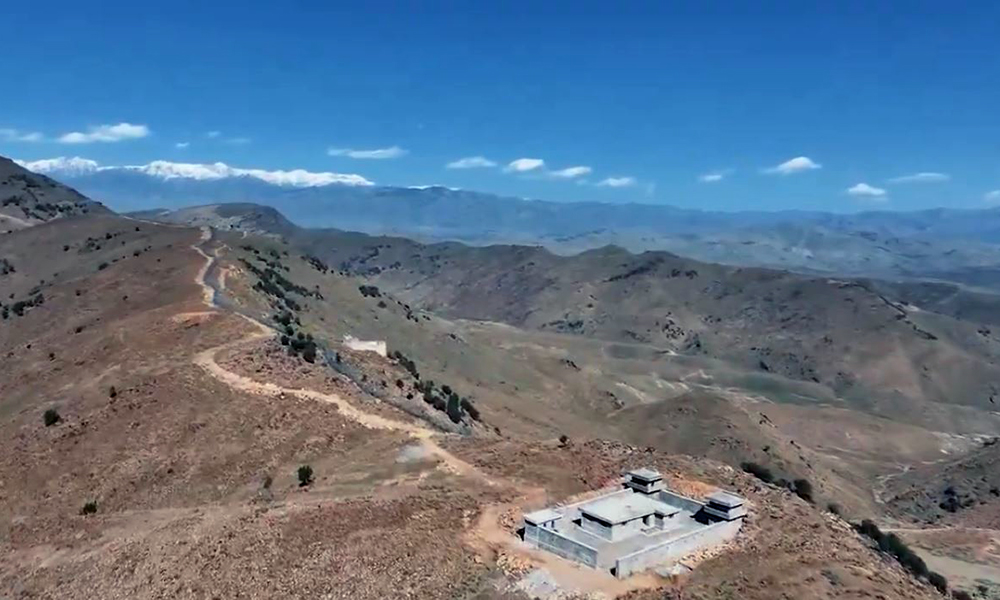
The Ministry of Defense of Afghanistan has reassured the nation that its defense forces are fully prepared to address any security threats along the country’s borders.
Enayatullah Khwarizmi, spokesperson for the Ministry of National Defense of the Islamic Emirate of Afghanistan, made a firm statement asserting that the protection of Afghanistan’s independence and national security is a fundamental responsibility for all members of the Afghan armed forces. He emphasized that this commitment is both a religious and patriotic duty.
In addition, Sediqullah Nasrat, deputy spokesperson for the Ministry, released a video message stressing that Afghan forces stationed in the eastern zone are steadfast in their positions, remaining vigilant to defend the nation’s sovereignty against any external threats. Nasrat further highlighted that the defense forces are leveraging all available resources to ensure the safety, security, and stability of Afghanistan, underscoring their unwavering dedication to serving the Afghan people.
The statements come at a time of heightened regional tensions, as Afghanistan continues to focus on safeguarding its borders and strengthening its defense capabilities.
Latest News
Amnesty International urges IEA to end education ban for girls
In a statement, the human rights organization called on the Islamic Emirate of Afghanistan to ensure that girls can safely return to schools and universities.

Amnesty International has raised serious concerns over the ongoing exclusion of Afghan girls from education, noting that with the start of the new academic year, girls above the sixth grade, including university students, remain barred from schools and higher education.
The South Asia office of Amnesty International highlighted that Afghan girls have been denied access to formal education for over four years, depriving a generation of young women of critical learning opportunities.
In a statement, the human rights organization called on the Islamic Emirate of Afghanistan to ensure that girls can safely return to schools and universities.
Amnesty International warned that continuing restrictions on girls’ education will have severe long-term consequences on the development of the country and the future of its youth.
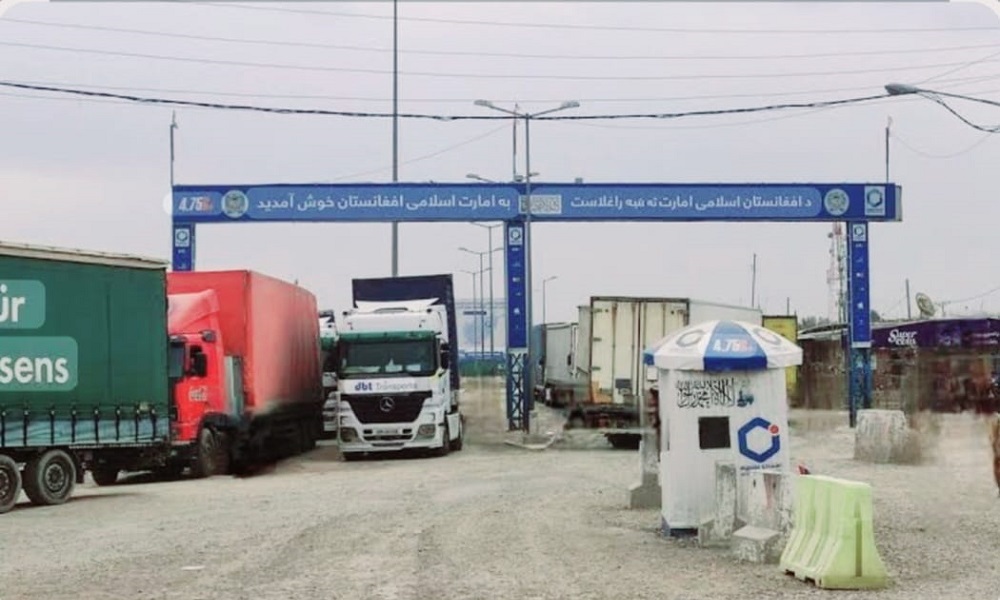
Mohammad Yousuf Saeedi, spokesperson for the governor of Herat, announced on Friday that Iranian cargo truck drivers will no longer need visas to enter Afghanistan.
Saeedi said that, by order of the leader of the Islamic Emirate, starting Saturday, Iranian transit vehicles will be allowed to enter Afghanistan without a visa or a “road pass.”
According to him, the implementation of this decision will reduce transportation costs and, as a result, lower the prices of goods.
Noor Ahmad Islamjar, the governor of Herat, visited the Islam Qala border crossing on Friday to review the implementation of this order. During the visit, he discussed the details of executing the plan with officials from relevant departments, including representatives from the Ministry of Foreign Affairs, Public Works, Customs, and Transport.
Starting Saturday (March 28), foreign cargo vehicles are expected to enter the Islam Qala border without the need for a visa or road pass, unload their goods, and then return to their destinations.
The statement added that implementing this plan could reduce transportation fares on one hand and, by lowering transport costs, help decrease the prices of goods on the other.
This process will create daily job opportunities for more than 1,000 people.


Afghan defense forces stand ready to protect national sovereignty: MoD

G7 foreign ministers demand an end to attacks on civilians in Iran war

Amnesty International urges IEA to end education ban for girls

Twelve US troops wounded in Iran strike on base in Saudi Arabia, US official says

Exclusive interview with Indrika Ratwatte, Deputy UN Special Representative for Afghanistan

Pakistani military jet downed in Afghanistan’s Jalalabad, pilot captured alive

Afghan Air Force conducts airstrikes in Islamabad, other cities

Prominent Muslim scholar issues fatwa calling for Afghanistan-Pakistan ceasefire

Afghan air force strikes key Pakistani military installations in retaliatory operation

IEA: Special circle in Pakistan has launched mission to destabilize region
Exclusive interview with Indrika Ratwatte, Deputy UN Special Representative for Afghanistan

Tawsia: Efforts to boost Afghanistan’s domestic production and economic diplomacy

Tahawol: Discussion on day 27 of Iran–US war

Saar: Islamic Emirate confident of Durand Line control

Tahawol: Efforts to release Mohammad Rahim from Guantanamo Bay Detention Camp
-
 Latest News2 days ago
Tajikistan shifts stance on Afghanistan amid rising border tensions
-
 Latest News4 days ago
Around 2.3 million tourists visited Afghanistan’s recreational areas during Eid: Ghufran
-

 Sport4 days ago
Afghanistan squad hit by withdrawals ahead of AFC Asian Cup Qualifiers
-
 Latest News4 days ago
Islamic Emirate releases American prisoner Dennis Coyle
-
 Latest News3 days ago
Two civilians killed, eight injured in fresh shelling by Pakistan in Kunar
-
 Regional4 days ago
US allies in Middle East ‘edging closer’ to joining conflict
-
 Latest News5 days ago
Airstrike on Kabul drug rehabilitation centre sparks legal concerns
-
 Regional4 days ago
Tehran rejects Trump’s claims of talks, accuses US of spreading ‘fake news’