
Climate Change
UN urges aid to Myanmar quake survivors before monsoons hit, death toll climbs towards 3,000
Aid groups in Myanmar warned that the window to find survivors was closing fast.


United Nations officials who surveyed earthquake damage in Myanmar urged the global community on Tuesday to ramp up aid before the looming monsoon season worsens already catastrophic conditions, with the death toll at 2,719 and expected to surpass 3,000.
Drinking water, hygiene, food, shelter and medicine are the most critical needs following extensive damage to buildings, roads and bridges, said Marcoluigi Corsi, acting humanitarian and resident coordinator following a two-day visit.
“We remain, of course, deeply committed to reaching people in Myanmar who need aid,” U.N. spokesperson Stephane Dujarric said. “And we must act swiftly to provide relief before the upcoming monsoon season, which, of course, will even worsen this horrendous crisis.”
A civil war in Myanmar had displaced more than 3 million people long before the quake struck. U.N. Special Envoy for Myanmar Julie Bishop urged all sides to immediately cease fire, permit humanitarian access and ensure aid workers are safe.
“Continuing military operations in disaster-affected areas risks further loss of life,” she said in the statement.
Aid groups in Myanmar warned that the window to find survivors was closing fast.
Myanmar’s military ruler Min Aung Hlaing said the death toll from Friday’s 7.7 magnitude quake reached 2,719 as of Tuesday morning and was expected to surpass 3,000. Some 4,521 people were injured and 441 missing.
“Among the missing, most are assumed to be dead. There is a narrow chance for them to remain alive,” he said in a speech.
The quake, which struck at lunchtime on Friday, was the strongest to hit the Southeast Asian country in more than a century. It toppled ancient pagodas and modern buildings alike and inflicted significant damage on Myanmar’s second city Mandalay and Naypyitaw, the capital the previous junta purpose-built to be an impregnable fortress.
U.N. agencies said hospitals were overwhelmed and rescue efforts hindered by infrastructure damage and the civil war. Rebels have accused the military of conducting airstrikes even after the quake and on Tuesday a major rebel alliance declared a unilateral ceasefire to help relief efforts.
The earthquake was the latest in a succession of blows for the impoverished country of 53 million people following a 2021 coup that returned the military to power and devastated the economy after a decade of development and tentative democracy.
Myanmar’s military has been accused of widespread atrocities against civilians as it fought to quell a multi-pronged rebellion after the coup. It has dismissed the accusations as misinformation and says it is protecting the country from terrorists.
In neighbouring Thailand, the death toll from the quake rose to 21 on Tuesday, with hundreds of buildings damaged. Rescuers kept searching for life in the rubble of a collapsed skyscraper under construction in the capital Bangkok, but acknowledged time was against them.
The region has been hit by five more aftershocks.
Julia Rees of the U.N. children’s agency UNICEF said she witnessed entire communities in Myanmar that had been flattened, with immense destruction and psychological trauma.
“And yet, this crisis is still unfolding. The tremors are continuing. Search and rescue operations are ongoing. Bodies are still being pulled from the rubble,” she said in a statement.
“Let me be clear: the needs are massive, and they are rising by the hour. The window for life-saving response is closing.”
In the Mandalay area, 50 children and two teachers were killed when their preschool collapsed, the U.N. humanitarian agency said.
In a rare survival story, a 63-year-old woman who was trapped for 91 hours was pulled from the rubble of a building in Naypyitaw on Tuesday in a joint rescue effort by the Myanmar fire department and teams from India, China and Russia.
Myanmar’s civil war has complicated efforts to reach those injured and made homeless, including tight controls over the internet and communication networks.
The Three Brotherhood Alliance of three major rebel groups at war with the junta on Tuesday declared a unilateral one-month ceasefire, to allow urgent humanitarian efforts to “be carried out as swiftly and effectively as possible”.
In its nightly news bulletin on Tuesday, state-controlled MRTV quoted Min Aung Hlaing as saying the military had halted its offensives but unspecified ethnic minority armies were planning to exploit the disaster.
“The military is aware they are gathering, training, and preparing to attack,” it said, quoting the general as saying at an event to raise funds for quake victims. “We consider it as attacking us and will respond accordingly.”
One rebel group, the Karen National Union, on Sunday said the junta had conducted airstrikes in the east of the country at a time when it should be prioritising quake relief efforts.
Amnesty International said it had received testimony corroborating reports of air strikes near areas where quake recovery efforts were focused.
“You cannot ask for aid with one hand and bomb with the other,” said Amnesty’s Myanmar researcher Joe Freeman.
It was unclear if Min Aung Hlaing would make a rare foreign trip this week to attend a regional summit in Bangkok as planned. Thailand’s on Tuesday said the general may attend by teleconference.
In Bangkok, rescuers were still seeking signs of life in the ruins of an unfinished skyscraper that collapsed, aware that four days after the quake, chances had dimmed of finding survivors.
Fourteen deaths have been confirmed at the site and seven elsewhere in the city. The government is investigating the collapse and initial tests showed some steel samples from the site were substandard.
There were an estimated 70 bodies under the rubble and experts said 12 had been located using scanners, but access was blocked by large debris.
“Maybe they can survive one week or two weeks, so we have to go on,” Bangkok Governor Chadchart Sittipunt said. “The experts still have hope.”











Japan and the UN Office for Project Services (UNOPS) have signed a $9.4 million grant agreement aimed at strengthening climate adaptation and disaster preparedness in Afghanistan.
The agreement, valued at 1.474 billion Japanese yen ($9.4 million) was signed by UNOPS Afghanistan Country Director Katy Ann Webley and Japan International Cooperation Agency (JICA) Afghanistan Chief Representative Sota Tosaka.
The project will be implemented in Kabul province and focuses on improving the capacity of local communities to cope with climate-related disasters.
Using a community-led approach, the programme will support the construction of infrastructure designed to reduce the impact of floods, droughts and other climate risks, alongside training to improve emergency preparedness and response.
Over the next 24 months, UNOPS will carry out activities aimed at enhancing climate risk awareness, strengthening local resilience and protecting livelihoods vulnerable to the effects of climate change.
Climate Change
Winter storm disrupts US travel, triggers thousands of flight cancellations
The disruptions followed a chaotic Sunday, when about 11,000 flights were scrapped—the highest daily total since the COVID-19 pandemic
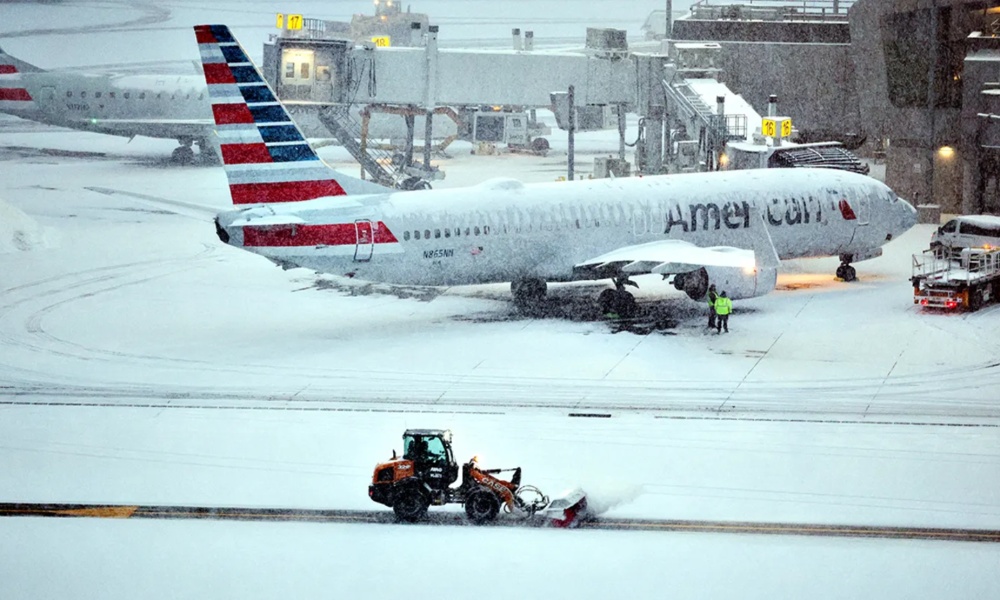
A powerful winter storm sweeping across the United States brought air travel to a near standstill on Monday, forcing airlines to cancel and delay thousands of flights as freezing rain and heavy snowfall battered large parts of the country.
By late afternoon, nearly 19% of scheduled flights had been canceled, according to aviation analytics firm Cirium. Separate data from FlightAware showed around 5,220 U.S. flights were canceled and more than 6,500 delayed by early evening.
The disruptions followed a chaotic Sunday, when about 11,000 flights were scrapped—the highest daily total since the COVID-19 pandemic, Cirium said.
The massive storm dumped up to a foot of snow from New Mexico to New England, paralyzing much of the eastern United States and contributing to at least 18 deaths. Extreme cold is expected to linger in some areas through the week.
American Airlines accounted for the largest share of disruptions on Monday, canceling nearly 1,180 flights and delaying about 1,130, followed by Republic Airways, JetBlue Airways, and Delta Air Lines.
In an advisory, the Federal Aviation Administration (FAA) warned that snow, freezing rain, and low visibility were affecting major hubs, including Boston and the New York metropolitan area. Boston Logan International Airport recorded the highest cancellation rate at 71%, according to Cirium.
American Airlines said the storm disrupted operations at five of its nine hub airports, including its largest base at Dallas–Fort Worth, where freezing temperatures and ice grounded flights.
The carrier requested FAA-approved ground stops for all its flights at Dallas–Fort Worth and Ronald Reagan Washington National Airport to manage gate capacity constraints.
The airline said teams were working around the clock to restore operations, as frustrated passengers flooded social media with requests for updates and assistance.
United Airlines said it had begun restoring flights, with cancellations dropping sharply from 1,019 on Sunday to 320 by Monday evening, FlightAware data showed.
The storm is on track to become the costliest severe weather event since the Los Angeles-area wildfires in early 2025, with preliminary damage and economic losses estimated between $105 billion and $115 billion, according to AccuWeather.
Airline operations remain vulnerable due to the interconnected nature of flight schedules, where cancellations can leave aircraft and crews out of position, slowing recovery efforts. Already, about 285 flights scheduled for Tuesday have been canceled, FlightAware data showed.
Climate Change
FAO warns of dry winter, low snowfall and rising food insecurity risks in Afghanistan
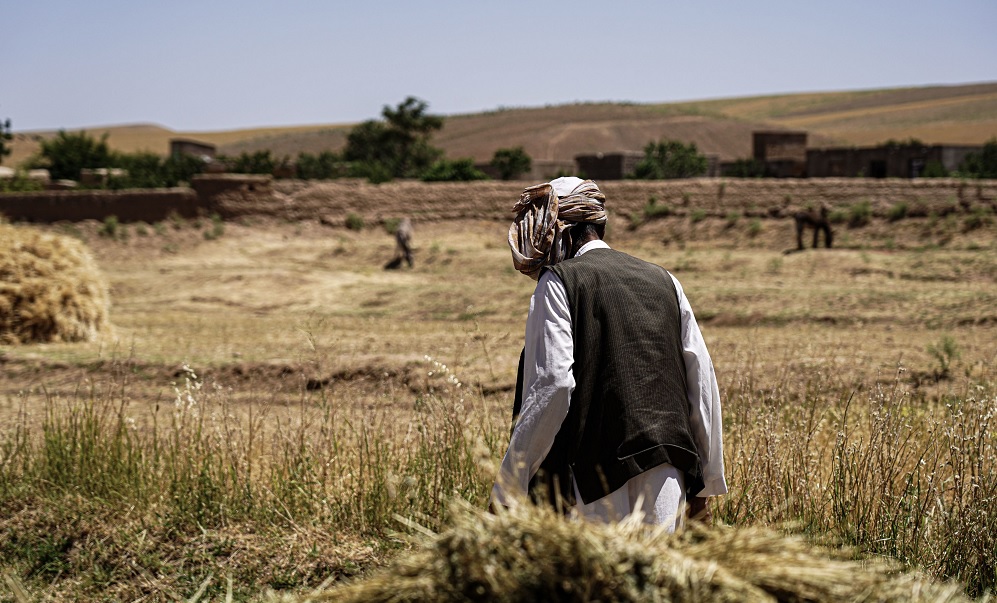
The Food and Agriculture Organization of the United Nations (FAO) has warned that Afghanistan is likely to face a drier and warmer-than-average winter, raising serious concerns about water availability, agricultural production and food security.
In its Seasonal Climate Outlook for December 2025 to February 2026, FAO said a weak La Niña pattern is driving below-average precipitation and above-average temperatures across most parts of the country. The report notes that the 2025/26 wet season has already begun drier and warmer than normal, with widespread soil moisture deficits persisting for another consecutive year
According to FAO, snow accumulation remains exceptionally low, with snow-water-equivalent levels at their lowest point in the past 25 years. This poses a critical hydrological risk, particularly for irrigated wheat-growing areas that depend on snowmelt-fed river systems. Even if precipitation improves later in winter, early deficits are unlikely to be fully offset, the report said
The outlook projects that December, January and February will all carry an elevated risk of below-normal rainfall, especially in northern, northeastern, western and central highland regions. Warmer daytime temperatures combined with cold nights are also expected to increase stress on crops, livestock and vulnerable communities
FAO warned that continued dryness could delay planting and weaken crop establishment for rain-fed winter wheat and barley, potentially reducing yields for the 2026 harvest. In irrigated areas, low snowpack threatens spring water supplies, increasing competition for water and reliance on already stressed groundwater resources.
Rangeland and pasture conditions are also expected to deteriorate, with delayed green-up likely to force herders to depend longer on stored fodder. This could lead to declining livestock health, reduced milk production and increased risk of animal losses toward late winter and early spring, the report said.
FAO and partner assessments caution that consecutive seasons of insufficient rainfall and high temperatures have already weakened agricultural systems and could leave millions of people facing acute food insecurity between late 2025 and early 2026
The UN agency emphasized the need for close monitoring of precipitation, snowpack and crop conditions, calling for timely agricultural support, improved water management and early anticipatory action to mitigate the impacts of the unfolding climate risks.


Tahawol: Tajikistan’s expanding relations with Afghanistan reviewed

Saar: Criticism of Pakistan’s policies on Afghanistan discussed

Ministries of Public Health and Higher Education sign cooperation agreement

UNAMA holds new round of Working Group meetings on counter-narcotics and private sector

Economic Commission approves national policy for development of agriculture

Afghanistan–China joint market opens in Kabul

Pakistan approves re-export of stranded Afghan transit trade cargo

Pakistan army orders evacuation of Tirah Valley, fears of mass displacement grow

Afghan traders sign deal to import pharmaceuticals from Bangladesh

Uzbekistan pushes forward with Trans-Afghan railway project
Tahawol: Tajikistan’s expanding relations with Afghanistan reviewed
Saar: Criticism of Pakistan’s policies on Afghanistan discussed

Tahawol: Pakistan’s Foreign Policy Failure of Towards Afghanistan discussed

Saar: Regional Problems, Opportunities, and Challenges discussed

Saar: Afghanistan’s relations and opportunities with regional countries
-

 Latest News3 days ago
Afghanistan to grant one- to ten-year residency to foreign investors
-

 Sport5 days ago
Indonesia shock Japan to reach historic AFC Futsal Asian Cup final
-

 Sport3 days ago
Iran clinch AFC Futsal Asian Cup 2026 in penalty shootout thriller
-
 Latest News4 days ago
Afghanistan says Pakistan is shifting blame for its own security failures
-

 International Sports2 days ago
Winter Olympics gain momentum as medal table takes shape
-

 Latest News4 days ago
Traffic police receive new cars
-

 Regional4 days ago
Iran’s FM calls Oman-mediated talks with US ‘good start’
-

 Latest News3 days ago
Tajik foreign minister urges international community to help Afghanistan address its challenges