
Latest News
UN warns Afghanistan economy in ‘freefall’

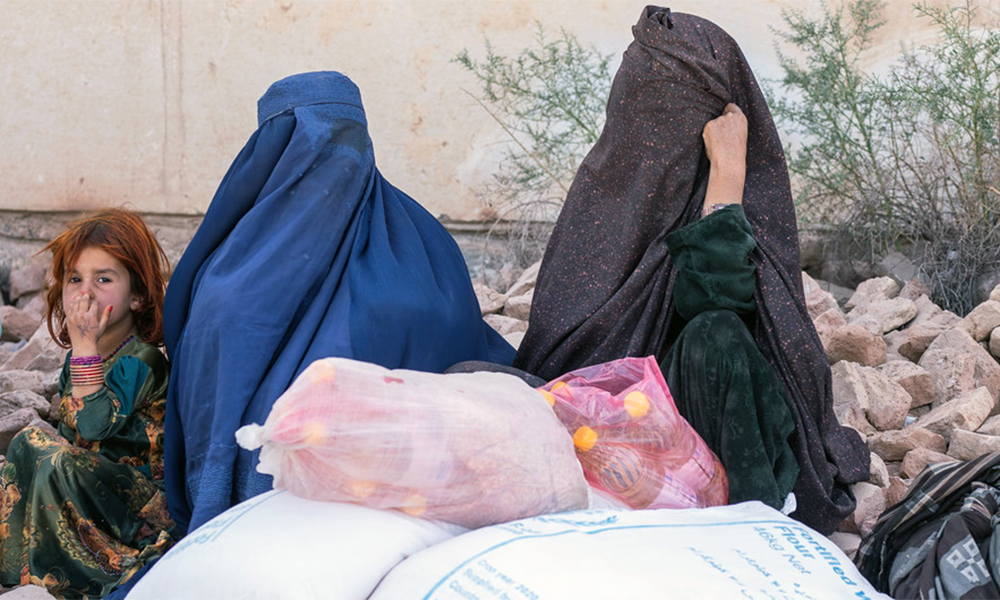
Under-Secretary-General for the UN’s Humanitarian Affairs Martin Griffiths painted a grim picture on Sunday of 23 million people facing hunger; malnourished children overflowing in health facilities; 70 percent of teachers working without salaries; and millions of students – Afghanistan’s future – out of school.
Speaking virtually to the 17th Extraordinary Session of the Organization of Islamic Cooperation (OIC) Council of Foreign Ministers in Islamabad, Pakistan, Griffiths said the crisis is unfolding as the value of the Afghani currency plummets, a lack of confidence in the financial sector destroys trade and the space for borrowing and investment dramatically constricts.
“The need for liquidity and stabilization of the banking system is now urgent – not only to save the lives of the Afghan people but also to enable humanitarian organizations to respond”, he said.
Griffiths also welcomed the decision by the World Bank’s Afghanistan Reconstruction Trust Fund to transfer $280 million by the end of December to the UN Children’s Fund (UNICEF) and the World Food Programme (WFP).
“This step should be followed by reprogramming of the whole fund to support the Afghan people this winter”, he said.
“Families simply do not have the cash for everyday transactions, while prices for key commodities continue to rise”.
The cost of wheat and fuel are up by around 40 percent and food now accounts for more than 80 percent of the average household expenditure.
And as international development support has frozen up, basic social services that all Afghans depend on are collapsing.
Griffiths cautioned that by the middle of next year, universal poverty – reaching 97 percent of the population – could be “the next grim milestone”.
“Within a year, 30 percent of Afghanistan’s gross domestic product could be lost altogether, while male unemployment may double to 29 percent”, he spelled out.
The OIC met on Sunday to express their willingness to help avert disaster and contribute to the humanitarian endeavor.
Griffiths meanwhile also said that next year, the UN would seek its largest-ever funding appeal of $4.5 billion “to help the most vulnerable in Afghanistan”.
The plan is a stopgap measure for over 21 million people who need lifesaving assistance and must be funded as “a matter of priority”, he said.
“The crisis is huge. Our humanitarian response is effective and continues to scale up, thanks to generous donor support and your sustained engagement”, he stated.
Griffiths also said that Afghanistan will not get through the winter on emergency aid alone and stressed the need for “flexible donor funding” that can be used to ensure salaries for public sector workers and support to basic services, such as health, education, electricity and livelihood.
He said going forward, continued constructive engagement with the Islamic Emirate of Afghanistan (IEA) authorities was imperative to “clarify what we expect of each other”.
“The consequences of inaction on these three fronts are clear: Afghanistan will collapse, people will run out of hope, and the region – and indeed the world – will see destabilization increase”, he underscored.
Noting that the OIC meeting was being held at “a moment of exceptional gravity for the people of Afghanistan”, Griffiths pointed out that “we have the advantage of being forewarned of the fate that awaits them if we do not act”.
Acknowledging that the meeting has provided both a chance and an opportunity to do so, he warned that “if we do not act with urgency and with a collective will, then there will be a terrible reckoning”.
“We cannot fail to do what we know is right, and what we know is possible”, concluded the Emergency Coordinator.




Latest News
Fazlur Rehman urges policy review on Afghanistan, warns of Pakistan’s regional isolation
Rehman further warned that Pakistan’s relations with India, Iran, and Afghanistan are under strain, while several regional states are strengthening partnerships with India.
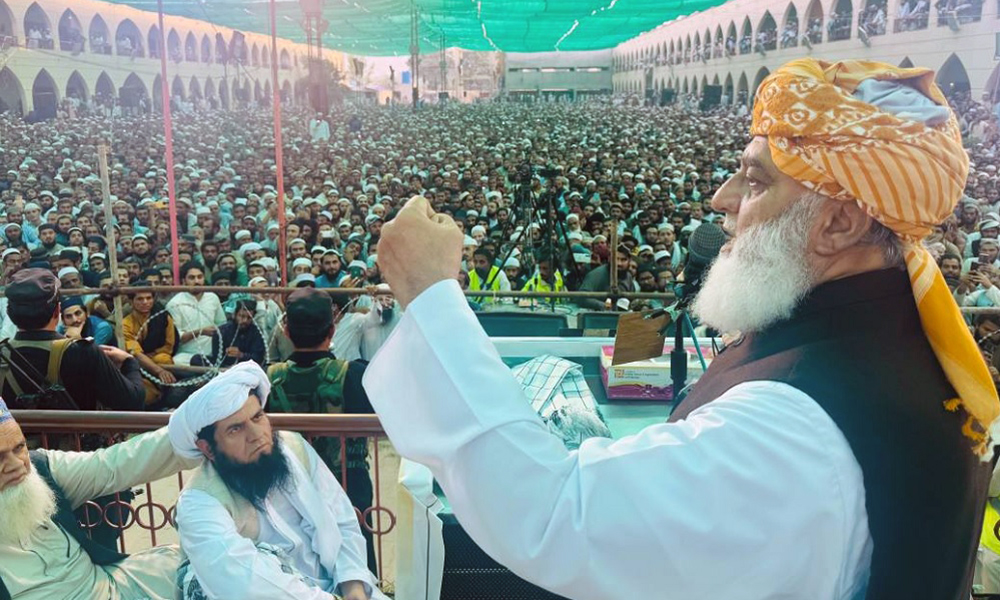
Maulana Fazlur Rehman, the leader of Pakistan’s Jamiat Ulema-e-Islam (JUI-F), has called on the Pakistani government to reassess its Afghanistan policy, warning that the country risks increasing diplomatic isolation across the region.
Addressing a ceremony organized by JUI-F leader Kafeel Nizami, Rehman criticized what he described as contradictory state narratives toward Afghanistan. He questioned why bilateral relations have failed to improve despite more than seven decades of engagement.
“We must reflect on whether all the mistakes lie on Afghanistan’s side,” he said, urging policymakers to abandon efforts aimed at maintaining influence over Kabul. He emphasized that a stable and sovereign Afghanistan would better serve regional peace and long-term strategic interests.
The JUI-F chief also cautioned against repeated attempts at regime change, arguing that such approaches have historically deepened instability. He linked past conflicts and interventionist policies to ongoing regional tensions.
Criticizing United States foreign policy, Rehman described Washington’s approach as inconsistent, saying it shifts positions depending on circumstances. He urged Pakistan to avoid entanglement in great-power rivalries and instead pursue an independent, sovereignty-driven diplomatic strategy.
Rehman further warned that Pakistan’s relations with India, Iran, and Afghanistan are under strain, while several regional states are strengthening partnerships with India.
He concluded by calling for a unified national foreign policy, stressing the need for collective decision-making among political stakeholders rather than reliance on a single party’s approach.
Latest News
US regime change efforts in Afghanistan ended in failure, says Merz
The Chancellor pointed out that, in his view, the only successful regime change in recent decades occurred in Panama.

German Chancellor Friedrich Merz has criticized the United States’ efforts at regime change in countries like Afghanistan, describing them as largely unsuccessful.
Speaking at a forum in Frankfurt on Friday, organized by the FAZ newspaper, Merz questioned the effectiveness of regime change as a strategy. “Is regime change really the goal?” he asked, adding that such efforts have “mostly gone wrong” in past conflicts, particularly the war in Afghanistan.
Merz expressed significant doubts about the existence of a coherent and successful strategy for regime change, remarking, “I have serious doubts as to whether there is a strategy and whether that strategy is being successfully implemented.” He warned that without a clear plan, such efforts could take even longer to achieve, if at all.
The Chancellor pointed out that, in his view, the only successful regime change in recent decades occurred in Panama. In contrast, Merz stated that most other attempts, including in Afghanistan, have failed to deliver the intended outcomes.
His comments come amid widespread domestic and international criticism of the U.S. military presence and withdrawal from Afghanistan, following nearly two decades of conflict that culminated in the Islamic Emirate’s return to power.
Latest News
Afghan defense forces stand ready to protect national sovereignty: MoD
Sediqullah Nasrat, deputy spokesperson for the Ministry, released a video message stressing that Afghan forces stationed in the eastern zone are steadfast in their positions, remaining vigilant to defend the nation’s sovereignty against any external threats.
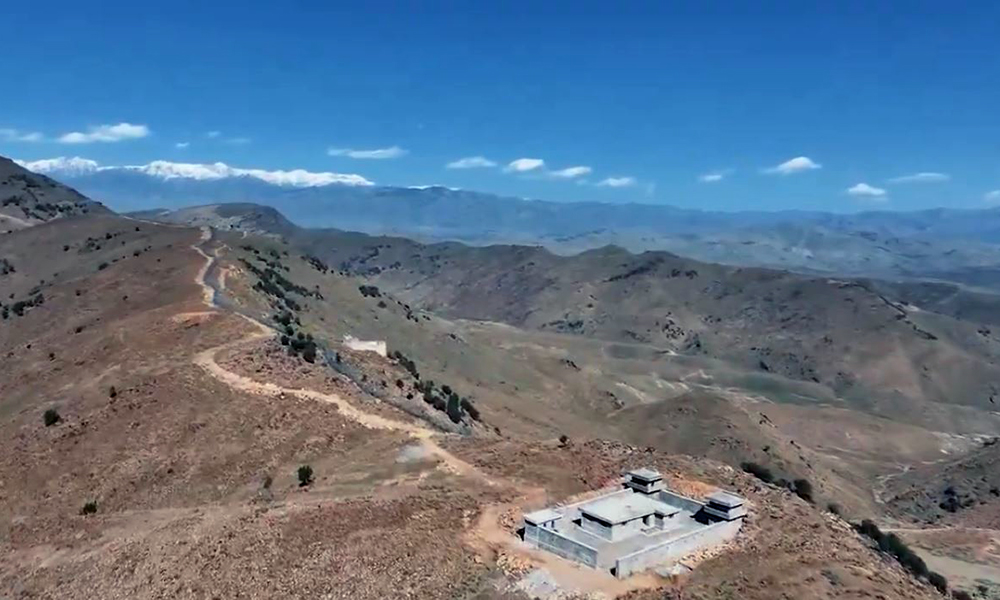
The Ministry of Defense of Afghanistan has reassured the nation that its defense forces are fully prepared to address any security threats along the country’s borders.
Enayatullah Khwarizmi, spokesperson for the Ministry of National Defense of the Islamic Emirate of Afghanistan, made a firm statement asserting that the protection of Afghanistan’s independence and national security is a fundamental responsibility for all members of the Afghan armed forces. He emphasized that this commitment is both a religious and patriotic duty.
In addition, Sediqullah Nasrat, deputy spokesperson for the Ministry, released a video message stressing that Afghan forces stationed in the eastern zone are steadfast in their positions, remaining vigilant to defend the nation’s sovereignty against any external threats. Nasrat further highlighted that the defense forces are leveraging all available resources to ensure the safety, security, and stability of Afghanistan, underscoring their unwavering dedication to serving the Afghan people.
The statements come at a time of heightened regional tensions, as Afghanistan continues to focus on safeguarding its borders and strengthening its defense capabilities.


13 mountaineers in Balkh summit Alborz at 1,650 meters

Fazlur Rehman urges policy review on Afghanistan, warns of Pakistan’s regional isolation

US regime change efforts in Afghanistan ended in failure, says Merz

Afghan defense forces stand ready to protect national sovereignty: MoD

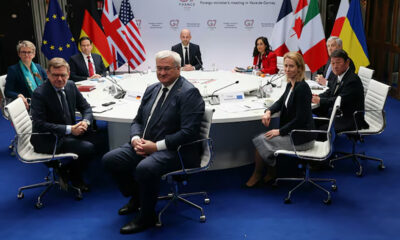
G7 foreign ministers demand an end to attacks on civilians in Iran war

Pakistani military jet downed in Afghanistan’s Jalalabad, pilot captured alive

Afghan Air Force conducts airstrikes in Islamabad, other cities

Prominent Muslim scholar issues fatwa calling for Afghanistan-Pakistan ceasefire

Afghan air force strikes key Pakistani military installations in retaliatory operation

IEA: Special circle in Pakistan has launched mission to destabilize region

Exclusive interview with Indrika Ratwatte, Deputy UN Special Representative for Afghanistan

Tawsia: Efforts to boost Afghanistan’s domestic production and economic diplomacy

Tahawol: Discussion on day 27 of Iran–US war

Saar: Islamic Emirate confident of Durand Line control

Tahawol: Efforts to release Mohammad Rahim from Guantanamo Bay Detention Camp
-
 Latest News2 days ago
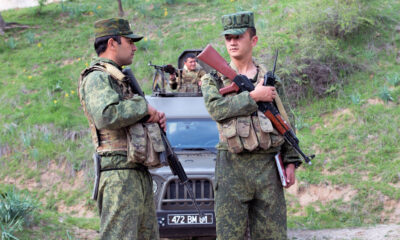
Tajikistan shifts stance on Afghanistan amid rising border tensions
-
 Latest News4 days ago
Around 2.3 million tourists visited Afghanistan’s recreational areas during Eid: Ghufran
-

 Sport4 days ago
Afghanistan squad hit by withdrawals ahead of AFC Asian Cup Qualifiers
-
 Latest News4 days ago
Islamic Emirate releases American prisoner Dennis Coyle
-
 Latest News3 days ago
Two civilians killed, eight injured in fresh shelling by Pakistan in Kunar
-
 Regional4 days ago
US allies in Middle East ‘edging closer’ to joining conflict
-
 Latest News5 days ago
Airstrike on Kabul drug rehabilitation centre sparks legal concerns
-
 Regional4 days ago
Tehran rejects Trump’s claims of talks, accuses US of spreading ‘fake news’