
Latest News
UNHCR calls for more aid for forcibly displaced in Afghanistan

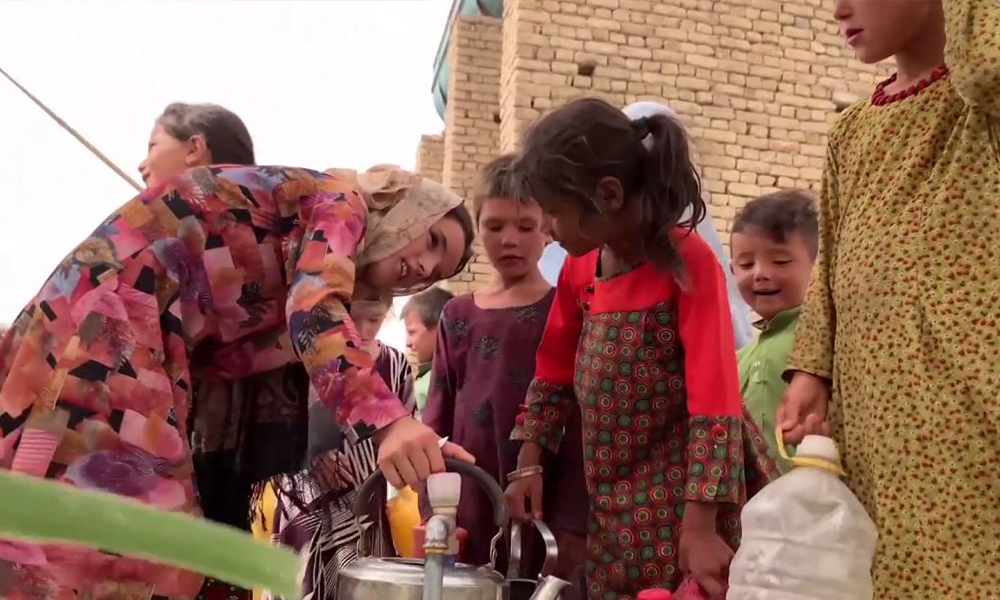
UNHCR, the UN Refugee Agency, has appealed for much more support amid acute and rising humanitarian needs for 3.5 million people displaced by conflict inside Afghanistan – including 700,000 who were displaced in 2021.
In a statement released on Friday, UNHCR said that the forcibly displaced are facing a lack of insulated shelters, warm clothes, insufficient fuel for heating, and inadequate amounts of food and medical supplies as temperatures begin to plunge below freezing.
“The humanitarian crisis is escalating daily in Afghanistan. Hunger in the country has reached truly unprecedented levels. Nearly 23 million people – that’s 55 percent of the population – are facing extreme levels of hunger, and nearly 9 million of them are at risk of famine,” the statement read.
The organization emphasized that providing food supplies is an “immediate priority” to help avoid widespread starvation in the country.
“This year, UNHCR has assisted some 700,000 displaced people across the country the majority since mid-August. The race is on to reach more. Currently, we are able to reach nearly 60,000 people every week.”
“Further resources are urgently needed for the most vulnerable -single mothers with no shelter or food for their children, older persons who have been displaced are left to take care of orphaned grandchildren, and those taking care of loved ones with special needs.”
UNHCR has been bringing in relief supplies by road through Afghanistan’s neighboring countries and through humanitarian airlifts.
The organization noted that five more flights carrying UNHCR winter supplies from its global stockpiles in Amman are scheduled next week.
“UNHCR support will continue throughout the cold season until February 2022 to help forcibly displaced families cope with the extreme conditions. The response includes core relief items, such as thermal blankets and warm winter clothing. Shelters are being repaired and reinforced, while people are also being provided plastic sheeting and insulation materials to help weather-proof their shelters,” the statement said.
The organization added that vulnerable families are also being provided with cash assistance to meet additional needs during the coldest months, such as fuel for heating.
“Further support is urgently needed for UNHCR to continue delivering lifesaving aid this winter as we head into the coldest weeks of the season. UNHCR’s funding needs for the Afghanistan Situation in 2022 – including continued winter response – amount to US$374.9 million,” the statement concluded.






International Sports
Mumbai Indians outclass KKR in high-scoring IPL thriller
Mumbai chased down a daunting target with six wickets to spare, thanks to outstanding batting performances from Ryan Rickelton and Rohit Sharma, who dominated the chase and thrilled the home crowd.

The 2026 Indian Premier League (IPL) produced a thrilling contest on Sunday, March 29, as Mumbai Indians (MI) defeated Kolkata Knight Riders (KKR) in a high-scoring encounter at Mumbai’s Wankhede Stadium.
Mumbai chased down a daunting target with six wickets to spare, thanks to outstanding batting performances from Ryan Rickelton and Rohit Sharma, who dominated the chase and thrilled the home crowd.
Despite KKR posting a massive total, Mumbai’s batting lineup showed composure and attacking intent to seal one of the most entertaining matches of the early IPL season.
The tournament continues today, March 30, with another exciting fixture as Rajasthan Royals (RR) take on Chennai Super Kings (CSK).
The match is expected to draw huge attention, with both teams featuring star-studded lineups and looking to build early momentum in the competition.
Fans in Afghanistan can watch every match of the tournament live as Ariana Radio and Television Network (ATN) holds exclusive broadcast rights for the IPL in the country.
Cricket lovers can follow Ariana Television and Ariana News social media pages for live coverage, highlights, and the latest updates throughout the tournament.
Latest News
Pakistan shelling in Afghanistan’s Kunar leaves civilian casualties, says IEA
Earlier this month, Afghanistan said that a Pakistani airstrike had hit a drug treatment hospital in Kabul, killing more than 400 people.
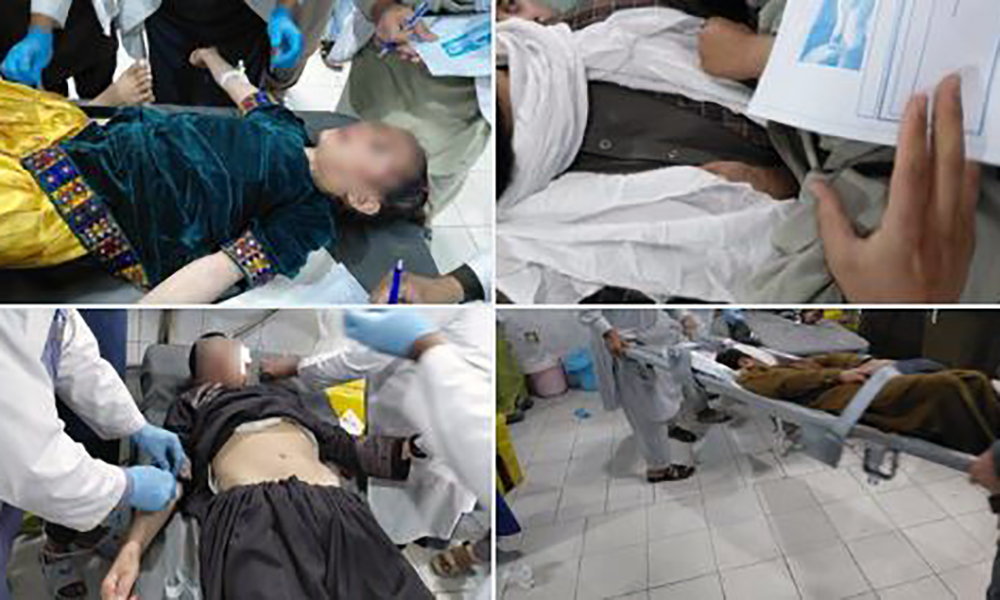
The Deputy Spokesman of the Islamic Emirate of Afghanistan, Hamdullah Fitrat, says Pakistani forces carried out heavy shelling on civilian areas in eastern Afghanistan, leaving several residents injured and one person dead.
In a statement issued on Sunday, Fitrat said that members of the Pakistani military regime fired mortars and other heavy weapons at around 5 pm on rural areas and residential neighborhoods on the outskirts of Asadabad, the provincial capital of Kunar Province.
According to him, the attacks targeted villages and civilian homes, resulting in casualties among local residents. Preliminary reports indicate that at least 16 people were injured—most of them women and children—while one person was killed in the incident.
“Once again, the militias of the Pakistani military regime conducted shelling on rural areas and civilian residences located on the outskirts of Asadabad using mortars and other heavy weaponry,” Fitrat stated.
Local sources say the shelling created panic among residents in surrounding communities, forcing some families to leave their homes due to fears of further attacks. Authorities say investigations are ongoing to determine the full extent of the damage and casualties.
Earlier this month, Afghanistan said that a Pakistani airstrike had hit a drug treatment hospital in Kabul, killing more than 400 people.
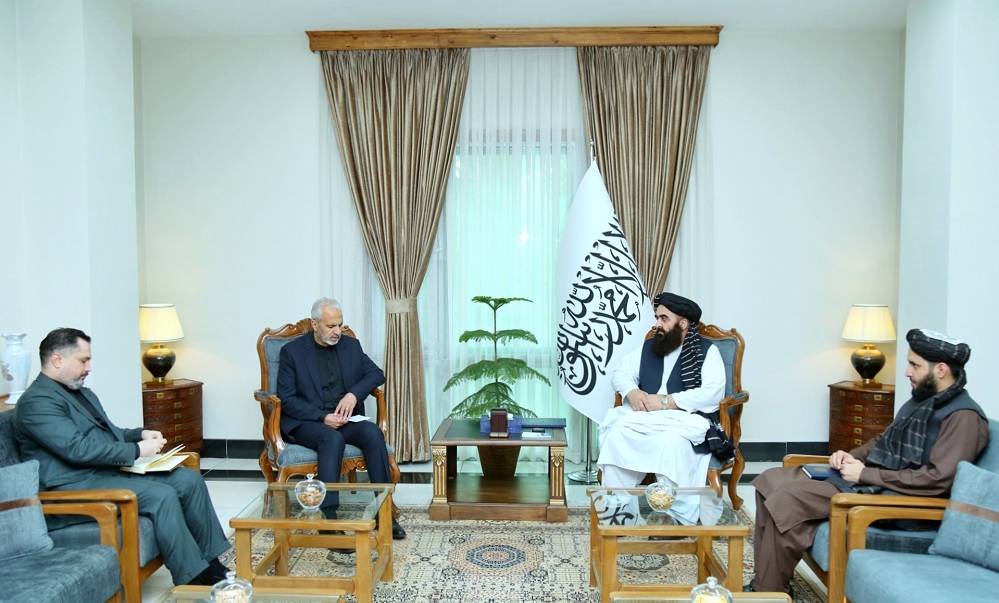
Amir Khan Muttaqi, Foreign Minister of the Islamic Emirate of Afghanistan, met with Ali-Reza Beikdeli, Iran’s acting ambassador in Kabul, to discuss bilateral relations and regional developments.
According to a statement from the Afghan Ministry of Foreign Affairs, Muttaqi criticized what he called the “aggression” of the United States and Israel against Iran, warning that the expansion of conflict to other countries affects the entire region.
He also highlighted the growing trade relations between Afghanistan and Iran, describing them as a positive sign of cooperation. In addition, Muttaqi praised the “constructive stance” of Iranian officials regarding recent tensions between Afghanistan and Pakistan, emphasizing that the resolution of legitimate concerns from both sides is only possible through genuine dialogue.
Beikdeli reaffirmed Iran’s position on U.S. and Israeli actions and described bilateral cooperation with Afghanistan—particularly in trade—as positive. He added that Iran’s leadership is closely monitoring the situation between Afghanistan and Pakistan and supports a peaceful resolution.


Mumbai Indians outclass KKR in high-scoring IPL thriller

Pakistan shelling in Afghanistan’s Kunar leaves civilian casualties, says IEA

Pakistan hosts regional powers for Iran talks, with focus on Hormuz proposals

Tahawol: Efforts for Kabul-Islamabad de-escalation

Saar: Restrictions on girls’ education in Afghanistan discussed

Prominent Muslim scholar issues fatwa calling for Afghanistan-Pakistan ceasefire

Afghan air force strikes key Pakistani military installations in retaliatory operation

IEA Supreme Leader issues Eid-ul-Fitr message urging unity and support for Islamic system

14 Pakistani soldiers killed after military post falls along Durand line: MoD

Ronaldo’s private jet flies out of Saudi Arabia following US Embassy drone strike in Riyadh
Tahawol: Efforts for Kabul-Islamabad de-escalation
Saar: Restrictions on girls’ education in Afghanistan discussed

Tahawol: Concerns over spread of Middle East crisis discussed

Saar: Weakening relations between Kabul and Washington discussed

Exclusive interview with Indrika Ratwatte, Deputy UN Special Representative for Afghanistan
-
 Latest News4 days ago
Tajikistan shifts stance on Afghanistan amid rising border tensions
-

 Latest News3 days ago
Russia deems US military presence in Afghanistan unacceptable
-
 Latest News3 days ago
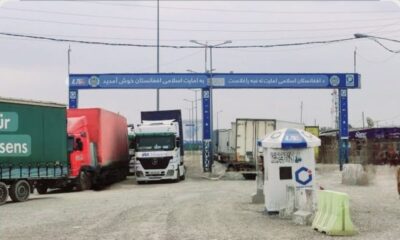
IEA says Iranian drivers no longer need visas to enter Afghanistan
-
 Latest News5 days ago
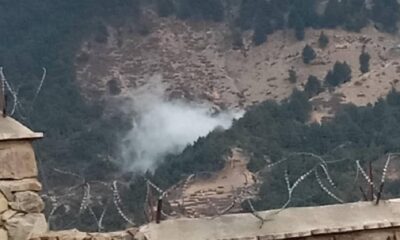
Two civilians killed, eight injured in fresh shelling by Pakistan in Kunar
-

 Sport4 days ago
Myanmar trump Afghanistan 2-1 in Asian Cup Qualifier
-
 Latest News2 days ago
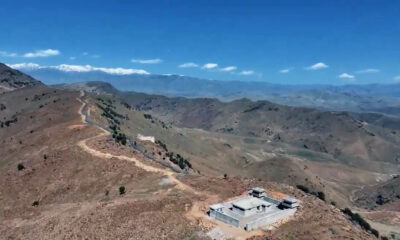
Afghan defense forces stand ready to protect national sovereignty: MoD
-

 Sport4 days ago
Afghanistan to face Myanmar in crucial AFC clash
-
 Latest News4 days ago
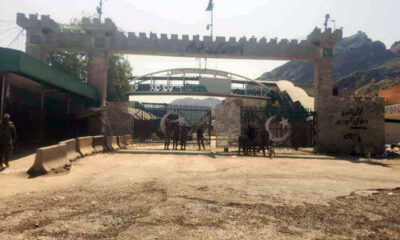
Torkham crossing reopens for returning Afghan migrants