
World
35 killed in Gaza, 5 in Israel, as violence escalates

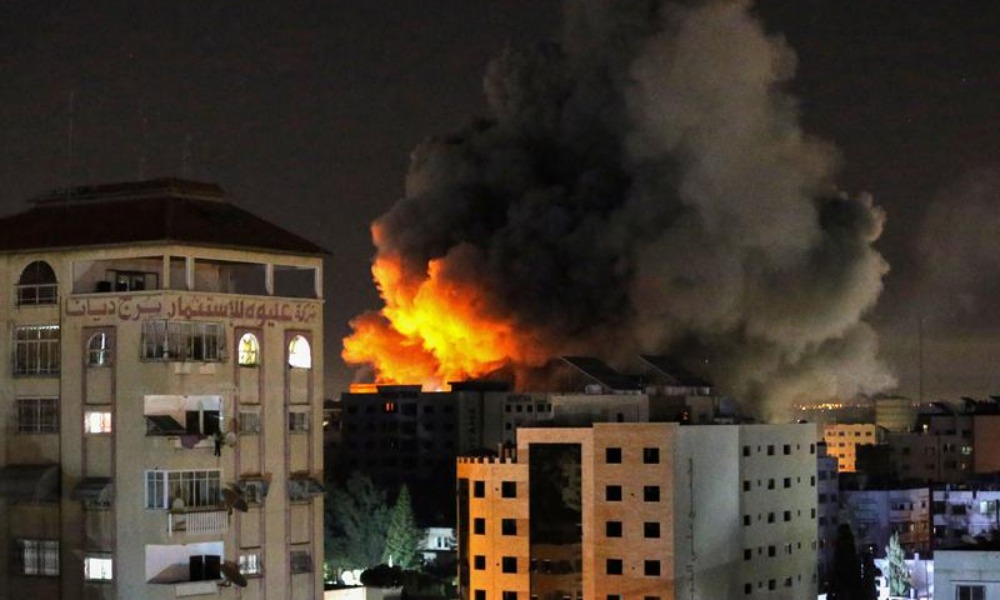
Hostilities between Israel and Hamas escalated on Wednesday, with at least 35 killed in Gaza and five in Israel in the most intensive aerial exchanges for years.
Israel carried out hundreds of airstrikes in Gaza into Wednesday morning, as the Islamist group and other Palestinian militants fired multiple rocket barrages at Tel Aviv and Beersheba.
One multi-story residential building in Gaza collapsed and another was heavily damaged after they were repeatedly hit by Israeli air strikes.
Israel said its jets had targeted and killed several Hamas intelligence leaders early on Wednesday. Other strikes targeted what the military said were rocket launch sites, Hamas offices and the homes of Hamas leaders.
It was the heaviest offensive between Israel and Hamas since a 2014 war in Gaza, and prompted international concern that the situation could spiral out of control.
U.N. Middle East peace envoy Tor Wennesland tweeted: “Stop the fire immediately. We’re escalating towards a full scale war. Leaders on all sides have to take the responsibility of de-escalation.
“The cost of war in Gaza is devastating & is being paid by ordinary people. UN is working w/ all sides to restore calm. Stop the violence now,” he wrote.
Gazans homes shook and the sky lit up from Israeli attacks, outgoing rockets and Israeli air defence missiles intercepting them. At least 30 explosions were heard within a matter of minutes just after dawn on Wednesday.
Israelis ran for shelters or flattened themselves on pavements in communities more than 70 km (45 miles) up the coast and into southern Israel amid sounds of explosions as interceptor missiles streaked into the sky.
In the mixed Arab-Jewish town of Lod, near Tel Aviv, two people were killed after a rocket hit a vehicle in the area. Lod and other mixed towns have been gripped by angry demonstrations over the Gaza violence and tensions in Jerusalem.
Hamas’s armed wing said it fired 210 rockets towards Beersheba and Tel Aviv in response to the bombing of the tower buildings in Gaza City. Israel’s military says that around a third of the rockets have fallen short, landing within Gaza.
For Israel, the militants’ targeting of Tel Aviv, its commercial capital, posed a new challenge in the confrontation with the Islamist Hamas group, regarded as a terrorist organisation by Israel and the United States.
The violence followed weeks of tension in Jerusalem during the Muslim fasting month of Ramadan, with clashes between Israeli police and Palestinian protesters in and around Al-Aqsa Mosque, on the compound revered by Jews as Temple Mount and by Muslims as the Noble Sanctuary.
These escalated in recent days ahead of a – now postponed – court hearing in a case that could end with Palestinian families evicted from East Jerusalem homes claimed by Jewish settlers.
Violence has also flared in the occupied West Bank, where a 26-year-old Palestinian was killed by Israeli gunfire during stone-throwing clashes in a refugee camp near the city of Hebron.
‘A VERY HEAVY PRICE’
There appeared no imminent end to the violence. Israeli Prime Minister Benjamin Netanyahu warned that militants would pay a “very heavy” price for the rockets, which reached the outskirts of Jerusalem on Monday during a holiday in Israel commemorating its capture of East Jerusalem in a 1967 war.
The outbreak of hostilities led Netanyahu’s political opponents to suspend negotiations on forming a coalition of right-wing, leftist and centre-left parties to unseat him after an inconclusive March 23 election.
Opposition leader Yair Lapid has three weeks left to establish a government, with a new election – and another chance for Netanyahu to retain power – likely if he fails.
The Arab League, some of whose members have warmed ties with Israel over the last year, accused it of “indiscriminate and irresponsible” attacks in Gaza and said it was responsible for “dangerous escalation” in Jerusalem.
Hamas named its rocket assault “Sword of Jerusalem”, seeking to marginalise Palestinian President Mahmoud Abbas and to present itself as the guardians of Palestinians in Jerusalem.
The militant group’s leader, Ismail Haniyeh, said Israel had “ignited fire in Jerusalem and Al-Aqsa and the flames extended to Gaza, therefore, it is responsible for the consequences.”
Haniyeh said that Qatar, Egypt and the United Nations had been in contact urging calm but that Hamas’s message to Israel was: “If they want to escalate, the resistance is ready, if they want to stop, the resistance is ready.”
The White House said on Tuesday that Israel had a legitimate right to defend itself from rocket attacks but applied pressure on Israel over the treatment of Palestinians, saying Jerusalem must be a place of coexistence.
The United States was delaying U.N. Security Council efforts to issue a public statement on escalating tensions because it could be harmful to behind-the-scenes efforts to end the violence, according to diplomats and a source familiar with the U.S. strategy. State Department spokesman Ned Price urged calm and “restraint on both sides”, saying: “The loss of life, the loss of Israeli life, the loss of Palestinian life, It’s something that we deeply regret.”
He added: “We are urging this message of de-escalation to see this loss of life come to an end.”
PLUMES OF BLACK SMOKE
Israel said it had sent 80 jets to bomb Gaza, and dispatched infantry and armour to reinforce the tanks already gathered on the border, evoking memories of the last Israeli ground incursion into Gaza to stop rocket attacks in 2014.
More than 2,100 Gazans were killed in the seven-week war that followed, according to the Gaza health ministry, along with 73 Israelis, and thousands of homes in Gaza were razed by Israeli forces.
Video footage on Tuesday showed three plumes of thick, black smoke rising from a 13-story Gaza residential and office block as it toppled over after being demolished by Israeli airstrikes.
The Israeli military said the building, in Gaza City’s Rimal neighbourhood, housed “multiple” Hamas offices, including ones for military research and development and military intelligence.
The existence of one Hamas office, used by political leaders and officials dealing with the news media, was widely known locally.
Residents in the block and the surrounding area had been warned to evacuate the area before the airstrike, according to witnesses and the Israeli military.
A second residential and office building in the same neighbourhood was heavily damaged in Israeli attacks shortly before 2 a.m. on Wednesday. Residents and journalists working in the building had already left.
On Tuesday Gaza health ministry officials put the death toll at 32, but a Hamas-affiliated radio station later said three more people, including a woman and a child, were killed shortly before 2 a.m. on Wednesday in an Israeli airstrike on an apartment above a restaurant.
Israeli political leaders and the military said they had killed “dozens” of militants, and hit buildings used by Hamas.
Defence Minister Benny Gantz said Israel had carried out “hundreds” of strikes, and that “buildings will continue to crumble.”
Gaza’s health ministry said that of the people reported dead, 10 were children and one was a woman.
Israel’s Magen David Adom ambulance service said a 50-year-old woman was killed when a rocket hit a building in the Tel Aviv suburb of Rishon Lezion, and that two women had been killed in rocket strikes on Ashkelon.





World
US says it can keep naval blockade on Iran ‘indefinitely,’ vows more economic pressure
Shipping traffic through the Strait of Hormuz fell to eight vessels on Tuesday, compared with a 10-day average of about 12 vessels, and 130 to 140 ships before the war.
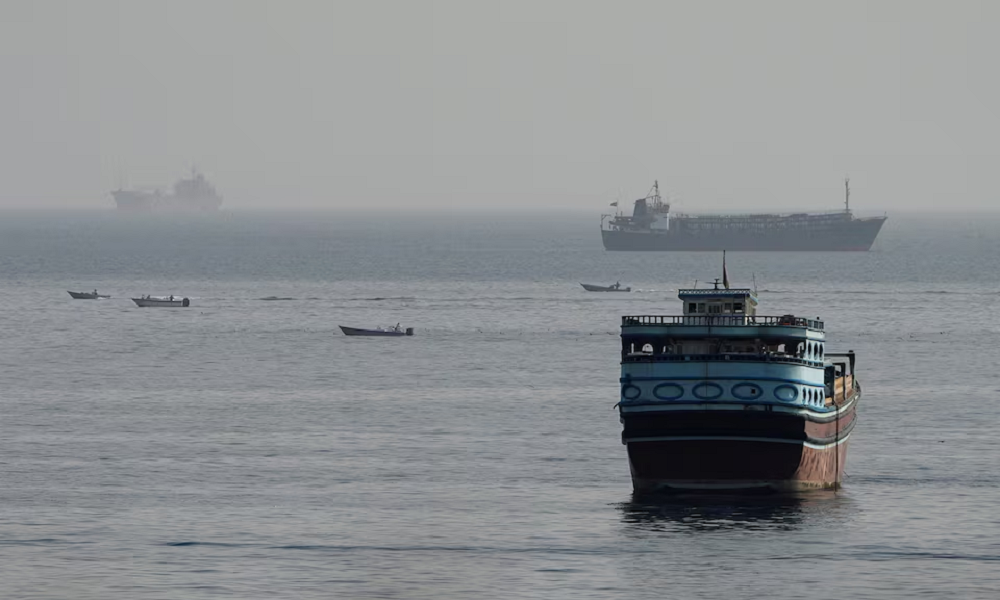
The United States on Thursday said that it could maintain a naval blockade of Iran indefinitely and would ratchet up economic pressure on Tehran as ceasefire talks have floundered, global oil supply is dropping and regional tensions are rising, Reuters reported.
Defense Secretary Pete Hegseth told reporters that the U.S. military has the capability to maintain a naval presence in the region to enforce its blockade of Iran, which has inflicted severe economic damage on the country.
“Indefinitely the United States Navy can maintain a blockade like that because we’ll rotate ships in and out, as we have, and we’ll continue to,” Hegseth told reporters during a trip to Panama.
Treasury Secretary Scott Bessent said on Thursday that the United States planned to inflict more financial damage on Iran.
“Watch this space for more announcements coming next week because we are going to apply measures like have never been seen in the history of economic isolation on a country,” he said in an interview on Newsmax’s “Rob Schmitt Tonight” program.
With a tentative June deal to end the war in tatters, Iran has sought to exert leverage on Washington in return by controlling the Strait of Hormuz.
It has attacked some vessels trying to transit the strategic waterway, through which a fifth of the world’s oil and liquefied natural gas traveled before the war began in February.
Two vessels from the state-owned Abu Dhabi National Oil Company were attacked transiting the strait on Thursday evening, UAE state news agency WAM reported. The United Arab Emirates government condemned it as an Iranian attack.
U.S. President Donald Trump is under pressure at home to end a war that is deeply unpopular, with high fuel prices dragging down his approval ratings and potentially eroding his party’s control of Congress in midterm elections in November, read the report.
Trump has repeatedly asserted that the U.S. has “total control” over the strait, prompting Iranian denials. Tehran has said it will not allow the waterway to reopen until its conditions are met. These include removing economic sanctions and releasing frozen Iranian assets.
Shipping traffic through the Strait of Hormuz fell to eight vessels on Tuesday, compared with a 10-day average of about 12 vessels, and 130 to 140 ships before the war.
The U.S. lifted its blockade of Iran’s shipping and ports for a month in mid-June but has since reimposed it, cutting off Tehran’s primary source of hard currency and compounding earlier losses from wartime strikes on its energy infrastructure.
Washington previously said it would lift the Iranian blockade once Iran and Oman, which sit on either side of the strait, reach an agreement to restore commercial shipping.
Trump has also repeatedly threatened to escalate military strikes and “hit Iran hard,” although he has thus far resisted deploying ground troops or seizing strategic islands and bombing desalination plants. Earlier this week, Trump suggested he would rely on economic means, rather than military action.
The U.S. has tightened economic sanctions against Iran and other individuals and entities that it says are helping it procure weapons, but the pressure campaign has failed to bring Tehran back to the negotiating table.
Stress is mounting on the global economy. The International Energy Agency on Wednesday forecast that global oil supply would fall by 4.3 million barrels per day, or around 4%, this year.
Just a month ago, the agency had forecast a drop of 3.7 million barrels per day.
Oil prices settled down more than 2% on Thursday after a week of gain, as investors focused on signs of weaker global demand and a sharp increase in U.S. crude inventories, Reuters reported.
But reports that Yemen’s Iran-backed Houthis had targeted a Saudi Aramco refinery with drones unsettled the market, renewing concerns about a widening regional war.
Global economists have forecast a sharp drop in global growth as a result of the war, and potentially a swing into recession in some areas, warning that the impact will grow if the war is not ended soon.
Hegseth declined to comment on a question about whether, in retrospect, it was a mistake to declare a ceasefire in April, a move that ended high-tempo bombing of Iran in exchange for peace negotiations that have failed to resolve the conflict.
“I’m never going to comment on that. We’re doing exactly what we need to, to ensure that Iran never has a nuclear weapon,” Hegseth said.
World
US military operations killed 153 civilians in 2025, Pentagon assessment shows
A Pentagon report submitted to the U.S. Congress and published by U.S. media said all civilian deaths and injuries recorded in 2025 resulted from three U.S. strikes in Yemen.
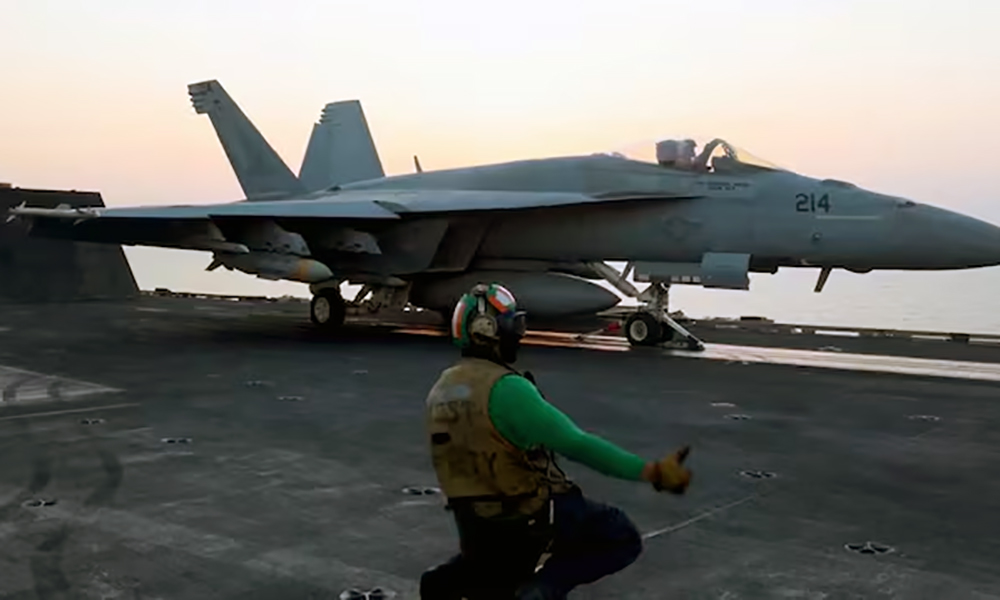
U.S. military operations killed 153 civilians and wounded 243 others in 2025, a U.S. official said on Tuesday, citing Pentagon assessments.
According to Reuters, the figures represent a sharp increase from 2024, when Pentagon assessments recorded two civilian deaths and two injuries linked to U.S. military operations.
A Pentagon report submitted to the U.S. Congress and published by U.S. media said all civilian deaths and injuries recorded in 2025 resulted from three U.S. strikes in Yemen.
The report said the U.S. Central Command assessed that the three strikes carried out in April 2025 in Yemen “more likely than not” resulted in civilian harm.
As of February 2026, the report said, 15 other incidents in Yemen were still being assessed by U.S. Central Command following reports received through non-governmental organizations.
The U.S. military says its operations in Yemen aim to degrade the capabilities of Iran-backed Houthi militants.
The Pentagon report did not include casualties from U.S. strikes in the Caribbean and Eastern Pacific. It said that as of February 1, 2026, the U.S. Southern Command had assessed that no incidents in its area of responsibility in 2025 “more likely than not” resulted in civilian casualties.
The Trump administration has also carried out strikes on vessels it accuses of transporting narcotics in the Eastern Pacific, describing the targets as “narco-terrorists.” According to a Reuters tally based on death tolls published after each strike, more than 200 people have been killed in such operations since September 2025.
Human Rights Watch and Amnesty International have described the strikes as unlawful extrajudicial killings, while the American Civil Liberties Union has called the Trump administration’s claims about those targeted “unsubstantiated, fear-mongering claims.”
World
Trump took secret flight out of Turkey due to Iran threat, the Washington Post reports
The trip to NATO was the first international travel for the new plane, whose speedy upgrades triggered questions over its cost and security, and took place as hostilities escalated with Iran, which borders Turkey.
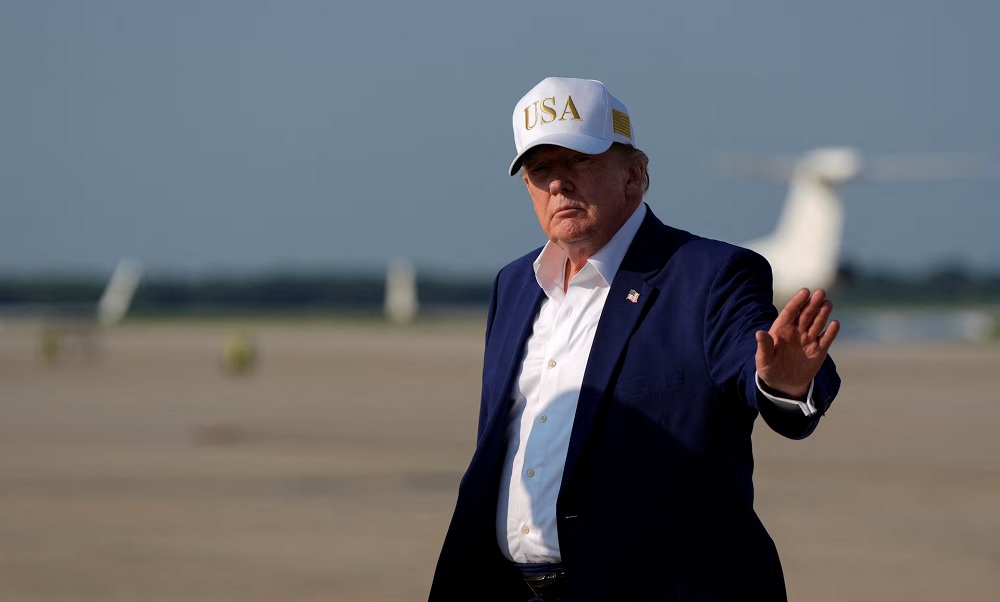
U.S. President Donald Trump departed on a secret military flight from Turkey last month when the White House said he was flying aboard Air Force One, an extraordinary move prompted by an Iranian assassination threat, the Washington Post reported Monday.
Trump had taken the newly renovated Qatari-donated jet to Ankara for the NATO summit but he unexpectedly used an older Air Force One when departing the country, a move that prompted questions about the newer plane’s security, Reuters reported.
The trip to NATO was the first international travel for the new plane, whose speedy upgrades triggered questions over its cost and security, and took place as hostilities escalated with Iran, which borders Turkey.
Before departing Ankara, Trump said on Truth Social that he would use an older baby blue Air Force One plane “for old time’s sake” to RAF Mildenhall in Britain while the new plane stopped at the same base so U.S. service members stationed there could tour the aircraft.
After Trump boarded the old Air Force One in front of cameras in Ankara, he was secretly shuttled by an airport catering truck to a smaller plane, an Air Force C-32A, the Post reported citing a U.S. official familiar with the operation and corroborating material it reviewed.
The deception operation was triggered by a credible threat to Trump, the Post reported. A similar operation had taken place in 2000, when President Bill Clinton used an unmarked executive jet to fly into Pakistan while sending his formal Air Force One as decoy.
On this occasion, the journalists who thought they were traveling with Trump on the older Air Force One, which was effectively used as a decoy, reported being advised to keep their window shades in the press cabin closed. The Post said aside from reporters, some White House staff also believed that the president was on board.
When asked later by reporters why they had to keep their shades shut during the flight, Trump said it was because they were “probably on a dangerous flight.” He went onto say: “But if I go, you go. Right?”
The C-32A carrying Trump flew to Britain and arrived at around 10:20 p.m. while the older Air Force One and media, arriving minutes later, the Post reported. It was not clear, the paper said, how Trump was moved from the C-32A back to the older Air Force One.
Trump’s traveling press pool reported he climbed down the stairs of the older Air Force One at 10:56 p.m. UK local time.
He gave press a peace sign but didn’t walk over to talk to them. He then spent some time greeting service members before walking to the new, Qatar-donated plane.
When asked for comment on the revelation of a secret flight on a third plane, the White House provided a statement from Communications Director Steve Cheung saying the Qatari-donated jet has been fitted with high-level security protocols that ensure the safety of the president and his staff.
“As the President has said recently, there are many enemies of America who have their sights on him, and we use every tool at our disposal to address those threats,” Cheung said. It was the same statement provided to the Post.
The Pentagon did not immediately respond to a request for comment.
The new plane, with red, white, dark blue and gold livery chosen by Trump, is a Boeing 747 gifted to the United States by Qatar last year and refitted by defense contractor L3Harris Technologies. It was intended to serve as a temporary placement while Boeing (BA.N) struggled to deliver long-delayed next-generation Air Force One planes.


Tawsia: $420M investment in TAPI gas distribution network in Herat discussed

Afghanistan cannot reach full potential without women and girls: UK envoy

Tajikistan sends protest note to Afghanistan after airspace violation, civilian death

IEA rejects Pakistan’s concerns, says Afghan soil will not be used against any country

FM Muttaqi says Islamic Emirate sees no need for talks with opponents

Pakistan’s governance system has ‘collapsed’: Mohsin Naqvi

Spain sweep FIFA World Cup player awards after historic triumph

Iran, Afghanistan and Tajikistan discuss expanding regional transit cooperation

Afghanistan temporarily eases fuel import standards to help curb rising prices

First Chinese transit shipment arrives in Herat via Iran’s railway corridor
Tawsia: $420M investment in TAPI gas distribution network in Herat discussed

Tahawol: Trade cooperation between Afghanistan and Iran discussed

Saar: Discussion on Islamic Emirate’s five-year journey

Tahawol: Afghanistan’s future in the global press discussed

Saar: The Islamic Emirate’s five-year rule discussed
-

 Sport5 days ago
Abasin Defenders stun Kabul Zalmi in Kabul Premier League
-

 Sport5 days ago
Kabul Premier League gets underway with high-scoring opener
-
 Regional5 days ago
Iran ties Hormuz reopening to US concessions on several demands
-

 Sport4 days ago
Afghanistan beat Ireland by 3 wickets in third ODI
-

 Latest News1 day ago
HesabPay unveils new visa card and digital payment app in Kabul
-
 Latest News4 days ago
MoU on TAPI gas purchase signed between Afghan Gas and Türkmengaz
-

 Sport3 days ago
Abasin Defenders beat Shamshad Eagles by four wickets in Kabul Premier League
-

 Sport3 days ago
Afghanistan to host India for three-match T20I series in Delhi